Dieser Artikel ist auch in deutscher Sprache verfügbar: Zum deutschen Artikel.
The new Act on the Further Development of Pharmacy Services (ApoVWG), also known as the pharmacy reform, is intended to enable pharmacies to offer additional vaccinations, venous blood sampling, the dispensing of prescription-only medicines without a prescription, and other services. This is intended to ease the burden on GPs, out-of-hours clinics and A&E departments. Will pharmacies really offer these services, and how will people benefit? We spoke to a pharmacist in Leipzig, whose pharmacy already offers vaccinations and other services.
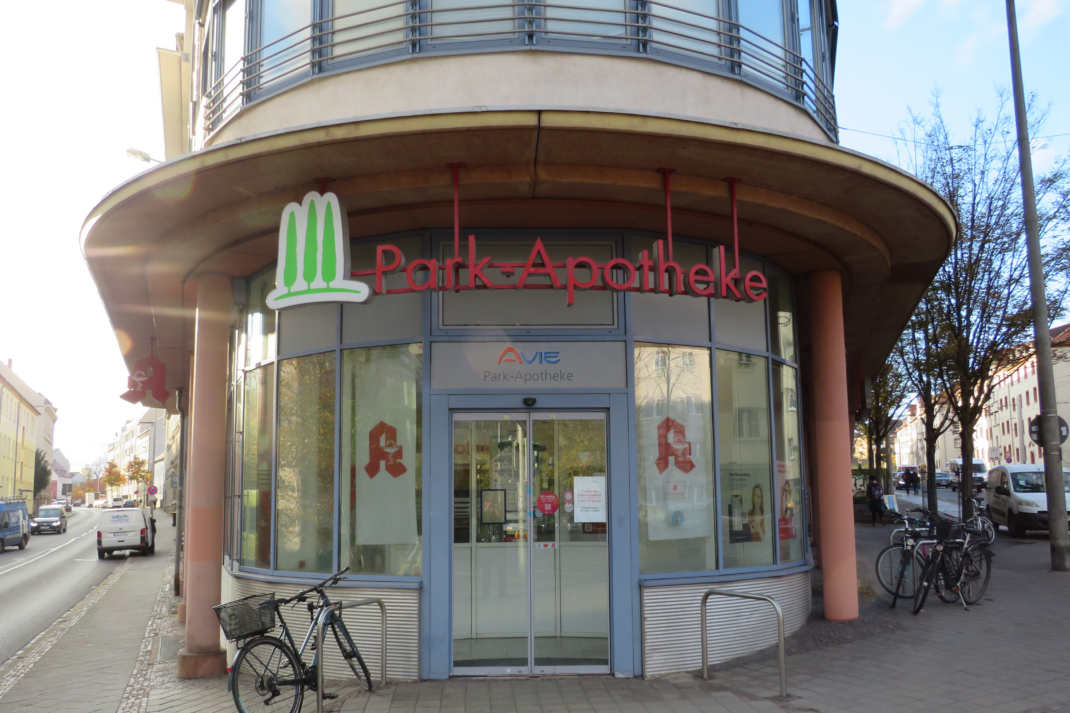
Thomas Lange is a pharmacist and owner of the Parkapotheke & Regenbogenapotheke in
Leipzig; he was happy to speak to us about this. 
Mr Lange, at the Parkapotheke you already administer flu and Covid vaccinations, and people can have various blood tests carried out, their blood pressure measured and other services. What additional opportunities will the new Act on the Further Development of Pharmacy Care (ApoVWG) provide you with?

Since July, when this new law came into force, pharmacies have been authorised to offer, in addition to flu and COVID-19 vaccinations, further protective vaccinations using inactivated vaccines against tetanus or TBE. In this context, we can offer vaccination record checks. Furthermore, venous blood samples will also be permitted to be taken in pharmacies in future. Until now, pharmacies were only permitted to take small quantities of capillary blood – for example, from the fingertip or earlobe. A classic example is the standard blood glucose test; in future, other laboratory tests – such as B12, iron and, where applicable, thyroid levels – may also be possible. However, the whole matter is still in the exploratory phase. As is so often the case, the precise regulations will be published at a later date.
These blood tests involving venous sampling are mostly the same as those offered by GPs as IGeL services – that is, services paid for out of pocket. They are not covered by health insurance; am I correct in this?
As things stand, blood tests carried out in pharmacies will be purely out-of-pocket services.
Reading some articles on the ApoVWG gives the impression that pharmacies are expected to offer an increasing number of medical services. This includes, for example, dispensing prescription-only medicines without a prescription. In this context, what does the addition ‘which are habitually prescribed and taken’ mean? Do you need access to the ePA for this?
With the reform and the new responsibilities we are taking on as a pharmacy, or rather as pharmacists, we naturally have significantly greater powers than before. However, we are not intended to – nor do we wish to – replace doctors in any way; rather, this is intended to be an additional service designed to relieve the pressure on doctors and, above all, on A&E departments and out-of-hours clinics in certain situations.
In the example of dispensing to patients with chronic conditions, the situation is that, in an acute case and under certain conditions, we are permitted to dispense a small pack of a prescription-only medicine without a prescription, as a temporary measure. However, this is only permitted if the patient can prove to us – for example, via their electronic medication record or because they hold a loyalty card with us – that they have been receiving this medicine at this strength continuously for a year.
Would that usually be the case when doctors aren’t holding consultations?
In most cases, it’s Friday afternoon, at the weekend, or the doctors are on holiday, and the patient has realised: ‘I’ve just taken my last tablet.’ Thyroid tablets or certain blood pressure tablets are a great example of this. With thyroid tablets, people realise very quickly – after a day or two – whether they’ve taken them or not. This means we can take some of the pressure off out-of-hours surgeries or A&E departments in such situations.
It’s important to note that the patient pays for this out of their own pocket; it isn’t covered by health insurance. The patient has to pay for it themselves and also has to pay a processing fee – I believe it’s 5 euros – at the chemist’s.
So it will effectively amount to a self-inflicted shortage of this medicine and a service paid for out of pocket. This is particularly bad news for people exempt from co-payments.
Exactly – it’s not about competing with GPs or ‘taking anything away’ from them, but about offering an additional service to people who currently do not have a GP or who, for professional or personal reasons, are unable to visit a GP’s surgery during opening hours. As I said, the basic requirement is that it must be proven that this treatment is ongoing, and the patient must pay for it themselves. The health insurance fund does not reimburse this service, nor will there be any possibility of claiming a refund retrospectively by submitting a prescription at a later date. It is, of course, difficult for patients if the naturopathic practice is unexpectedly closed and they have therefore not been able to obtain a new prescription.
Let’s return to the additional services, such as vaccinations and venous blood sampling. With the Covid vaccination alone, a member of staff spends at least ten minutes dealing with the paperwork. After all, the vaccination isn’t just a quick jab in the arm. Will you need more staff as you expand the range of services, or will customers have to prepare for longer waiting times? Will more staff need to be trained, and will the pharmacy receive adequate remuneration for this?

In principle, the first thing to check is whether you have the capacity to fit this into your daily routine. That is the first point. As you have quite rightly pointed out, administering this vaccination involves not only the practical side but also, in fact, the German bureaucracy that goes with it. Forms need to be filled in, they need to be signed, and you have to discuss the matter to check whether the candidate is even eligible for the vaccine. Sometimes there are still questions that need to be clarified, and that all takes up time. The remuneration for this is set at a similar level to that for doctors, so it’s not exactly exorbitantly high.
If you’re going to offer this service, you should structure it in such a way that you administer a certain number of vaccinations. It’s not worth all the effort for just five vaccinations a year. Vaccination training courses have to be undertaken, which cost between 50 and 350 euros. The training for the flu vaccination comprises several hours of theory, an exam, plus a practical course – that is, a practical vaccination session supervised by a doctor. On top of that, there’s first-aid training, which might well be necessary. All of this has to be done; it’s not a course that simply takes ten minutes and then we’re done – it lasts several hours. These are the necessary preparations for staff before you even start offering the service.
There are also spatial requirements, aren’t there? At least, that’s what I gathered from the Official Gazette.
We naturally need a room where people can move about easily and where vaccinations can be administered in private. The same applies to medical examinations, blood tests and other procedures. It’s not yet 100 per cent clear what training will be required, what the scope of the courses will be, what costs will be involved and what spatial arrangements will need to be made; a lot of this is still in the planning phase, so we’re waiting for the information for now.
Do you think this will be economically viable for you and for other pharmacies?
You have to assess: can I incorporate this into my pharmacy’s business model, and can I offer it as an additional service in a way that makes financial sense? If you ask two people here, you’ll probably get three different answers. In principle, it’s initially a logistical challenge and a cost that you have to bear in order to assess whether you can actually implement this in our pharmacy.
Here at Park-Apotheke, we already have some experience with vaccination services – specifically with flu and Covid vaccinations – so we can certainly envisage offering an expanded range of vaccinations in our pharmacy. That said, as is so often emphasised: our aim is not to take work away from doctors, but simply to offer people – particularly those without a GP – a way to access vaccinations.
Nor will we be vaccinating everyone; instead, we will advise people with underlying health conditions, those taking certain medications and so on to consult a doctor before getting vaccinated.
Whether it’s when dispensing prescription-only medicines without a prescription, or when assessing eligibility for vaccination, we can access the electronic patient record, where available. Many people fear that we might then be able to view information that is not intended for us. Can you really see everything?
We cannot view the entire electronic health record; in fact, we can only access the section on medication. What have you been prescribed and from which pharmacy did you collect it? Other sections are not accessible to us, and access is only granted if you have not objected to the use of the electronic health record. If you decide that you do not want this electronic record at all, or if you exclude certain doctors or professional groups, then we cannot see any records relating to them either. This naturally makes it difficult to verify which medications you are receiving.
To summarise, the law sets out many possibilities for what pharmacies will be permitted to offer in future. Every pharmacist can now assess: ‘What resources do I have in terms of staff, space and finances? What can I offer my customers?
’ That’s right; you have to weigh up the cost-benefit ratio, but also the time-benefit ratio. And, of course, whether one is prepared to put up with the bureaucratic processes. In order to be allowed to administer vaccinations, we must submit a notification to the Regional Directorate stating that we are carrying out vaccinations here, and also specify who is administering them and where. This is then officially recorded and subject to inspection. During pharmacy inspections, checklists are used to verify whether the necessary requirements are met. We do not yet know exactly how this will work in practice for venous blood sampling.
Mr Lange, that was a lot of information. Thank you for the conversation and for your time. Conclusion:
In future, pharmacies will be able to provide more services for which people previously had to visit a doctor. This could provide real relief for doctors’ practices and for local people, particularly in underserved areas. It remains to be seen how many pharmacies will have the staff, space and, above all, the financial resources to implement these services. It is also still possible that excessive bureaucracy will lead to burdens that deter pharmacists from doing so. Not every pharmacy will be able (or willing) to take this step, but in principle, local pharmacies will continue to show great commitment to making their contribution to the healthcare system. We can only wait and see.
Empfohlen auf LZ


So können Sie die Berichterstattung der Leipziger Zeitung unterstützen:





There is one comment