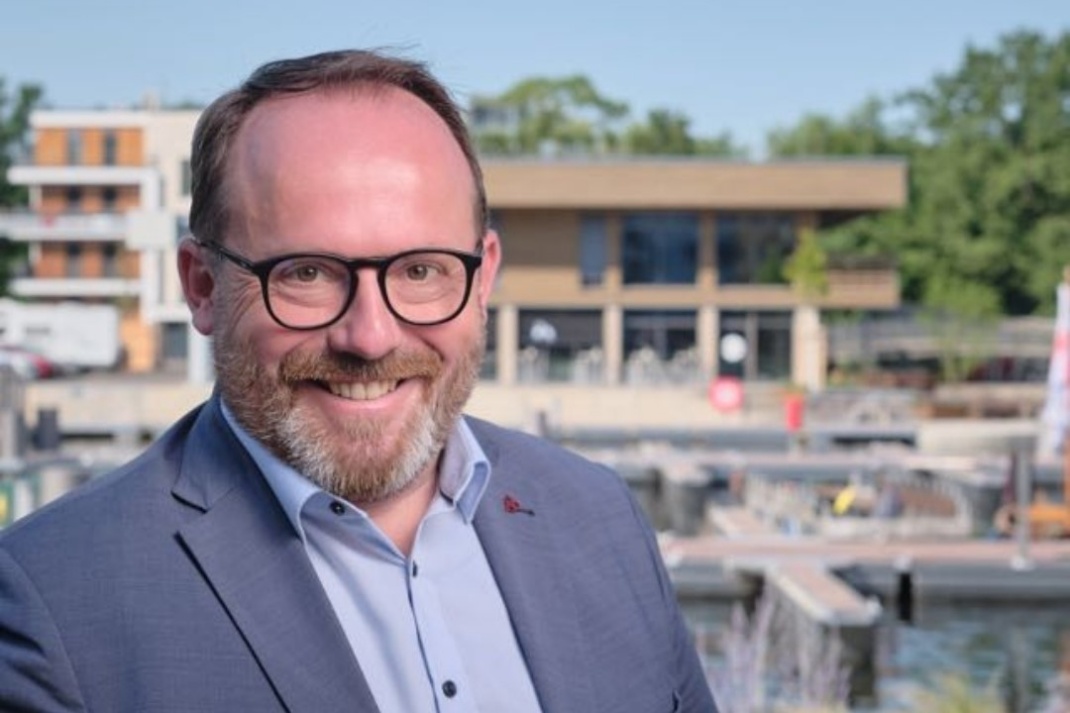
The field of candidates has probably settled definitively at 15. Unfortunately, there will still only be two women on the ballot papers; both are already officially recognised candidates, as are eight other candidates. To make it onto the ballot paper, five further candidates must each find 240 supporters who will go to the electoral office and sign in support of their preferred candidate. Jürgen Brenken’s list has been available there since Friday, and Ralf Kohl’s since Monday.
At the end of last week, Jürgen Brenken announced his candidacy
and submitted his documents to the electoral office on Friday. On
Saturday, Lars Kulesch informed us that he was withdrawing his
candidacy; consequently, as described above, there remain fifteen
candidates. 
Who is Jürgen Brenken? We asked him for an interview and met on 10 November. The interview was shortened in consultation with Mr Brenken. Jürgen Brenken is an eloquent speaker, but the text would have been too long for an article had it been published in its original length.
The interview
Mr Brenken, you entered the election campaign at short notice and, for many people, unexpectedly. However, your first large poster is already up on Täubchenweg, and since Friday at 12.20 pm, people have been able to sign in support of you. So it wasn’t entirely unprepared – how did this come about, and who is Jürgen Brenken?
How is it that someone who wasn’t in the front or second row is suddenly standing for this truly very important role in the city administration? I have experience in administration, albeit in the private sector, in the hotel industry. I spent 25 years in a leadership role as a hotel manager, trainer, department head, divisional manager and hotel director, and to this day, in my self-employed role, I remain responsible for ensuring things are done properly.
Ever since 1998, whenever I’ve been in charge of staff, it has always been important to me to work with people and to form a cohesive unit for the team. So that everyone knew exactly that we were all heading in the same direction and wanted to work happily or be satisfied. The customer wants to be satisfied, the accountant wants to sort the accounts out properly, and other departments want their fair share too.
What else is there to say about you as a person?
As a person, I’m a father; I’m also the one who supports my children through their studies – which means I even do their homework for them, though that’s perhaps not always entirely right. I say this with a wink, because I want to present myself openly to my fellow citizens and voters. Something like that can also be a mistake, but mistakes must be admitted. I would do the same later on, by consulting my colleagues and my department heads directly, and by allowing myself to be questioned.
I am a multifaceted person; I am someone who loves travelling as a tourist in my private life, but who doesn’t always have to stay in a five-star hotel – I also enjoy popping into a local inn on the spur of the moment and then lending a hand on a farm. In other words, I like to shape my life in a very active way. I am someone who has been associated with the Lions Club for over 20 years, a member of the Leipzig South-East Garden Society, who attends the Leipzig Annual Exhibition and supports the Lene Voigt Society.
I was also active in the CDU for over 32 years and, as a former citizen of the GDR, I deliberately asked to give a welcoming address on 7 October and then bid farewell to my fellow party members. Quite openly, with my cards on the table, making clear statements and taking a clear stance.
Once again, why did you announce your candidacy so unexpectedly and at such short notice?
Why did it seem so sudden and come as a surprise to people? I only have large posters – just one large poster on display at the moment; there will be a maximum of four in total. I’ve already found a subsequent use for them – they’ll be donated as sunshades for nursery schools. I don’t want to litter the town with paper, so no leaflets or anything like that.
Why are you putting yourself through this election campaign – what drives you?
I have role models in my family. My great-grandfather, born in 1860, was a constant presence in our family and did a great job. Everyone was always politically active – throughout the Imperial era, the Weimar Republic and the period up to 1945. They were always concerned with people, at all times. I don’t want to single anything out or highlight it as special; it was all so consistently good that, now at 50, I want to follow in their footsteps. I’ve always been politically active, but I’ve never pushed my way to the front of the queue; instead, I’ve always tried to exert a positive influence.
I’m putting myself forward because I want to give the city the non-partisan advantage of not having to make decisions under party discipline. At 50, I feel mature enough to take on responsibility, whether for one parliamentary term or two. I want to be just as much of a role model to my son, who is 40 years younger, as my father, my grandfather and my great-grandfather were to me.
Leipzig is a large and diverse city, and the challenges facing the new Lord Mayor are just as great and diverse. Which three or four issues would you tackle first?
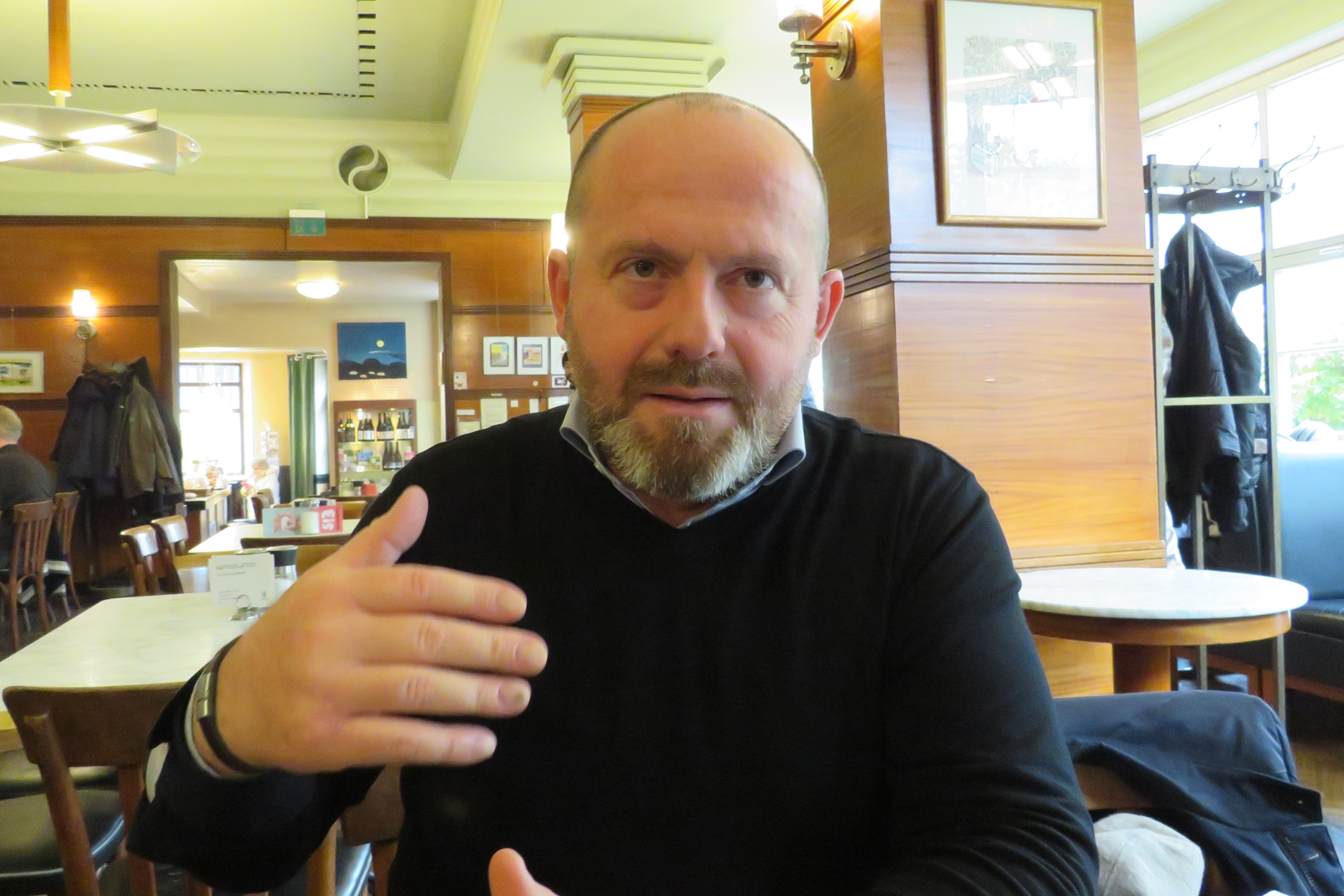 Interview
with Jürgen Brenken. Photo: Thomas Köhler
Social issues are very, very important to me. To put it simply, the real pressing issue right now is homelessness – and rising levels of it. It’s so widespread that people are having to camp right in the city centre. There’s no container village for them with basic amenities, a clothing bank, a medical centre or sanitary facilities – that would be the first thing I’d set up. Three of these, not somewhere on the outskirts of town, but right where they’re needed. Of course, this would also need to be secured, because there are always fellow citizens who would love nothing more than to tear down the tents on Wagner-Platz and cause a disturbance. That would be the first thing.
You mentioned diversity; I don’t see the Connewitzer Kreuz as a problem area, I see it as a wonderful starting point for cultural development. I’m a father; my youngest is 40 years old, and my eldest daughter is 30 years younger than me. I have a good rapport with my children – even with those I’ve done nothing special for, yet who still call me ‘Dad’; they give me inspiration and ideas. Secondly, I would help to organise these ideas, without labelling them, but ensuring that something genuine grows out of them. We mustn’t view the Kreuz as a problem area; violence is, of course, the absolute worst – none of us want that, nor do we want burning rubbish bins and cars. That goes without saying, and it won’t happen so often anymore.
The third point is this: because I’m essentially a Christian Social in my outlook, I helped develop Lions Quest – ‘Growing Up’, ‘Acting Like an Adult’ – these two modules, which I’ve used to train 3,400 teachers, and I’d like to do something for schools. As a trainer and examiner at the Chamber of Industry and Commerce, I think I also have the teachers’ understanding, and we can take a bit of the pressure off families in their day-to-day lives.
You’ve listed homelessness, culture and education as your top priorities; as Lord Mayor, you’d also share responsibility for the city’s economic development. What would your priorities be in that regard?
It’s wonderful that you’re drawing a connection to my list of priorities; this has been with me, in concept and in spirit, for over 15 years. I’d just like to mention the eight most important points.
Housing, a secure supply of housing, and education – we’ve just touched on that. As for transport, these include the expansion of the road and rail networks, a second S-Bahn tunnel and the connection of the waterways to form a coherent water network, just as Karl Heine envisaged. This will also boost the economy. The establishment of new businesses, such as Dornier, Bayer, Rolls-Royce and Rolls-Royce Europe at the airport – and no arms industry! I am someone who has served in the military, but I do not accept that.
The city should grow; economic growth will then follow. I can envisage the incorporation of Taucha, Markkleeberg, Markranstädt, Schkeuditz and Pegau. And I want to run a modern city administration; I know of departments that do not need any cuts at all. We shouldn’t cut back on staff; we need to make changes to the structures. Michael Weikert, a former good party colleague, said two or three days ago: ‘Making minor improvements to the structures won’t work; it won’t make the sh… any better. But that’s the wrong approach; there are experienced people working there, and if you sit down and talk, if you engage in dialogue, if you ask questions and are open to questions, then you’ll achieve your goal more effectively than if you immediately shut the door and say: ‘It’s all rubbish’ and cast everything in a relatively negative light straight away.
Last question – let’s wrap it up. Assuming you were to become Mayor from 2027, what would your vision be for what Leipzig would look like in 2034?
We’re not just moving closer within the municipal boundaries; we’re also moving closer to Halle/Saale and harnessing the potential of all the local authorities along the B6, so that when you drive through, you’ll hardly even notice there’s a boundary. In other words, we’re also growing closer to the other federal states through mutual exchange. We’ll then have a functioning infrastructure, as well as factories and industrial sites at the airport. We’ll have an expanded motorway network – not just three lanes, but one that relieves road traffic by creating additional lorry lanes, particularly for traffic flowing to and from the airport.
After seven years, we’ll have a thriving Connewitzer Kreuz where everyone feels at home, and – to borrow Friedrich Merz’s phrasing, but in the positive Leipzig sense – we’ll have a cityscape where we have no worries simply because we once had reservations. In 2026, we had reservations which we no longer have, because, through a community that has grown closer together, through organisations and clubs in which everyone plays an active part, we have got to know one another. And there will then be no more problem areas that we need to mark with ‘weapons-free zone’ signs. We won’t need them any more.
Mr Brenken, thank you for speaking with me.
With Jürgen Brenken, the field of candidates is likely to be complete, though there can always be surprises. We will speak to him again, as we will with all the other candidates, during the crucial phase of the election campaign. On 18 December, the Electoral Committee will announce which candidates will appear on the ballot paper for the first round of voting.
Empfohlen auf LZ


So können Sie die Berichterstattung der Leipziger Zeitung unterstützen:


There is one comment