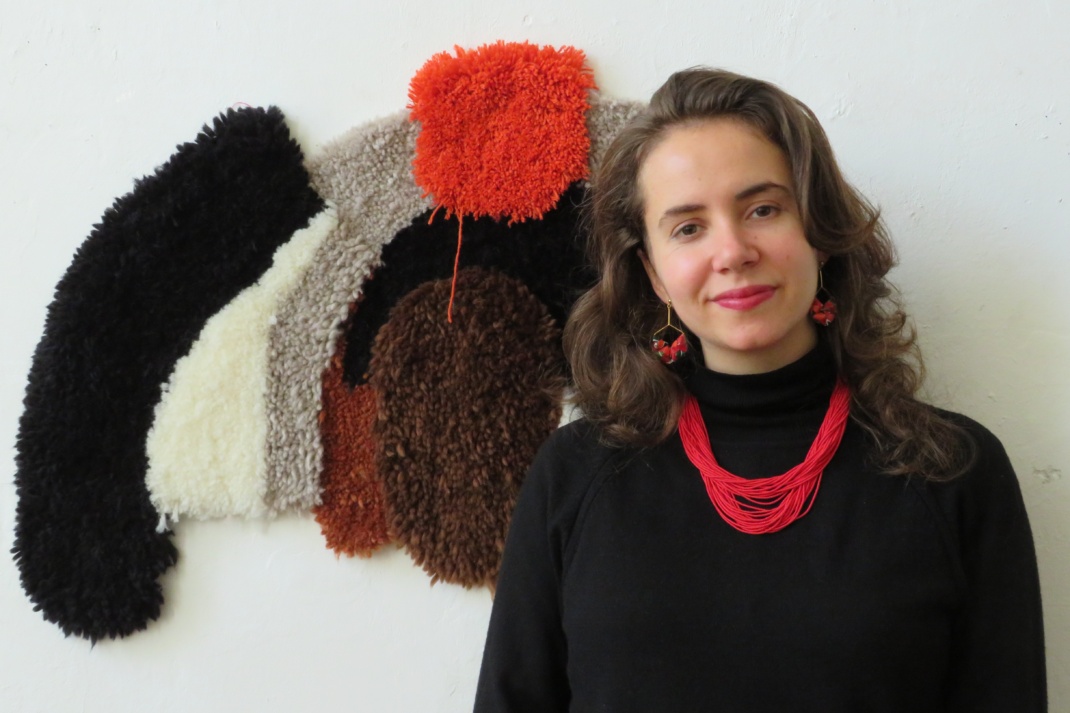
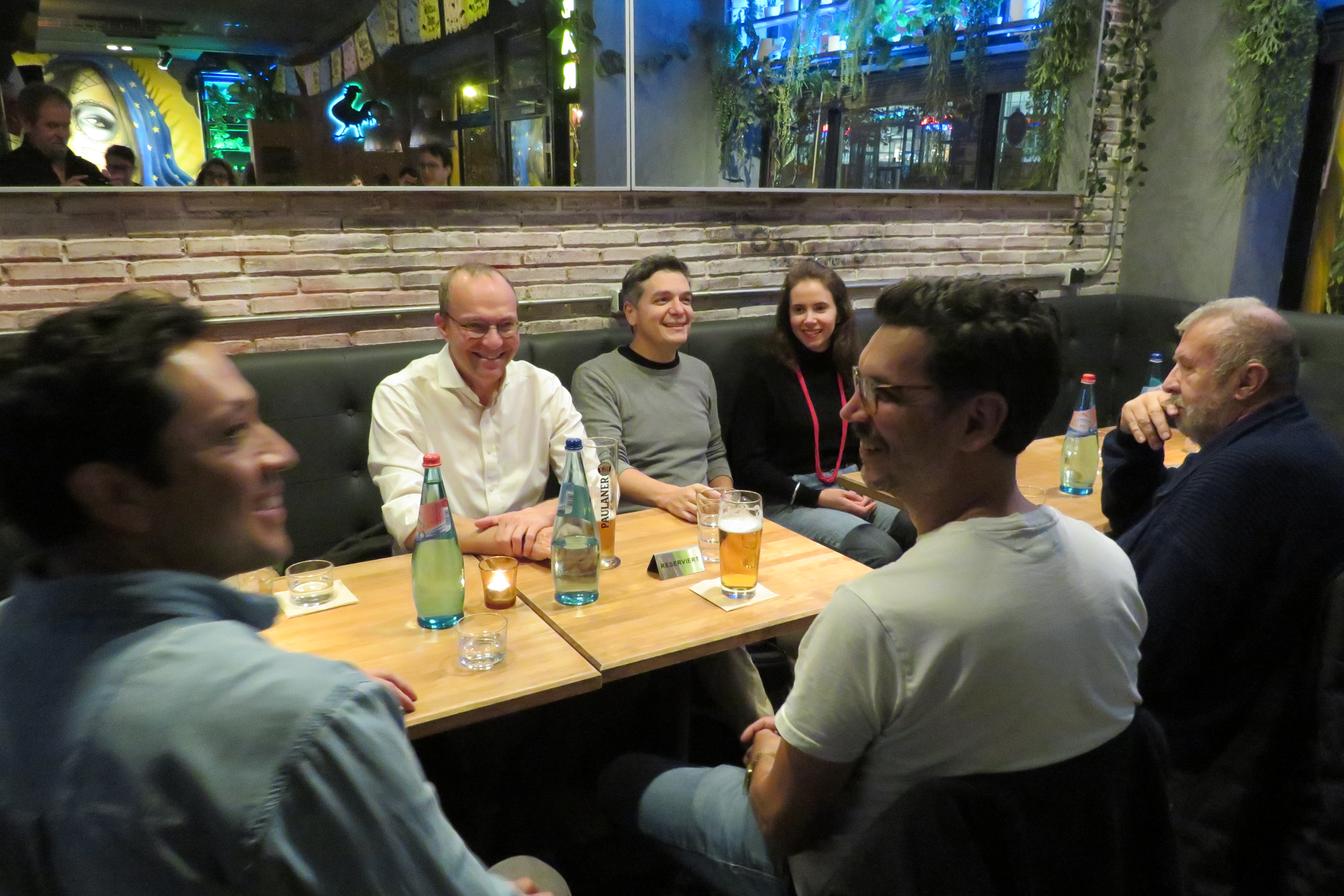
We met Dana László da Costa at a get-together with Wolfram Günther at the Gallo Negro. She’s a young woman from Brazil who’s been living in Leipzig for years and has a studio here. When she introduced herself, it sounded like a story worth telling. We arranged a time and met at her studio in the Alte Handelsschule in Leipzig-Kleinzschocher. We agreed to address each other informally for the interview.
Dana, we met through Alan; if I remember correctly, you’ve been in Germany for twelve years.
 It’s actually been almost fourteen –
thirteen and a half years, to be precise – since I came to Germany
as an au pair.
You came as an au pair, then studied at Burg Giebichenstein – what happened next?
I completed my degree course in 2022 and was invited straight afterwards to do a masterclass with Professor of Art History Nike Bätzner. I then spent two years on the master’s programme and, when I finished in 2024, I was immediately awarded a scholarship from the Saxony-Anhalt Art Foundation. I lived in Halle for a year whilst carrying out this scholarship.
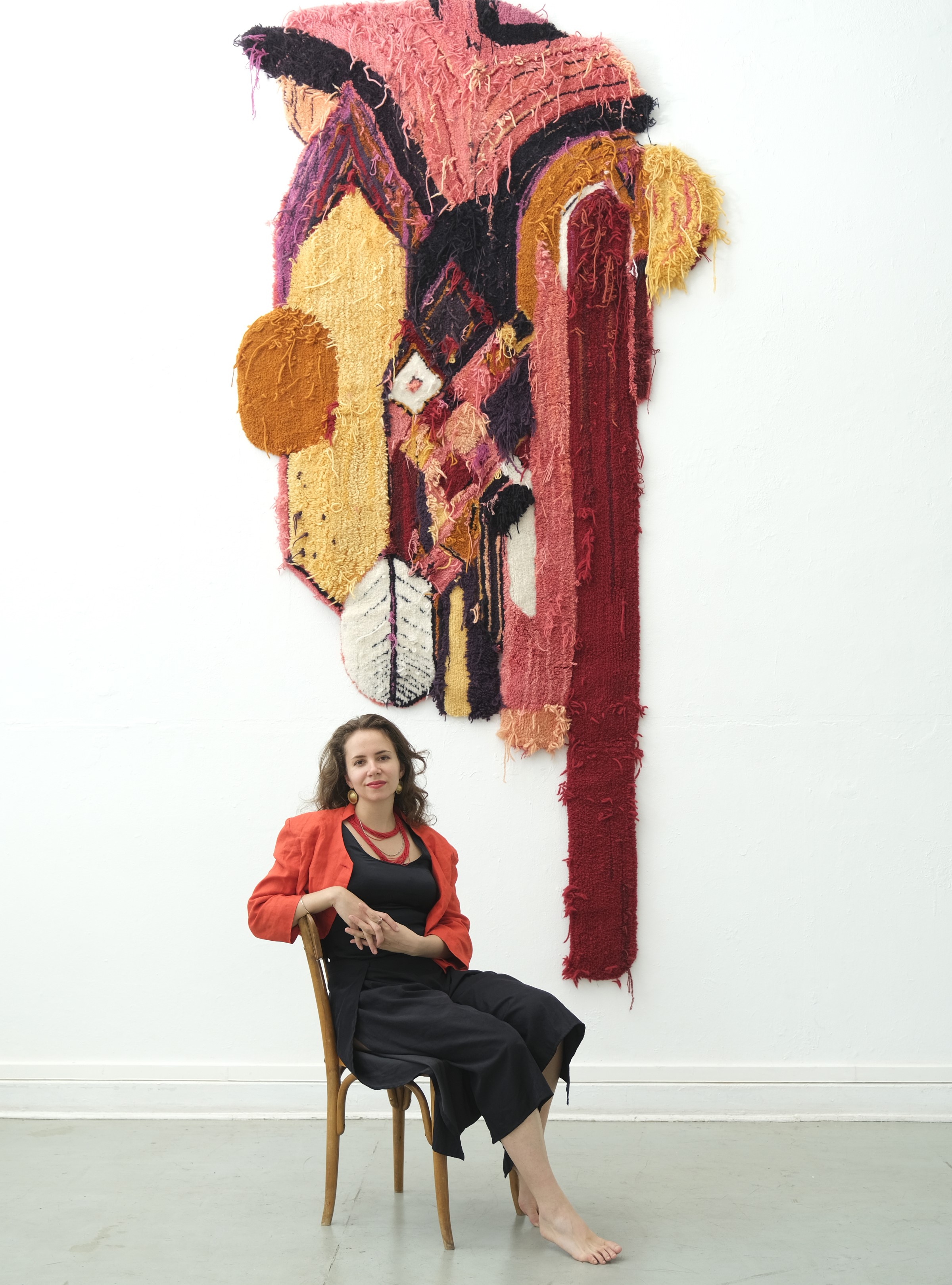
Now you’re here in Leipzig and have your own studio in the Alte Handelsschule. You create textile art – what does that involve?
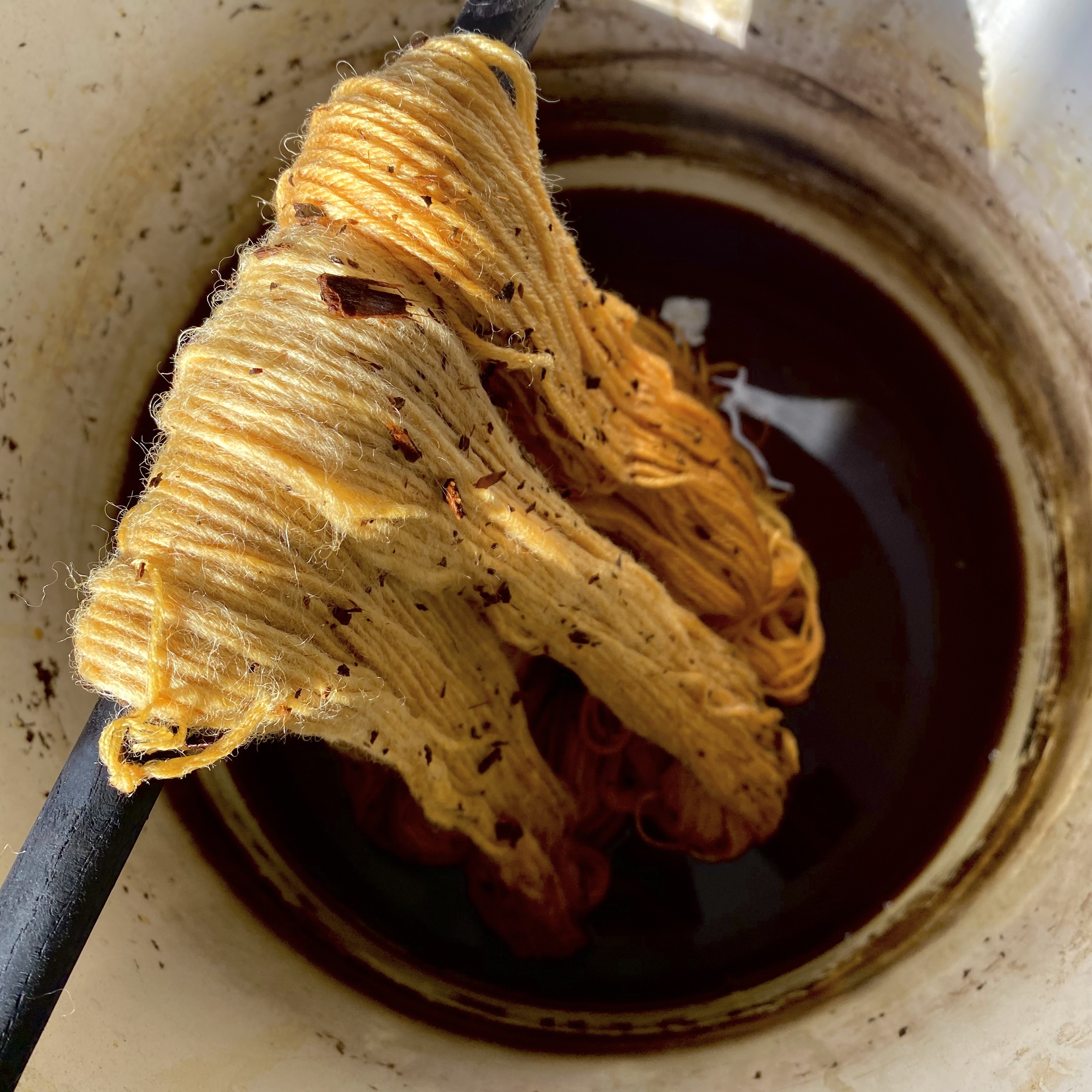
Exactly, I’ve been here in Leipzig for a year now. I work with natural materials and natural dyes. I get the wool in its raw state – white wool – and dye it using various extracts. For example, with brazilwood, which comes from a tree native to Brazil. It’s actually really fascinating – Brazil is named after this tree. I use different recipes and different dyes to colour this wool. I do the whole process on the hotplate, and I’ve got the pots here too.
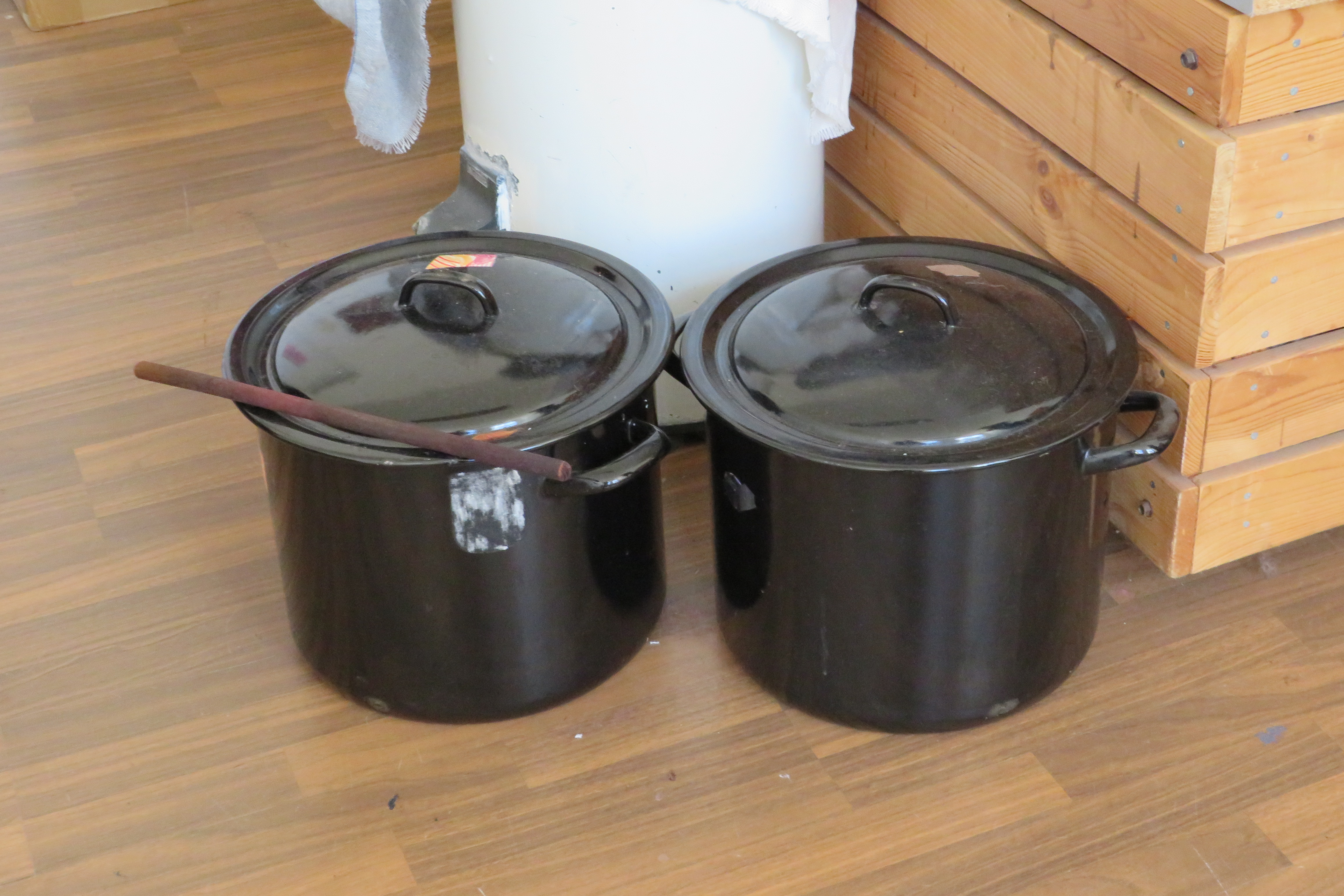
So these aren’t soup pots. Once the wool is dyed, what do you do with it next?
Dyeing the wool takes a great deal of time; afterwards, a linen fabric is stretched over the frame and I then work using the tufting technique, which is a method for making rugs.
Is that knotting?
It looks similar to knotting, but it’s a different technique.
Where do you sell these rugs, then?
There’s a project in Frankfurt am Main, for example, that I’m collaborating with – or rather, we’ve now moved to Lisbon. I’ve been working with ‘THE ORI HOUSE’ for a few years now. I’m currently taking part in an exhibition in Prague where some of my work is on display.
So, if I understand correctly, you make home textiles – tapestries with patterns you’ve designed yourself. Or are they traditional patterns as well?
I mainly make tapestries; I only make floor rugs when I’m working on specific projects. I had one such project with an architect from Italy, where I created something bespoke with him. I design the patterns myself and often draw inspiration from nature in particular. They’re certainly very free-form and don’t represent anything specific, but there’s always something essential in the larger pieces.
That evening at Alan’s, we’d also talked about problems with the authorities, particularly the immigration office. You’d think that, having been in Germany for almost fourteen years, having studied here, having been a master’s student and now having your own studio, there shouldn’t be any more problems. But that’s not the case, is it?
It’s by no means straightforward; at the start of this year I had major difficulties with my visa. I received a letter stating that an extension had been refused. After 14 years here, I never expected that, because I feel very much at home here. But I can see that’s not the case and that, even though I’ve been here for so long, I still don’t belong.
Fourteen years in Germany – that means you’ve lived here for almost half your life.
Exactly – I came here just as I turned 19.
So, you’ve spent almost half, or a third, of your life here, and at some point it could happen again that someone says: That’s it now!
Yes, that’s right – I find it very difficult when you think about it like that, but I went through that at the start of the year. I’ve now been granted a one-year visa – actually, a bit less than that. My visa expires at the start of February next year.
So you’ll have to apply for a visa again; that’s not great.
Exactly – I’ll have to apply for it again at the end of the year; it really isn’t great.
Even though, as a non-EU citizen, you’re not allowed to vote for the mayor, what would be important to you? What should the new mayor do in Leipzig?
I think it’s very important – not just because I studied art and work as an artist – that art and culture are absolutely vital for everyone. Art and culture should continue to be promoted and supported even more. I believe that’s something I’d like to see – that the importance of art and culture in general for society is placed right at the top of the agenda. Perhaps that’s not very specific right now, perhaps other things are more important, but under no circumstances should anyone think that art and culture are unimportant.
What’s next for you? You’ll carry on with your art and your exhibitions – do you want to stay in Leipzig?
Yes, I want to stay here in Leipzig. I feel very much at home in this city and really appreciate the cultural scene here. I find it absolutely fascinating. I’ll be getting even more involved here and integrating myself further. In any case, I’m very grateful to have such a good studio here and want to continue working here as an artist.
Dana, thank you for talking to me, and I wish you continued success.
It’s one of those stories about people who come to Germany, do an apprenticeship or a degree here, and then work here. As far as the authorities are concerned – and not just them – even after fourteen years they still don’t really belong here. That needs to change urgently.
Empfohlen auf LZ


So können Sie die Berichterstattung der Leipziger Zeitung unterstützen:




There is one comment