Dieser Artikel ist auch in deutscher Sprache verfügbar: Zum deutschen Artikel.
What is the value of old GDR buildings? A panel of experts is discussing the future of well-known buildings from a bygone era. The candidates in the mayoral election are looking to the future and discussing Leipzig’s nightlife. Two exhibitions explore the process of coming to terms with the Soviet dictatorship and magazines published illegally in the GDR. And in the surrounding area, there are problems with bus services.
When the day begins at night
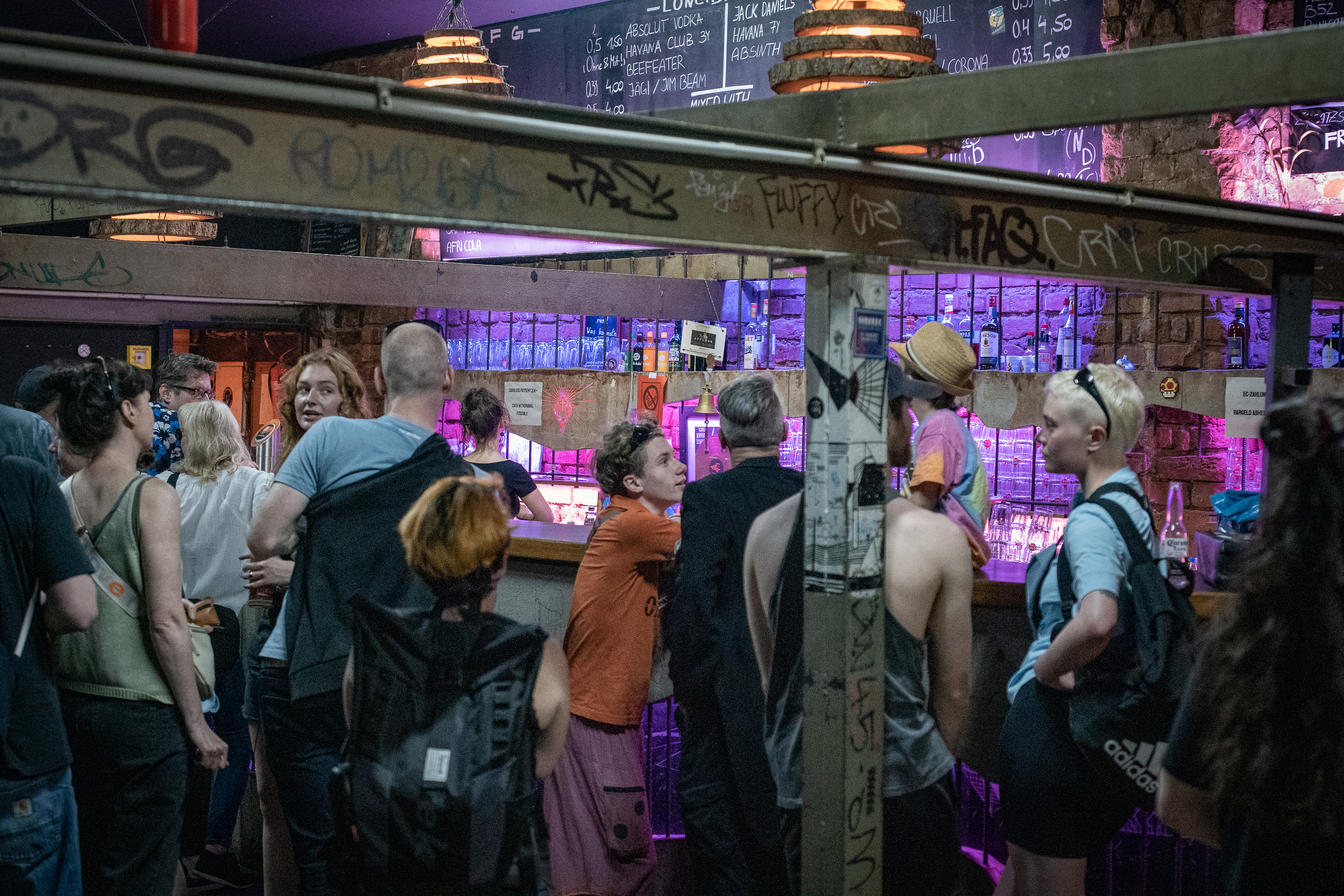
It’s getting dark outside, the lights are coming on in the clubs, and the city is coming to life in a different way. But for how much longer – and under what conditions? Some of Leipzig’s mayoral candidates are discussing the future of nightlife today at the invitation of ‘LiveKommbinat’. The public election forum ‘Leipzig nach Acht’ begins at 8 pm at the Distillery (Alte Messe, Hall 7).
On the panel will be Falk Fiebig (Volt), Dr Skadi Jennicke (Die Linke), Dirk Panter (SPD), Eric Recke (BSW), Tom Rodig (Die PARTEI), Alexander Türpe (FDP), Michael Weickert (CDU) and Wolfram Günther (Bündnis 90/Die
Grünen). Mandy Engel (Radio RSA) will be moderating the
discussion.
In the run-up to the 2027 mayoral election, the candidates’ political visions for the development of Leipzig’s nightlife will be discussed. Topics to be covered include the economic and legal conditions for clubs, live music venues and event organisers, safeguarding cultural spaces, and the importance of the music industry for Leipzig. Potential conflicts between urban development, commercial use and the interests of the public will also be discussed.
Of particular importance here are future municipal funding for the arts and the management of municipal land used for cultural events. The forum offers an opportunity to directly compare the candidates’ positions on these issues. Questions from the audience are expressly encouraged.
Living with GDR-era buildings
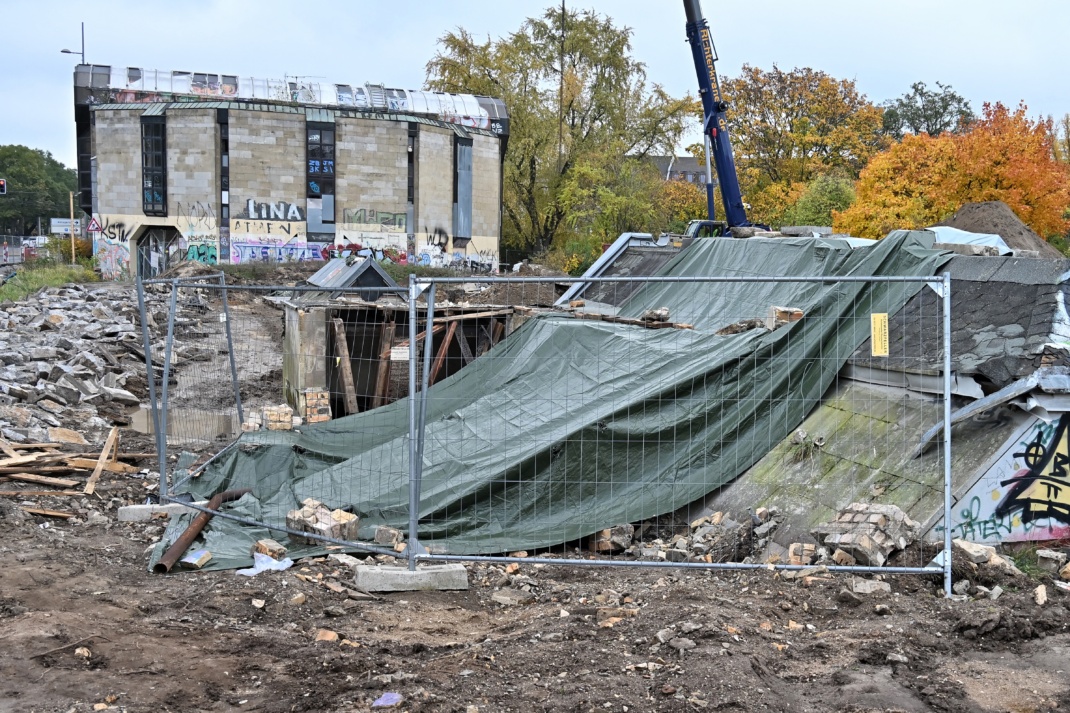
What future lies in store for the buildings of East German Modernism, and how can citizens’ initiatives, architects and heritage conservationists influence their preservation? Experts will be discussing this today from 6 pm at a public event in the Oberlichtsaal of Leipzig City Library (Wilhelm-Leuschner-Platz). The panel discussion is entitled ‘Impulses for East German Modernism: Stakeholders – Initiatives – Networks’ and forms part of the supporting programme for the exhibition project ‘Ostmoderne.Kultur-Orte’.
A current example in Leipzig of how the architectural heritage of the GDR is being dealt with is the Bowling-Treff, which is being converted into a natural history museum. Like the former Exhibition Hall 7, the building is one of the Leipzig sites featured in the exhibition. Other examples include the Robotron canteen and the Pinguin Café in Dresden, as well as the Schauspielhaus and the Stadthalle in Chemnitz.
The discussion will focus on the preservation, conversion and use of such buildings. It will also explore the opportunities available to civil society initiatives to influence decisions in construction and cultural policy.
Leipzig’s Councillor for Urban Development and Construction, Thomas Dienberg, and the Managing Director of the Centre for Building Culture Saxony (ZfBK), Juliane Naumann, are expected to give the opening addresses. Sigrid Brandt from the Saxon Academy of Arts, Marco Dziallas from the ostmodern.org network, Johannes Rödel from the Viadukt e. V. association in Chemnitz, and Gunnar Volkmann, regional chair of the Association of German Architects (BDA) in Saxony, have been announced as speakers.
The accompanying exhibition ‘Ostmoderne.Kultur-Orte. Regenerative Architecture of Industrial Heritage in Dresden, Chemnitz, Leipzig’ can be viewed until 3 December at the Centre for Building Culture Saxony in Dresden’s Kulturpalast. It opened on 6 November and can be visited free of charge from 1 pm to 6 pm, Tuesday to Saturday.
Dictatorship, resistance and coming to terms with the past
Two exhibitions on political opposition and independent public discourse will open today at 5 pm with a joint opening ceremony at the Bibliotheca Albertina (Beethovenstraße 6). “The Other Russia. MEMORIAL: 35 Years of Struggle for Historical Truth and Democracy” documents the work of the Russian human rights organisation, which has been campaigning since the late Soviet era for the reappraisal of state crimes, the remembrance of the victims of Stalinist repression and fundamental democratic rights.
At the same time, the University Library of Leipzig is showing the exhibition “EinBlick #11: Samizdat – Magazines Against the Tide” in the foyer, featuring opposition publications from the GDR dating from before 1989, including “Anschlag” and “Sno Boy”. Following a welcome address by Library Director Dr Anne Lipp, the opening will feature speeches by the Vice-Rector of Leipzig University, Prof. Dr Brigitte Latzko, and the Deputy Director of the GWZO, Prof. Dr Julia Herzberg.
This will be followed by a discussion between Irina Scherbakowa, Franziska Davies and Gwendolyn Sasse on “The Other Russia? Opposition and Dissent Then and Now”. Dr Timm Schönfelder will moderate. Curator Dr Almuth Märker will introduce the samizdat exhibition. This will be followed by a reception and a guided tour of the exhibition.
Both exhibitions are open until 24 January 2027, with free admission. The MEMORIAL exhibition has the following opening hours: Mondays to Wednesdays 10 am to 6 pm, Thursdays to Sundays 10 am to 9 pm. The University Library states that the Samizdat exhibition is open daily from 10 am to 6 pm. Further information is available at www.leibniz-gwzo.de/de/node/1750 and www.ub.uni-leipzig.de.
Not exactly what’s needed right now
They’re there exactly when you need them – or so you’d think… On-demand buses ensure mobility, particularly in smaller towns where regular bus services run only rarely or have ceased altogether. However, in the Machern and Brandis area, even these nimble, on-demand services are experiencing delays until 15 November.
According to Regionalbus Leipzig GmbH, this is due to bridge closures in Machern. There, Polenzer Straße south of the railway bridge is closed due to broadband expansion works. Traffic is being diverted via Brandis. These delays can be particularly frustrating for passengers trying to catch a connecting bus or train.
On-demand buses supplement regular services and run on request rather than to a fixed timetable. Software aggregates journey requests and plans suitable routes between designated stops. They are often indispensable, particularly for people without their own car, for journeys to the station, the doctor’s or for shopping. In the Bennewitz/Machern area, just under 30 stops are served between Püchau, Wurzen station and Posthausen.
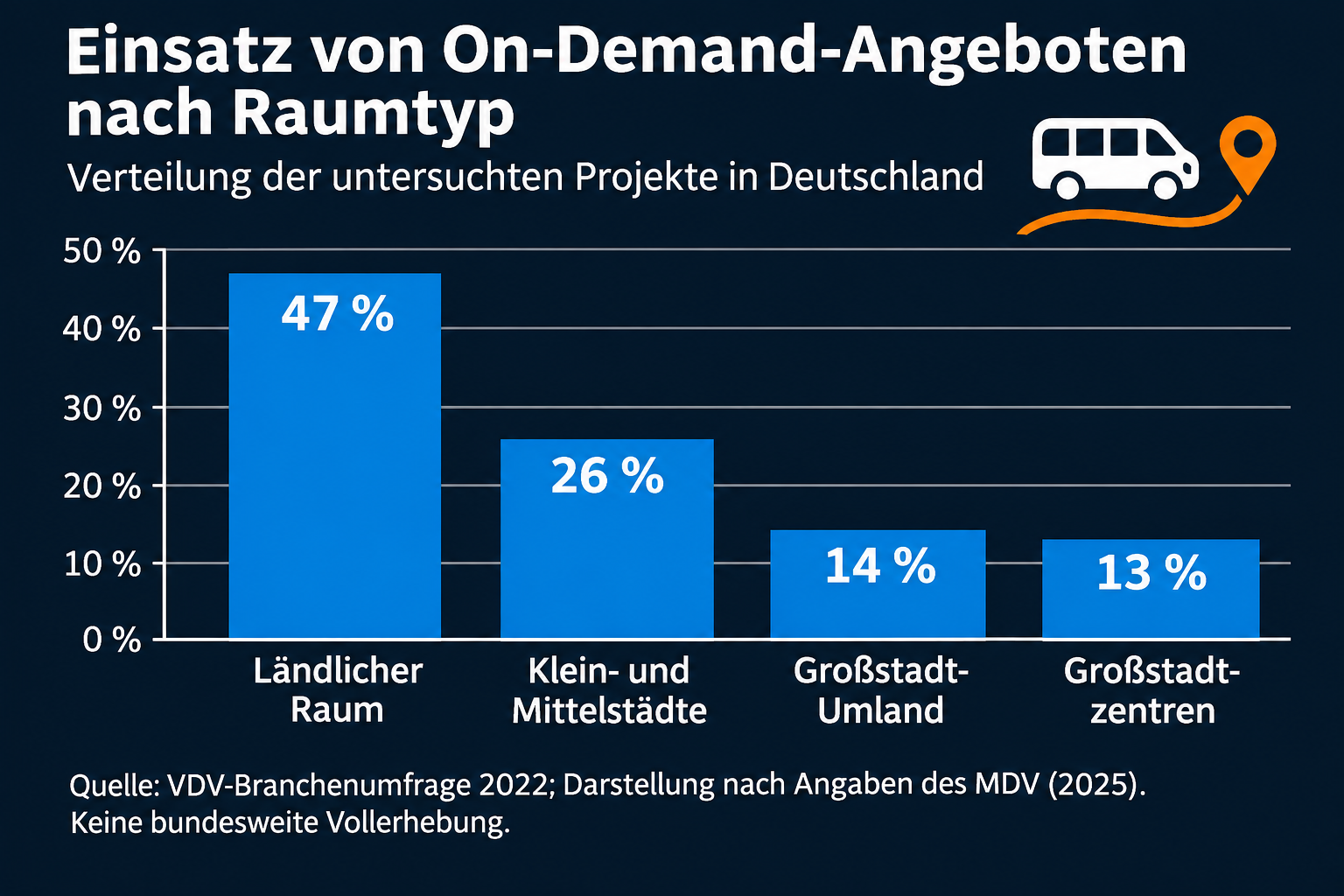
A 2022 study by the Association of German Transport Companies highlights just how important such services are for rural areas: 47 per cent of the on-demand services surveyed were in rural areas, 26 per cent in small and medium-sized towns, 14 per cent in the outskirts of major cities and 13 per cent in city centres.
On-demand buses run Monday to Friday from 5 am to 9 pm, Saturdays from 6 am to 9 pm and Sundays from 7 am to 9 pm. Bookings can be made via the MOOVME app or by telephone on 03425 8989 89, at the earliest seven days and at the latest 30 minutes before the journey begins. The call centre is open Monday to Thursday from 7 am to 5 pm and on Fridays from 7 am to 2 pm. Passengers wishing to change buses should specify the entire journey or their desired arrival time when booking. The standard MDV fare applies, including the Deutschlandticket and valid season tickets.
In addition, in Brandis, until 13 November, routes 640, 683 and 691 will not serve the Rathausgasse stop in the direction of Schulzentrum or Polenz. The alternative stop is Alter Friedhof. Further information is available at regionalbusleipzig.de.
Empfohlen auf LZ


So können Sie die Berichterstattung der Leipziger Zeitung unterstützen:





There is one comment