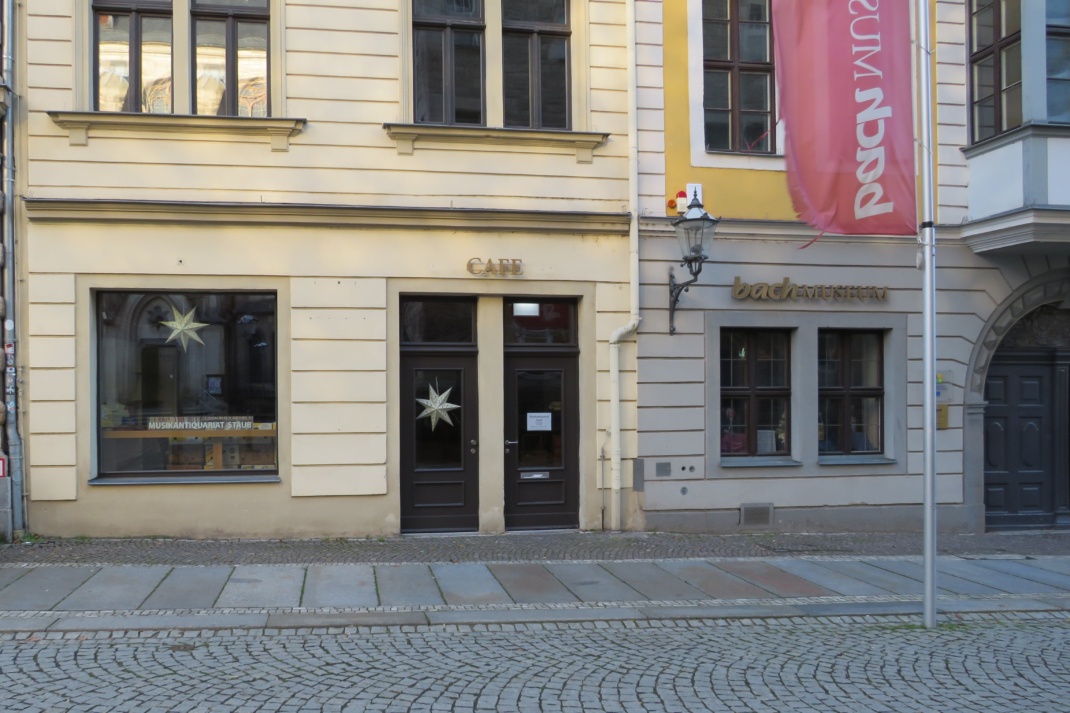
A whole generation of enthusiasts of antique music materials – by which I mean the younger generation – is probably unaware that, until 2007, there was a music antiquarian’s shop next to the Bach Museum on the Thomaskirchhof. Even we found it difficult to prove this, but one of our colleagues actually still had a photograph in his archives.
At the end of December, the Bach Archive in the Bose-Haus
closed, as did the music antiquarian’s shop in the neighbouring
building. The buildings were renovated, and following the
refurbishment and reopening, a café moved into the premises
formerly occupied by the antique shop. The signage above the shop
window and entrance also disappeared. 
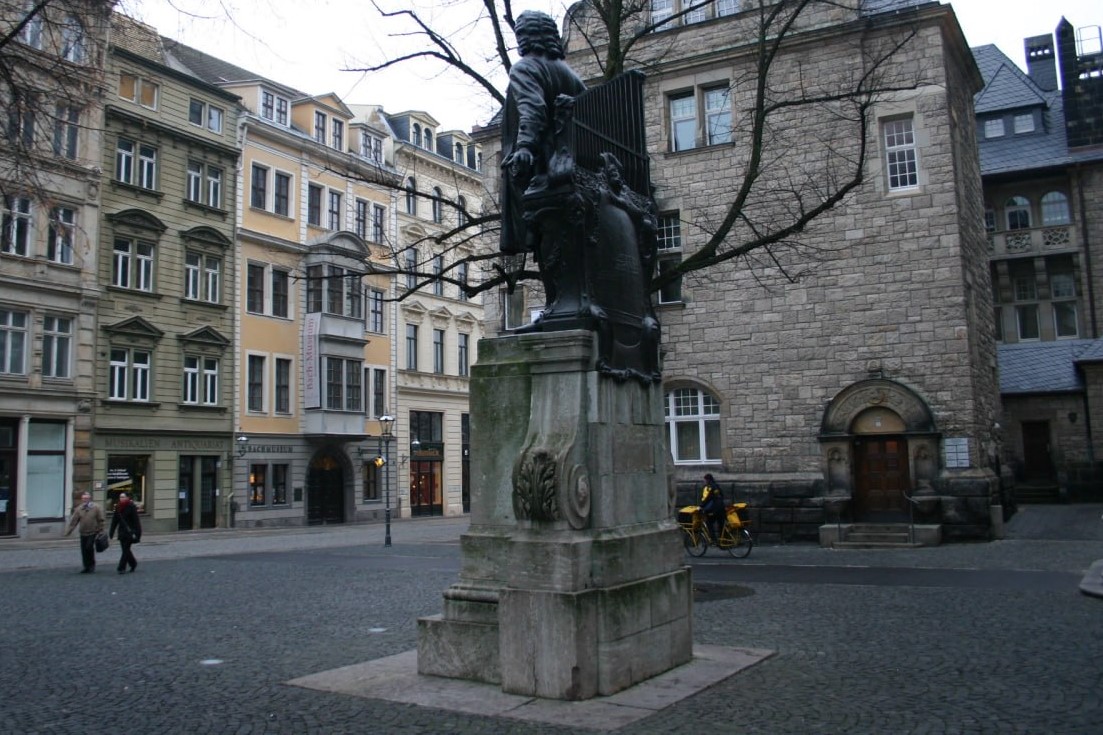
Nineteen years later, on 1 December 2026, a music antiquarian’s shop reopens at this historic site. Musicologist Alexander Staub is moving his business – which was previously located above the Oelsner music shop – to this location.
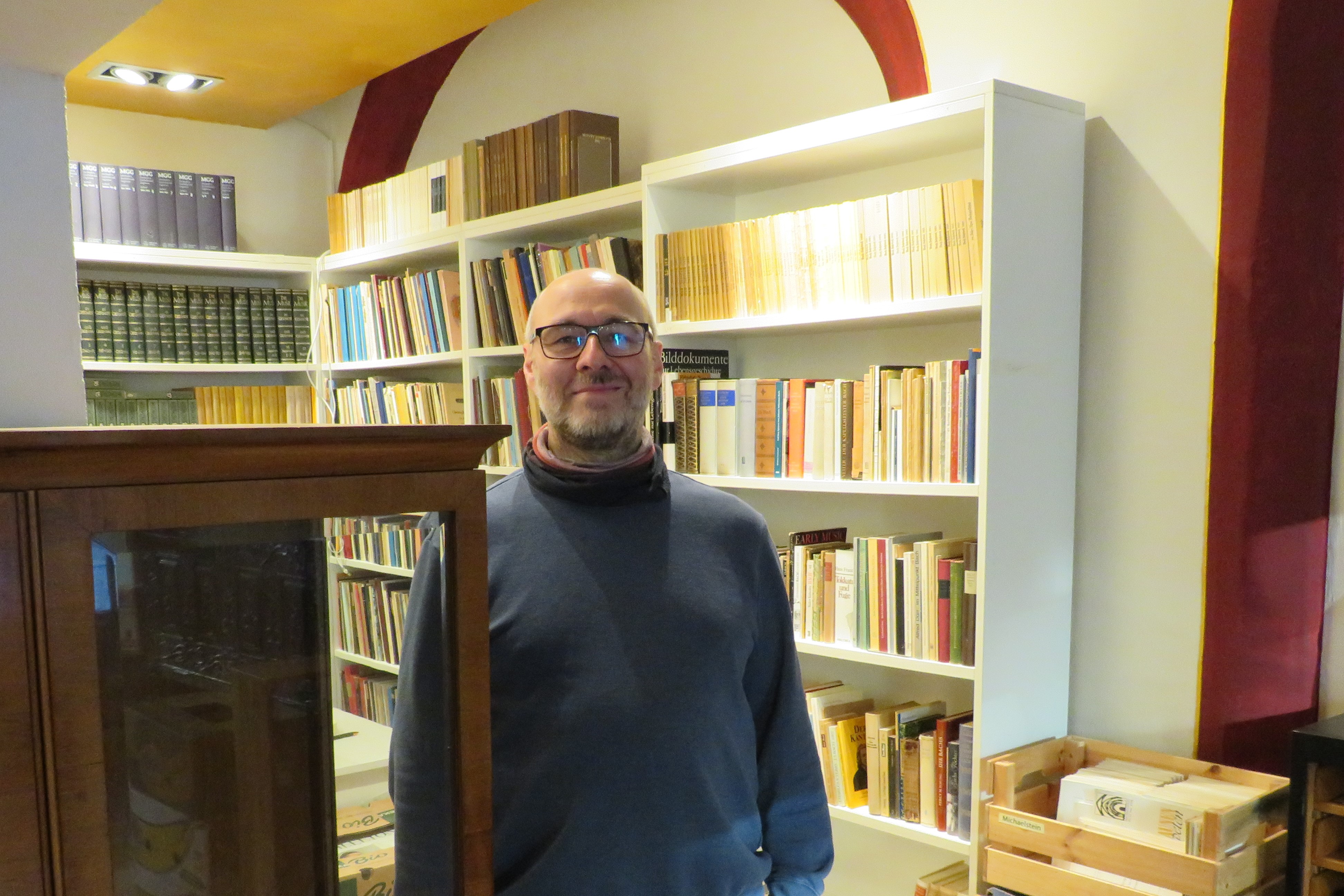
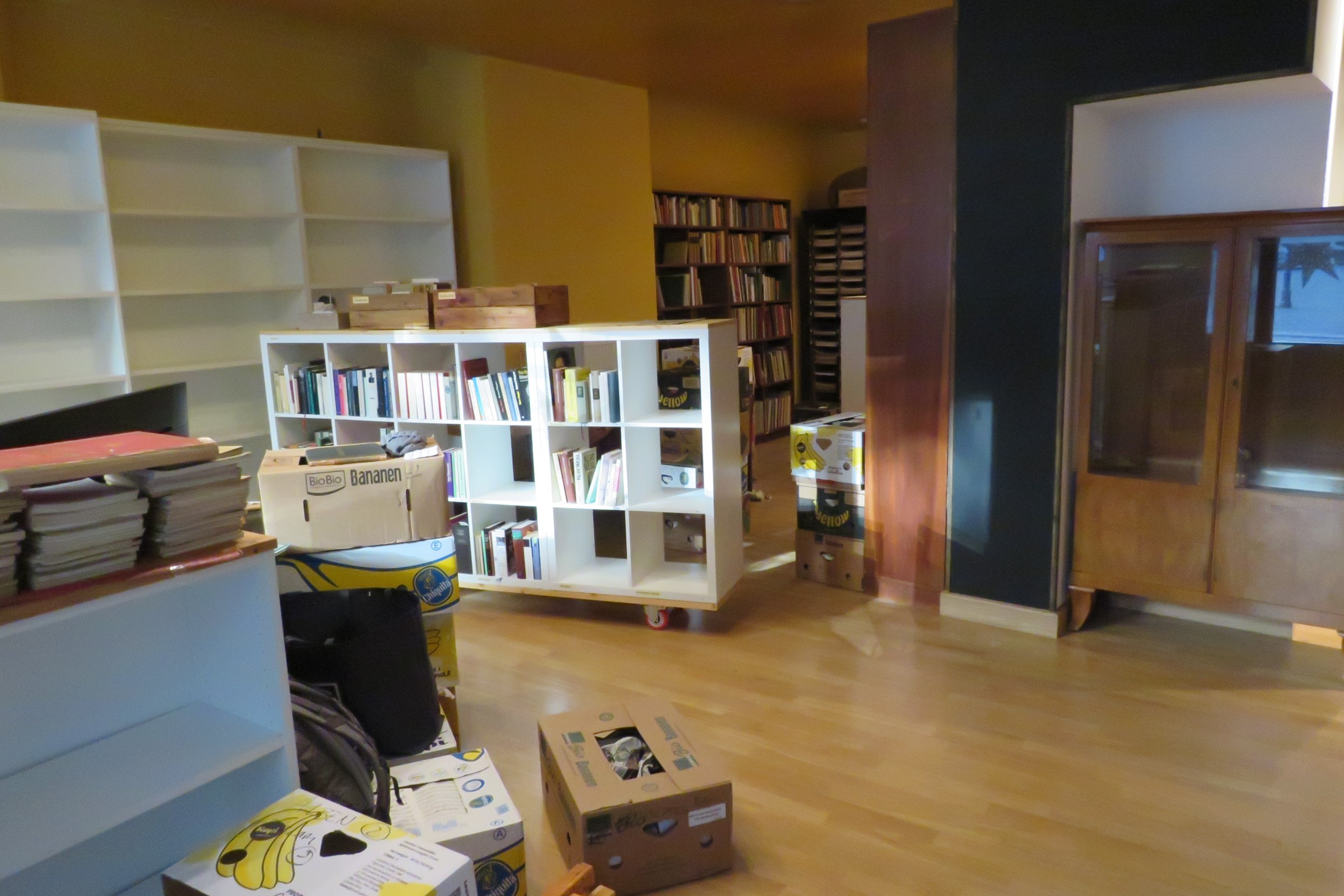
We caught up with Alexander Staub amidst the hustle and bustle of the move and asked him a few questions.
Mr Staub, what exactly is a music antiquarian’s shop? Do you deal in old sound recordings such as shellac records and the like?
We mainly stock sheet music – second-hand sheet music, for the most part – as well as older prints and rare items. The bulk of our stock is aimed at practising musicians, as well as students and collectors, of course. We also sell facsimiles, books on music, specialist texts, biographical works and anecdotal accounts. In summary, one could say that Staub’s music antiquarian’s shop stocks printed material on the subject of music.
What distinguishes old printed sheet music from more recent editions? Is it simply a matter of the price of second-hand items, or are there genuine differences?
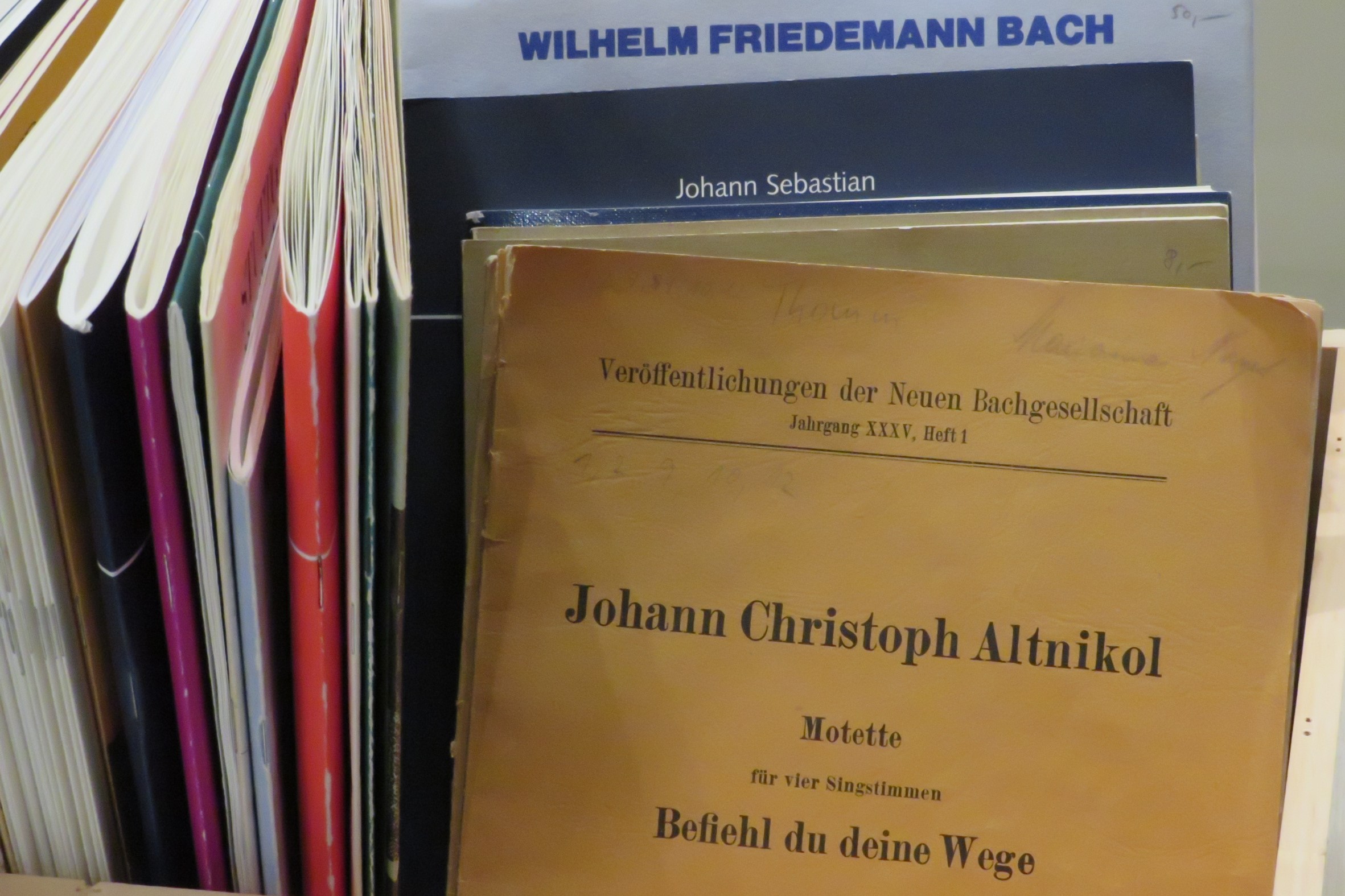
There are often different editions of individual pieces – from different publishers or different editors – who have approached the pieces in different ways. Sometimes pieces have been revised or editions corrected. The world of sheet music is truly very diverse, because older scores in particular – for example, those from the 19th century, when plate printing was still in use – were repeatedly reprinted later using different printing processes, which altered the appearance of the print. This is of interest to many musicians. In new editions, the page turns – that is, the points where you have to turn the page – are sometimes less conveniently placed than was perhaps the case in earlier editions. There are also titles that have never been reprinted, and you need an old edition to even verify the existence of this piece in this form. The production of sheet music, particularly in the 19th and early 20th centuries, was so prolific that one can constantly discover something new, as no library can hold a complete collection.
For many people, antique simply means old – what is the oldest work available for purchase at your shop?
In the hymn book section, there is a small area dedicated to Bibles. There’s a Bible from 1704 in there; otherwise, in the sheet music section, there’s quite a bit from the 19th century, but the bulk of it dates from the 20th century.
I should also mention that not everything is here in the shop. I also have an extensive online catalogue which you can browse through. If you can’t find what you’re looking for there either, there’s also a large warehouse where I can check. It’s always worth enquiring – a lot of items aren’t on display and haven’t yet been catalogued.
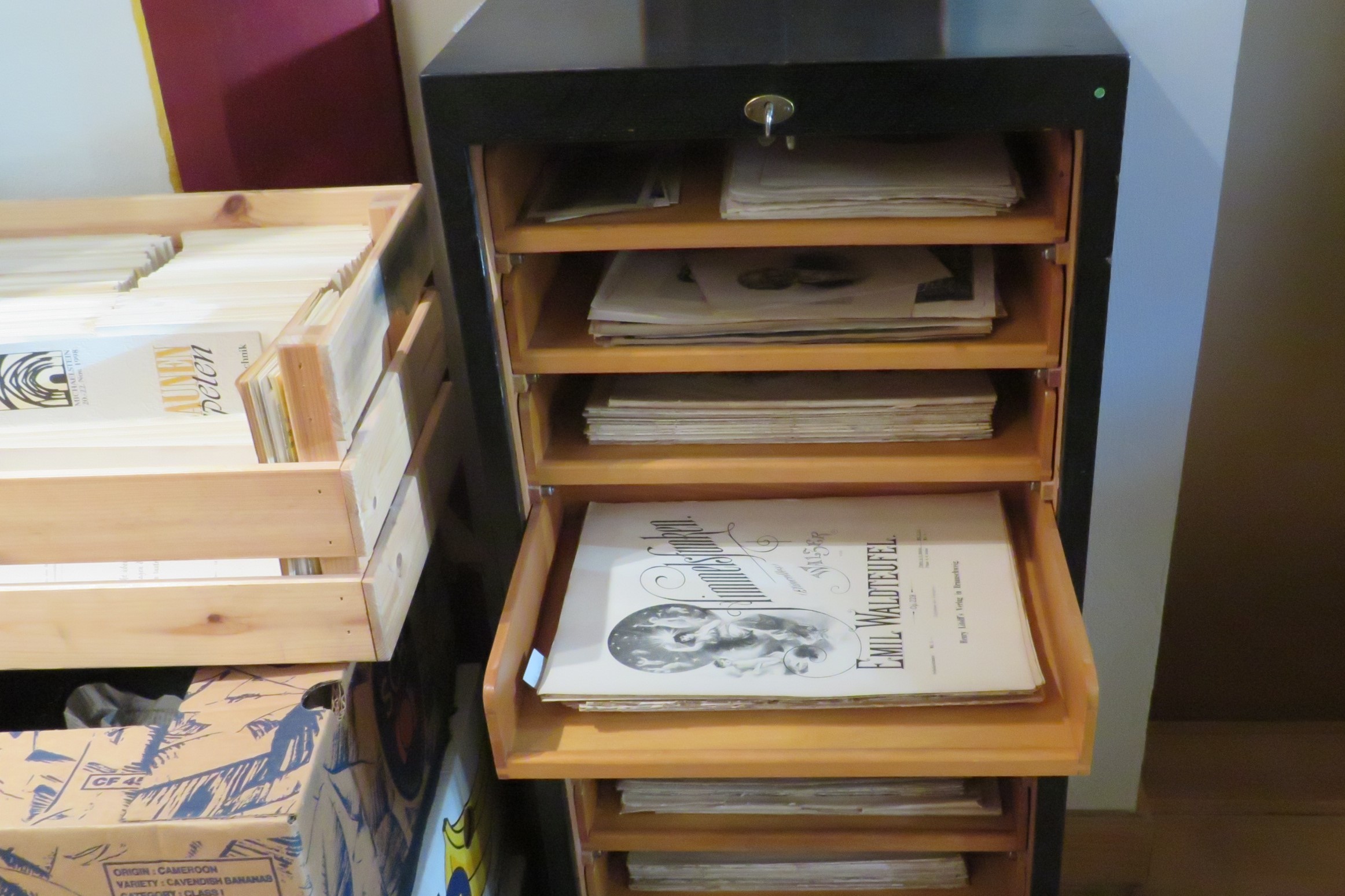
There’s still a great deal that’s tucked away somewhere on shelves, in boxes or elsewhere and hasn’t been catalogued. You might still find some treasures there. Do you also have sheet music for instruments that aren’t played very often these days, or for pieces with different instrumentation?
Yes, in the early music section or in the collections for keyboard instruments, you do come across such things. Similarly, four-hand piano playing used to be much more common; households usually had a piano and often two people who could play it. Who can play a Beethoven symphony for four hands these days? Of course, such editions of sheet music are available too. It never ceases to amaze me what sort of people come into the shop – for example, couples who are friends and say: ‘We often organise string quartet evenings together and are now looking for something we haven’t played before.’
That’s where a shop like this is brilliant; you can find plenty online, of course, but you do need to know what you’re looking for. Here, I organise the sheet music by instrument and ensemble. So, if I’m looking for something for a string quartet, I can go to the shelf and find a stack of sheet music for that ensemble. Then I browse through the material and am sure to come across editions I’d never otherwise find, simply because I’m not familiar with them. Providing an opportunity to browse is a key priority for this shop.
There used to be this sort of house music, for example with piano, violin and recorder – are there sheet music editions for that as well?
Such editions do exist, but it’s sometimes difficult to categorise them. Sometimes you have to look in two or three different sections because you can’t file them under a single heading.
I’m certainly interested in music, but I can neither read music nor play an instrument. So would I be completely out of place here?
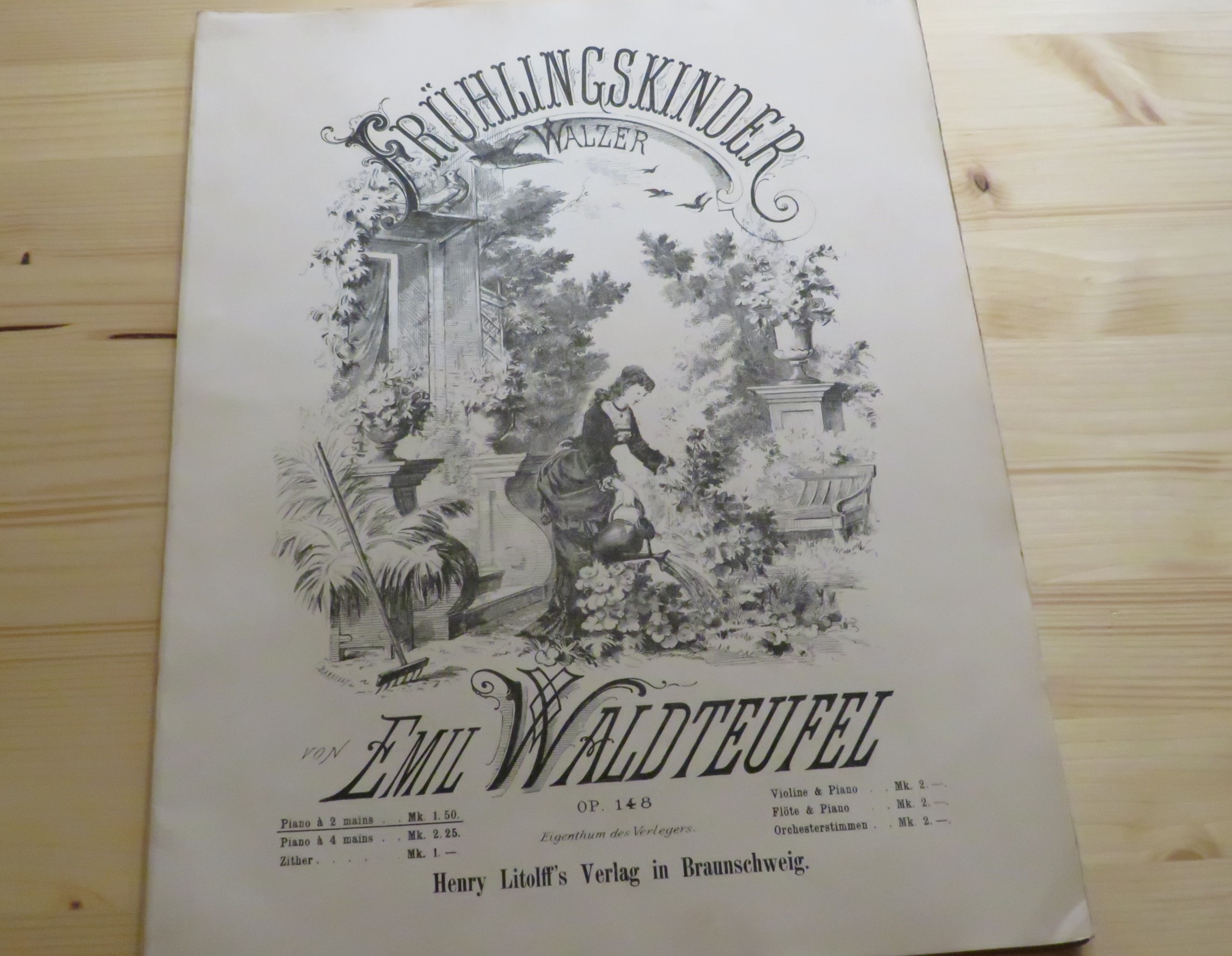
Not necessarily; people come in with all sorts of enquiries. Some are simply looking for a present, have no idea about music themselves, and are searching for something for someone who’s musically gifted. For example, there are these lovely colourful sheet music prints, with their brilliant title pages – two or three pages like that. I’d also like to start a small section, which I might call ‘Musical Memorabilia’. So, Mr So-and-so’s baton, a lovely metronome or a musical card game – a few things you could give as gifts. Or if someone says, ‘We don’t want to play music, but we’d like something to do with music.’ Some people might want to take a souvenir home with them. A poster to hang on the wall or a sheet of music to frame. These are simply lovely things – you don’t have to be a musician to appreciate them.
Now that you’re moving to the premises next to the Bach Museum and the Bach Archive, are you hoping that people interested in antique music materials will find you more easily?
I think this is the perfect location, especially as this used to be home to the last antique music shop – right here in these very premises. But it never moved back in after the renovation; I still remembered it from my student days. That’s why I was all the more delighted when I was asked if I could imagine moving my shop here. I didn’t have to think twice. I thought, firstly, the location is brilliant, and secondly, this is where the antique music shop used to be. It worked well back then, and in a way, it brings things full circle. You could say the antique music shop is coming home.
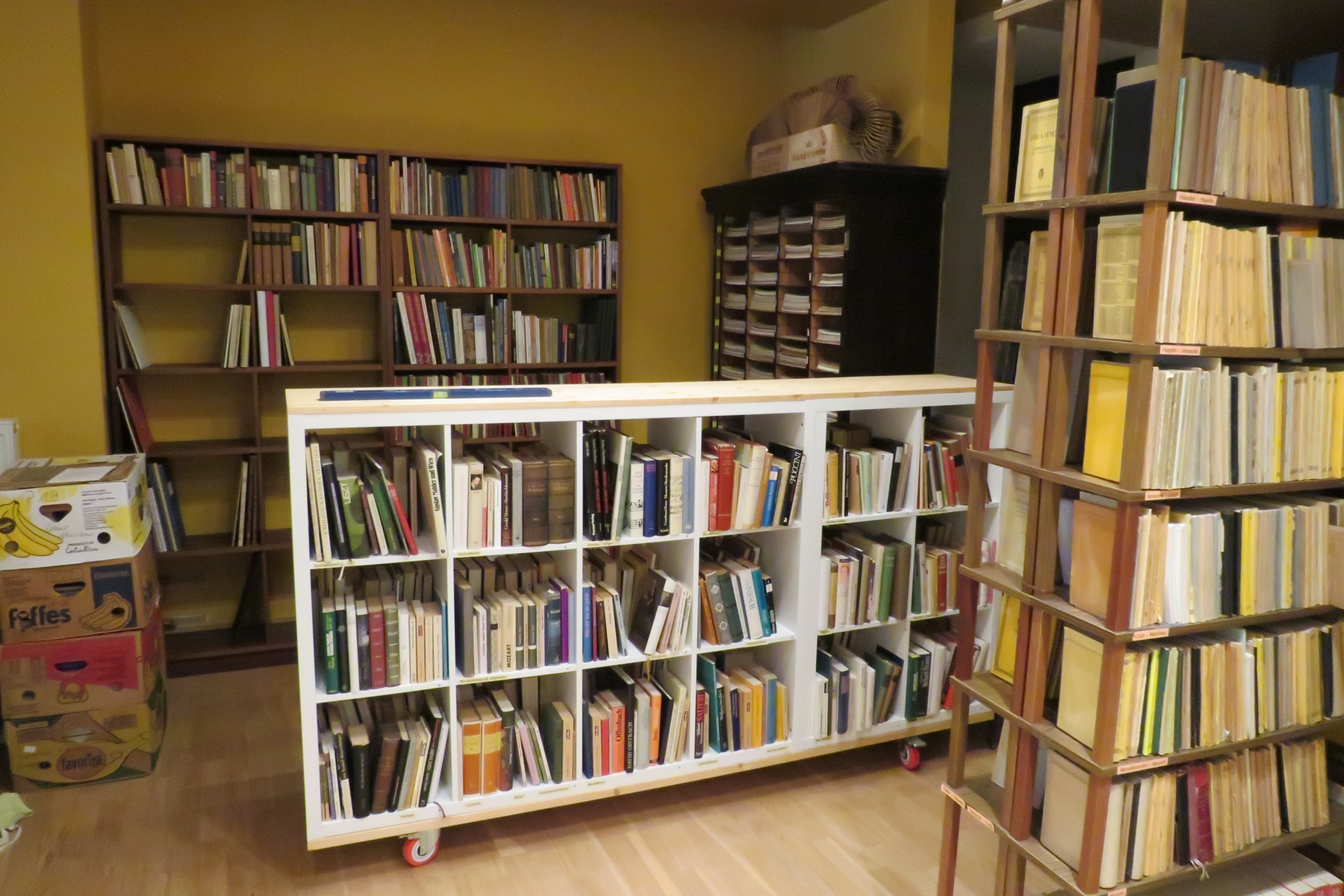
One more thing I must mention: this door here leads straight into the Bach Museum’s shop. We intend to keep it open as much as possible. We want to cross-pollinate our visitor experience, so to speak. We want to open up a space for people; we want them to see these two places as complementary. Sometimes someone might say to themselves: ‘I’ve had a browse here, so now I’ll have a look at the museum’ – or the other way round. That’s more or less our plan.
You probably won’t get rich running a music antiquarian’s shop – what motivates someone to run one?
Definitely the material itself. I’ve always ended up with books; in my family, it was always, ‘Here are some books – do you want them?’ At some point – about sixteen years ago – I started selling some privately. After doing that for a while and building up a side business from it – that was seven or eight years ago – I realised: everyone’s doing this, so you’ve got to specialise. As I’m a musicologist and music is closer to my heart than other subjects, I thought it would make sense to develop in that direction. My first purchases were musicological collections and estates from former lecturers, acquaintances or singers. That was, so to speak, the starting point where I realised that music-related items suited me and that they’re also lovely items for which there’s a market.
As a musicologist, you rarely have a permanent post; there are often only fixed-term projects. At the moment, I’m employed part-time at the library of the Leipzig University of Music; the music antiquarian’s shop has grown over the years and is increasingly becoming my main occupation. Last year, I opened the shop at Oelsner and heard time and again from both locals and tourists that there used to be a music antiquarian’s shop on Thomaskirchhof and that it was a shame it was no longer there. That has encouraged me to say now: I’m taking the risk of moving to a new, larger – and also more expensive – premises in a superb location. If it doesn’t work here, it won’t work anywhere. In Leipzig, in this very spot – I’m confident.
Mr Staub, you still have a lot to do; the countdown to the opening on 1 December is on. Thank you for the interview, and I wish you every success at the new premises.
The Staub music antiquarian’s shop opens on 1 December 2026 at Thomaskirchhof 15/16, right next to the Bach Archive. Opening hours are Tue–Fri 11am–5pm and Sat 11am–1pm. Further information can be found on the website www.musikantiquariat-staub.de
.
So können Sie die Berichterstattung der Leipziger Zeitung unterstützen:





There is one comment