Dieser Artikel ist auch in deutscher Sprache verfügbar: Zum deutschen Artikel.
The ‘Gutes Leben Leipzig’ festival will take place for the second time from 12 to 20 September 2026. What sort of festival is it, when was the first one, and what can the people of Leipzig expect there? These are questions that many people who missed the first festival in 2025 are likely to be asking themselves.
The festival’s theme is ‘What does a good life in Leipzig mean – today and in the future?’ and it is a joint initiative of the Economy for the Common Good Central Germany e.V. and the Forum for Sustainable Leipzig.
We wanted to find out more; a quick look at the website wasn’t enough for us, so we asked the festival’s project manager, Viktoriya Machulskaya, to arrange an interview. It all worked out, and on 19 August we met with Viktoriya Machulskaya and Anna Heil for a chat. Anna Heil works at the Forum Nachhaltiges Leipzig and had already helped organize the 2025 festival. We agreed to address each other informally as ‘Du’ during the conversation.
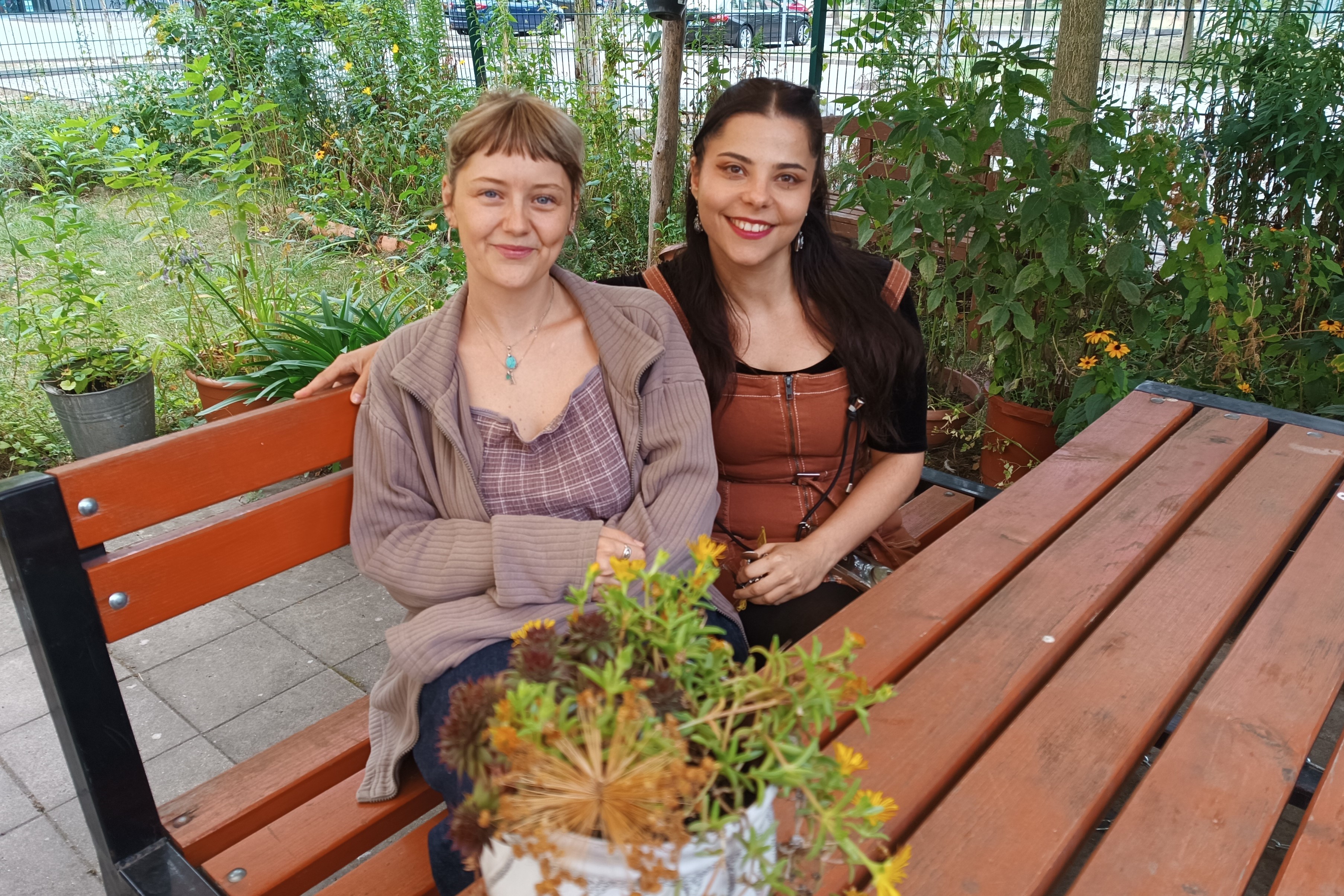
’s interviewees Anna Heil and Viktoriya Machulskaya. Photo: Thomas Köhler
Viktoriya and Anna, it’s great that we’ve managed to meet today. The ‘Gutes Leben Leipzig’ festival – what’s the background to it and what motivates you?
Viktoriya: I’ll pass the question on to Anna straight away. She’s the one who helped organize the festival last year. To briefly describe the core idea behind the festival: We want to highlight just how diverse people’s ideas of a good life in Leipzig are, what already exists in the city today that contributes to this, and to reflect together on what’s needed for a good life in the future. But Anna can tell you a bit more about this, as she helped organise the festival last year.
Anna: The idea isn’t for everyone to say how well off they are. We want people to tell us what they need for a good life, or what a good life means to them. That can vary completely from person to person; it’s a very open-ended, vague concept. That’s what we want to find out with the festival: what motivates people, and what constitutes a good life for them? Conversely, we want to show all the great things that already exist in Leipzig which contribute to a good life.
You’re also conducting a survey for this – what are you asking people?
Viktoriya: We’re mainly focusing on the following questions: What does a good life in Leipzig mean to you personally? What might a good life look like? What would you like to see? Could you imagine getting involved?
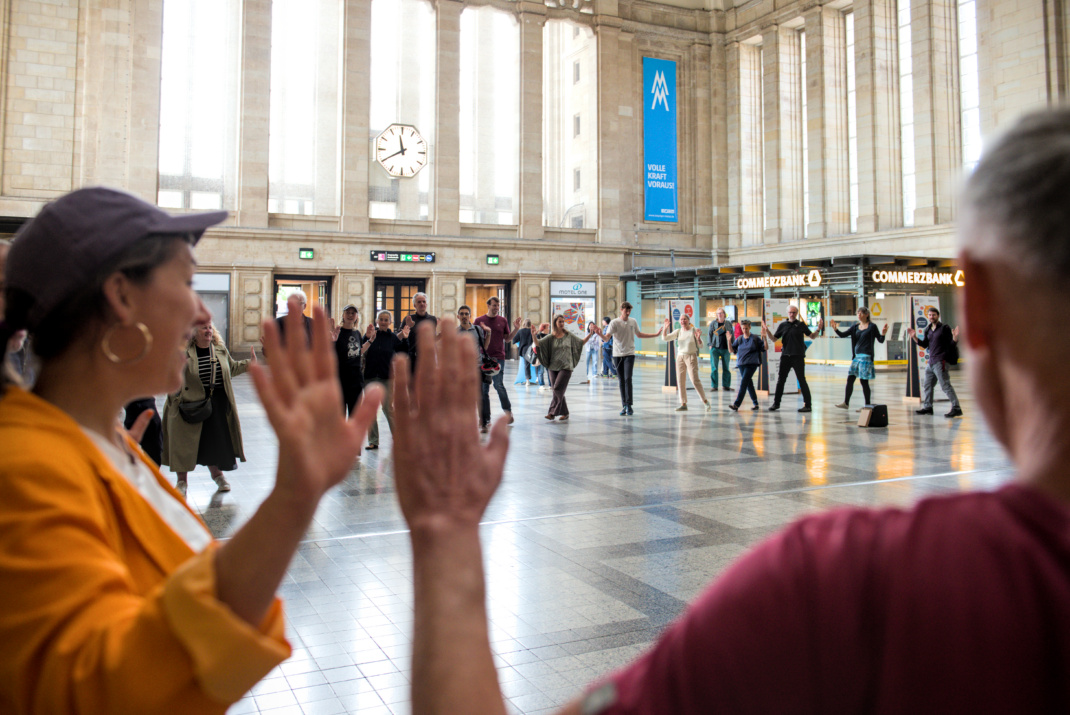
We’ll be presenting the interim results at our launch event on 11 September from 10.30 am in the Osthalle at Leipzig Central Station in the form of an exhibition. There, you can discover the results, discuss them further and, of course, take part in the survey yourself. We’re, of course, inviting everyone in Leipzig to come along.
How long will this survey run?
Viktoriya: The survey has been running since mid-June and will continue until the end of the festival. We’ve also arranged for a student research assistant from the University of Leipzig to write an academic paper on the subject and carry out a scholarly analysis of the findings.
How is the festival organized?
Viktoriya: The festival is organized on a decentralized basis and takes place at many different venues across the city. Leipzig-based initiatives, associations, organizations and other stakeholders are organizing their own events and activities, which come together under the festival’s umbrella. These range from workshops and walks, through talks and discussions, to hands-on activities, cultural events and advisory services. It’s already possible to view the festival programme online, and we’re currently finalizing the print run of the programme.
Even though the name ‘Gutes Leben Leipzig’ sounds apolitical – after all, people often have conflicting ideas about what constitutes a good life. Last year, the focus was very much on ecology and sustainability. Many people would say it was a ‘green’ festival. So what is it really?
Anna: The festival is a collaboration between Gemeinwohl-Ökonomie Mitteldeutschland e.V. and Forum Nachhaltiges Leipzig, the latter of which I’m part of. This gave us a foundation, as we had a whole host of contacts amongst green and ecological activists, who were naturally on board right from the start and took part. However, we deliberately want to open up the festival so that it doesn’t just take place within this ‘green bubble’. A good life is, after all, something much broader; as I said, it can mean something different to everyone. This year, for example, we’ve tried to focus a little more on inclusion. We offered workshops and tried to make these activities more inclusive. Naturally, we’d like to build on that further every year.
The festival is only taking place for the second time, so it still needs to establish itself. A good life also encompasses many other topics – I’m thinking of health, both physical and mental. Do you want to expand into such topics as well, and perhaps bring on board further partners, such as church organizations? Anna:
We’ll see if we choose a mini-theme each year; that’s not quite clear yet. In any case, we definitely want to apply what we’ve learnt each year to the following year and keep expanding the whole thing.
The opening event is back at the main station, but are all the other events spread across the city?
Viktoriya: The festival itself spans the complete city; everything is quite spread out. The kick-off event is what’s meant to bring the entire thing together a bit. There, you can get a first glimpse of what’s on offer and meet some of the first organizers who’ll be taking part in the festival.
Anna: We’ll also have a ‘Market of Opportunities’ there, where various organizers will be present. That means you can already speak to the organizers at the opening event, see what their events are about, and perhaps even catch the first introductions to the organizers. The European Mobility Week will probably be there with a stand as well. As it’s taking place at the same time – which we think is great – we can also draw attention to each other. By the way, we’ll be at the Reallabor throughout the festival – that’ll be our base, so to speak, should anyone have any questions. Our printed programme will also be available there.
You’ve also launched a crowdfunding campaign – would you like to say a few words about that?
Viktoriya: Exactly, it’s been running since 17 August. Through the crowdfunding, we’re aiming to raise additional funds for the festival. A key focus is making the festival and its events more accessible and further breaking down barriers. This includes, for example, better labelling events in terms of their accessibility and supporting organizers in making their offerings as inclusive as possible. At the same time, the support helps us to raise the festival’s profile and develop it further. Of course, this also involves financial costs that we have to cover.
Anna: If I may add one more thing, the festival isn’t yet known to everyone in Leipzig, of course – we still need to build that awareness. We definitely want the festival to be open to everyone, regardless of age or background. That’s how we want it to be perceived, and we’d be delighted if that message were passed on.
Let’s take that as our closing remark – thank you for the interview. Good luck with the festival – we’ll see you there.
So können Sie die Berichterstattung der Leipziger Zeitung unterstützen:



There is one comment