Dieser Artikel ist auch in deutscher Sprache verfügbar: Zum deutschen Artikel.
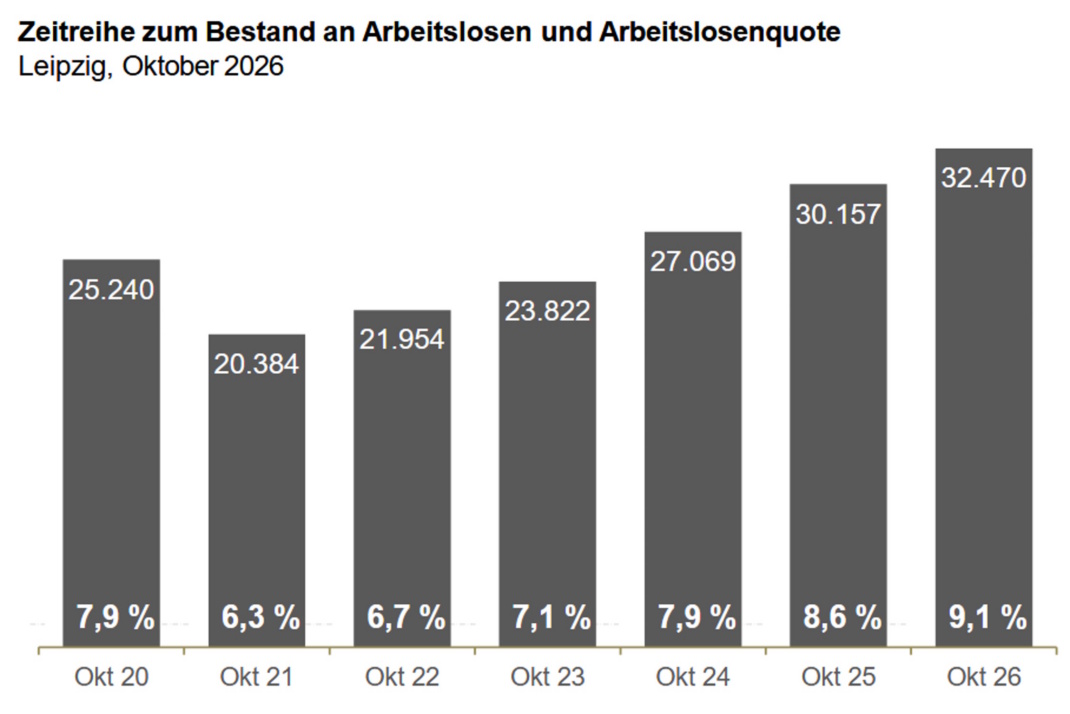
The month is over. But for the time being, not much is really happening on the Leipzig labour market, even though unemployment in the Leipzig Employment Agency’s district fell slightly in October 2026. 32,470 people were registered as unemployed, 346 fewer (-1 per cent) than in September, but 2,313 more (8 per cent) than a year ago. The unemployment rate stood at 9.1 per cent, 0.1 percentage points below the previous month’s level. A year ago, it stood at 8.6 per cent, according to the Leipzig Employment Agency.
Unemployment in Leipzig fell slightly in October. The unemployment rate now stands at 9.1 per cent, which, in absolute terms, is no cause for complacency. And another trend is becoming increasingly apparent: employment subject to social insurance contributions continues to fall, whilst long-term unemployment is also rising significantly compared with the previous year. At the same time, companies are still recruiting staff, albeit slightly less so recently than in September.
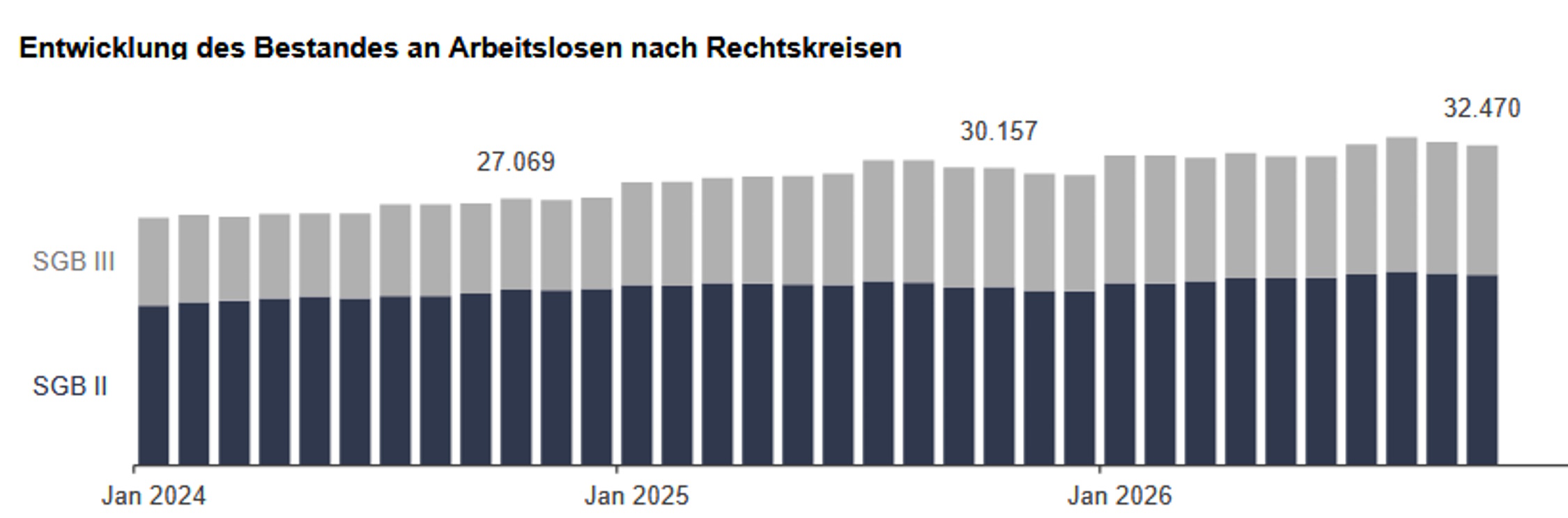
But significantly fewer than two years ago. Even the timeline of registered unemployment shows how the hope that economic growth would finally pick up again in 2026 was dashed as early as spring. This was no coincidence.
For that was when the consequences of the Iran war triggered by Donald Trump hit energy prices with full force, causing rapid inflation in employees’ wallets and, amongst businesses, justified concerns that it would soon no longer be viable to stay in business. As a result, more and more companies are hesitating to take on new staff or are choosing to withdraw their job vacancies from the Jobcentre.
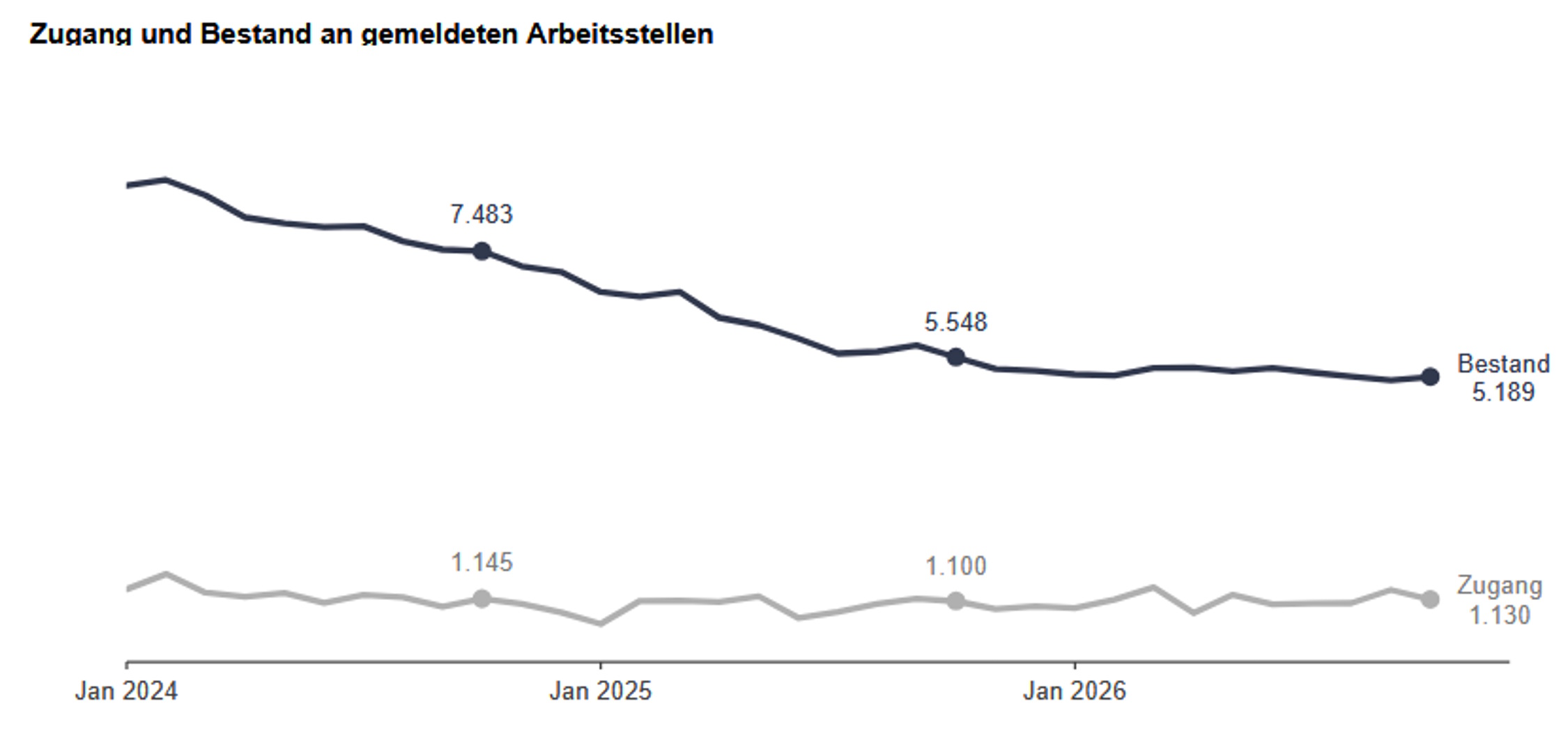
And in doing so, they are reinforcing a trend that has now been ongoing for years. Whilst the Job Centre emphasises that companies are still looking for staff, the number of vacancies has fallen from just under 10,000 to 5,189 in October. The monthly increase in vacancies is roughly balanced by the number of vacancies being filled.
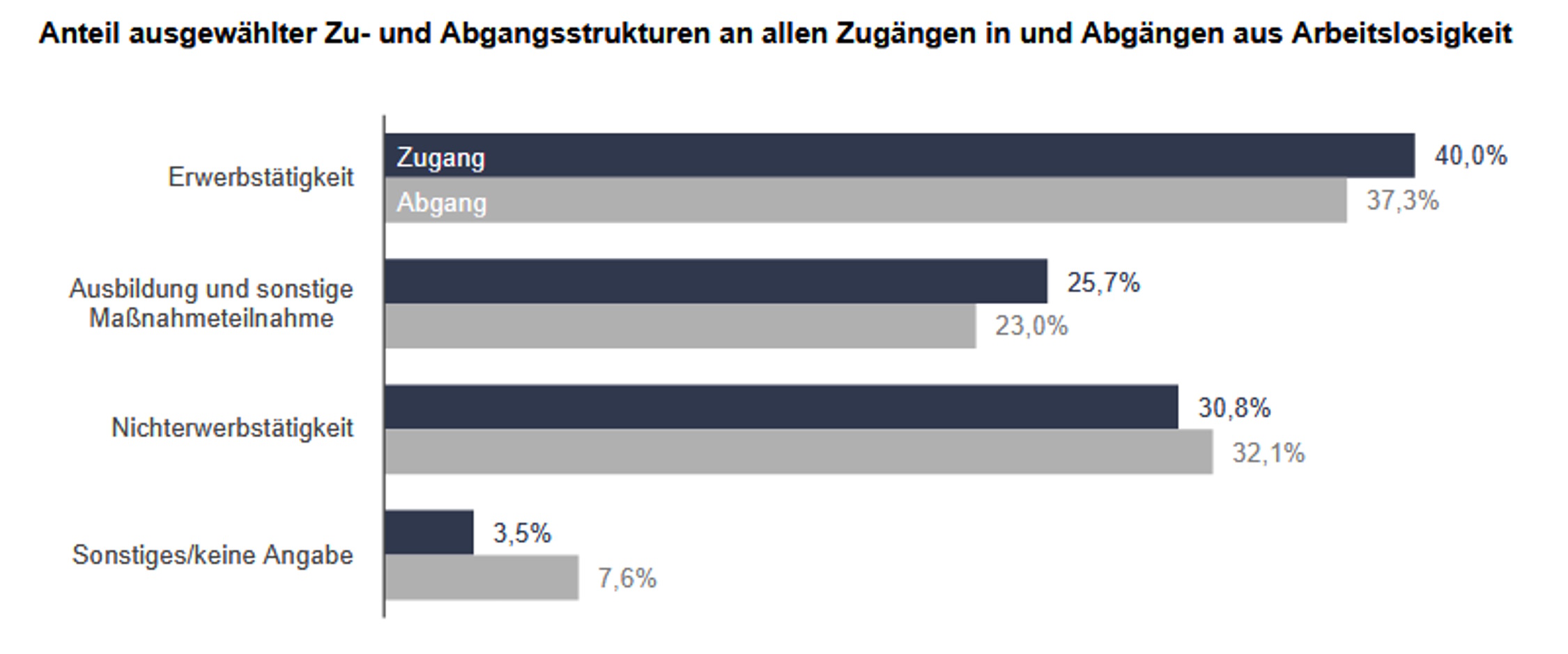
And what does this mean for the number of unemployed? Why, then, are the figures falling? In any case, they are not falling because people are returning in large numbers to well-paid full-time jobs. The fall in the unemployment figure is primarily due to one very simple reason, which in officialese is called ‘non-employment’. In most cases, this means receiving a pension or being retired. Meanwhile, the figures under the ‘new entrants’ category remain low: young people are finding it increasingly difficult to break into the world of work.
And so, there were 2,125 people – mainly young people – who moved from non-employment into the care of the job centre, compared with 2,335 – mainly older people – who moved from this ‘friendly’ care back into non-employment. The difference – as anyone can work out for themselves – accounts for the lion’s share of the measured fall in unemployment. This means that, behind the unemployment figures, the number of people in employment in Leipzig has been shrinking for a good two years, even though the city is growing.
“This makes it all the more important to open up new career prospects for people through targeted training and to support companies in equipping their staff to meet changing requirements. After all, training is not only key to returning to work, but also to securing long-term employment,” says Steffen Leonhardi, Chairman of the Management Board of the Leipzig Employment Agency.
Failed economic policy
This sounds like a voice crying in the wilderness, because the economic framework conditions are not changing. The people of Leipzig, too, are paying – in several ways at once – the price for the wars instigated by people like Donald Trump and Vladimir Putin. It is primarily the oil companies that are reaping the profits from energy prices that remain high. Calls for a ‘windfall tax’ fall on deaf ears.
And on top of that: the federal government is trying to get the country back on its feet with completely ineffective measures of cutbacks and downsizing. Measures which, in the end, will only increase the burden on workers, businesses and jobseekers. For they ensure that even less money flows into the economic cycles that keep the German economy going. That, ultimately, even less is invested and the public sector fails to act as an engine of economic growth.
In this context, the fact that unemployment is not really falling is merely an indicator of economic and fiscal policies in the country that have gone completely off the rails.
The Leipzig labour market in figures
Last month, a total of 6,897 people registered as unemployed. Of these, 2,757 came directly from employment. 7,265 people came off the unemployment register, of whom 2,713 took up employment.
Under the SGB III scheme (Employment Agency), unemployment stood at 13,144 people (225 fewer than the previous month, but 1,124 more than a year ago). Under the SGB II scheme (Jobcentre), 19,326 unemployed people were registered (121 fewer than in the previous month, but 1,189 more than a year ago). The basic income support authorities (Jobcentres) provided support to 60 per cent of all unemployed people.
In the basic income support scheme (Jobcentre), the number of benefit households fell by 859 (a decrease of 3 per cent) compared with the previous year, to a total of 29,654.
During the reporting month, a total of 37,208 people of working age who were entitled to basic income support were supported, which was 1,110 fewer (-3 per cent) than a year ago.
Companies are still looking for staff: 1,130 new vacancies were reported in October (180 fewer than in the previous month, but 30 more than a year ago). Most vacancies are currently in the sectors of other business services, professional, scientific and technical services, construction, health and social care, retail, maintenance and repair of motor vehicles, and manufacturing. This means that there are currently 5,189 vacancies on the Employment Agency’s register.
So können Sie die Berichterstattung der Leipziger Zeitung unterstützen:



There is one comment