Dieser Artikel ist auch in deutscher Sprache verfügbar: Zum deutschen Artikel.
The mayoral election campaign in Leipzig is slowly getting under way; the first election forums have already taken place, and the candidates are gradually warming up at their own events. On Monday 16 November, for example, the first public forum featuring Wolfram Günther took place. Entitled ‘Leipzig, have your say!’, the event at the naTo was intended to discuss whether civic engagement and culture in Leipzig still have the conditions they need.
That sounds exciting, especially as the Green Party’s mayoral
candidate had already come across as very approachable to
participants during the ‘pub chat’ (Alan,
forgive me, but the Gallo Negro is a restaurant). 
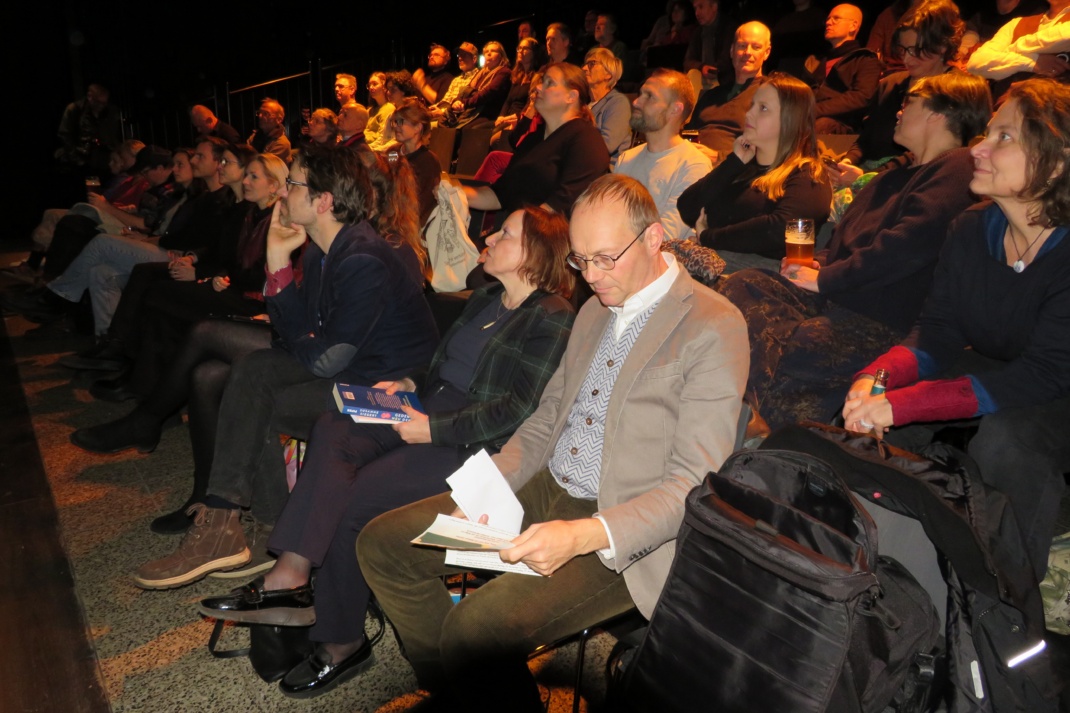
It was due to start at 7.00 pm; half an hour beforehand, the hall was already well filled, with a few people still standing outside, and we met Wolfram Günther and simply asked him what he was expecting.
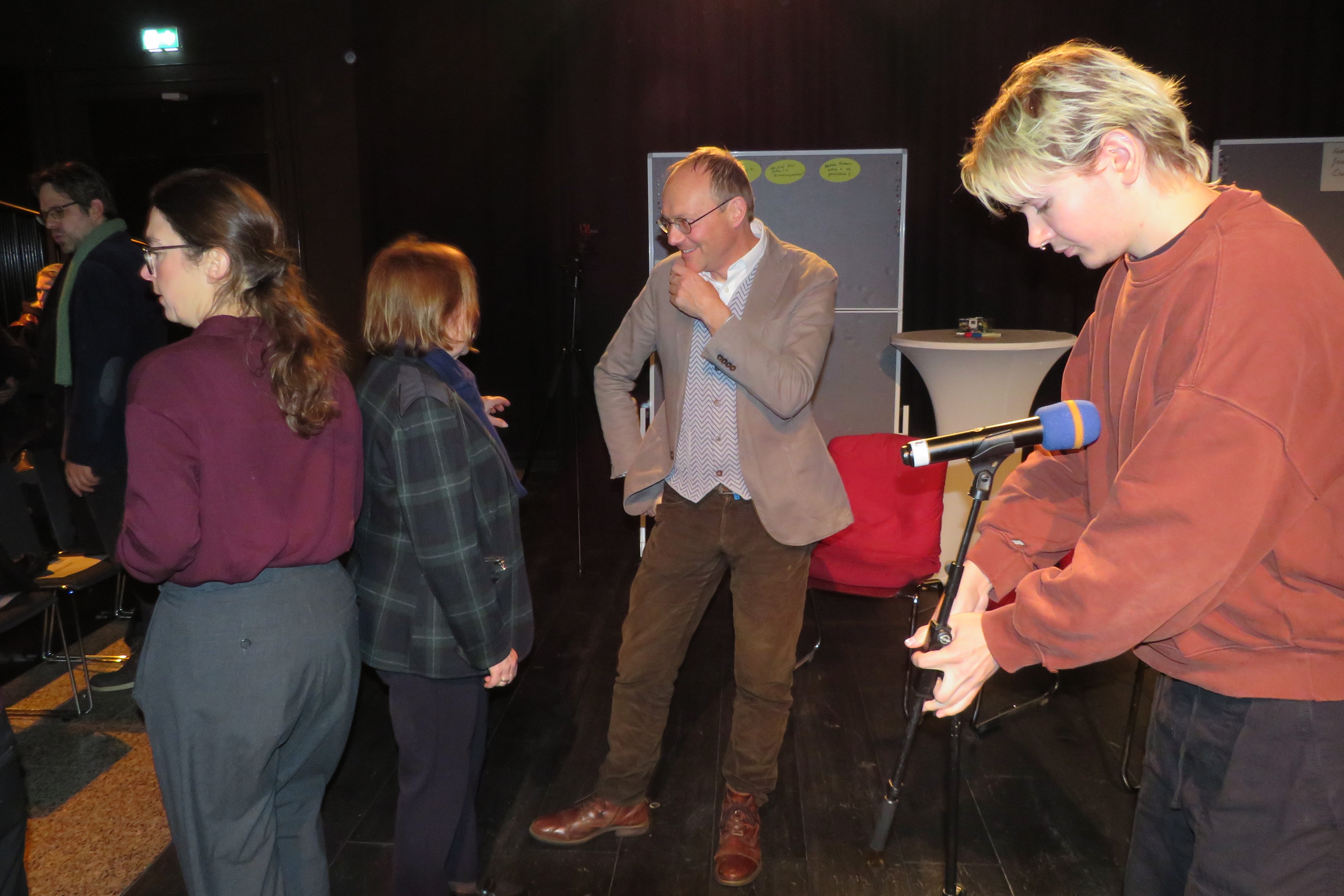
As far as I know, tonight’s event is about culture. What’s on the agenda?
Yes, tonight we’ll be discussing the topics of culture and civic engagement in this city with active members of the community and people from Leipzig in general. The background to this is that I don’t actually have a fully formed election manifesto that I’m presenting from the outset. I’ve said that I want to discuss the issues that matter to the city with the people who live here, and that should then be reflected in the manifesto afterwards.
So the election manifesto is a ‘work in progress’?
That’s right – it’s not just a ‘work in progress’ right now; to be honest, it never really stops. After all, that’s precisely why I’m standing for election – to say that a Lord Mayor must remain in dialogue with the people affected by issues in this city. It’s not a one-man show. What’s important is that people’s views are taken on board. When the time comes to make a decision, you simply have to implement what was discussed beforehand.
You’re organizing several events on different topics – three to start with. Is it starting to feel a bit tiring now?
Oh no, I wouldn’t call it tiring. The city is diverse, the topics are diverse; it’s more a case of sorting through them. We could have discussed many more topics than just those in these three forums. We’ve had to limit ourselves quite a bit, but we’re already in dialogue with so many people anyway. I’m actually quite keen on it; this exchange is really enjoyable.
So, you’re up for the election campaign – you’ve put yourself forward to win?
Yes, I want to win, but I also want to win in exactly this style and carry on that way. This sort of thing should never stop – getting together in formats like this and having a proper chat.
Thanks for the chat; perhaps we’ll speak again after the event.
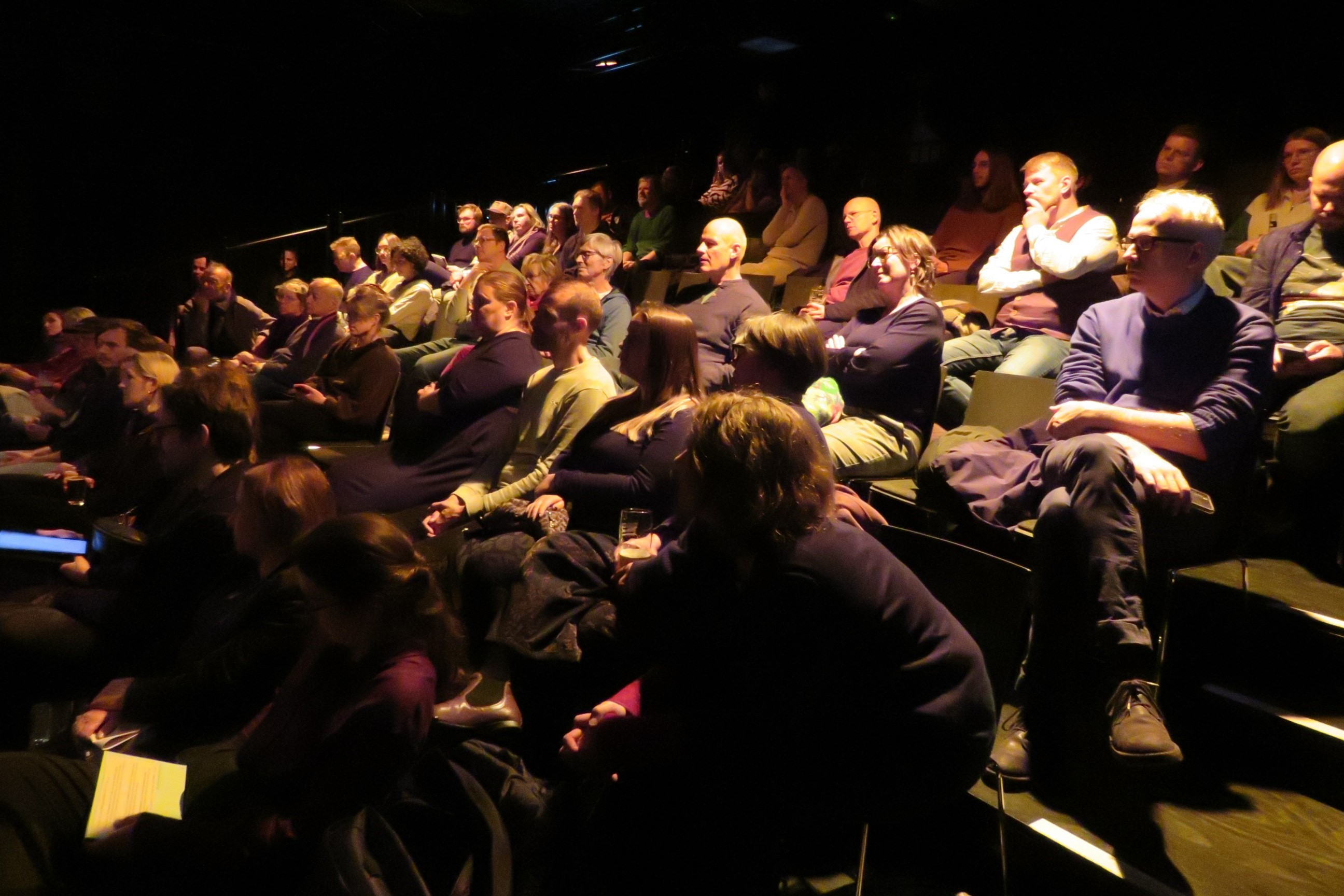
It was approaching 7.00 pm, and the hall was filling up more and more. We met City Councillor Dr Tobias Peter in the crowd and asked him some questions too.
Tobias, what is your district association doing to support your candidate?
We’re doing quite a lot, including these public forums, because our approach is that the manifesto Wolfram is running on in the mayoral election shouldn’t be drawn up at a desk or in a quiet back room. It should be developed through dialogue with the public, which is why three events are taking place today. Wolfram is someone who is all about engaging with the public.
One event in the south, the second in the east and the third in the west – why not in Grünau?
That might well happen; our approach is, after all, to take the whole city into account.
The event
Claudia Maicher chaired the forum and, as expected, it began with remarks from Wolfram Günther, who – in a refreshingly brief seven-and-a-half minutes – outlined his career and then explained why the topics of culture and civic engagement are important to him. These three minutes can be seen in the video.
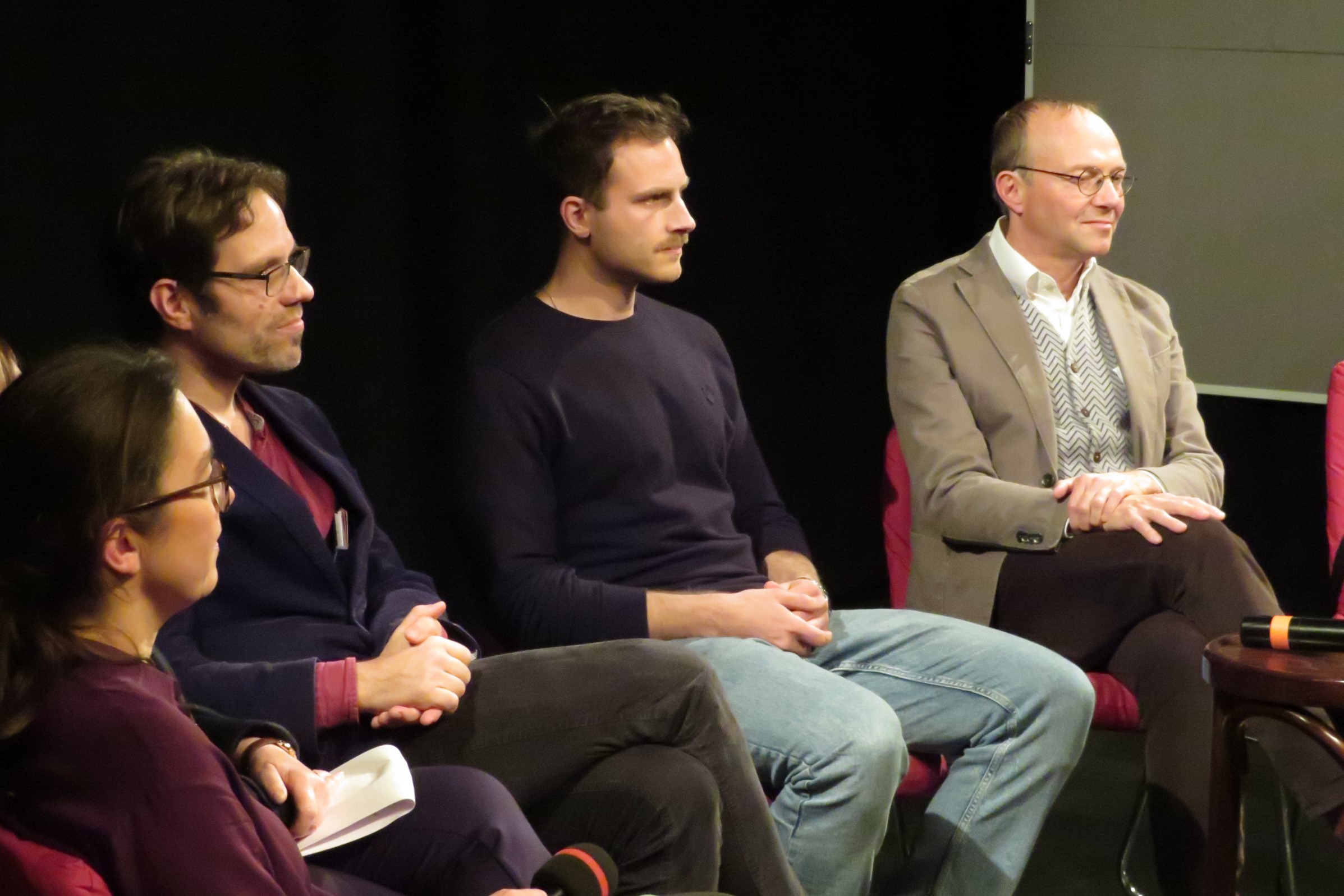
Afterwards, representatives from various institutions, associations, and initiatives took the floor. Anne-Cathrin Lessel from Lofft spoke on the topic of ‘freiräume’ (spaces of freedom), Tilman Löser presented the ‘Klänge der Hoffnung’ (Sounds of Hope) project, Susanne Kucharski-Huniat spoke on the culture of remembrance, Leon Sibila from the Volunteer Agency elaborated on the challenges of voluntary work, and Maxi Rauch spoke about the “The Opposite of Vacancy” project. These were comprehensive and essential presentations; unfortunately, given the limited space of an article, it is not possible to go into them in detail.
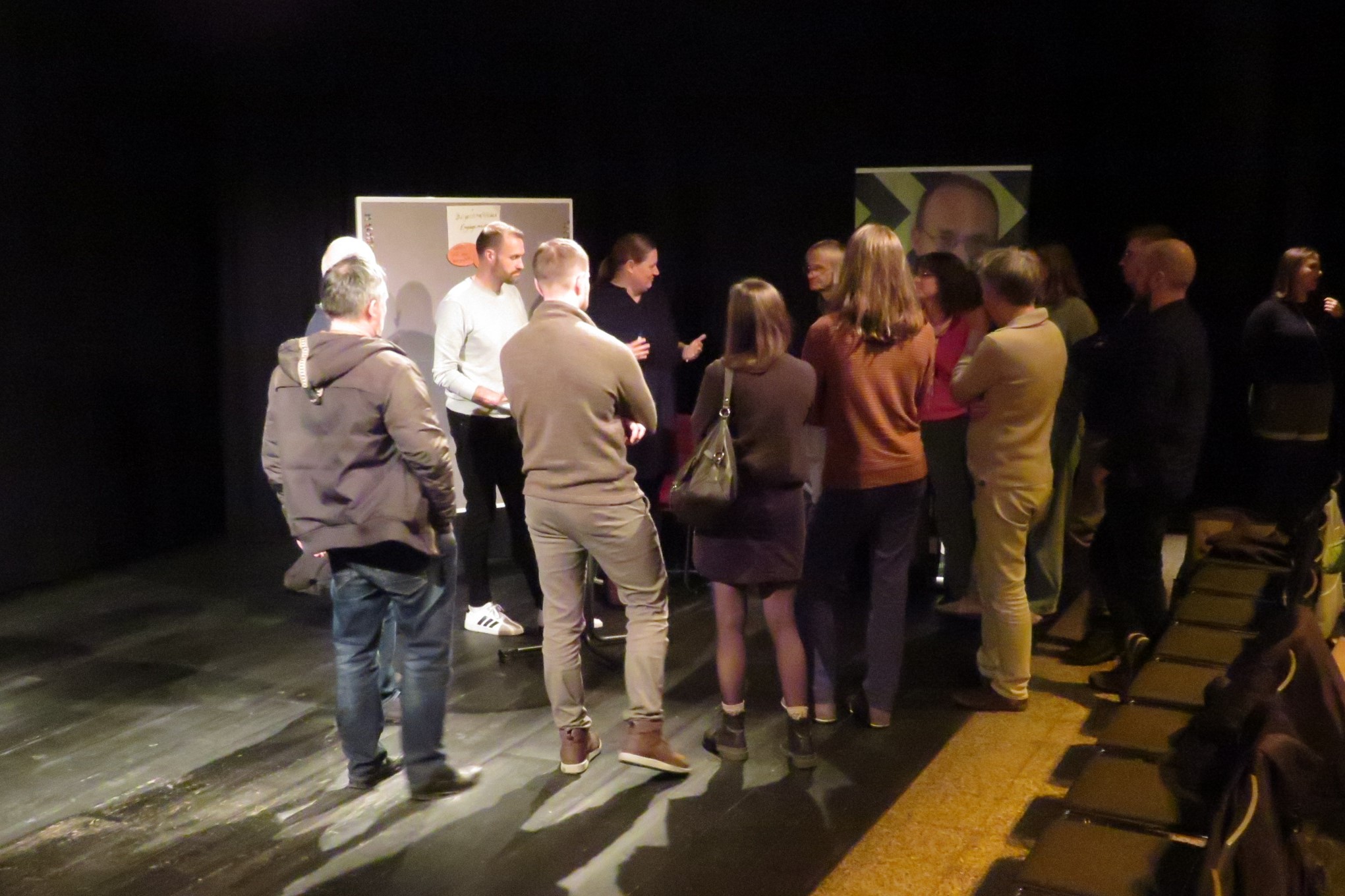
This was followed by 45 minutes of project work at four themed tables. One table discussed socio-culture, the independent arts scene and club culture; one was dedicated to the culture of remembrance; another focused on civic engagement; and at the fourth table, cultural spaces were debated. There were lively discussions at the tables; ideas were put forward by the audience, collected by the facilitators and then presented to the entire audience.
A short interview
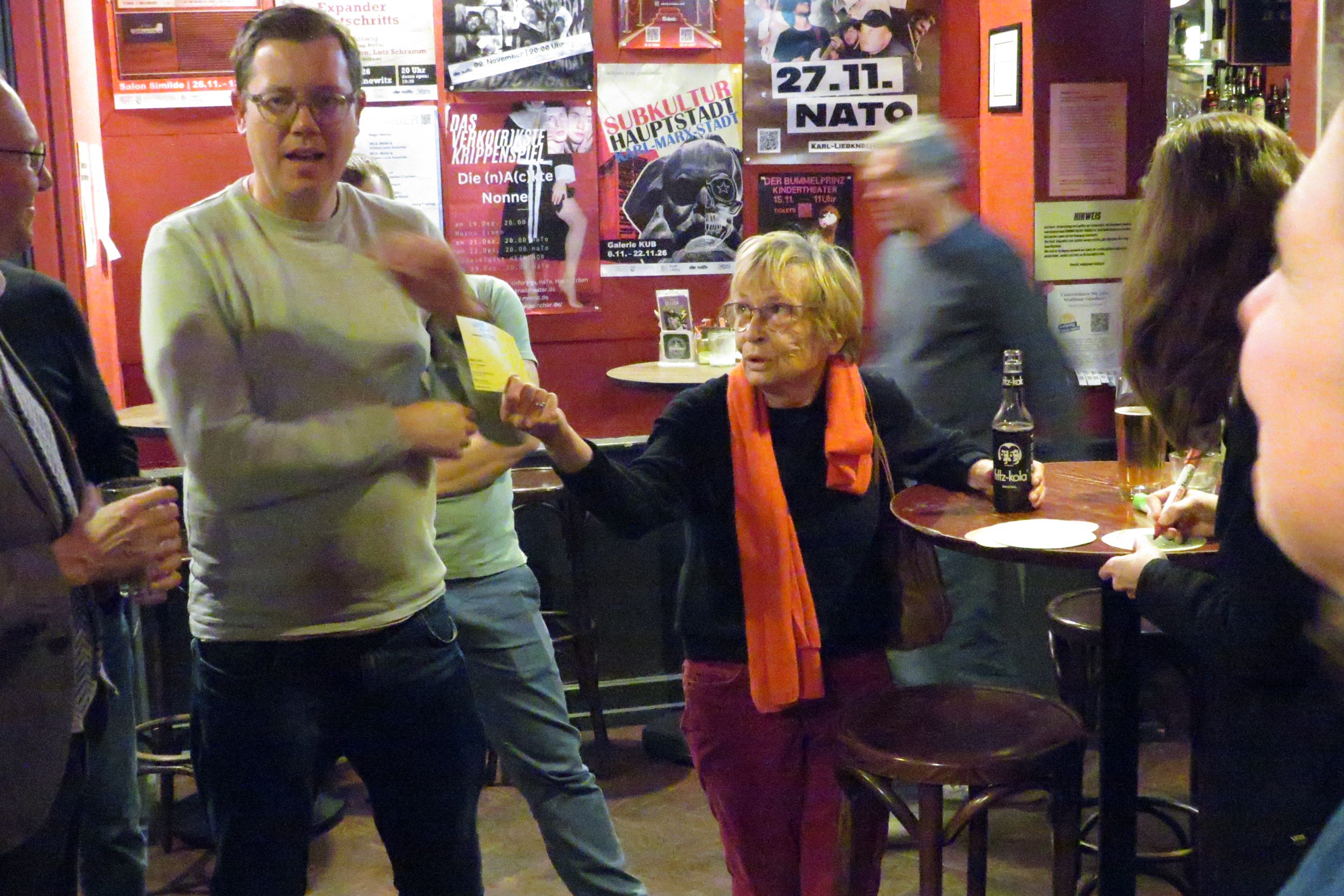
We took the opportunity to ask Leon Siblia why the Leipziger Engagement fair only runs until 5.00 pm.
Leon, even though the fair is on a Saturday, people working in retail, the hospitality sector and other industries have to work. Why does the fair only run until 5.00 pm?
In principle, that’s certainly true. Ideally, it would run a little longer, and in the best-case scenario, it would take place every year – perhaps even over two days. I don’t think it’s simply possible to cover everything. Nevertheless, it would be nice if it went on for longer. For anyone who’d still like to find out more, they’re welcome to come to the Volunteer Agency for a face-to-face consultation or simply pop over to our website. We have a large database there where you can find all the organizations taking part in the Volunteering Fair.
Are there any particular areas of focus for volunteering here in Leipzig, where people are most urgently needed?
It’s certainly a broad issue. I’d say that, given the current situation, there’s a lot of talk about civil protection. I’m with the German Red Cross, but organizations such as ASB, Johanniter and Malteser are all heavily involved in volunteering within the field of civil protection and disaster relief. Otherwise, we’ve been talking today about culture and volunteering for integration – the whole spectrum is important, and volunteers are needed everywhere. One area that’s always in demand is the senior citizens’ visiting and support service; they’re always looking for volunteers there too.
You just have to see what you feel capable of and what you fancy doing. Do you fancy doing something with people, or not? You could also do the bookkeeping for a charity. That’s incredibly significant too. And – something that’s still very essential – there’s a desperate need for people who are willing to take on responsibility and join the boards of charities.
Leon, thank you, and I wish you all the best.
The conclusion and a short interview
To round off the event, Wolfram Günther gave a summary, expressing his thanks and calling for more discussion about people who are making a difference: “Why not talk about the people who are doing great things here? They need a bit of support, and they really do exist, even out in rural areas.” You can listen to the full interview in the video.
We spoke to Wolfram Günther again afterwards.
It was a new format – what did Wolfram Günther take away from
the evening?
It was a very productive format, and it’s simply great fun to bring
together people from the city – both those who are actively
involved and the many others who are interested – to hear what
drives them. We discussed a wide range of topics, from the bigger
questions – where you realise we need to take a more strategic,
long-term approach and change structures – right down to the small
things where you think: ‘Surely that must be possible.’ People
become happier when you manage to achieve this and develop the
city’s potential.
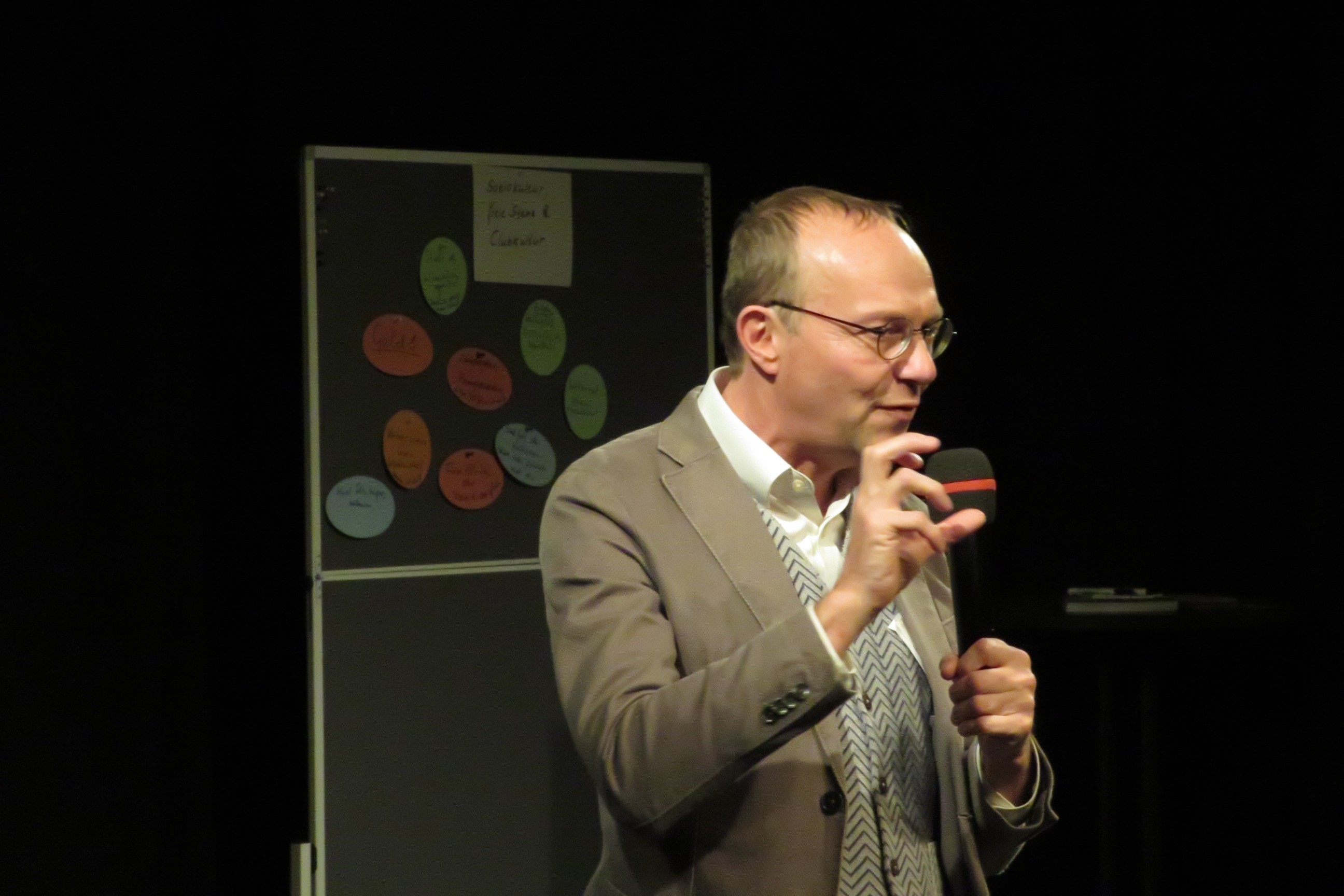
I enjoyed this event, I’m also looking forward to the next two that are coming up, and I’d like us to have many more events like this in this city so that we can talk to one another. For the sake of democracy and social cohesion, we need these spaces for dialogue, and it isn’t actually that important that we all always reach a consensus. Rather, it must first be possible to voice all these diverse demands and wishes and to exchange views with one another.
Can we expect Mayor Wolfram Günther to continue taking part
in such events once he takes office?
It would be very essential to me that these kinds of discussion
forums continue to be organized on precisely these topics; it must
become something completely normal.
Mr Günther, thank you for the conversation.
Conclusion:
It was an interesting evening; the topics were discussed in depth
and constructively. It remains to be seen which of these will be
included in the election manifesto and implemented should he win
the election. Wolfram Günther was, as usual, approachable – not
just to us, but to everyone who wanted to speak to him. We can look
forward to the upcoming citizens’ forums with interest.
Empfohlen auf LZ


So können Sie die Berichterstattung der Leipziger Zeitung unterstützen:



There is one comment