Dieser Artikel ist auch in deutscher Sprache verfügbar: Zum deutschen Artikel.
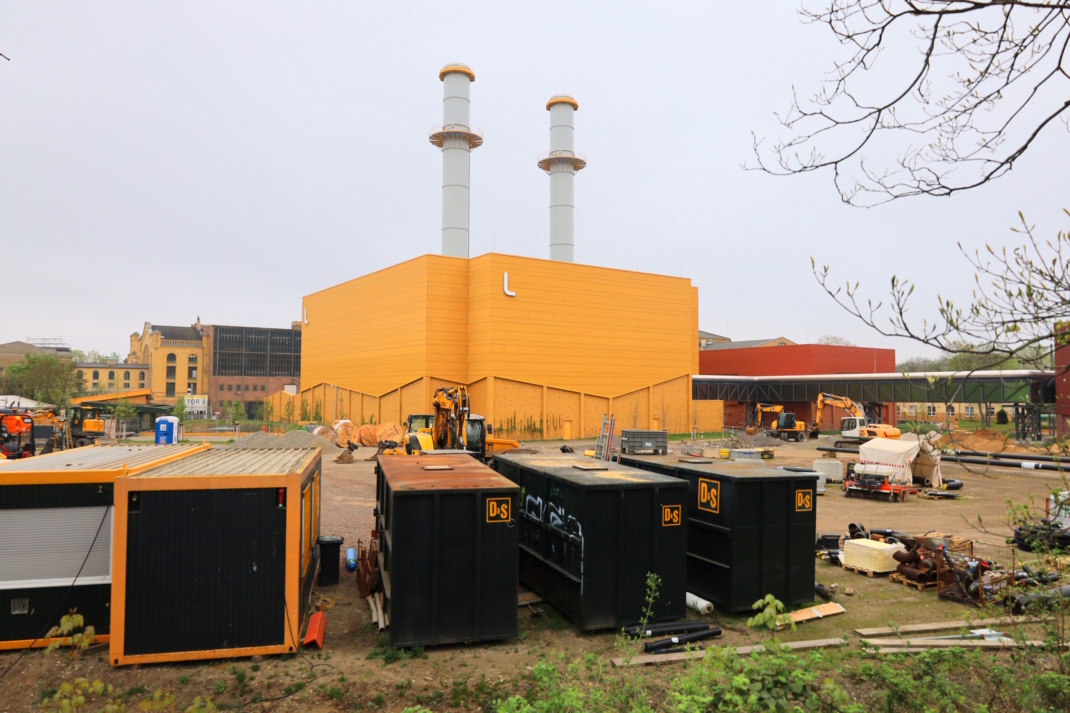
Neither Leipzig’s local government nor Stadtwerke Leipzig are doing themselves any favours by keeping things under wraps. At the last council meeting, the Bündnis 90 / Die Grünen parliamentary group tabled a fairly comprehensive question regarding Stadtwerke Leipzig’s South Combined Heat and Power Plant. This is because, when the new power station was being planned, Stadtwerke Leipzig made a great fuss about the turbines’ future hydrogen capability. However, it will be many years yet before the South Combined Heat and Power Plant actually runs on hydrogen.
The problem with the response to the Greens’ parliamentary group
is this: the Mayor and Stadtwerke Leipzig have classified some of the questions as trade secrets. These questions were answered only in private and were therefore not published on the ALLRIS platform.
Which is utter nonsense, at least in the case of one question – namely the very first one: “How have Stadtwerke Leipzig’s CO₂ emissions in the electricity and heating sectors developed since 2019 (in absolute terms and in kg/kWh)?”
The phase-out of district heating from Lippendorf
This is the central issue around which everything revolves, because Stadtwerke Leipzig is, after all, the driving force behind Leipzig’s energy transition; in future, it intends not only to supply district heating from Leuna but also to transport hydrogen via pipeline to Leipzig, whilst the district heating network is being massively expanded.
And the all-important yardstick, ultimately, is whether Stadtwerke Leipzig can significantly reduce its CO₂ emissions. So this figure needs to be made public. Just like the city’s overall carbon footprint. The latter is calculated, at the very least, with a huge time lag. The most recent figure dates from 2021. In that year, Leipzig emitted 3.018 million tonnes of CO₂ equivalent.
But what proportion of this is attributable to Leipzig’s municipal utilities, which, after all, supply the city with electricity, gas and heat?
The response from the Mayor’s Office simply classified the details as a trade secret. It is not clear why, as the figure is in fact public. It can be found in the Leipzig Group’s sustainability report, which is also available on the municipal group’s website.
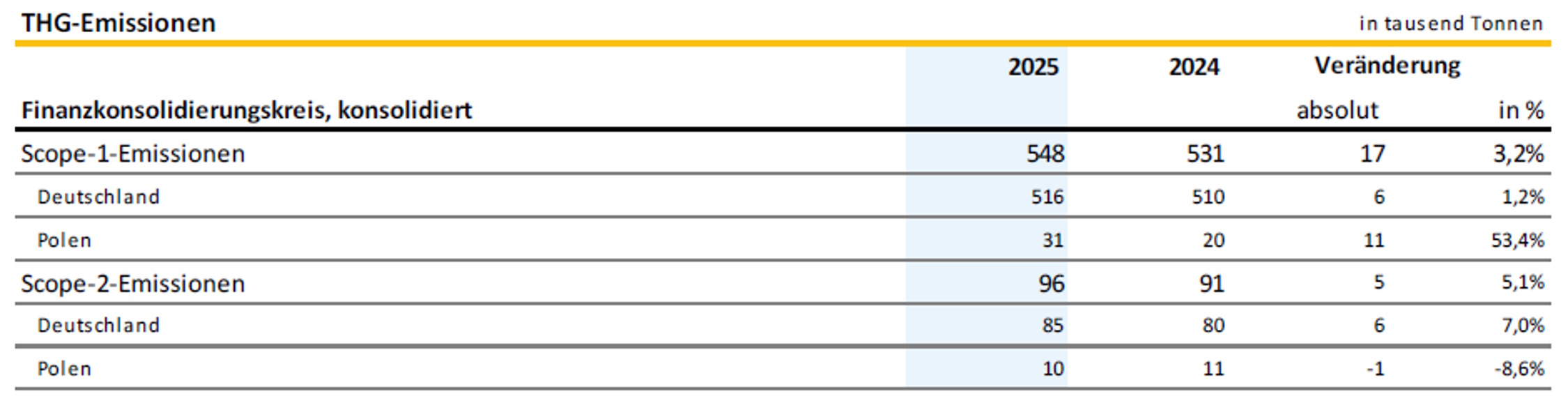
The report also explains the figures: “93 per cent of the Leipziger Group’s emissions (Scope 1 and 2) are generated by the Energy division. This is therefore where the main focus lies and where the greatest potential for reducing emissions can be found,” the company emphasises. Below this, the figures of 548,000 tonnes (Scope 1) and 96,000 tonnes of CO₂ emissions (Scope 2) are given. These figures also include those from the Polish subsidiaries.
If one applies the stated 93 per cent share of municipal utilities to the total of 644,000 tonnes, the figure comes to 598,920 tonnes.
The fact that this figure presents a certain problem was also explained in the 2025 Sustainability Report: “For example, to decarbonise district heating, the supply of district heating from lignite is being replaced, amongst other things, by the bridging technology of natural gas via gas-fired power stations.”
This reflects the phase-out – approved by the city council – of district heating supplied from the Lippendorf coal-fired power station, which took place in 2025. For the time being, this also means that the municipal utility must burn more natural gas to replace the district heating supply from Lippendorf.
Result: “In the 2025 financial year, Scope 1 emissions rose due to the continued replacement of third-party heat procurement from the upstream lignite-fired power station with heat from the city’s own plants.”
More precisely: by 1.2 per cent, or 6,000 tonnes of CO₂.
This was to be expected. But where do we go from here?
2040? 2045?
When will the turbines at the Süd combined heat and power plant be powered by hydrogen? This depends – as was also to be expected – on the availability and market prices of green hydrogen. Which is why the municipal utility’s response points to the still somewhat distant year 2040:
“To switch to hydrogen, the necessary infrastructure and market conditions must first be established, which are not currently in place. According to the Municipal Heat Plan, the use of green hydrogen will begin around 2040 and will make a significant contribution to decarbonisation by 2045 at the latest, particularly in meeting peak loads. Hydrogen will replace biomethane as the ‘bridge fuel’.”
Meanwhile, the municipal utility’s plans to set up its own hydrogen production facility at the Süd site have also fallen through: “Following the cancellation of the Burn4H2 project (integration of electrolysers and solar thermal energy) due to a lack of economic viability and insufficient infrastructure, Leipzig’s municipal utility company currently has no plans to produce green hydrogen itself. It is assumed that the core hydrogen network will be established, and it is expected that the West and South sites will be connected to it in the future.”
Biomethane as a “bridge fuel”
What, then, is the significance of the reference to biomethane as a ‘bridge fuel’? The response states:
“Biogenic fuels (biomethane) will be used as a supplementary transitional solution from around 2035, in accordance with the transformation plan set out in the City of Leipzig’s municipal heating plan. This conversion of all remaining gas-fired installations to biomethane will enable the City of Leipzig to meet its target of achieving a 100 per cent climate-neutral heat supply by 2038, but will increase production costs.
The proportion will remain moderate and, in the modelling, serves primarily to provide security of supply and cover peak demand. Discussions with potential suppliers have already taken place and enquiries regarding long-term contracts have been made. “Due to various political and regulatory uncertainties, it does not make economic sense to procure biogas or commit to such procurement at this stage.”
So this is also a procurement area with major question marks.
The big question mark over the district heating price
However, the Bündnis 90 / Die Grünen parliamentary group was also concerned about gas prices, which have been causing a stir for several weeks now. This is because if Leipzig generates its district heating using natural gas, high gas prices will also be reflected in the district heating price.
Since the beginning of July, the Saxony Consumer Advice Centre has therefore launched a campaign focusing on Leipzig’s district heating prices, which have risen significantly since 2023. You can find the campaign here.
But what about gas prices? Are Leipzig’s district heating customers still paying for the gas prices that have risen dramatically as a result of Russia’s war of aggression against Ukraine?
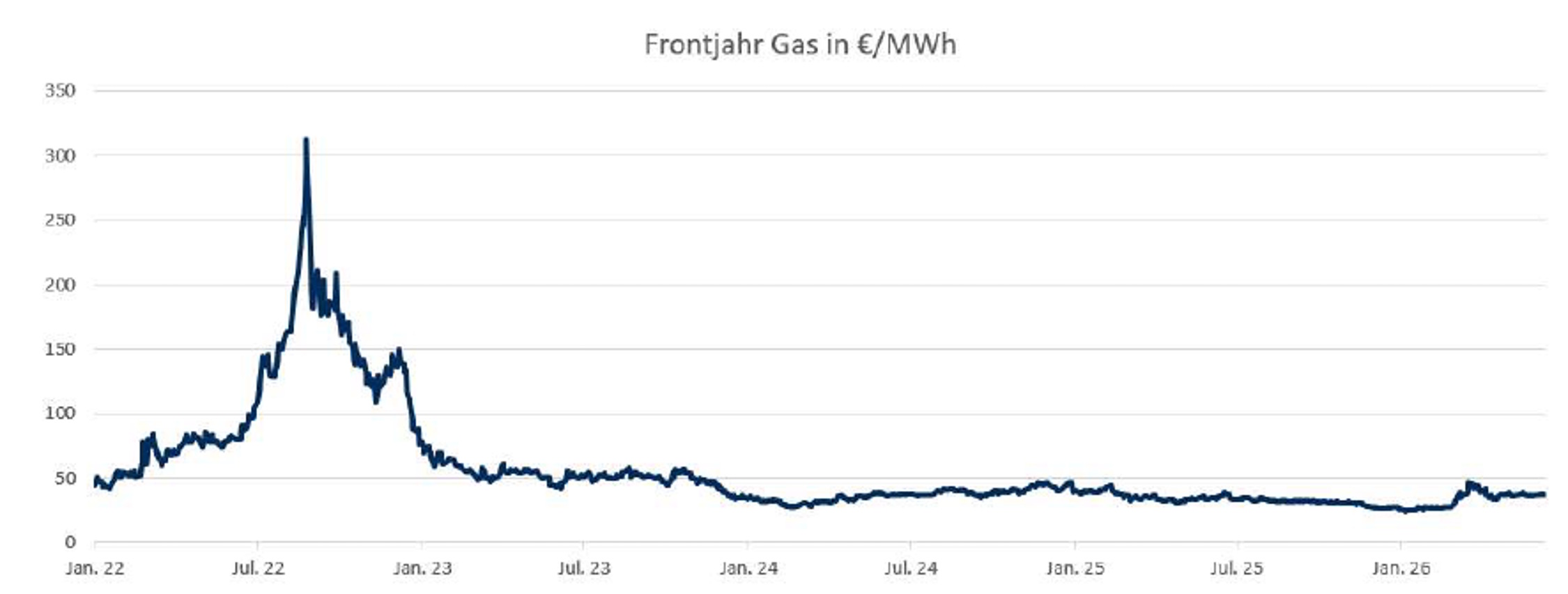 Trend in market prices for natural gas. Graphic: Leipziger Stadtwerke
That is not entirely the case, Leipziger Stadtwerke assure us in their response: “European gas prices remain well below the levels seen during the war in Ukraine and, by comparison, have risen only slightly as a result of the war in Iran. We cannot currently confirm the persistently high gas prices implied in the enquiry.”
Admittedly, the Greens did not ask how gas prices affect the pricing of district heating in Leipzig.
From the municipal utility’s perspective, the economic viability of the South Combined Heat and Power Plant is assured. Whether district heating prices will fall again now that the 2022 gas price spike is long gone is, of course, not clear from the response.
Empfohlen auf LZ


So können Sie die Berichterstattung der Leipziger Zeitung unterstützen:

There is one comment