Dieser Artikel ist auch in deutscher Sprache verfügbar: Zum deutschen Artikel.
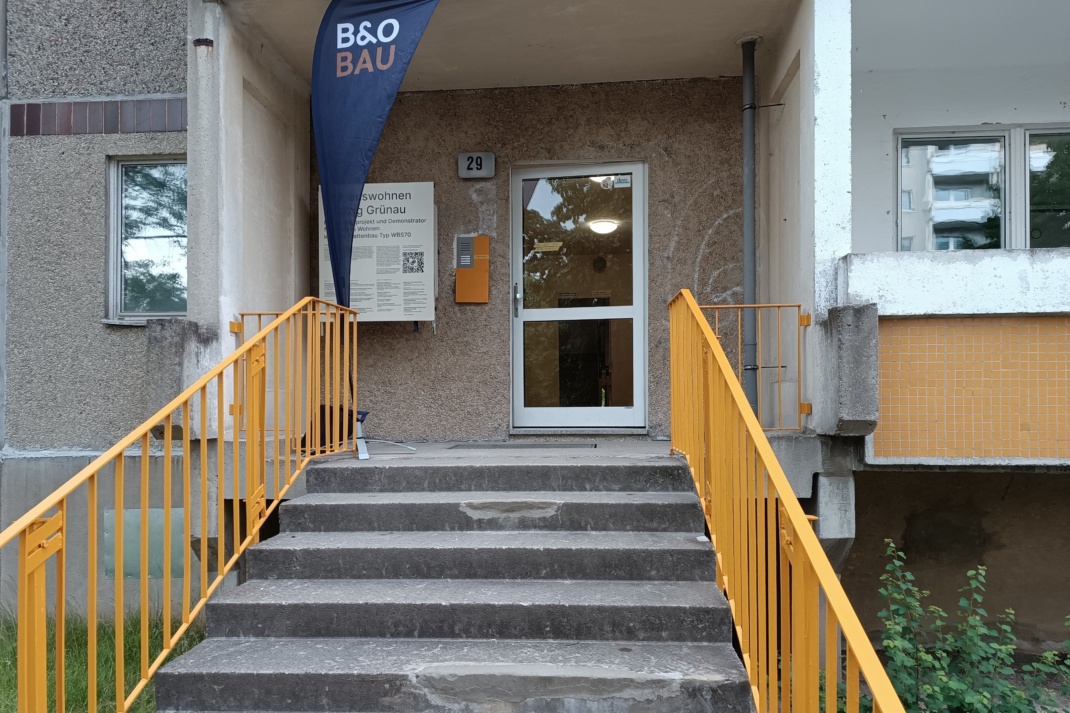
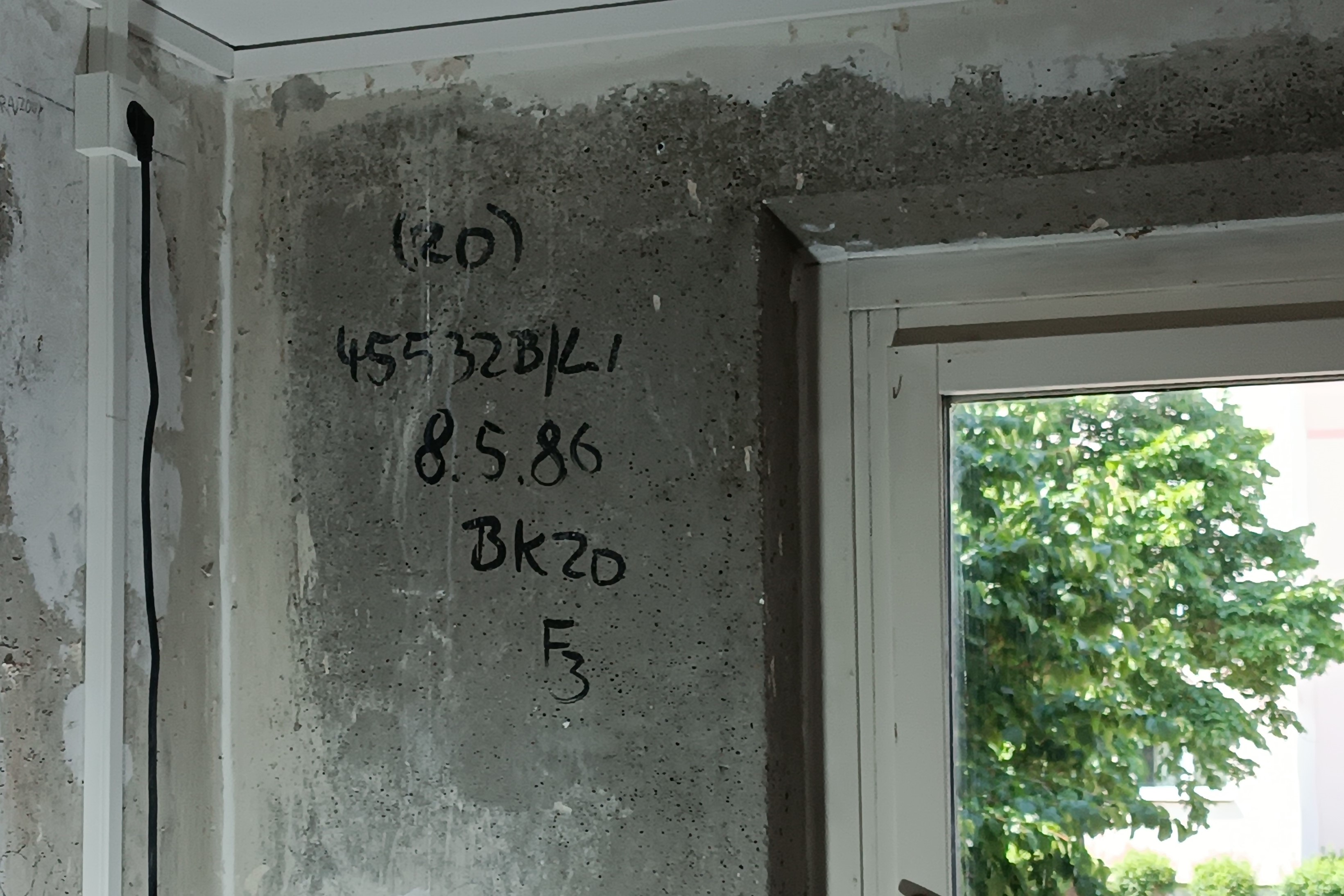
Leipzig Grünau is celebrating its 50th anniversary this year; the WBS-70 block of flats at Liliensteinstraße 19–39, of which number 29 forms part, was built 40 years ago. This can be seen on one of the ground-floor panels, stripped of paint and wallpaper, from the manufacturer’s mark. Now, with the Nucleus Living housing demonstrator, new life is temporarily being breathed into the long-vacant block.
A press event was held on 11 June, which we naturally attended, and since 15 June the first residents have been living in this new form of housing on a trial basis. At the press event, we met Ariane, one of the first residents, and asked her: Why did you apply for the trial stay and what are your expectations?
Press event and guided tour of the project
It began with a presentation of the project, introduced by Florian Fischer-Almannai from RWTH Aachen University. Why new forms of housing at all? A housing shortage, under-utilisation of housing stock, the reduction of emissions through the use of existing buildings, and other reasons – which will not be detailed here – were cited and explained. He moved on from topics such as theoretical housing reserves that could be tapped by resolving cases of misallocation to discuss new forms of housing, and described ‘nucleus living’ as follows: “Very briefly, the principle is that the nucleus, the core, is a fully-fledged flat. So not just a kitchen, living room and bathroom, but also the first private room.” The most important structural element is the corridor, which lies between the nuclei and the other private rooms. This allows for the shared use of space, though this is not compulsory. We’ll come back to this later.
Reem Almannai, from Almannai Fischer Architects, took over and began by talking about the Germans’ favourite possession: the car. She drew a comparison between test-driving a car and a trial stay, described the individual ‘nuclei’ and emphasised that an experiment is taking place here: “The demonstrator is intended to be a laboratory in which we use this experiment to test research hypotheses, in which we put forward claims and don’t simply say: ‘That won’t work.’ But rather: ‘Why won’t it work, and what is the reason it simply doesn’t work?’”
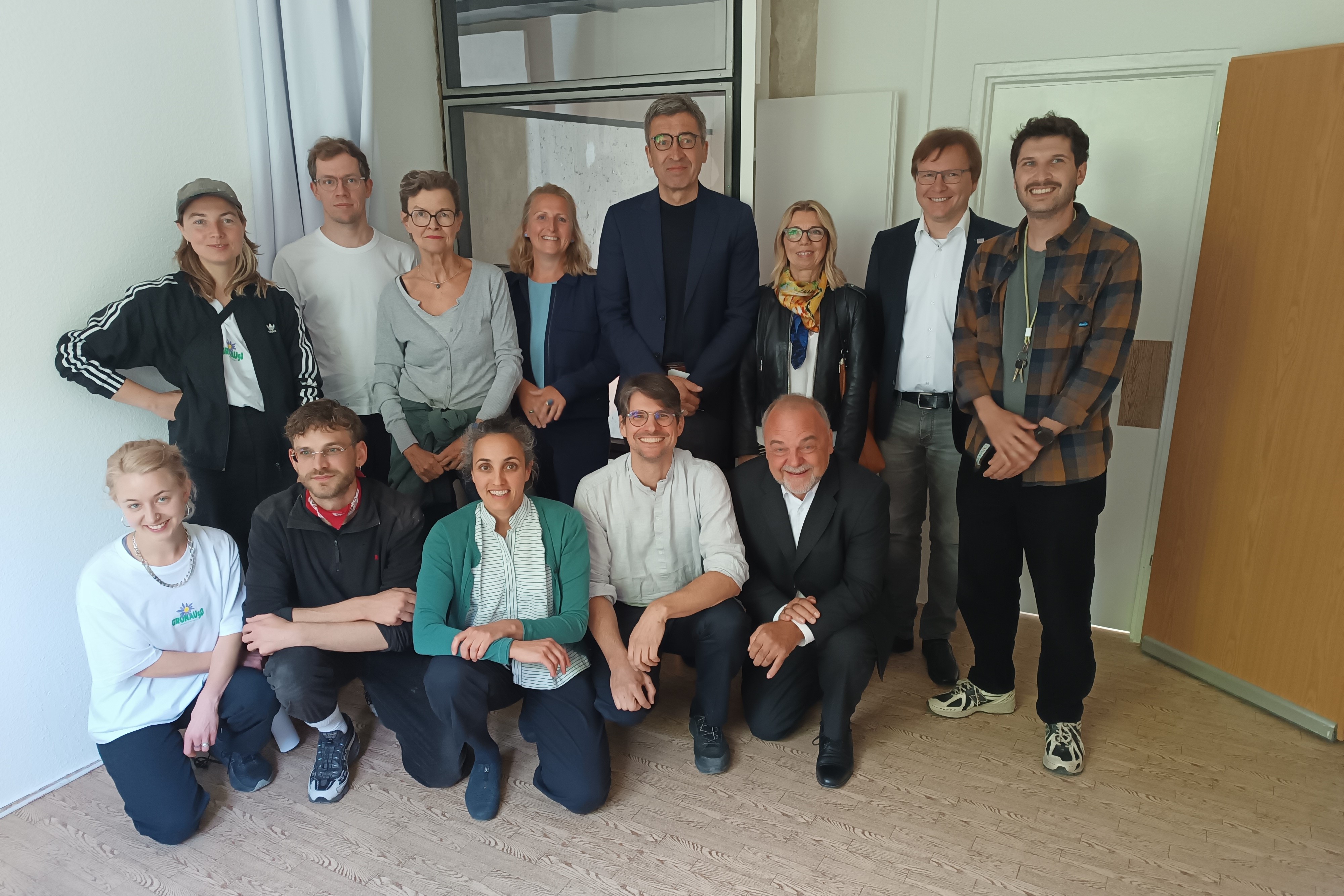
Following explanations of the construction process and details of who did what and where, Mayor Dienberg took the floor. He expressed his delight that the project is based in Grünau and promised further support.
Next to speak was Nelly Keding, Chair of the Board at Housing Cooperative Lipsia; we spoke to her afterwards. Can Nelly Keding envisage Lipsia making this concept a permanent feature?
We also asked André Ruhsam, site manager at B&O Bau, for a statement. Among other things, we were interested to know whether B&O Bau would later take over the fit-out work, which is currently being carried out by the project participants from RWTH.
The tour
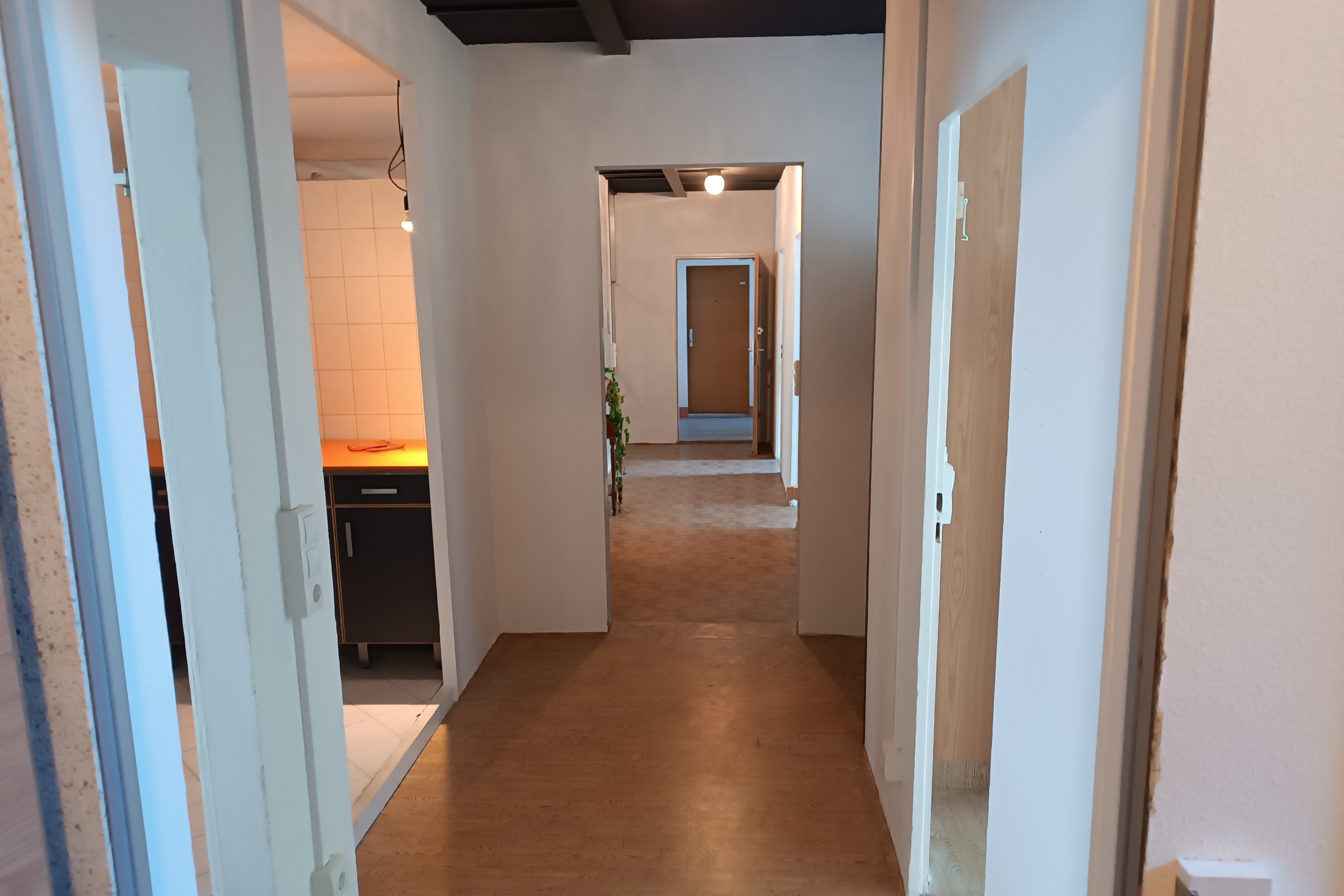
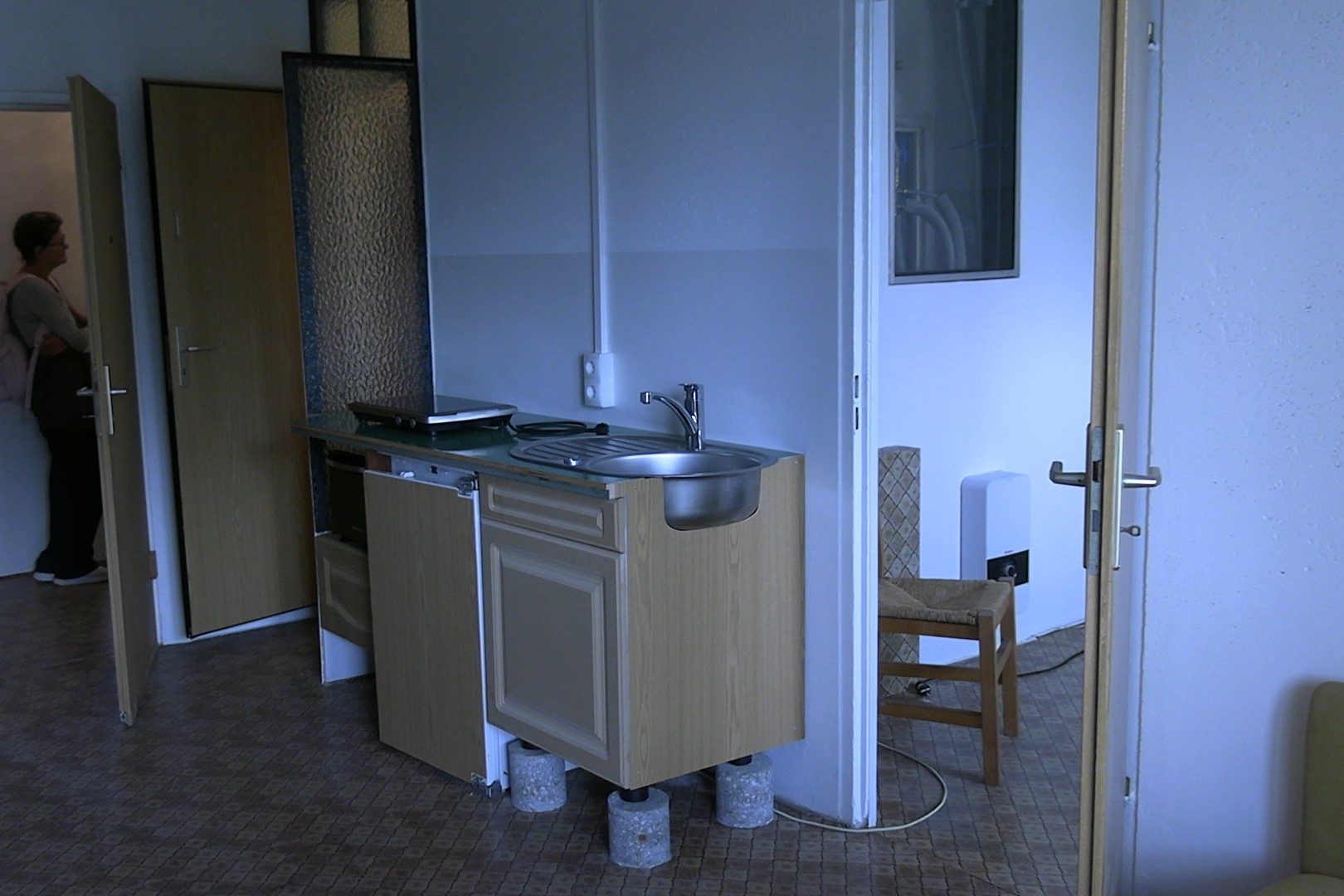
During the tour, we saw variously designed core units. For example, some had a separate kitchen, forming a sort of studio flat. In another variant, there was a kitchenette in the living room, whilst the former kitchen had been converted into a bedroom. The bathrooms had access from both the living area and the hallway, and there were interesting structural alterations in the corners of the rooms. In some cases, non-load-bearing walls had been partially removed. In their place, a sloping wall and a glass element (implant) had been fitted, which, amongst other things, provided lighting in the hallway.
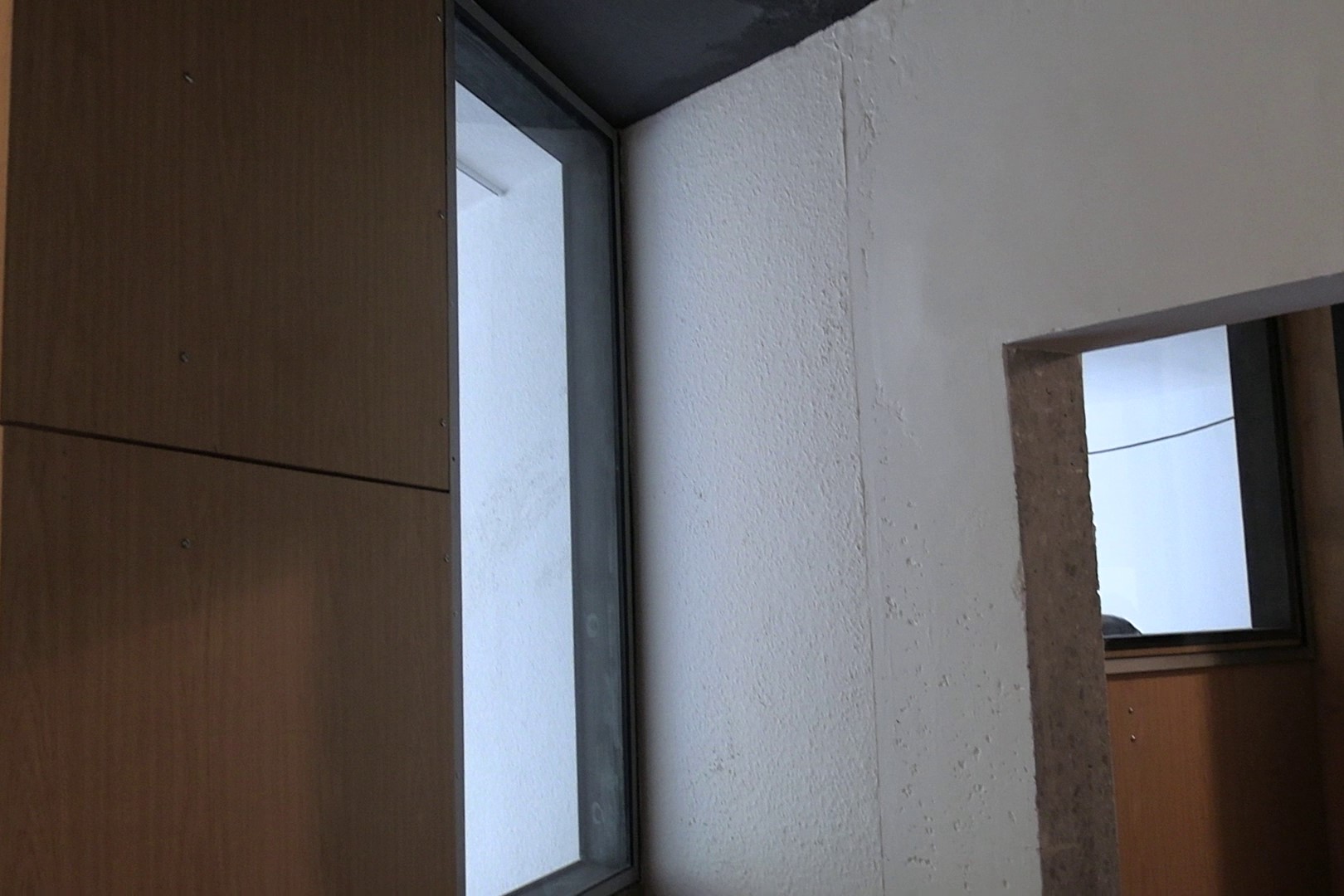
It was repeatedly emphasised that these structural alterations were largely carried out by the project participants – the team from RWTH Aachen University – using existing materials, such as doors that were no longer needed and the like. We spoke to Yanik Wagner from the Chair of Housing Design at RWTH Aachen University, one of the project participants and co-author of the paper “Nucleus Living – The Basics, Experiences, Outlook”. The paper is not freely available in its German version, “Nukleuswohnen – Grundlagen, Erfahrungen, Ausblicke oder San Riemo und die Folgen”, so we are providing a link to the English version here.
Conclusion: All in all, an interesting project; we can look forward to seeing whether this form of living becomes established. In the author’s opinion, Nucleus Living is not suitable for everyone. As the corridor serves as the communal space when moving from the nucleus to additional rented rooms, the level of privacy is not that of a traditional flat. However, residents enjoy far more privacy than in a shared flat and more than in cluster living.
Next year, we will be getting in touch with the trial residents and the other stakeholders and reporting on the results of the housing demonstration project.
Appendix: What is Nucleus living?
The technocratic side of nucleus living can be told in a nutshell: ‘Lifelong adequate living space for everyone and at any time’. What sounds like a form of socialism requires quite complex — albeit not very complicated — mechanics in the background when applied to an entire building; these should react rapidly and at any time to the individual needs of residents or households and household sizes in a residential building. The complexity of the mechanics or rather the complex combinatorics of individual rooms should be handled in almost inverse proportionality through an extremely simple, clear, and robust basic structure. In the best case, this allows a switching of rooms or a constant (re)configuration of flats without any conversions, or complicated or expensive displacement, or even the provision of movable partition walls but, instead, employing a very simple ‘door open, door closed’ principle. From Nucleus Living – The Basics, Experiences, Outlook.
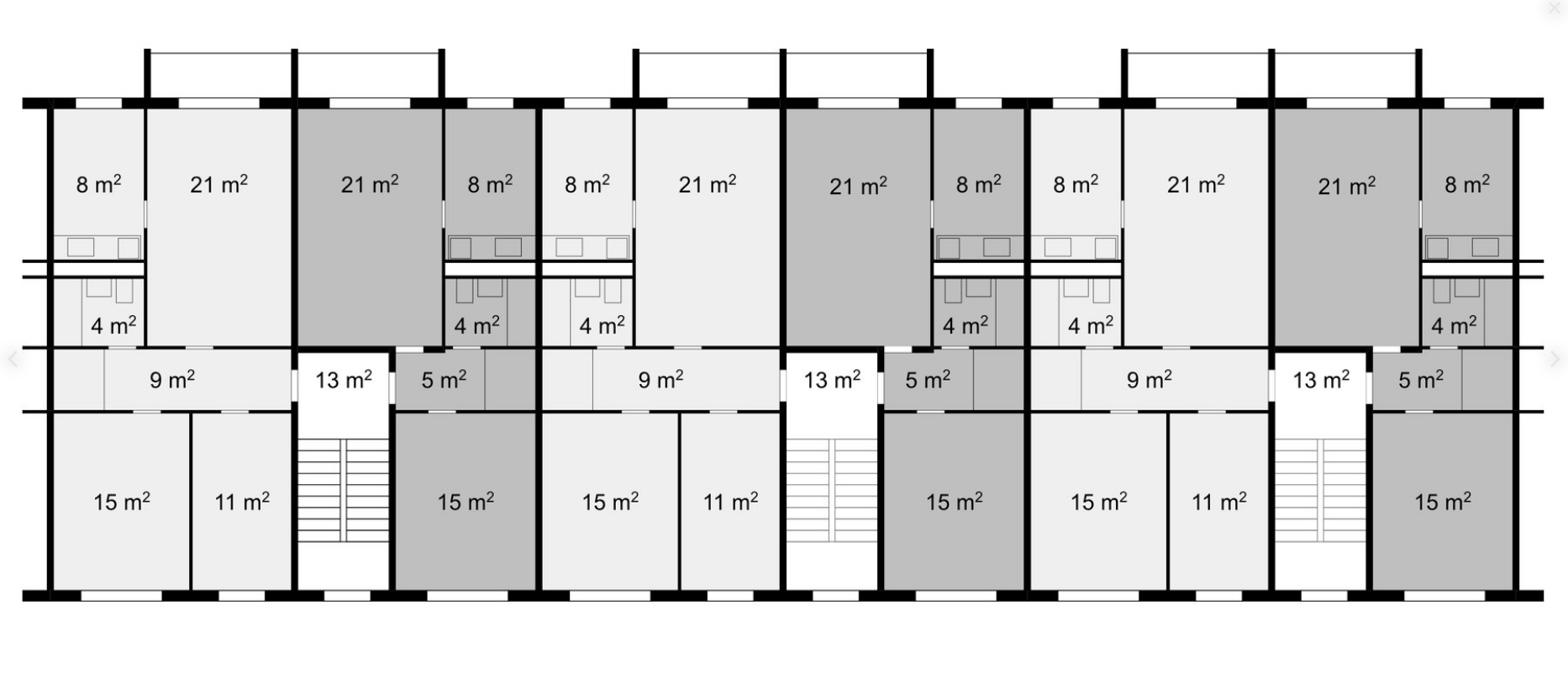
That sounds very complicated; put simply, it means the reorganisation of an existing residential building structure. In the WBS-70 building, as found on Liliensteinstraße, there are two flats on each floor: one two-room flat and one three-room flat (Figure 1). The rooms shown in the image above form the basis for various configurations of the ‘nuclei’ (core units). Figure 2 shows the variant with a separate kitchen and access to the bathroom via the hallway.
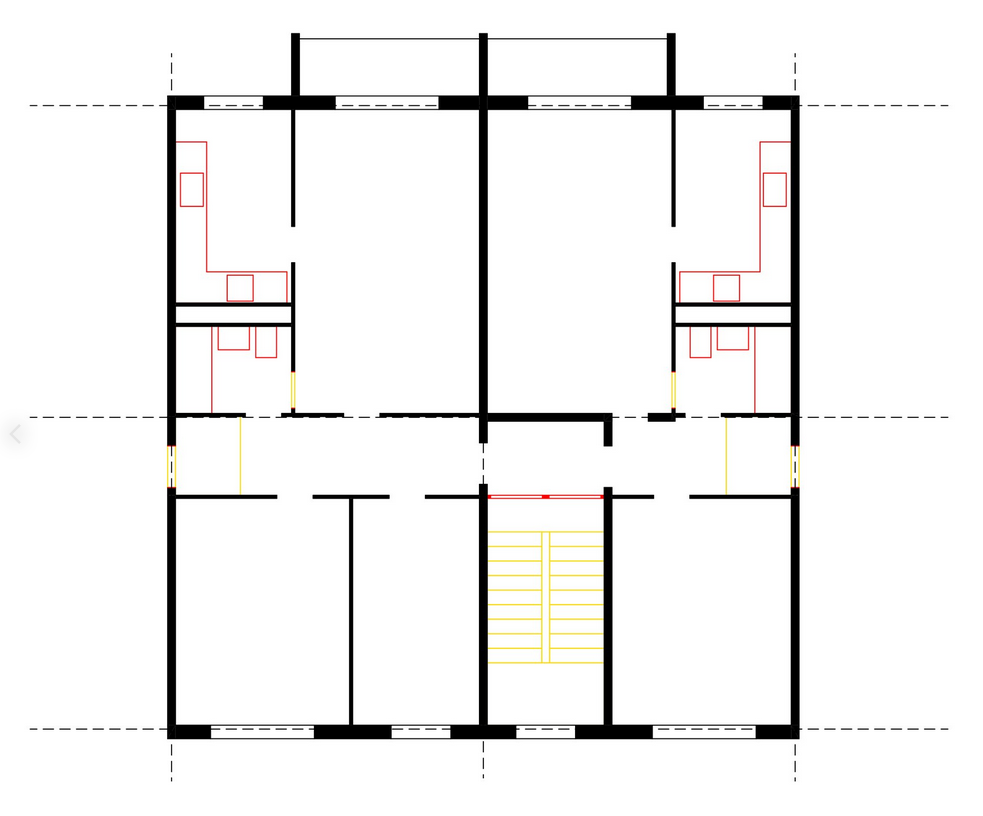
Figure 3 shows how a kitchenette can be fitted out in the living room, with the former kitchen becoming a bedroom. There are even more options available; you can find these on the Wohnbau website.
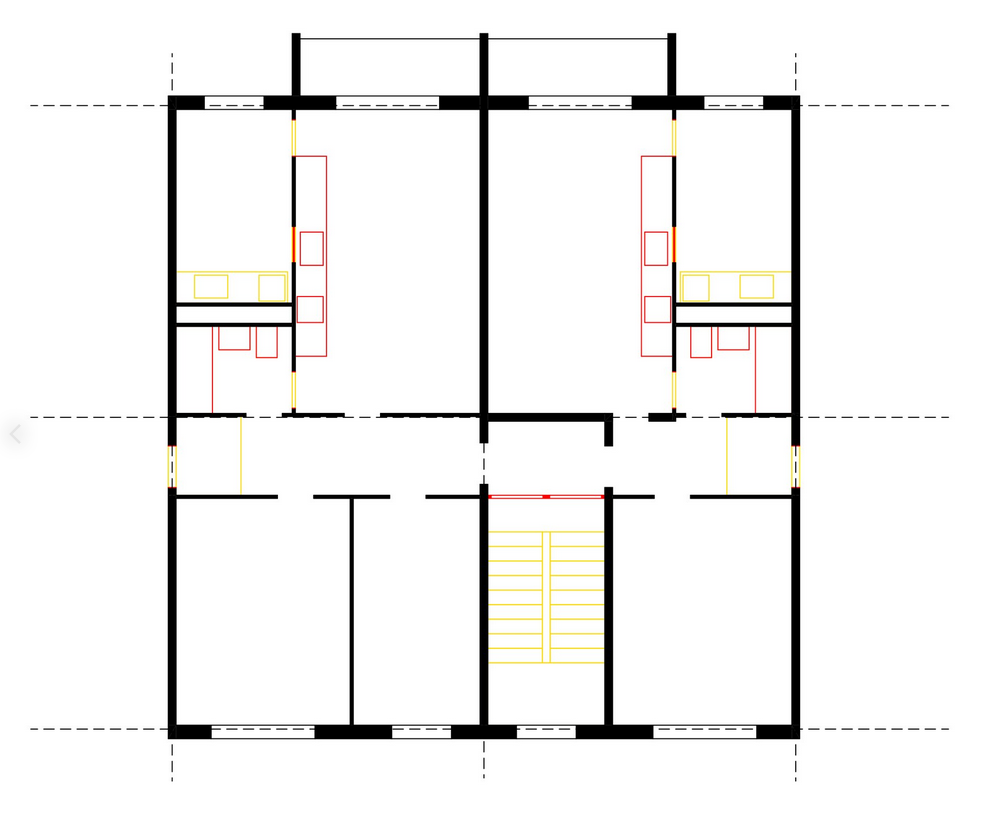
The most distinctive feature of the conversion can be seen in Figure 4. In this variant, two of the three stairwells shown in Figure 1 have been removed and converted into rooms; the hallways of the houses have been connected, and the central stairwell serves as access to the upper floor. Shown here with an attached stair tower.
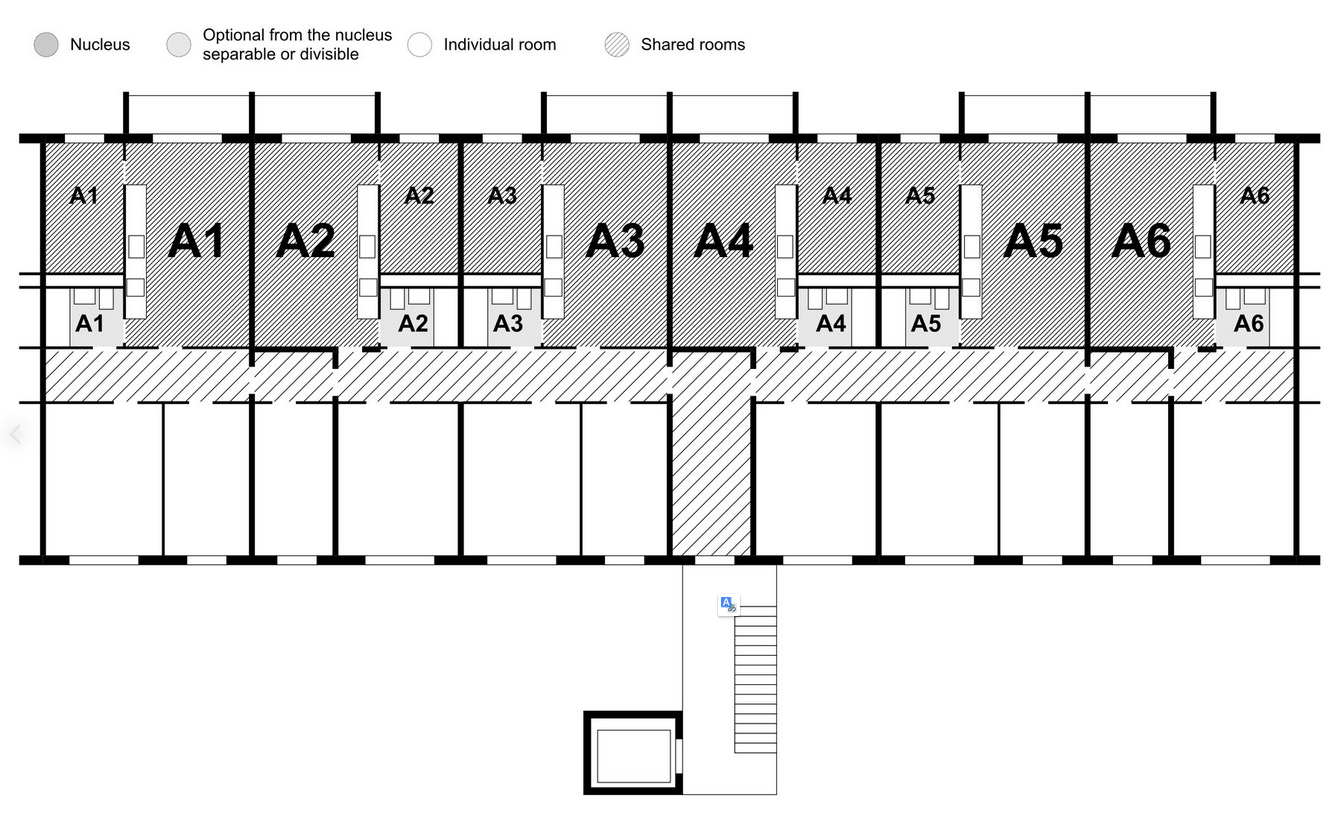
The rooms shown in the images below can be flexibly rented by the tenants of the ‘Nukleus’ flats, with the corridor serving as the floor’s communal area. This illustrates the limited privacy outside the Nucleus described above; depending on availability, additional individual rooms rented by tenants are not necessarily located in the immediate vicinity of the Nucleus. Nevertheless, it is an interesting project and will certainly find users.
So können Sie die Berichterstattung der Leipziger Zeitung unterstützen:




There is one comment