Dieser Artikel ist auch in deutscher Sprache verfügbar: Zum deutschen Artikel.
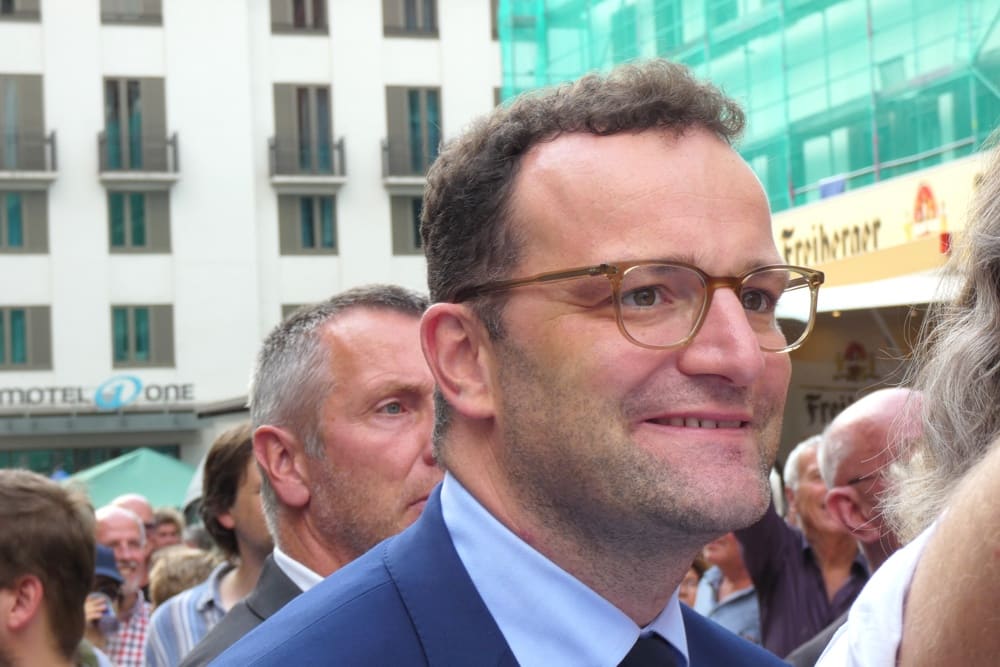
Jens Spahn, parliamentary leader of the CDU/CSU in the German Bundestag and a self-declared admirer of Donald Trump, said in an interview with the Süddeutsche Zeitung: “Is it really wise, as Europeans, given the dependency we have on America, to conduct this debate in this way right now? And the answer is no.” That remark immediately raises a question of its own: Why isn’t the parliamentary group leader waiting until the chancellor comments on the matter?
First, some context. The interview was conducted on January 16, before Trump threatened higher tariffs against European countries supporting Greenland. Friedrich Merz has so far remained cautious on the issue, but has signed a joint declaration on Greenland with other heads of government. It concludes with a clear statement: “Greenland belongs to its people. Denmark and Greenland – and they alone – decide on matters concerning Denmark and Greenland.” This is, unequivocally, a rejection of Trump’s claims.
The SZ interview with Jens Spahn cited here sits behind a paywall; readers without a subscription can find selected excerpts in an article on t-online.
One part of the above quote deserves particular attention. Spahn speaks of “the dependency we have on America [as Europeans]”, which he is right about. The more important question, however, would be this: how can we reduce that dependency – politically, militarily, and economically?
This is not an anti-American stance. It is about Europe being able to deal with the United States on equal footing, as a partner rather than a subordinate. Europe’s dependence on the U.S. is not a law of nature; it is largely self-inflicted. It was simply convenient to rely on military protection from NATO’s strongest member. It was equally convenient to allow American corporations to dominate Europe’s digital infrastructure and media landscape. The United States – the “land of the free,” long seen as a democratic role model – appeared to be a reliable partner.
Then Donald Trump came along for the first time and fired a warning shot that was ignored. The second time around, he followed through, attempting to reshape the U.S. government into a MAGA-style authoritarian project. Europe could do little more than watch.
Now Trump is reaching for Greenland, whether by “purchase” or annexation. According to the Research Service of the German Bundestag, Greenland is “a self-governing part of the Kingdom of Denmark and part of Danish territory.” As such, Greenland is also part of the EU and NATO. An annexation by the United States would therefore constitute an attack on another NATO member.
Can EU and NATO states simply look on without protest, invoking the “strategic sobriety” Spahn calls for? From a security perspective, Greenland is not only of importance to the United States but to the entire NATO alliance. If Trump opposes actions by other NATO members aimed at ensuring Greenland’s protection, he makes one thing clear: this is not about security; it is about mineral resources. In pursuing them, it is Trump – not the Danish government or Europe’s NATO allies – who is putting the alliance at risk.
Spahn supports Trump’s policies. Which in turn brings up the question: is it really wise to have a Jens Spahn?
Empfohlen auf LZ


So können Sie die Berichterstattung der Leipziger Zeitung unterstützen:





There is one comment