Dieser Artikel ist auch in deutscher Sprache verfügbar: Zum deutschen Artikel.
The City of Leipzig is once again planning to increase parental contributions for crèches, nurseries and after-school care. The city administration hopes this will generate additional revenue of around nine million euros over the next two financial years, 2027 and 2028. However, a majority on the city council had already rejected the increase during negotiations on the 2025/2026 two-year budget. The Left Party group has highlighted the fundamental problem here. For even if this brings in millions of euros, it will do little to alleviate Leipzig’s growing debt problem.
It sounded like a lot at first when the city announced at the start of the month: “For the financial years 2027 and 2028, the city expects additional revenue of around 4.35 million euros and 5.27 million euros respectively.”
The city is scraping together every conceivable source of revenue to reach a total savings package of 100 million euros. However, this is still not enough to offset the existing annual deficit of around 300 million euros. The local authority’s scope for savings is simply too limited, whilst the costs of the mandatory tasks imposed by the federal government are spiralling out of control.
New additional expenditure in the social services department
This is, of course, only to be expected: when the federal and state governments ‘make savings’ primarily at the expense of the poorest sections of the population, whilst the economy has been stagnating for five years, expenditure in the social sector inevitably rises. And on a completely different scale, as a recent report on unplanned additional expenditure by the social affairs department shows:
“An analysis of the actual figures as at 30 June 2026 reveals additional expenditure in the areas of basic support for jobseekers under SGB II, basic income support and assistance under SGB XII, integration assistance under SGB IX, education and participation benefits for recipients of WOGG and BKGG, and the contribution to the Saxony Municipal Social Association, there will be additional expenditure compared with the 2026 budget.” And by no less than 59.4 million euros.
Rising unemployment is causing the city’s social welfare costs to spiral out of control immediately.
Falling birth rates, rising parental contributions?
The increases in parental contributions planned by the city would mean a rise of 37.86 euros for crèche places; contributions for nursery schools are set to rise by 25.88 euros, and for after-school care by 9.85 euros per month. There are, admittedly, reductions available for low-income families. But even for families whose income exceeds the threshold, this represents a significant amount of money. All the more so in a city where birth rates have been falling significantly for several years and the first childcare centres have had to close due to a lack of children.
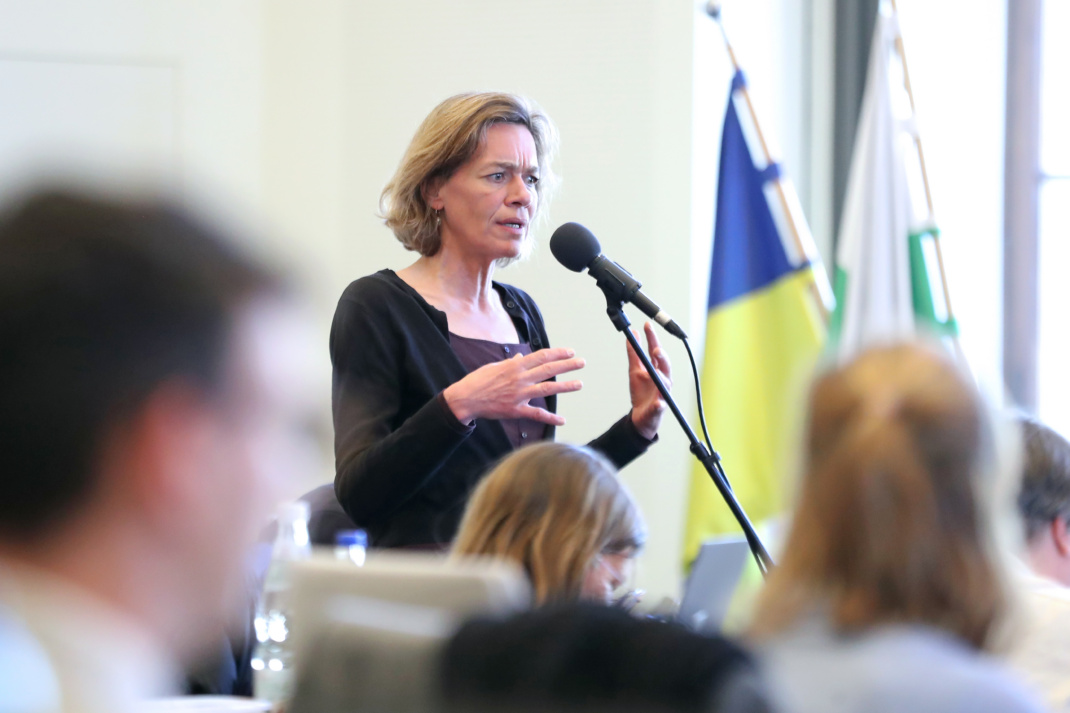
“We are once again opposing the increase in parental contributions for childcare,” says Juliane Nagel, spokesperson for children’s and youth policy for the Die Linke group on the city council, explaining her group’s opposition. “At a time when the cost of living, housing and transport is skyrocketing, it sends completely the wrong message to be slapping on extra charges for education as well.
Families must not be made to foot the bill for flawed childcare funding – an additional cost of nearly 40 or 25 euros a month is no small matter for many. This would place a burden on people who already have to cut back in far too many areas, yet have no right to an exemption or reduction in fees.”
The Free State is saving its share
However, the rising costs are not borne by the penny-pinching Free State; they end up as a financial burden on the city.
“Of course, we can see that the local authority’s share of childcare funding has grown steadily over the years – most recently to almost 60 per cent. Meanwhile, the state’s share remains at less than a third. The state should therefore be relieving the burden on local authorities when it comes to funding early years education,” says Juliane Nagel, expressing an expectation that a state government enthusiastic about the ‘debt brake’ will never fulfil.
“As members of Die Linke, we want free education for all children. This is particularly essential in the area of early years education. We are working towards the goal of fee-free childcare. Federal states such as Mecklenburg and Berlin show that it can be done. Other states, such as Saarland, are also on the way to making childcare fee-free.”
The city of Leipzig is caught between a rock and a hard place. No more money is coming from the Free State. And several council groups want to protect the city’s families from rising fees.
But the city’s mounting debt is no argument either, notes Juliane Nagel: “The bottom line is that the planned additional revenue from the increases in parental fees cannot steer the city out of its financial crisis. We consider the administration’s approach – of already factoring these into the budget and thereby shifting the responsibility for compensation in the event of rejection onto the city council – to be more than a bit risky. Since the last decision in April 2025, the composition of the city council has not changed. Nor, in any case, has the position of The Left.”
Empfohlen auf LZ


So können Sie die Berichterstattung der Leipziger Zeitung unterstützen:


There is one comment