Dieser Artikel ist auch in deutscher Sprache verfügbar: Zum deutschen Artikel.
What happened at Leipzig/Halle Airport on the night of 4 to 5 August 2026 did not come out of the blue. For several years now, critical infrastructure in Germany has been the target of drone overflights. Dozens of such incidents are recorded every year by the security authorities in Saxony. And there has already been an incident involving explosives at Leipzig/Halle Airport. Are Saxony’s investigators taking these incidents seriously at all?
Rico Gebhardt, the spokesperson on home affairs for the Left Party faction in the Saxon State Parliament, had already raised this question before the incident on the night of 4–5 August. It is a coincidence that Saxony’s Minister for the Interior, Armin Schuster, has now responded to his enquiry at precisely this time.
At least the more vigilant parliamentarians were alarmed in September 2025 when a parcel filled with explosives burst into flames at the DHL centre at Leipzig/Halle Airport. Shortly afterwards, it emerged that it was one of four rigged parcels that had been dispatched from Lithuania.
“According to the Office of the Prosecutor General in Vilnius, the suspects are alleged to have sent parcels containing homemade explosive devices via courier services to other EU countries and to the UK on behalf of the Russian secret service. This was reportedly a test for a Russian plan to trigger explosions on cargo flights to the US,” *Der Spiegel* summarised the findings at the time.
The silent war
The scale of the incident was unprecedented. But not the fact itself that Western infrastructure was the target of an attack whose links repeatedly pointed back to Moscow. In their 2025 book *The Silent War*, Reinhard Bingener and Markus Wehner have highlighted the scale of the hybrid war that Russia has been waging for years, particularly against Germany.
This is because reports of individual incidents usually get lost in the daily flood of news. By the very next day, they are usually forgotten. And the question is entirely justified: are the German security authorities failing to take the threat seriously?
A dozen incidents in the first half of the year alone
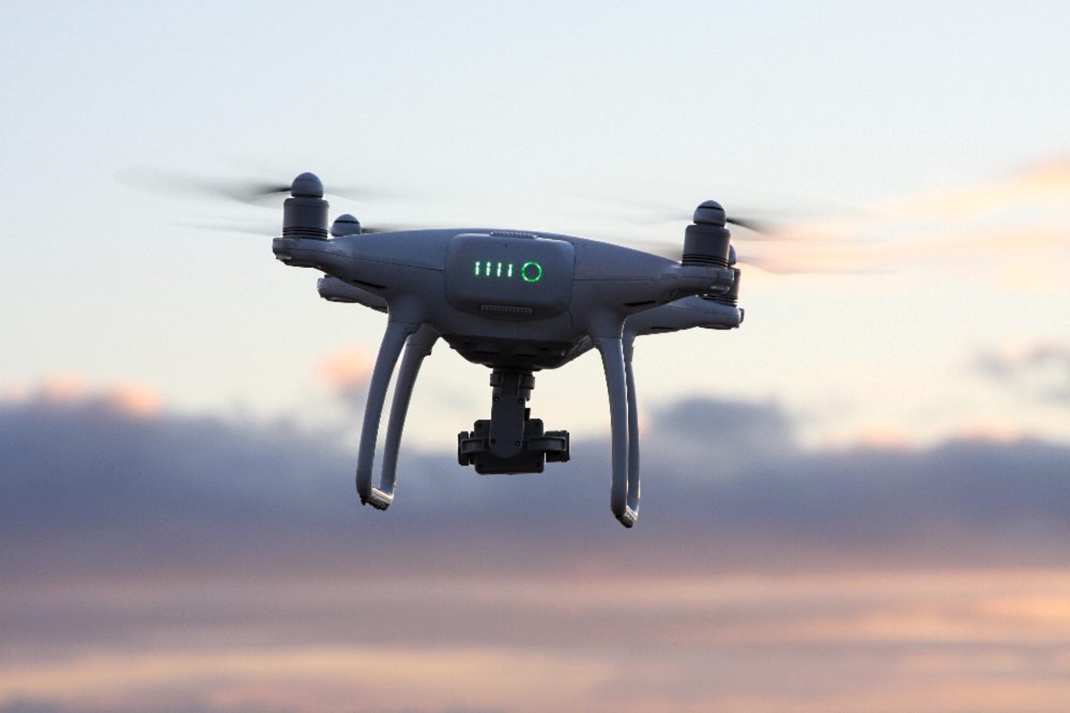
At least the investigators in Saxony are recording security-related incidents, as Rico Gebhardt has now learnt from his enquiry to the Saxon state government. In Saxony alone, more than a dozen security-related drone overflights of critical infrastructure facilities were recorded in the first half of 2026. (Parliamentary Paper 8/7522).
The figures from the Ministry of the Interior were presented on Tuesday 4 August, shortly before the alleged drone attack in the vicinity of Leipzig Airport. According to these figures, there have recently been 13 such incidents. Most of the incidents involved facilities in the transport sector (eight cases), but energy companies were also affected (four cases). The response states that no damage was caused in any of these instances.
This phenomenon is not new, Gebhardt notes. After all, there were 21 such incidents in 2025 as a whole (Parliamentary Paper 8/5301). These included four incidents at military installations. The Minister for the Interior did not disclose any further details, “so as not to jeopardise the security of the facilities in question or ongoing intelligence-gathering, defence and investigative measures”.
“What can be observed, however, is that the majority of the most recent incidents have taken place in the city of Leipzig and the neighbouring district of North Saxony (four cases in each). There are ‘currently’ no indications of espionage or sabotage, nor of so-called hybrid threats – though it is almost never possible to identify the perpetrators. The drone pilots were identified in only three cases,” said Gebhardt, commenting on the information provided by the Ministry of the Interior.
Every second case is classified as a threat
Meanwhile, six further incidents committed in Saxony in the first half of 2026 are “assumed to be hybrid threats”.
“This is the first time a figure for the Free State has been publicly disclosed. Here, too, details are being withheld, and here, too, investigations almost always proceed against persons unknown. It is probably also against this backdrop that a link to foreign state authorities has so far not been established ‘in any case’,” emphasises Gebhardt.
He is also frustrated that Saxony’s Minister for the Interior did not provide timely information about the rising number of these incidents. “At the end of last year, the responsible Minister for the Interior, Armin Schuster (CDU), had still stated that security-related offences against critical infrastructure were ‘not recorded separately’ (Parliamentary Paper 8/5199). As recently as May, Schuster explicitly described a motion by The Left parliamentary group to establish systematic monitoring – particularly in light of the dangers posed by hybrid attacks (Parliamentary Paper 8/6508) – as ‘superfluous’.”
This now sounds quite different in the Minister of the Interior’s most recent statement, in which he notes that the threat situation “has, according to the findings of the federal security authorities, been persistently high and complex for some time”. In addition to the recorded drone incidents, there were eight further cases of suspected sabotage and “alleged espionage” against critical infrastructure in Saxony in the first half of 2026.
“I hope that the suspected drone attack in Leipzig will prompt a change in thinking,” says Rico Gebhardt. “On the one hand, this means that the Free State must step up its efforts in the area of drone detection in order to identify and prevent incidents swiftly, particularly in areas at high risk. Secondly, targeted investigations are needed into high-profile incidents, and that is precisely what we are now dealing with in Leipzig, not least because of the military nature of the incident. It stands to reason that the Federal Public Prosecutor should now take charge of the case.”
Empfohlen auf LZ


So können Sie die Berichterstattung der Leipziger Zeitung unterstützen:



There is one comment