Dieser Artikel ist auch in deutscher Sprache verfügbar: Zum deutschen Artikel.
Following the seizure of a bomb at the airport, the Dresden Public Prosecutor’s Office and the Saxony State Criminal Police Office have launched investigations into its origin and background. There’s plenty of music on offer in Leipzig today – with Dire Straits hits at the Marktmusik event and a guided tour of an exhibition on the history of sound recordings. In Grünau, a political neighbourhood tour tracing the history of the 1990s is on offer, followed by a discussion on right-wing violence in the district during that period,
Investigation following discovery of bomb-carrying drone
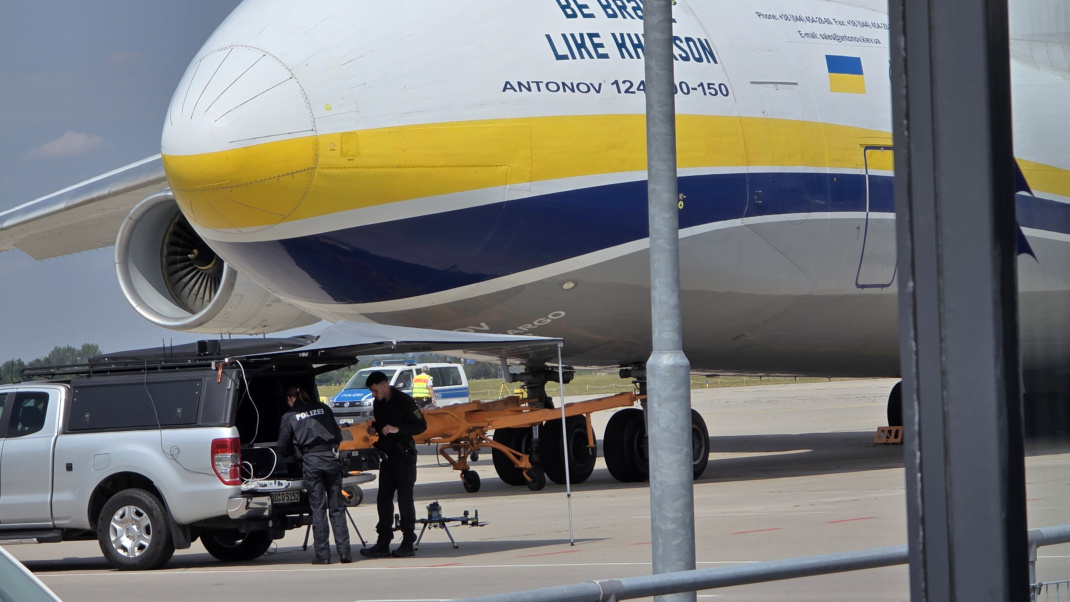
One day after a drone was seized and an explosive device attached to it was defused on the southern airfield of Leipzig Airport, the circumstances surrounding the incident remain unclear.
At a press conference convened at short notice yesterday evening, Federal Minister of the Interior Alexander Dobrindt (CSU) described the event as a “very serious, security-related incident”. He reported that a detonator attached to the explosive had been torn off, which was apparently why an explosion had not occurred.
In a statement, Saxony’s Minister for the Interior, Armin Schuster (CDU), praised the work of all federal and state bodies involved in drone defence. “Working under intense pressure and hand in hand, this worked exceptionally well last night.”
However, this assessment appears to be at odds with a detail reported by various media outlets (including WELT
). According to these reports, a bus driver saw the drone hovering above the ground from his vehicle, got out, pushed the drone to the ground and then informed the Federal Police. This account, which has not yet been confirmed by the authorities, raises the question of what would have happened had the bus driver chosen a different route for his journey.
Dobrindt and Schuster did not speculate on the possible sender of the cargo, which could have been lethal in the worst-case scenario. The Federal Minister of the Interior merely spoke of ‘foreign powers’ believed to be behind the attempted attack. The drone was found amongst parked Ukrainian Antonov cargo aircraft and was subsequently secured by special forces.
The history of these aircraft and their location dates back to 2006. A consortium of NATO and EU states had put out a tender for the operation of a military air logistics facility; the contract was ultimately awarded to “RUSLAN SALIS GmbH”, a joint venture between the Russian airline Volga-Dnepr Airlines and the Ukrainian airline Antonov Airlines.
When the contract expired in 2016, the two companies went their separate ways and submitted independent bids. The Russian bid was awarded the contract because it was cheaper than the Ukrainian one. Two years later, the Russian airline Volga-Dnepr withdrew from the contract ahead of schedule.
As the demand for large-capacity aircraft for military and humanitarian missions by NATO and the EU had not diminished, the Ukrainian Antonov company was brought back to Leipzig Airport.
The Saxony Central Office for Extremism (ZESA) at the Dresden Public Prosecutor’s Office is leading the investigation into the incident. The police investigation is being conducted by the Saxony State Criminal Police Office, specifically the Police Centre for Countering Terrorism and Extremism (PTAZ). This is according to an official joint statement dated 5 August 2026.

Since March 2006, the then Russian-Ukrainian company SALIS Logistics, with its Antonov aircraft, had been a partner of NATO and the EU on international missions. Pictured here: the repatriation of the EUFOR contingent from the Congo in December 2006. Photo: Benjamin Weinkauf
The trail of right-wing street terror through Grünau
They are often referred to as the ‘baseball bat years’: the 1990s were characterised by radicalised political conflicts. Taking to the streets armed with the actual sports equipment, not merely to cause destruction but to deliberately hunt down people, was a brutal side-effect of the social reorientation following the fall of the Berlin Wall.
Today, the event ‘The Baseball Bat Years in Grünau’ at the KOMM-Haus (Selliner Straße 17) invites participants to engage with the issue of right-wing violence in Leipzig-Grünau. The event kicks off at 5 pm with a tour of the neighbourhood, taking participants to specific locations where right-wing groups established a presence and committed acts of violence during that period. This will be followed at around 6.30 pm by a panel discussion in the Wagner Hall of the KOMM-Haus, which is scheduled to run until around 7.30 pm.
Topics to be discussed include racist attacks, attacks on accommodation for asylum seekers, the takeover of youth clubs by far-right groups, and the impact of these developments on the neighbourhood to this day. Whilst the walking tour visits historical sites in Grünau, the subsequent discussion will place the events in their historical context and draw parallels with the current debate on far-right extremism.
Guests include Paul Zschocke, a social scientist and expert on right-wing violence in Grünau, former youth social worker Willie Wildgrube, and other eyewitnesses. The event will be moderated by journalist Carolin Haentjes. Admission is free; no registration is required.
You’d be best off sleeping through this train disruption
It’s bad enough having to travel at night. Today, passengers on the RE 10 regional express line must prepare for disruption. Due to engineering works, the RE 18398 train, scheduled to depart at 23:31 from Leipzig Central Station on the night of Friday 7 August 2026, will be cancelled between Leipzig Central Station and Falkenberg (Elster).
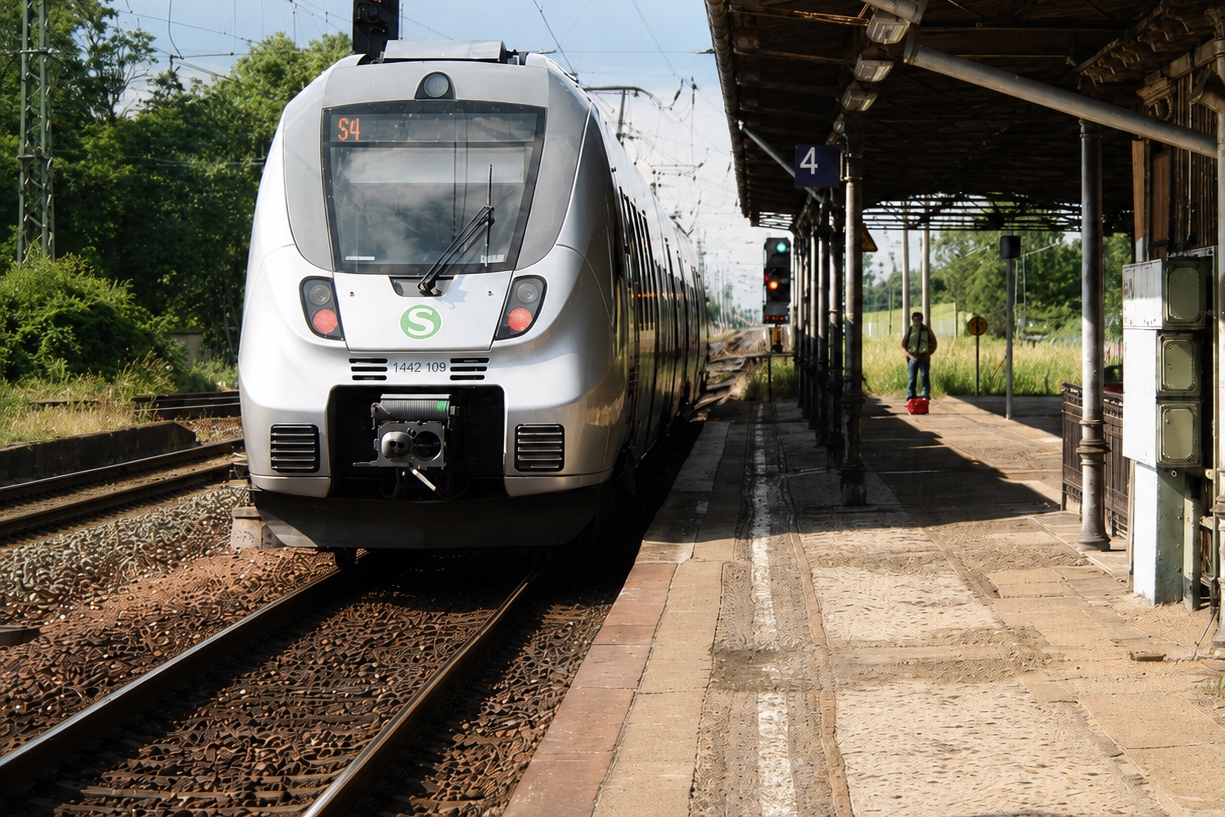
The disruption will be in place from 23:30 to 01:20. As an alternative, Deutsche Bahn recommends using the S4 trains. Timetables for any necessary replacement services are available on the DB Regio travel information page at bahn.de.
Dire Straits music with good food
They may not be “Brothers in Arms”, but they certainly are in spirit. Today, as part of Leipzig’s Marktmusik, the focus is on the music of Dire Straits and Mark Knopfler. From 5 pm, the tribute band THE SCUTTLES will be playing hits such as “Money for Nothing”, “Sultans of Swing”, “Romeo & Juliet”, “Walk of Life”, ‘Telegraph Road’, ‘Private Investigations’ and ‘Going Home’.
Admission is free, and seating is available with or without catering. Anyone wishing to book a seat with catering can do so with one of the participating caterers, which can be conveniently arranged online here. However, this is not a requirement for attending the concert. The festival runs until 9 August and has been offering two live concerts daily on the historic market square since 31 July. The outdoor dining areas of Auerbachs Keller, Fairgourmet and Ratskeller Leipzig all open from 4 pm.
The Scuttles were formed in early 2004 and specialise exclusively in the music of Dire Straits as well as solo pieces by Mark Knopfler. Following an initial development phase, the band says it has been performing regularly outside Leipzig since 2008.
In an earlier statement, singer and lead guitarist Daniel Hütel reflected on the band’s early days: “It all began with the ambition to be able to play ‘Sultans of Swing’ on the guitar.” From this starting point, a programme dedicated exclusively to Dire Straits and Mark Knopfler gradually took shape.
The band has already performed on several occasions at major open-air events in Leipzig, including the Classic Open 2010 on Augustusplatz in front of more than 1,000 visitors.
The Marktplatz can be reached via S-Bahn lines S1, S2, S3, S4, S5 and S5X, amongst others. Toilets are located at the southern entrance to Leipzig Markt S-Bahn station. According to the organisers, a disabled-accessible toilet is also available there.

Music for the eyes
We’re staying on the subject of music – even at lunchtime. Today, as part of the ‘Musik am Mittag’ series, the German Music Archive at the German National Library is hosting a short guided tour of the exhibition ‘From the Edison Cylinder to Blu-ray’.
Under the title “Schellack, Wax and Horsehair – The Early Years of Sound Recording History”, selected exhibits are on display, including rare historical sound recordings, early playback devices and a reproduction piano. Visitors will learn how sound recordings and playback devices have developed over time and how a piano can produce music without a visible pianist.
The state archive collects music in order to preserve it permanently and make it accessible. It is thus Germany’s central music bibliographic memory. The collection is based on sheet music editions and sound recordings, which are handed over to the archive by all German music publishers and labels in accordance with a statutory deposit obligation.
With its ‘Musik am Mittag’ programme, the German Music Archive offers a regular opportunity to gain deeper insights into the exhibition.
The brisk guided tour begins at 12.30 pm; admission is free. And, of course, there’s no need to leave the exhibition after this express tour. There’s plenty to discover, and listening stations are on hand to help. Further dates for this special visit can be found online here on the Music Archive’s website.

Empfohlen auf LZ


So können Sie die Berichterstattung der Leipziger Zeitung unterstützen:




There is one comment