Dieser Artikel ist auch in deutscher Sprache verfügbar: Zum deutschen Artikel.
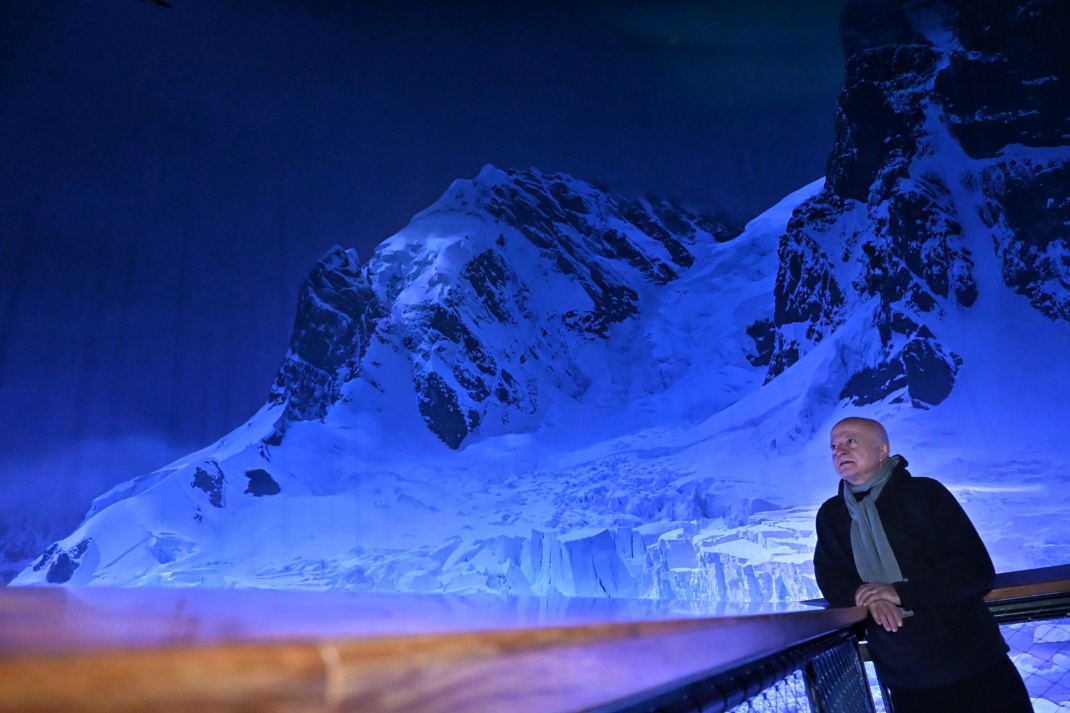
The next destinations are already mapped out. Yadegar Asisi is preparing to send himself into the desert, and down into the deep sea. But first, he takes his audience to Antarctica. Beginning January 24, the fifth 360-degree nature panorama by the Vienna-born artist with Iranian roots will be on display at Leipzig’s Panometer. Framed by an accompanying exhibition that blends information with artistic reflection, Asisi’s latest work offers a rare glimpse into one of the most remote places on Earth.
Ice and Light
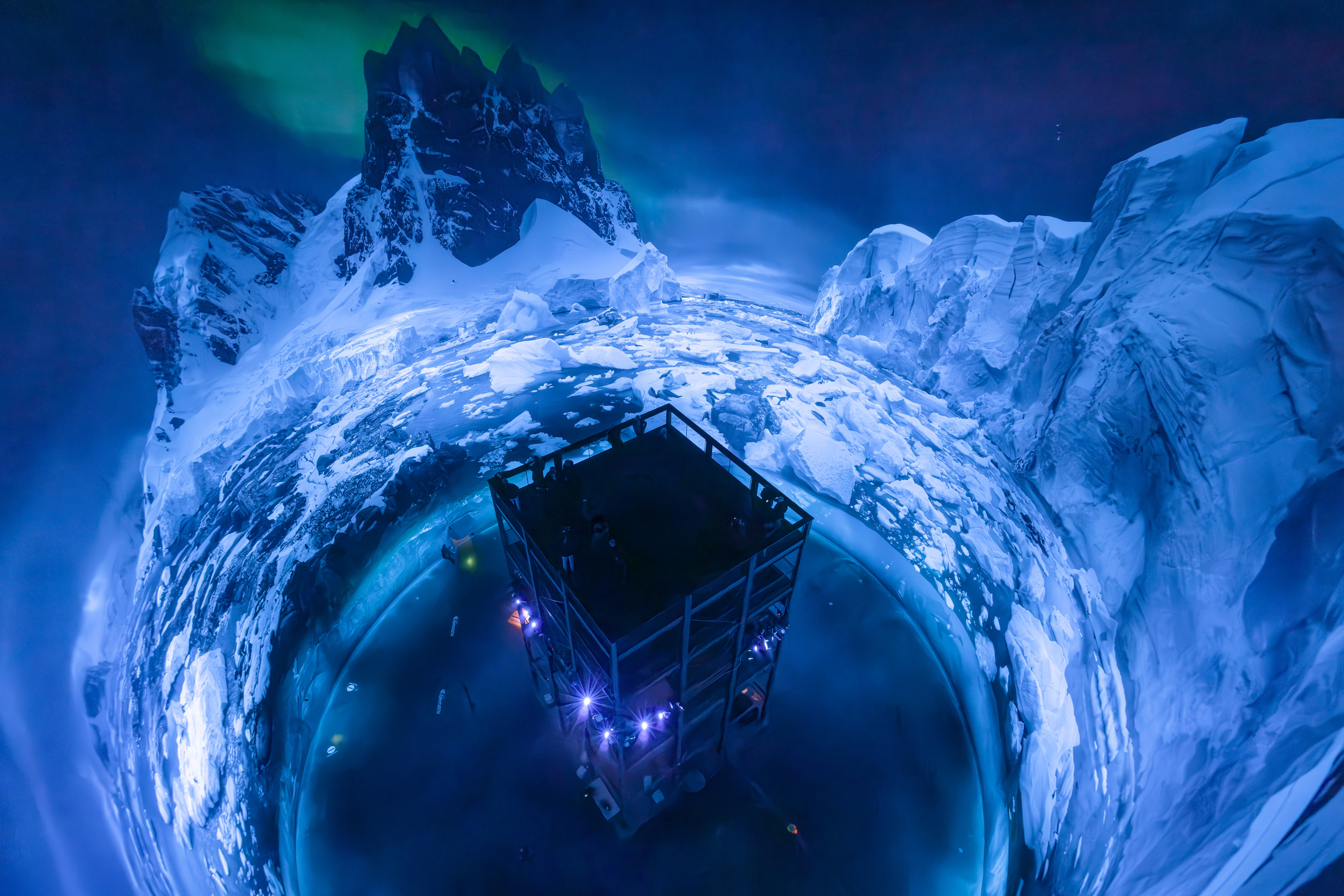
When Yadegar Asisi first traveled to Antarctica in February 2016, he set foot on a continent few people will ever see. It is often imagined as pristine and untouched. Covering some four million square kilometers – larger than Europe – the southernmost continent still radiates the allure of the unknown.
One of Asisi’s first surprises was the sight of vast mountain ranges. “We simply don’t picture that,” he says. “From a distance, we tend to assume Antarctica is just a single expanse of ice.” Even more striking, however, was the light.
“What impressed me most among the different phases of light was the darkness. When the sun disappeared behind the clouds,” the artist recalls. Shades of blue emerged, he says, in a richness and variety he had never experienced before.
Research and Ramifications
Presenting his seventeenth panoramic work, Asisi describes Antarctica as “one of the most inhospitable places on Earth – and at the same time one of overwhelming beauty. It does not want us, and yet it does so much for us.” And that, he insists, is how it should remain.
Antarctica is widely regarded as a key regulator of the global climate. Its massive ice sheets reflect sunlight, helping to cool the planet. In this sense, the continent is not a distant curiosity but a central pillar of Earth’s ecological balance.
What troubles Asisi deeply is the growing intensity of scientific exploration. “Wherever researchers go, someone inevitably wants to know what they’re finding,” he says. “And the more we know, the more desires emerge. Are there resources? Raw materials?”
Usually calm and measured, Asisi can also get angry. “Who do we humans think we are to arrive somewhere, plant a flag in the ground, and claim that a place belongs to us?”
The prospect of mining alarms him. Article 7 of the so-called Madrid Protocol prohibits “any activity relating to mineral resources,” but the treaty can be renegotiated starting in 2048.
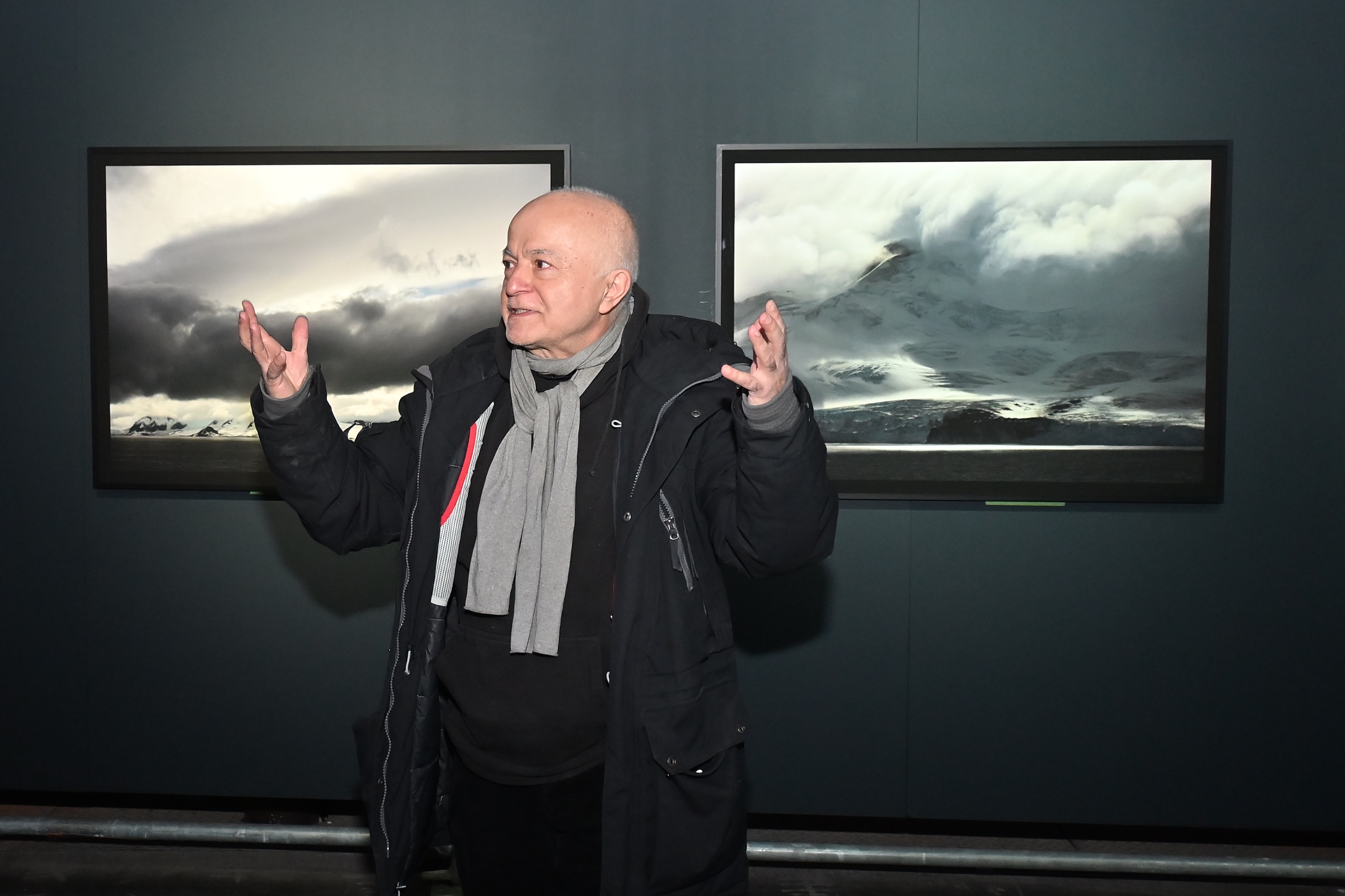
In the accompanying exhibition, Asisi visualizes this imbalance of power. Eighty-eight national flags—representing countries already active in Antarctic research—are set opposite fifteen portrait photographs of animals native to the continent. The result is an oppressive narrowness and darkness, a deliberate prelude before visitors step into the luminous vastness of the panorama itself.
Word and Image
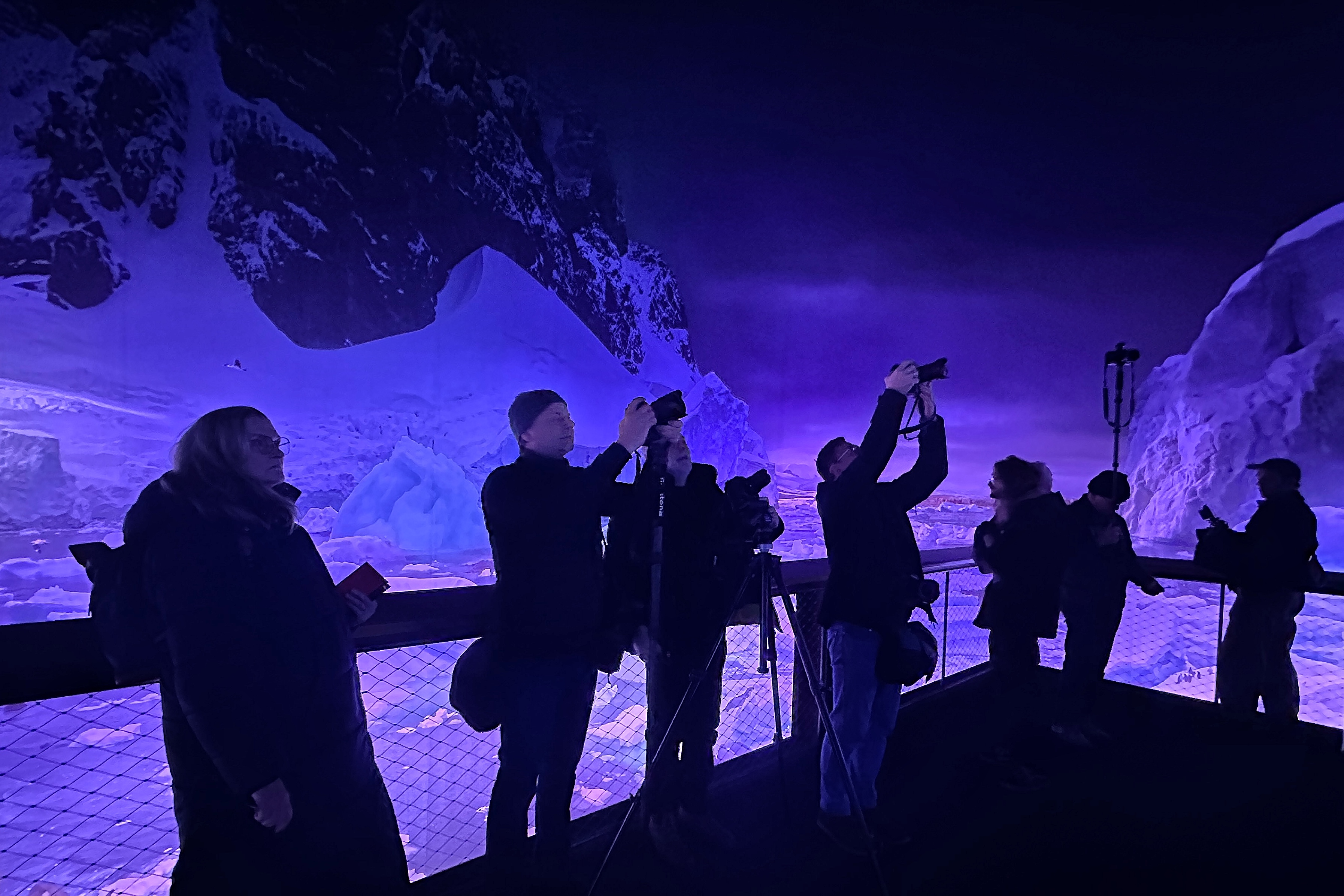
The fabric panels that form Asisi’s vision of Antarctica weigh a combined 650 kilograms. The monumental image spans 3,500 square meters and required 4,750 meters of thread to stitch its individual sections together.
“If I were to drop dead tomorrow,” Asisi says matter-of-factly, “I could say that something happened over the past 30 years that was socially relevant.” As always, he is quick to stress that this is not a personal achievement, but the work of a dedicated and empathetic team.
Past and Present
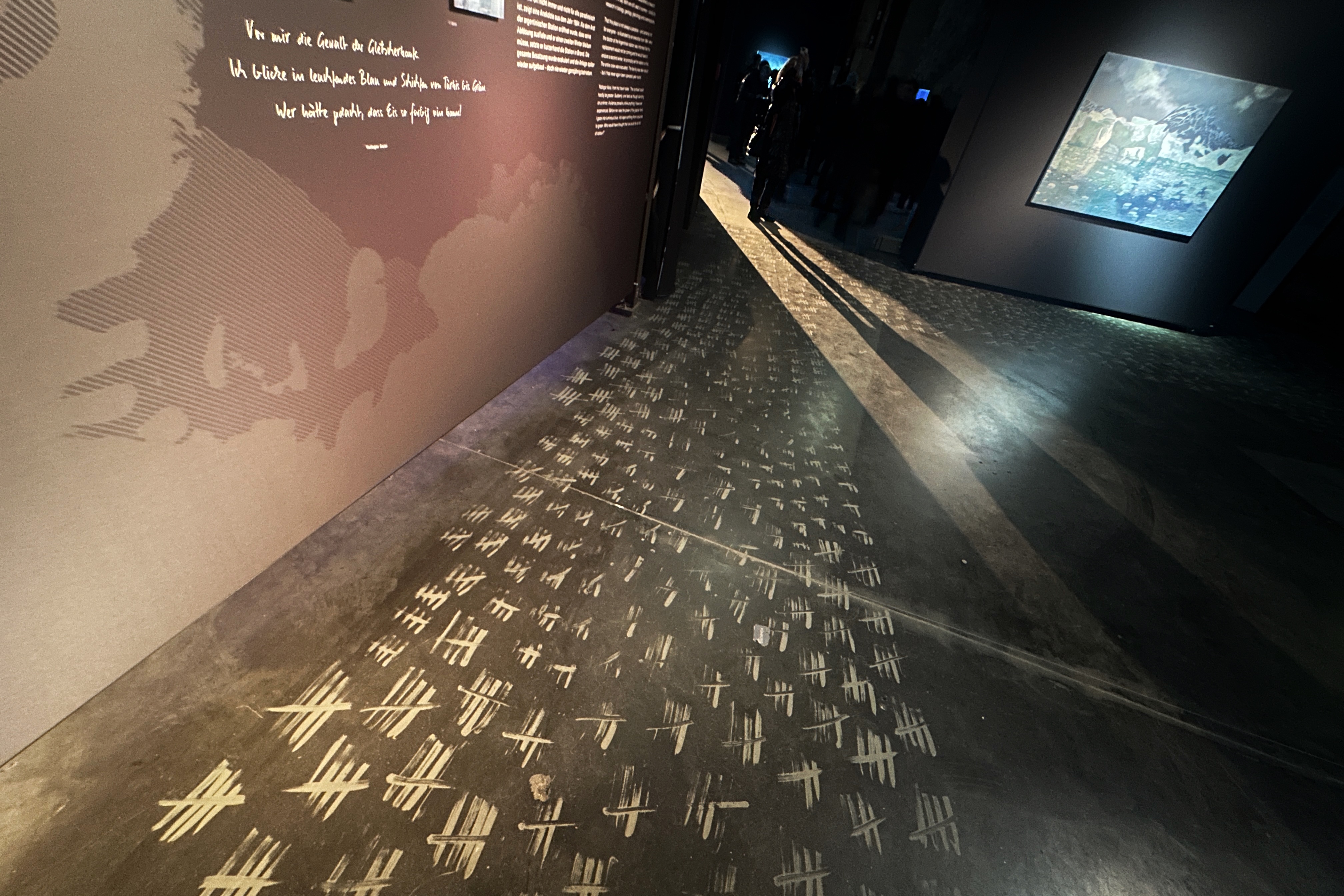
Attentive visitors may notice stylized chalk markings on the floor of the exhibition space. Few ask about them. In an interview, Asisi explains: “They were part of our 9/11 project. Each mark represented a victim of the attacks in New York.”
The memory matters so much to him that he chose to preserve these quiet memorials. They also commemorate those who died as a consequence of the attacks. “And of course,” he adds, “I’m glad when anyone notices at all.”
Looking ahead, Asisi has named the desert and the deep sea as his next major projects. Both, he says, reflect his enduring preoccupation: not visual spectacle for its own sake, but attention and respect. With his earlier project Carola’s Garden, he sought to show that we cannot truly grasp or honor nature’s grand spectacles “if we fail to notice the grass beneath our feet in everyday life.”
That panorama was devoted to a small garden behind the home of a former colleague whom he lost far too early to cancer. Asisi wanted to understand the source of her life energy – and created a deeply personal memorial in her name.
Between January 26, 2019, and March 27, 2022, more than 300,000 visitors found themselves immersed in Carola’s Garden, a place that in reality lay quietly in Leipzig’s Miltitz district.
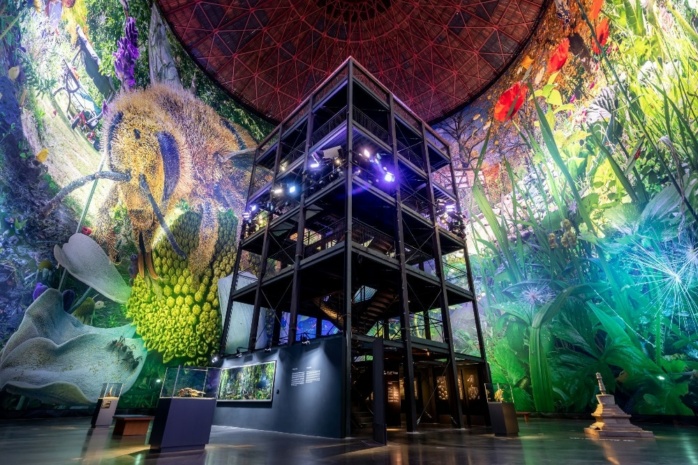
The Antarctica panorama opens January 24 and is open daily from 10 a.m. to 5 p.m., with last entry one hour before closing. Guided tours are offered Sunday through Friday at 11 a.m., noon, 2 p.m., and 3 p.m., and on Saturdays at 11:30 a.m., 12:30 p.m., 2 p.m., and 3 p.m.
The Panometer is best reached via tram line 9 or bus line 70; from the MDR S-Bahn station near the Kohlrabizirkus, it is a 15-minute walk.
Free parking is available directly at the exhibition hall. Inside, a café invites visitors to linger with cakes and pastries, as well as the classic “sausages with potato salad”.
A program of themed events related to the current panorama will be announced on the Panometer’s website.
Empfohlen auf LZ


So können Sie die Berichterstattung der Leipziger Zeitung unterstützen:



There is one comment