
Dieser Artikel ist auch in deutscher Sprache verfügbar: Zum deutschen Artikel.
Today, 31 October, thousands of young people are set to demonstrate again in Saxony. The police are preparing for large-scale operations. Three years on from the controversial police kettle in Leipzig on 3 June 2023, one question therefore arises: what have the state and the police learnt from the events of that time? An exchange of correspondence with three Saxon ministries spanning almost three years provides some answers. Yet many questions remain unanswered.
Demonstrations organised by the ‘Gen Z regelt’ initiative have been announced for 31 October in Leipzig and Dresden. Young people intend to protest against shortcomings in the education system, rising living costs, cuts to social services and compulsory military service. They are also drawing inspiration from youth protests in France. In Leipzig, the authorities are now expecting over 2,000 participants. The police headquarters is preparing a large-scale operation, which is also to be supported by riot police.
The fact that young people are becoming politically active should, at first glance, be good news. After all, schools, clubs, youth organisations and state-funded projects have been striving for years to encourage young people to engage with democracy and participate in society.
But democracy is not learnt solely in the classroom or through participation projects. Young people gain their experience of democracy primarily in situations where they actually exercise their rights – and in doing so come into contact with state institutions. Sometimes these experiences are sobering.
A look back: The Leipzig police kettling incident on 3 June 2023
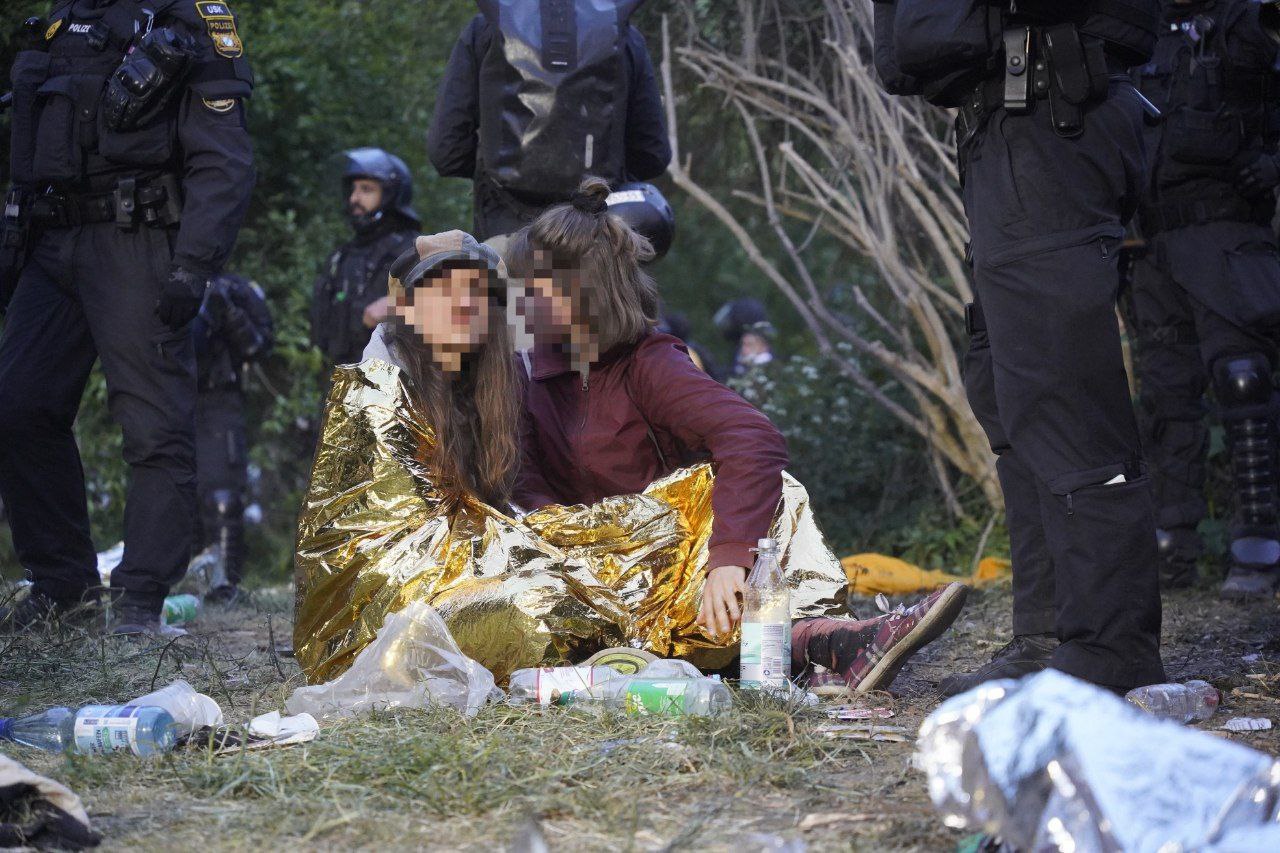
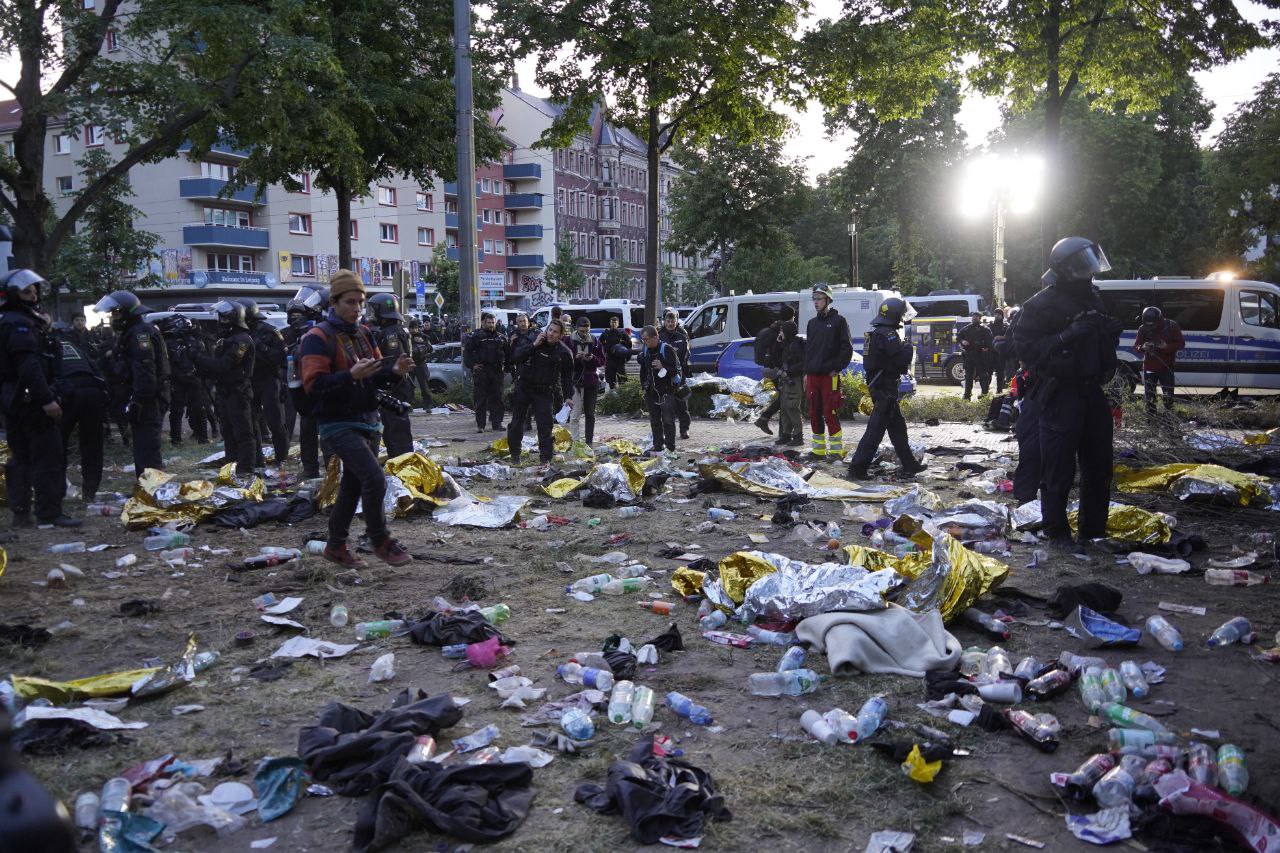
On 3 June 2023, in the context of the protests on so-called ‘Day X’ in Leipzig, more than 1,300 people were detained by the police for many hours. Among them were numerous minors. According to police reports, the kettling was preceded by violent attacks by individual demonstrators on police officers. Anyone who uses violence and thereby triggers an escalation bears responsibility for it – regardless of who that violence is directed against.
However, the majority of those detained were not involved in these acts of violence. Nevertheless, they were initially faced with allegations of a particularly serious breach of the peace. For them, that day was a formative experience. Their trust in the police and state institutions was permanently damaged.

As early as August 2023, the Leipziger Zeitung, in an article entitled ‘Freedom of Assembly in Leipzig and Day X’, described the contradictions this creates for the development of democracy.
We encourage young people to get involved, to express their opinions and to exercise their fundamental democratic rights. But what message are we sending them when they are detained for hours at a demonstration, face serious criminal charges and cannot understand why they, in particular, are being targeted?
I was concerned not only with the legal assessment of the police operation, but above all with its impact on young people. That is why I began to make enquiries with the relevant ministries.
2023: The Ministry of the Interior admits shortcomings
In August 2023, I contacted the Saxon State Ministry of the Interior. My questions were simple: How is the operation being reviewed? Who is involved in this process? Is independent expertise in youth and social psychology being drawn upon?

The Ministry replied: Initially, the police operation was assessed positively within the overall context. The police had been obliged to ensure public safety in view of announced criminal offences and numerous other large-scale events. At the same time, the Ministry acknowledged significant problems.
The situation had been extremely stressful for those trapped inside. Clear and transparent communication had not been achieved. There was also room for improvement in the procedures, in the handling of minors, and in the provision of support and care. That was, at least, an initial admission.
However, I received no answer to the key question regarding the composition of the review team and the involvement of independent youth psychological expertise. A follow-up enquiry also went unanswered.
2024: The Ministry of Social Affairs and the Ministry of Justice are involved
In January 2024, I therefore also contacted the then Minister for Justice and Democracy, Katja Meier, and the Minister for Social Affairs, Petra Köpping. Both ministers replied, each focusing on different aspects.
Petra Köpping reported on a professional exchange with the City of Leipzig, the Youth Welfare Office and the Ministries of the Interior and Justice. This had focused on aspects of the child’s best interests, future implications for the child’s best interests and the involvement of youth welfare services in criminal proceedings. In addition, the Ministry of Social Affairs named three counselling centres in Leipzig to which young people and families could turn.

I found Köpping’s statement particularly important: “Young people’s commitment to democracy and social cohesion deserves respect and support – promoting this is also our aim at the Ministry of Social Affairs.” This is a clear and welcome stance. But how was it put into practice?
The Ministry of Justice’s response was different. It stated that criminal assessments are the responsibility of the public prosecutor’s office and the courts. Those affected could seek legal assistance from a solicitor. When asked where the contradictions between democracy education and young people’s actual experiences were being discussed, the Ministry referred primarily to civil society.
Institutions dedicated to democracy education should, in the first instance, conduct such discussions themselves. The state supports the relevant organisations but does not intervene in their discourse. This institutional restraint is, at first glance, understandable in the context of independent criminal proceedings and the formation of public opinion within civil society.
However, this leaves another question unanswered: who takes responsibility for the social consequences of state action when young people, in particular, lose trust in democratic institutions as a result? This is not about influencing court proceedings. It is about the opportunity to learn from the experiences of those affected.
2026: The majority of preliminary investigations have been dropped
Three years after the Leipzig police kettle incident, the criminal justice record is striking. According to figures from the Left Party group in the Saxon State Parliament, by June 2026, ‘1,190 out of 1,319 preliminary investigations into serious breaches of the peace’ had already been dropped – more than 90 per cent.
This outcome raises significant questions. If, in the case of nine out of ten accused individuals, the criminal allegations cannot be sufficiently substantiated, the question of what consequences the initial suspicion had for those affected becomes all the more pressing. How many minors were among them? What impact did the investigations – some of which lasted for years – have on their personal development, their education and their trust in state institutions?
And who actually reached out to these young people again after the cases were dropped?
2026: What has actually changed?
In September 2026, I contacted Interior Minister Armin Schuster once again. I asked him what he had personally learnt from the events and what he had done since then to restore the lost trust. On 5 October, the Ministry of the Interior’s Ombudsman referred to an intensive police follow-up.
In particular, areas for improvement had been identified in communication with detained individuals, in the prioritisation of minors, in the provision of care, and in cooperation with medical staff. These findings had been incorporated into the optimisation of police operational procedures.
However, the review took place solely within the framework of the internal operational debriefing carried out by the relevant police headquarters. Regarding an independent investigation into possible police misconduct, the Ministry referred to the Central Trust and Complaints Office for the Police. This has at least clarified the framework of the review.
These responses make no mention of an independent youth or social-psychological investigation into the events. It also remains unclear whether the minors involved were themselves systematically consulted. As far as the individuals affected known to me are concerned, I can at least confirm that this was not the case.
A new reply from Petra Köpping
Unlike Armin Schuster, Social Affairs Minister Petra Köpping replied personally. On 28 October 2026, I received a further reply containing, for the first time, more specific information about the changes following the police kettling incident.
According to this, the Leipzig Youth Welfare Office had already reported to the Ministry of Social Affairs on 18 June 2023 that the youth welfare services involved in the criminal proceedings and the relevant on-call services had not been contacted by the city or the police on 3 June. Subsequently, information was exchanged and new communication channels were agreed upon.
The police headquarters has given an assurance that it will ensure youth welfare services are more readily accessible in future during demonstrations involving conflict. This includes providing suitable points of contact, digital information resources and further means of communication. Furthermore, it was agreed between the city and the police headquarters to give greater consideration to young people as a target group within the local preparatory committees for demonstrations.
These are concrete and sensible changes. The Ministry of Social Affairs has also suggested that the Ministry of the Interior and the Ministry of Justice carry out a corresponding review. Köpping also refers to the ‘Forum junge Perspektiven’ (Forum for Young Perspectives), which has been in existence since 2025 and through which young people can be involved in addressing issues of state policy.
This, too, is generally to be welcomed. However, it is a general participatory format. There is therefore as yet no evidence of a targeted review of the young people’s experiences on 3 June 2023.
And what about the young people affected themselves?
After three years of correspondence with three ministries, a nuanced picture has thus emerged.
The police have acknowledged organisational shortcomings. The city and the police headquarters have agreed on changes to their cooperation with youth welfare services. The Ministry of Social Affairs has identified counselling services and held expert discussions. The judiciary has dealt with the criminal proceedings, a large proportion of which have since been dropped. Yet one question runs through all the correspondence: were the experiences of the minors directly affected actually taken into account in the review? There is still no concrete answer to this. Judging by all the available information, the answer is rather ‘no’.

I am also aware, through direct contact with those affected, of reports of physical injuries to minors in connection with the events at that time. I am not yet in a position to assess whether, and to what extent, these cases were recorded, medically documented or independently investigated.
Transparent information on this point would also be important. For there is a difference between the institutional acknowledgement that the way minors are treated needs to be improved, and the actual question of what impact the measures taken at the time had on the young people concerned.
An internal police review can improve operational procedures. However, it does not necessarily replace an independent assessment of the consequences for those affected. And parliamentary scrutiny is not the same as a conversation with a young person who has lost trust in the state.
What does this mean for the demonstrations on 31 October?
Now young people are once again planning to demonstrate in Leipzig and Dresden. The police have a duty to protect their freedom of assembly, to prevent criminal offences and to intervene proportionately in the event of genuine danger. This applies regardless of the political views held by the demonstrators.
The fact that there may be individuals among the participants who are prepared to use violence must not be ignored. However, this must not lead to peaceful young people coming under blanket suspicion simply because of their presence.
Three years on from the Leipzig police kettle, it should therefore be possible to answer a number of questions ahead of the coming weekend:
1. What binding standards now apply to police measures involving minors at demonstrations?
2. How are youth welfare services, guardians and medical services involved?
3
. Which specific changes arising from the review of 3 June 2023 will be incorporated into the operational planning for 31 October 2026?
4. How will the experiences and complaints of affected minors subsequently be independently recorded and evaluated?
5
. And who will take responsibility for ensuring that young people can regain trust in democratic institutions following traumatic encounters with state violence?
It would be disingenuous to assume in advance that there will be another problematic police operation. Nor, however, is it sufficient to simply point out that the police have learnt from their mistakes internally. Particularly in the case of young people, the state’s learning process should also be visible to the outside world.
Democracy education requires credible experiences of democracy
Perhaps this is where the real contradiction lies. We invest heavily in democracy education. We explain young people’s fundamental rights to them, promote participation and encourage them to take responsibility for society. Yet when young people have distressing experiences with state institutions whilst exercising these rights, the subsequent discussion about these issues seems to take place primarily within those very same institutions.
The responses from the ministries certainly demonstrate efforts to make improvements. But trust is not built simply by an authority optimising its procedures. It arises, above all, when those affected are listened to, when decisions are explained to them in a way they can understand, and when mistakes are not merely dealt with internally but corrected in a transparent manner.
31 October therefore presents Saxony not only with a new policing scenario. It also offers an opportunity to demonstrate what has been learnt since 3 June 2023.
A democratic police force does not have to be able to avoid every conflict. But a democratic state should be able to explain, particularly to its youngest citizens, what it has learnt from such a conflict.
And perhaps it should, first and foremost, listen to them.
Empfohlen auf LZ


So können Sie die Berichterstattung der Leipziger Zeitung unterstützen:


There is one comment