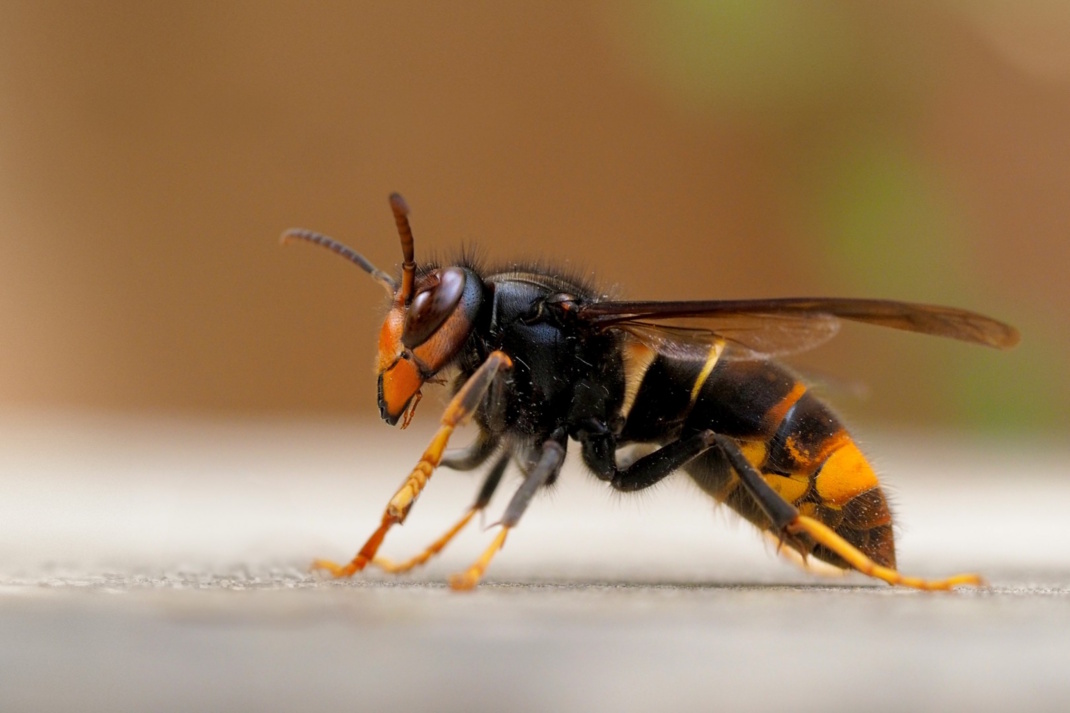
In August 2026, an Asian hornet was spotted in Leipzig-Grünau. This confirms that this invasive insect species has now reached Saxony. The Asian hornet (Vespa velutina) was first recorded in Germany in 2014. It is thought that the species arrived in France from overseas as early as 2004 via transport routes and spread rapidly across Europe from there. Since 2018, its range has also been expanding rapidly in Germany.
With an estimated rate of spread of around 80 kilometres per year, it could soon be found throughout Germany. In France and Spain, it is already causing considerable damage to beekeeping and agriculture. It is therefore important to monitor its further spread and contain it where possible, says NABU Leipzig.
The nature conservation organisation NABU Leipzig wishes to inform and educate the public about this. The Asian hornet behaves just as peacefully as native hornets, but can appear in larger numbers.
Although this non-native invasive species poses a threat to native species, it is hardly a threat to humans. However, damage to beekeeping and agriculture is possible if the species becomes established. It is possible to at least curb its spread, provided the Asian hornet’s nests are found quickly. This requires as many sightings of the insects as possible.
NABU is therefore calling on the public to officially report sightings of the Asian hornet to the authorities, together with a supporting photograph. To pinpoint their presence, a ‘wick pot’ can be used. Under no circumstances should you attempt to remove hornet nests or suspected nests of the Asian hornet yourself, as these are defended by the aggressive insects.
Furthermore, there is a risk of mistaking them for legally protected species. If you have any questions, you can also contact the NABU Leipzig Hymenoptera Advisory Service, although their capacity is very limited.
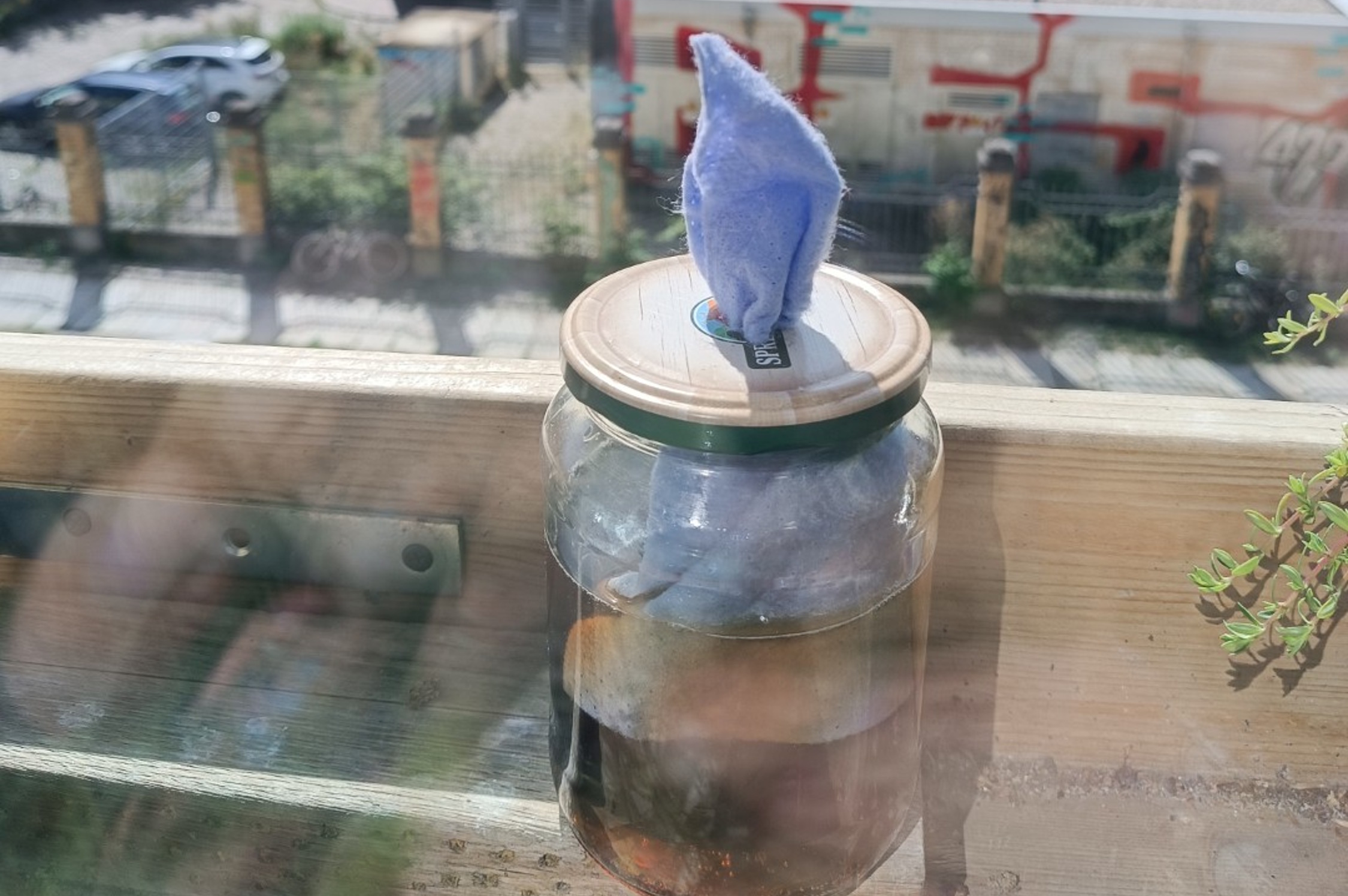
Asian hornets can be attracted using wick pots. These can be used to detect their presence and, if all goes well, to locate their nests. It is helpful to have as many observers as possible, which is why everyone is encouraged to get involved. Beekeepers in particular, or anyone with a garden, could easily help with this.
To do this, wick pots are set up, for example on a windowsill or in the garden. They are then observed from a safe distance, allowing you to identify which species are attracted to them. The distinctive Asian hornet can be distinguished relatively easily from native species. The introduced species is darker overall, partly black, and has yellow legs; the native species appears orange-brown and has dark legs.
As an ‘attractant’ in the wick pot, use a mixture of 300 ml of dark beer, 300 ml of white wine and 300 ml of fruit syrup. A jam jar, for example, can be used as a wick pot, with a hole drilled in the lid. A piece of felt (yellow is the most effective colour) is threaded through this hole, which then soaks up the solution.
It is then positioned at a height of around 1 to 1.5 metres above the ground, with as unobstructed a view as possible in all directions. Within 24 hours at the latest, ‘curious’ visitors will arrive; these will mainly be wasps, but also Asian hornets, provided they live in the area.
The Asian hornet
The Asian hornet is slightly smaller than the European hornet; its body is darker and its legs are yellow. The nests of the Asian hornet are home to far more individuals. Their colonies consist of up to 2,000 individuals, compared with up to 700 for the native hornet.
Towards humans, the Asian hornet behaves just as peacefully as the native species. However, both species will defend their nests, which is why you should exercise caution when near a nest. Under no circumstances should you, for example, attempt to remove an Asian hornet’s nest yourself.
Sightings (with a photo or video) can be reported via the Free State of Saxony’s reporting portal.
Empfohlen auf LZ


So können Sie die Berichterstattung der Leipziger Zeitung unterstützen:





There is one comment