Dieser Artikel ist auch in deutscher Sprache verfügbar: Zum deutschen Artikel.
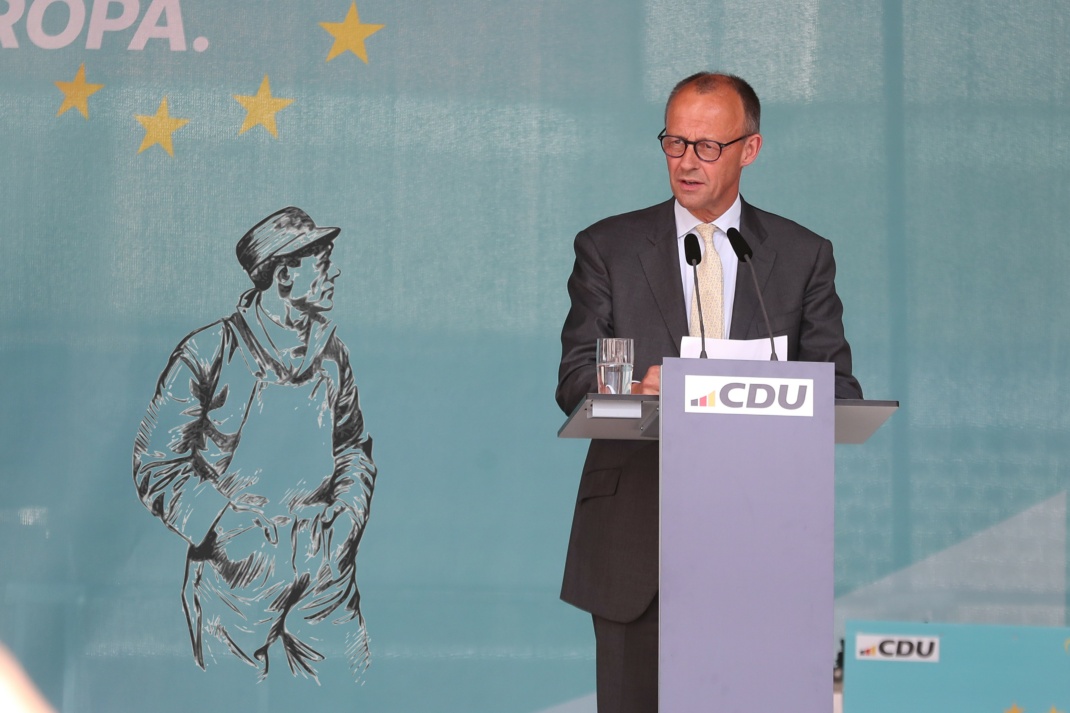
“Well, to be honest, all this constant nagging, all this constant whingeing, all this badmouthing, all this talk of our country falling apart. I’m allowed to say this on occasions like this. I’m simply fed up with it.” So said Friedrich Merz in his summer interview with Diana Zimmermann of ZDF. This was in response to his outburst at the CDU state party conference in Düsseldorf, which Ms Zimmermann brought up: “Cultural pessimists, prophets of doom, whingers, grumblers, indignant professional critics – step aside.”
Yes, here is the Chancellor saying: “No Chancellor before me has ever had to put up with anything like this. I’m not complaining about it, but that’s how it is.” Finally, plain speaking: enough of the whingeing!
And he immediately gives a positive example: “We have so many opportunities. We’re seeing an unprecedented number of start-ups being set up by young people. In the first half of 2026 alone, almost as many new businesses were founded as in the whole of 2025.” Then he says: “I’m simply fed up with people only speaking ill of Germany.”
Somehow, he’s forgotten the many people who quietly go about their work every day. Things were more dramatic during the heatwave, when millions of people went to their non-air-conditioned workplaces and kept the country running. Many volunteers, for example in Leipzig, have, at least for the time being, repaired the damage caused by the heat. We still have a high number of unpaid overtime hours in Germany – in 2024 the figure stood at 637.5 million – and people provide essential services to society on a voluntary basis. Friedrich Merz, however, believes that people are not working hard enough – if that isn’t just grumbling at the public.
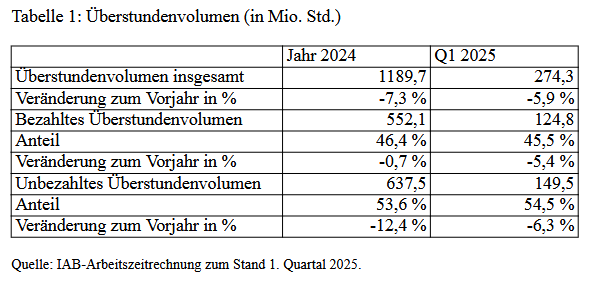
Overtime in 2024 and the first half of 2025. Screenshot: LZ
When asked about this during the summer interview, he reacted with some sensitivity: “And it’s part of the truth, Ms Zimmermann, that many people in Germany have said that it’s exactly as Friedrich Merz put it there. It’s just that they’re hardly mentioned in your reporting.” Apart from business leaders – by no means all of them – and business lobbyists who publicly agree with him, where exactly are these people who “I receive a great deal of support from the public for what I say on these matters”?
Friedrich Merz is portraying the coverage on ZDF and in other media as one-sided and directed against him. He has yet to provide any evidence of this widespread support; these people are not making themselves heard in the media, not even on social media.
Why, in fact, is the Chancellor comparing working hours in Germany and Switzerland this time? “I merely said that the number of hours worked in Germany is currently too low. The Swiss work 200 hours more than the Germans.” If you look at the statistics for 2025, Switzerland, just like Germany, is below the EU average.
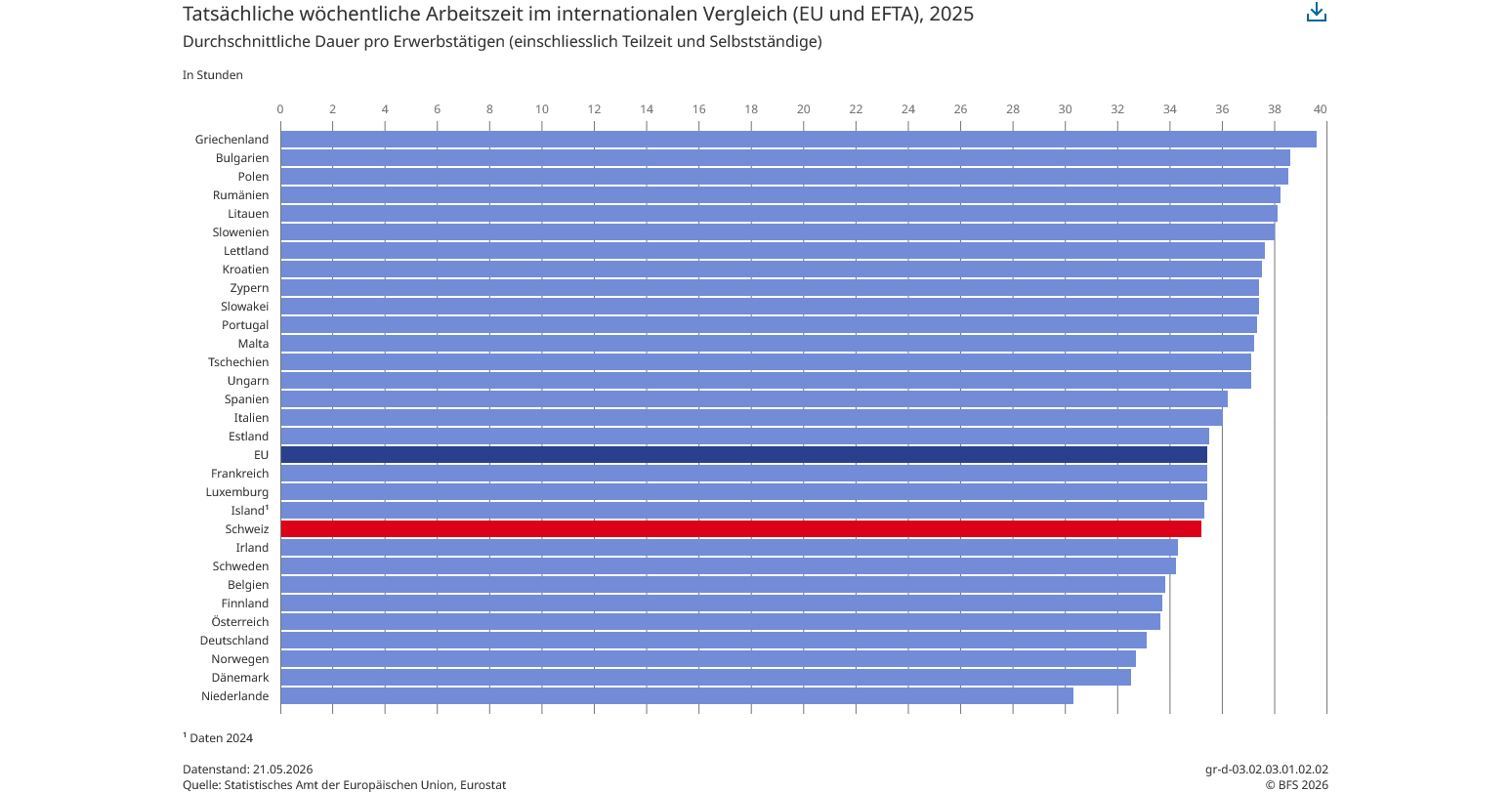
Actual weekly working hours in an international comparison (EU and EFTA) – 2025 chart. Screenshot: LZ
Yes, the comparison has been chosen deliberately. If Merz were to take the frontrunners, Greece and Bulgaria, as examples, he could not say: “Our productivity is too low, our economic performance is too low, and we need to do something about it.” Productivity and performance simply have nothing to do with the sheer number of working hours; this is statistically verifiable.
Nor does it help when he later says: “I know how much people achieve and work. I see it in hospitals, I see it in care homes, I see it in many other places.” He shows no appreciation for these people. For him, this is normal and in need of improvement. Because immediately afterwards he adds: “But I’m also saying that, overall, we simply have to perform better in this country.”
Conclusion: Friedrich Merz grumbles at his people, but fails to find a solution acceptable to everyone. After the summer interview comes the summer recess, during which Spahn must be replaced and the government may need to be reshuffled. Furthermore, Friedrich Merz wants to improve his communication – at least, that is what he said at the summer press conference.
Will that help? When asked whether politics is often simply communicated poorly, we received the following answer from a communications scholar in 2024:
“Politicians have a tendency to interpret political problems as communication problems. It’s convenient to say: ‘We simply haven’t communicated our policies well enough, but the policies themselves were right.’ That also seems to me to have been a popular reaction to the recent European elections. However, this fails to recognise that sometimes the problems do not lie at the level of communication, but actually at the level of substantive politics – at the policy level.”
So können Sie die Berichterstattung der Leipziger Zeitung unterstützen:




There is one comment