Dieser Artikel ist auch in deutscher Sprache verfügbar: Zum deutschen Artikel.
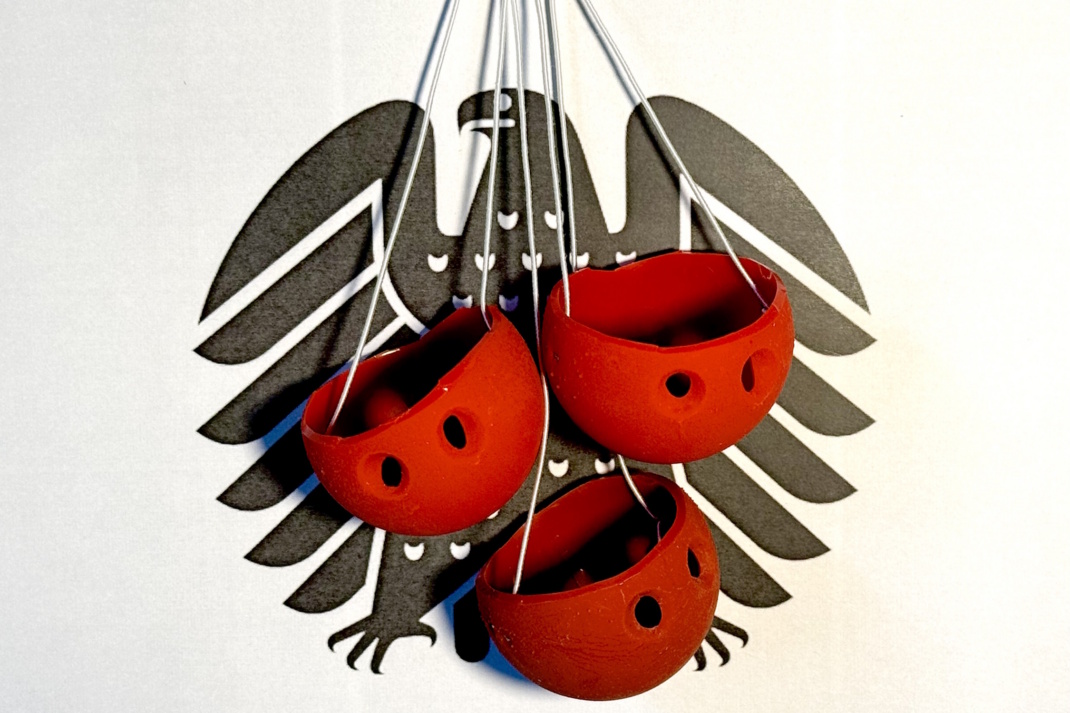
Does Germany need an Institute for Political Clowning? We asked ourselves this question and came to the conclusion that – yes, perhaps it’s not a bad idea. The German Bundestag took its time: for a full nine months, the Bundestag administration examined the proposal to establish an Institute for Political Clowning. The outcome of this thorough review is now available.
The office of Bundestag President Julia Klöckner initially referred the matter to the Bundestag’s Petitions Committee. The committee dealt with the submission under reference number Pet 2-21-02-11016-007232. In its response, the fundamental relevance of the issue is expressly acknowledged:
“Your petition […] ultimately highlights real challenges at the intersection of politics, the public sphere and the media – an issue that will continue to occupy both the political establishment and the general public.” Nevertheless, “no specific […] matter suitable for parliamentary scrutiny can be identified.”
An Institute for Political Clownery
In the summer of 2025, the NAUMZI Nature & Environment Circus had offered the Bundestag Presidium its support in establishing an Institute for Political Clownery to analyse styles of political communication. The aim was to gain a better understanding of how performative strategies designed to provoke irritation and deliberate escalations can influence political and parliamentary processes.
The initiative was prompted by Chancellor Friedrich Merz’s well-known remark: “The Bundestag is, after all, not a circus tent.”
Soon afterwards, the CDU parliamentary group leader, Jens Spahn, followed suit in the ‘Stadtbild’ debate, lamenting the ‘left-wing circus of outrage’. And Merz had also made it clear in the past: ‘This circus with the Reds, Greens and Yellows must be brought to an end.’
Others have tried this before: “We’re putting an end to the circus.” – “I see. And those over there are the clowns?” – Foaly poked his head through the door. “Excuse me for interrupting your elaborate circus metaphor, but what on earth is that?” – that’s how simply the young adult novel *Artemis Fowl* by Eoin Colfer puts it.
But still – Merz offers us some interesting comparisons here between politics and the circus world. These observations could be seen as an opportunity – especially as the circus has for centuries upheld high professional standards of timing, precision and understanding of roles.
“Should elements of political communication inadvertently come to resemble the circus genre, experts would of course be on hand to offer advice,” states the initiative.
A training programme of a special kind
The proposed research and further training programme included, amongst other things, an international research focus entitled ‘Political Clowning and Pseudo-Clowning – Opportunities and Risks’. In cooperation with the Bundestag, the initiative sought to investigate under what conditions theatrical or humorous devices contribute to the comprehensibility of political content – and when they take on a life of their own.
In this context, the initiative felt it made sense to specifically foster existing communicative talents. Clowning has long offered tried-and-tested methods for channelling rule-breaking, disruption and escalation into orderly paths. Ultimately, clowning aims for a conciliatory outcome in which all those involved – performers and audience alike – emerge from the performance with a sense of light-hearted satisfaction.
However, against the backdrop of the German Bundestag’s current reluctance, the founding initiative of the Institute for Political Clowning feels compelled to return to the audience gallery. Curtain up, clear the stage – the performance is already underway.
Empfohlen auf LZ


So können Sie die Berichterstattung der Leipziger Zeitung unterstützen:




There is one comment