Dieser Artikel ist auch in deutscher Sprache verfügbar: Zum deutschen Artikel.
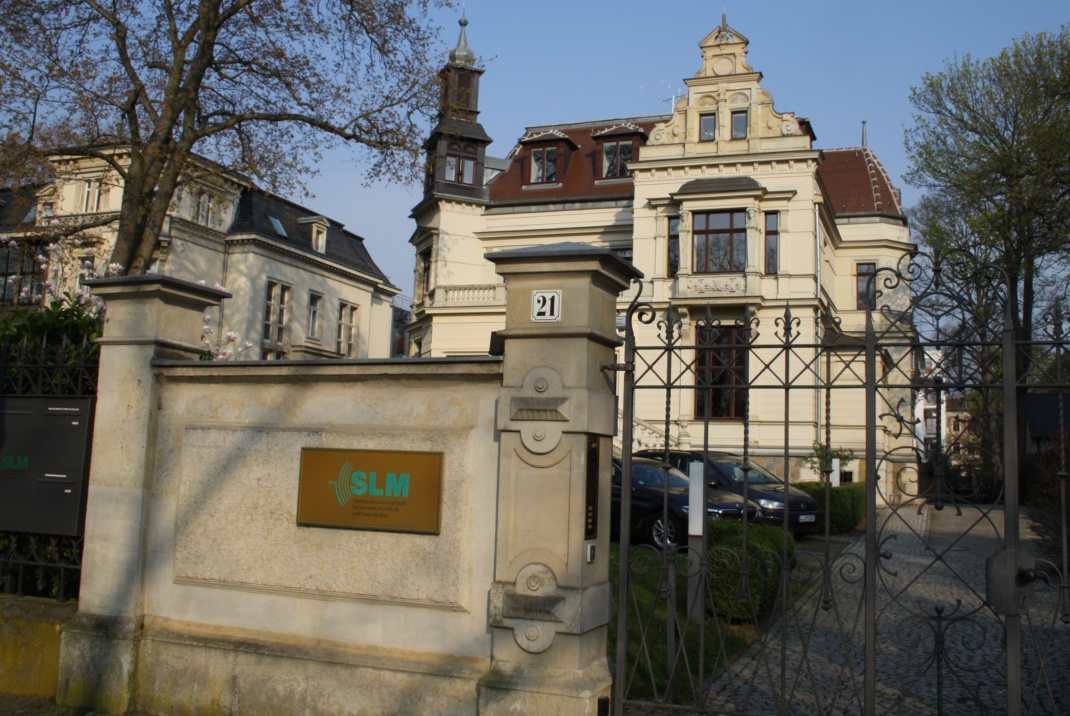
“Media diversity is one of the most important factors in ensuring that the media fulfil their role in shaping public opinion. It is therefore of great importance to the SLM that programmes are balanced and that all major schools of thought are represented. Creating the best possible operating conditions for private radio and television broadcasters in Saxony is a key objective of the SLM’s funding policy,” says the Saxon State Media Authority, describing the core of its work.
To this end, it receives an annual share of the broadcasting licence fees. However, there has been criticism for some time now. The Left Party group in the Saxon State Parliament wants to change this through a legislative initiative.
The Saxon State Authority for Private Broadcasting and New Media (SLM) has – as reported here in the *Sächsische Zeitung* – is repeatedly the subject of criticism – amongst other things, due to comparatively high salaries and enormous reserves set aside for the purchase of a flat in the office building, which is not even for sale. The Left Party group in the Saxon State Parliament therefore wants to oblige the State Media Authority to be more transparent and is now tabling a draft bill to this effect (Parliamentary Paper 8/7826).
“The State Media Authority must clear itself of the accusation of wasting money,” emphasises Luise Neuhaus-Wartenberg, media policy spokesperson for the Left Party parliamentary group. “It should therefore have a vested interest in ensuring that our draft bill is passed. In addition to high property costs, the in-house collective agreement is the main target of criticism, as it – like the managing director’s remuneration – exceeds the salary levels in the public sector.”
Criticism from the Saxon Court of Auditors
This was also criticised in October 2025 by the Saxon Court of Auditors (Parliamentary Paper 8/4916), which had examined the SLM’s financial performance for the years 2015 to 2022.
“Subscription-funded media services are a cornerstone of democracy, and we are fighting to preserve them. The sometimes critical attitude towards them can only be countered with maximum transparency,” Luise Neuhaus-Wartenberg sums up.
“We want to incorporate the public access and transparency standards that apply to public service broadcasters into the Saxon Private Broadcasting Act. These apply in particular to MDR, ZDF and Deutschlandradio. The State Parliament has regularly reaffirmed these requirements through the State Broadcasting Treaties. As the State Media Authority is also funded by broadcasting licence fees and budgetary allocations, these rules should apply to it as well. Our proposed wording is based on the State Broadcasting Treaties.”
The proposed legislation is intended to stipulate that the Media Council and the SLM Assembly shall, as a rule, hold their meetings in public, and that their composition, agendas, attendance lists and the outcomes of their meetings shall be published. An annual report and the audited annual accounts are also to be disclosed. Furthermore, pay scales and agreements both within and outside the pay scale framework are to be made transparent.
Greater control over finances
“In future, the Media Council must monitor all remuneration,” explains the Member of the State Parliament. “In doing so, it must ensure that this remuneration is proportionate to the tasks and performance of a public-law institution and is aligned with the provisions of the collective agreement applicable to the public service of the federal states.” Consequently, the draft bill implements the requirements set out by the Court of Auditors. Salary structures and the remuneration of the managing director are to be brought into line with the collective agreement for the public service of the federal states.”
In the view of the Die Linke parliamentary group, it is high time – and legally required – to extend the application of the fundamental standards of openness and transparency that apply to public service broadcasters and to ensure their corresponding application to the Saxon State Media Authority as a public-law body, which is financed by broadcasting licence fees and public budget funds, according to the explanatory memorandum to the draft bill, on which the other parliamentary groups in the state parliament must now form an opinion.
The proposal is likely to meet with a positive response from the majority. For when it comes to public service media and the state media authorities financed by broadcasting licence fees, transparency is the order of the day.
Empfohlen auf LZ


So können Sie die Berichterstattung der Leipziger Zeitung unterstützen:
There is one comment