
Dieser Artikel ist auch in deutscher Sprache verfügbar: Zum deutschen Artikel.
One could plagiarise a sentence by Friedrich Merz – with a slight tweak. It would then read: “No working population before us has ever had to endure anything like this.” Of course, this only applies to the period after 1950 and to the territory of the former Federal Republic. Such mistrust of the hard-working people in this country is surely unique.
Indeed, from the Hartz IV laws through to the reform of the ‘Bürgergeld’ – now known as ‘Grundsicherung’ – which can lead to utter destitution, there have been many measures taken by federal governments of all political colours against so-called ‘social parasites’. At present, there is a massive crackdown on working people, on those who are the real contributors to society.
Friedrich Merz, for instance, stood before the cameras at the press conference following the coalition committee meeting on 2 July and said:
“We cannot accept the exorbitant levels of sick leave in companies following the pandemic. We are abolishing sick notes issued over the phone and introducing the requirement to submit a certificate of incapacity for work from the first day of illness. This is a tough decision, we know, but we can no longer afford this competitive disadvantage caused by long periods of absence in companies.”
This implies that working people have been abusing both sick notes from the third day onwards – which companies have always been able to restrict under employment contracts – and sick notes issued over the phone on a massive scale.
What are the consequences of this?
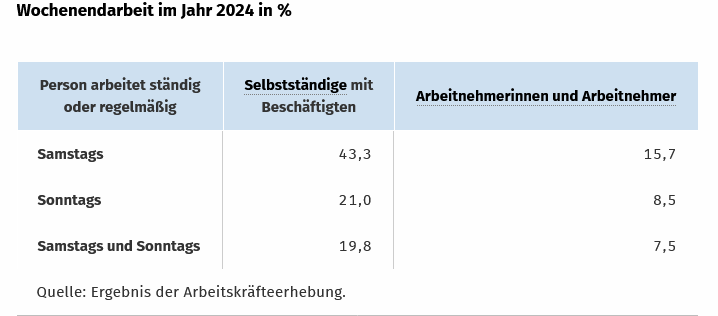
Assuming there are around 46 million people in the workforce in Germany, on Saturdays an average of around 7,222,000 (15.7 per cent) work on Saturdays, 3,910,000 (8.5 per cent) on Sundays and 3,450,000 (7.5 per cent) on both weekend days on average. If sick notes are no longer issued from the third day onwards, people who fall ill at the weekend will be forced to go to out-of-hours clinics, where available, or straight to A&E. The latter in particular are constantly overburdened, so this situation is set to worsen.
If telephone sick notes – which are only permitted for illnesses without severe symptoms – are abolished, GPs’ surgeries will once again be overwhelmed by people with mild illnesses. The risk of catching additional infections in waiting rooms will increase.
In my view, however, the biggest problem is that this step backwards sends a message to both working people and doctors alike: ‘We don’t trust you; you’re abusing these rules!’
In addition, the federal government also wants to impose harsher penalties for ‘the incorrect issuing of a certificate of incapacity for work’ (AU). So some as yet undefined body is to decide whether a certificate of incapacity for work is necessary. Only another doctor can do this properly; neither administrative officials nor employers are capable of doing so. It is already possible to review a certificate of incapacity for work, but what does ‘impose harsher penalties’ mean? Does the Federal Government now intend to step up monitoring of this as well? With what medical staff does it intend to do so?
Conclusion: The Chancellor and his government are making it clear to the people of this country that they are viewed with suspicion. The planned measures will place a further strain on the healthcare system, which is already stretched to the limit. At least if one assumes that the number of genuinely ill people far exceeds that of those feigning illness. Over the coming days and weeks, we will be speaking to people from the worlds of politics, healthcare, and other affected groups, and will report on this.
So können Sie die Berichterstattung der Leipziger Zeitung unterstützen:





There is one comment