Dieser Artikel ist auch in deutscher Sprache verfügbar: Zum deutschen Artikel.
The all-consuming question: when will Leipzig’s trams be running again? After three days of hard work, at least one line is once again running half its route. But when will the others follow … Two important deadlines are coming to an end today for students at the University and HTWK. Contributing to a new code of conduct and applications to study abroad. Both can still be sorted out today.
What’s next for tram services?
The tram lockdown is entering its fourth day – and there is no real forecast as to when the tram service disruption will be resolved. Work is in full swing on the tracks of the rail network. And in some cases, quite literally.
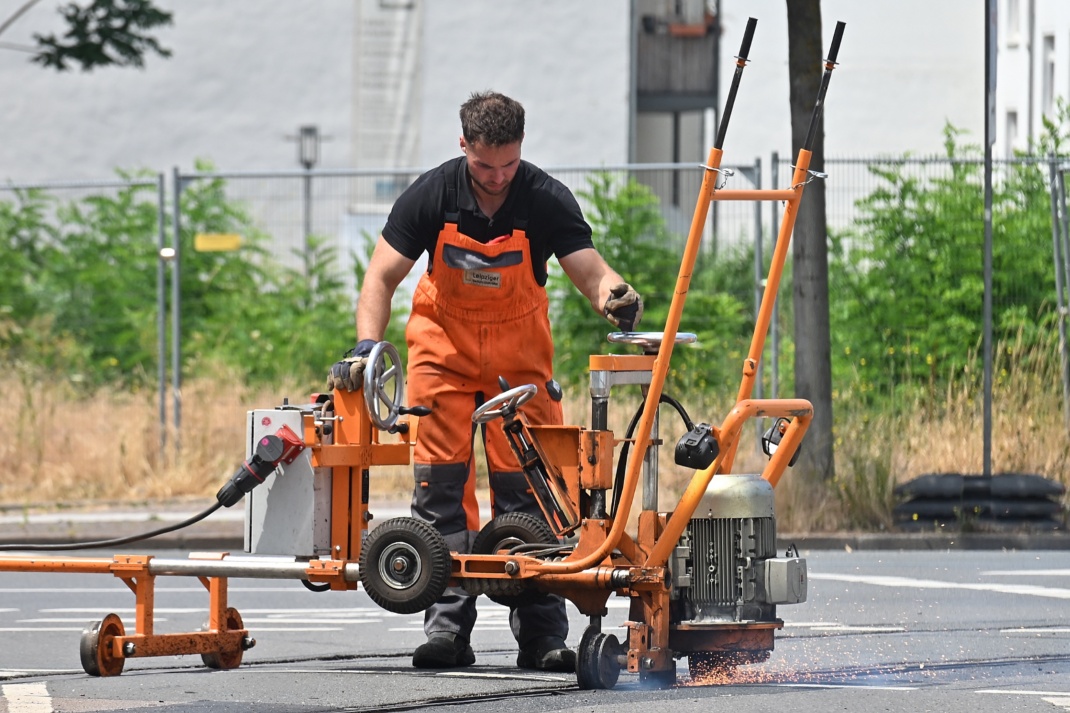
A company from the Saale district is using a method in which – much like a pressure washer – dry ice is forced onto the stuck-together rails. Within seconds, the sticky joint compound solidifies, freezes and bursts away from the steel.
Due to the extreme heat of the past few days, this filler material had swelled out of the grooves in the track bed across the board, clogging up points, causing the trams’ undercarriages to stick, and spreading via them to areas where the filler had not even been used.
The dry ice method is quick, but capacity is limited. The vast majority of the work has to be carried out by hand, which is physically demanding. Using trowels, shovels, wire brushes and grinders.
These tools, in turn, become clogged and must themselves be thoroughly cleaned time and again. Since yesterday, at least Line 1 has been running on a section between Lausen and Leuschnerplatz.
According to information from the transport authority this morning, it is not possible to say with any certainty which routes will follow and when. It would be irresponsible to make any predictions about something when it is not known whether they can actually be met, explained a company spokesperson in response to an enquiry from the LZ.
Work is still ongoing across a wide area; the routes scheduled for reopening must be tested for safety through trial runs without passengers once they have been cleaned.
Although there is now growing discontent in some areas because the full resumption of tram services is taking so long, the LVB states that reliable information can only be provided once these checks have been successfully completed.
The company intends to provide information about possible route reopenings on its website and via the LeipzigMOVE mobile app.
University calls for more decorum
In large corporations, signing such documents is sometimes part of the employment contract. In small craft businesses, people often seal them with a handshake: the rules governing day-to-day interactions within the company. Leipzig University now wants to adopt a new ‘Code of Conduct’ of this kind – and not as a set of instructions drawn up by the management.
According to the university, the code is not to be developed solely by the university management, but jointly with students, academic staff and administrative staff.
The in-person consultation phase at the university’s campuses ended on 22 June, whilst the opportunity to participate online has been extended until today.
A university-wide ‘Code of Conduct’ can shape the university’s culture, complement existing anti-discrimination structures, provide guidance for managers and staff, and strengthen participation in university decision-making processes.
Similar codes of conduct have been introduced or revised at numerous German universities in recent years, often in connection with diversity strategies, equality and the prevention of discrimination and harassment.
Information on the process and access to the online survey can be found at uni-leipzig.de/code-of-conduct. Feedback from both paper-based and digital responses will then be incorporated into the revision of the existing Code of Conduct. The aim of the ‘Code of Conduct’ is to establish common guidelines for working, teaching, learning and conducting research at the university.
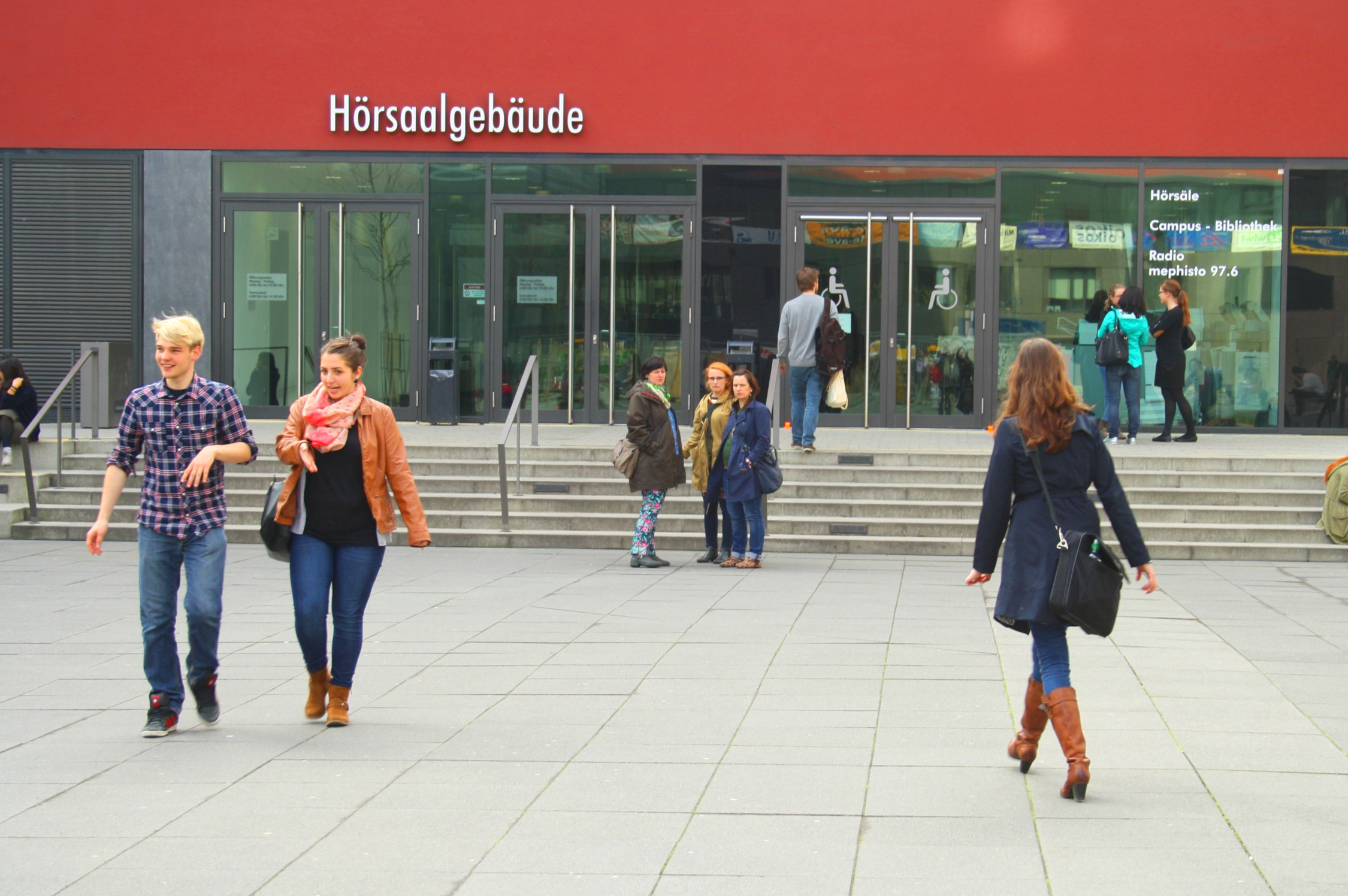 The university is adopting new rules of conduct. Archive photo: Ralf Julke
Travel broadens the mind
At another university in Leipzig, too, the message today is: ‘Hurry up!’ However, good behaviour is only a secondary consideration here. Students at HTWK Leipzig who are keen to travel further afield have until the end of today to apply for the remaining exchange places for the 2027 summer semester. The university is allocating remaining places at its partner universities. Applications can only be submitted today via the Mobility Online portal.
These remaining places are aimed at students who have not yet secured an exchange place or who have decided at short notice to spend time abroad – in the hope that things might work out better elsewhere.
Information on which universities still have places available can be found on the application portal. As the academic terms at partner universities may vary, HTWK Leipzig recommends checking these before applying.
The university will decide on the allocation of places according to the standard selection criteria. These include academic performance to date, existing language skills and motivation for the stay abroad.
Should any places remain vacant after the selection process has concluded, a waiting list procedure is in place. Where necessary, further extension periods may also be introduced. Students can find out about various funding options.
In addition to Erasmus funding, under certain conditions, BAföG for study abroad and other scholarship programmes, such as those offered by the German Academic Exchange Service (DAAD), may also be available.
Heating plan despite – and precisely because of – the heat
Today marks the deadline by which the city council must submit its municipal heating plan. This is based on the nationwide Heating Planning Act (WPG), which obliges all local authorities to draw up a long-term strategy for a climate-neutral heating supply.
Whilst cities with more than 100,000 inhabitants must finalise their plans by today, smaller municipalities have until 2028 to do so. The aim of the Act is to provide citizens, businesses and energy suppliers with reliable prospects for future investments.
Leipzig’s heating plan was completed on time and sets out the current heating demand and the resulting CO₂ emissions, whilst also highlighting potential solutions such as geothermal energy, waste heat, river water, large-scale heat pumps or solar thermal energy.
However, the heating plan does not impose any immediate obligations on homeowners to replace existing heating systems. The heating plan serves as an important basis for future decisions by the municipal utilities, for the allocation of funding, and for investments by housing associations and private homeowners.
According to estimates, the conversion of Leipzig’s heating supply will require investments running into the billions. Consequently, the city council has recently held intensive discussions on issues such as financing, future heating prices, network expansion, the distribution of district heating connections and the social aspects of the heating transition.

Empfohlen auf LZ


So können Sie die Berichterstattung der Leipziger Zeitung unterstützen:



There is one comment