Dieser Artikel ist auch in deutscher Sprache verfügbar: Zum deutschen Artikel.
Yesterday, an 89-year-old pensioner was the victim of a robbery in Grünau and sustained minor injuries. A call for witnesses has now been issued. Also: The Federal Constitutional Court has ruled that the Heating Act, passed three years ago by the then ‘traffic light’ coalition government, was not adopted too hastily. The LZ summarises the key events from Thursday, 23 July 2026, in Leipzig, Saxony and beyond.
Front-door attack: Unknown assailants cause minor injuries to 89-year-old
Following a robbery in Leipzig-Grünau targeting an 89-year-old man, the police are seeking witnesses and have today issued an appeal. According to spokeswoman Susanne Lübcke, the incident took place yesterday afternoon, at around 5.00 pm, on Schönauer Ring.
The 89-year-old man, who was returning home after a visit to the Allee-Center, was reportedly just about to unlock his front door when two unknown assailants attacked him and snatched the pensioner’s shoulder bag. Despite putting up a fight, the elderly man was unable to prevent the perpetrators from snatching the bag and fleeing towards Lyoner Straße. The victim sustained minor injuries.
The pair of robbers, estimated to be aged between 15 and 18, are now being sought by the Criminal Investigation Department, which is investigating the robbery. Contact details and further information about the suspects can be found here .
Heating Act in ‘turbo mode’? Federal Constitutional Court dismisses appeal
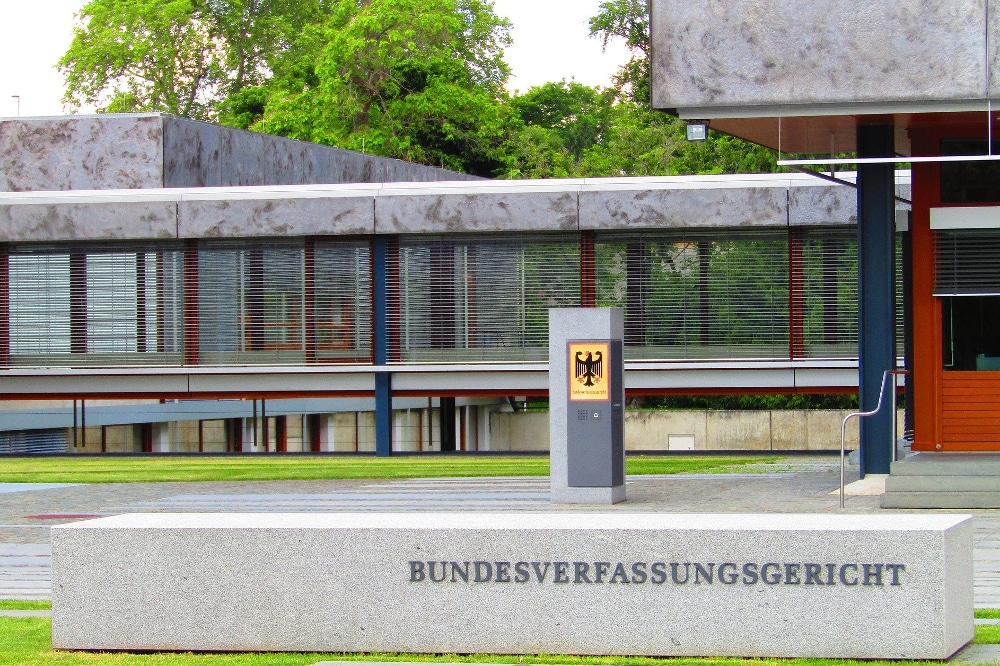
There is no speed limit on the legislative process in Germany, nor should there be one in future: this was the ruling handed down by the Federal Constitutional Court in Karlsruhe on Thursday. The judges of the Second Senate thus dismissed, in the main proceedings, a lawsuit brought by several parliamentarians, including former Member of the Bundestag Thomas Heilmann (62, CDU).
In summary proceedings in 2023, Heilmann and his fellow plaintiffs had initially been successful: their main concern centred on the consultation period for the reform of the Building Energy Act (colloquially known as the ‘Heating Act’). The plaintiffs argued that the controversial bill introduced by the then ‘traffic light’ coalition government had not allowed sufficient time to examine the matter properly, due to the speed of the proceedings and last-minute amendments.
Following the successful interim injunction, the second and third readings of the bill in the Bundestag had been halted three years ago. Now, however, the ruling has gone the other way: Heilmann had failed to present any credible evidence that his rights as a Member of Parliament had been infringed or that he had not received any information. The exchange of arguments is what matters, whilst the Basic Law makes no provision regarding the speed of legislative procedures in the Bundestag. “The Constitution sets a limit on the acceleration of legislative procedures, but not in the sense of a specific time limit,” said Senate Chair Ann-Katrin Kaufhold.
Judgement of 23 July 2026 – 2 BvE 4/23
What the LZ reported on today:
The butterflies continue to fly: University Library extends insect exhibition until 23 August
Leipzig study: Changes in atmospheric circulation are causing heat and drought in Europe
How a nation loses its mind: Why the concerted attack on the truth is destroying our democracy
What else was happening:
Leipzig-based author Heike Geißler has been awarded the 2026 Saxon Literature Prize.
In Stuttgart, a woman was attacked and suffered life-threatening injuries. A suspect is reported to have been arrested. Further shocking news of a hostage-taking at a bank is currently emerging from Regensburg.
France and Spain are battling forest fires.
Following the signing of a nuclear deal with Saudi Arabia, US President Donald Trump (80) has set out conditions.
Calendar page: When Portugal finally left the dictatorship behind 50 years ago

On 23 July 1976, Portugal’s first democratic government in more than five decades was sworn in in Lisbon, led by the socialist Mário Alberto Nobre Lopes Soares († 2017).
Prior to this, an authoritarian regime under António de Oliveira Salazar and his successor Marcelo Caetano had ruled for over 40 years, before being overthrown in 1974 by the ‘Carnation Revolution’. Dictatorships in Greece and Spain also came to an end around the same time.
Portugal, which had defended its colonial claims in Africa – even by force – right up until the 1970s, is now embarking on its long journey out of isolation. On 1 January 1986, the country joins the EU (then still known as the European Community, EC) and transforms itself into a service-based economy.
Empfohlen auf LZ

So können Sie die Berichterstattung der Leipziger Zeitung unterstützen:





There is one comment