Dieser Artikel ist auch in deutscher Sprache verfügbar: Zum deutschen Artikel.
The 50th anniversary of the laying of the foundation stone for the Leipzig-Grünau housing estate is being marked in Leipzig with various exhibitions and other events. On 1 June, for example, a ceremony took place on the square in front of the PEP in Grünau-Mitte, the KOMM-Haus is hosting the exhibition ‘When Grünau was still called Schlammhausen’, featuring photographs by Harald Kirschner, and at the Grünau neighbourhood centre, Karla Voigt’s photographic exhibition ‘From Kuchengartenstraße to Grünau’ takes us on a journey through the move.
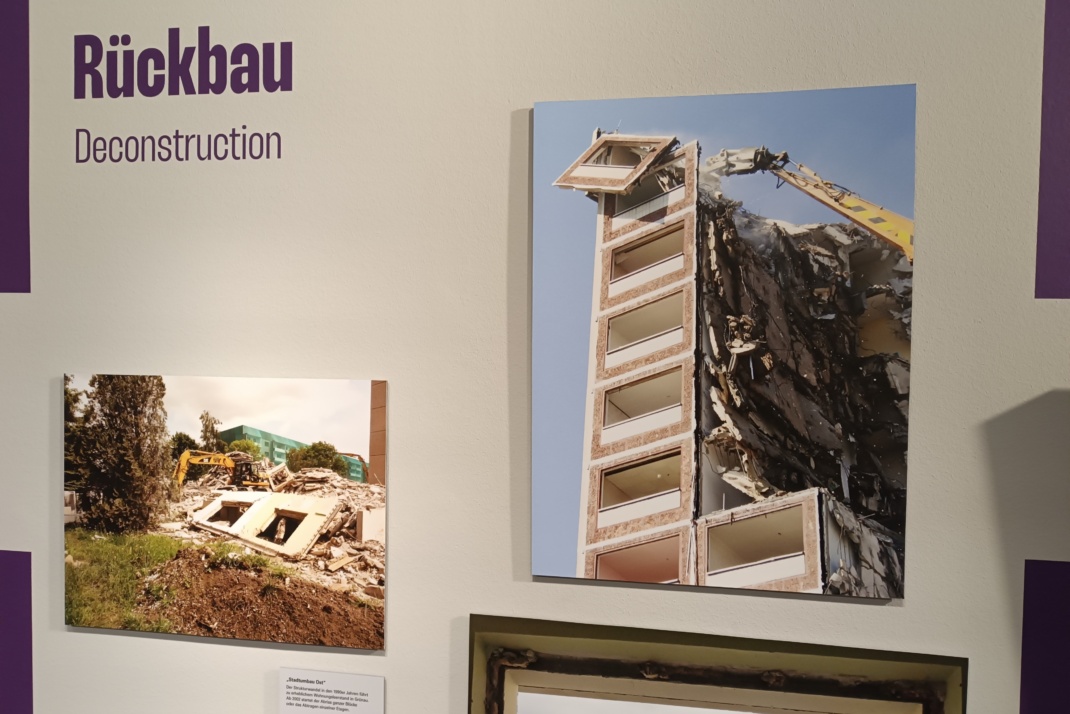
Since 3 July, the Zeitgeschichtliches Forum Leipzig has been hosting the exhibition ‘PLATTE. Life in the Large-Scale Housing Estate’, which explores this 50th anniversary from a different perspective. On display are amateur photographs taken by former and current residents of Grünau, covering the construction phase, the demolition following German reunification, right up to the present day.
The exhibition concept
The exhibition’s curator, Anne Meinzenbach, described to us how the project came about.
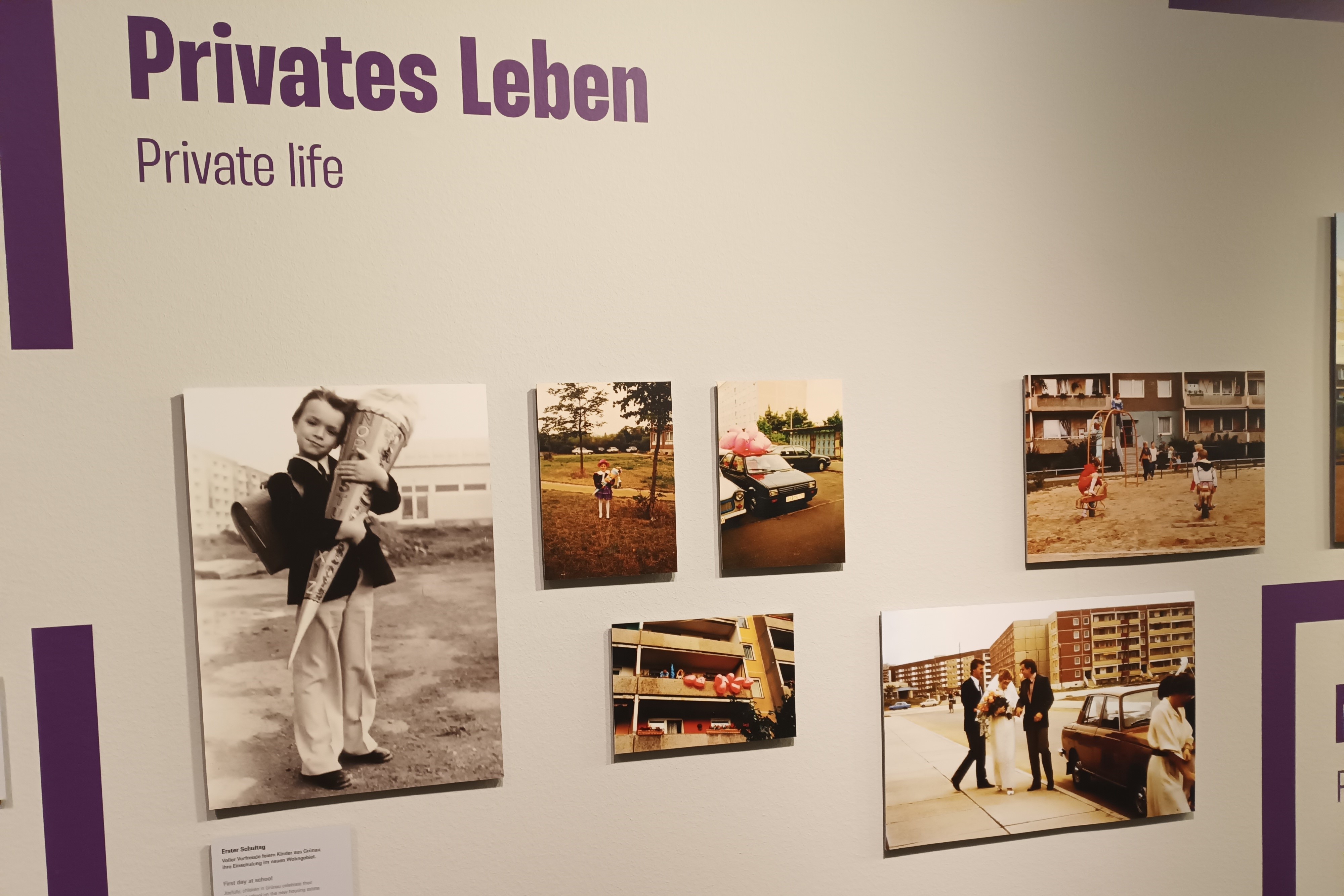
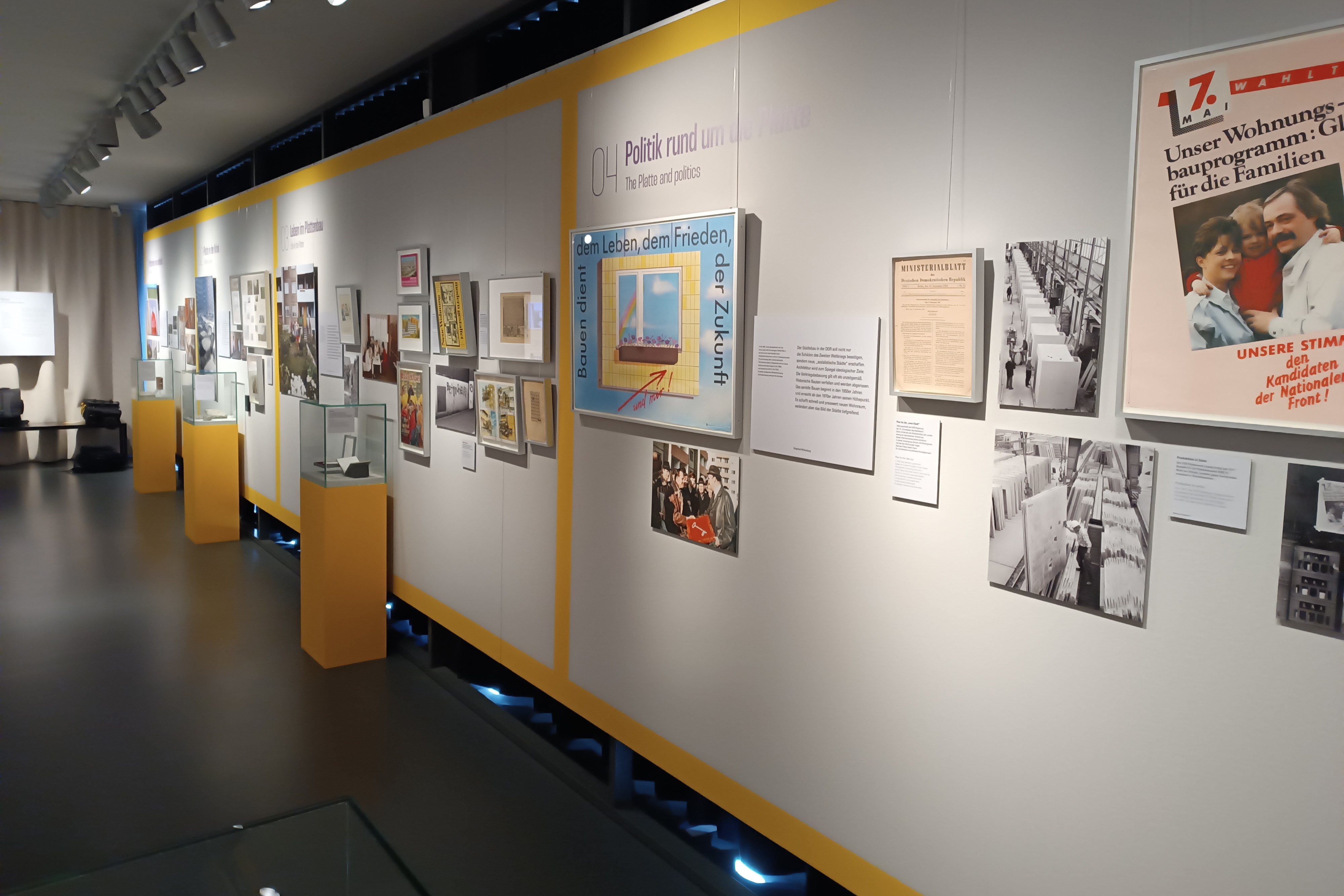
“We developed various ideas on how we could give the topic a bit of space and launched an outreach project in collaboration with the Leipzig Museum of City History. We put out a call to former and current residents of Grünau to share their stories with us, and everyone came together during a pub evening at the little pub to present their stories. We found the photos and contributions that came together so engaging and so beautiful that they form the focus of the exhibition. So these aren’t the views of professional photographers on the prefabricated housing estate, but those of amateurs – the residents themselves. We’ve complemented the whole thing with a narrative on the history of prefabricated housing in general. We take a journey backwards through history, starting in the present and then recounting the history of the large housing estate.”
After the press event, we spoke to Anne Meinzenbach once more about the exhibition.
The Glatzel family
The exhibition poster shows a dancing couple in front of a prefabricated block of flats. This couple, Brigitte and Klaus Glatzel, were present at the press conference with their son Torsten. Part of the exhibition features photographs from their private collection. The Glatzel family moved to Grünau in 1984, and Klaus Glatzel reminisced about the development of a community of neighbours with its own party room and golden house number. Here are some excerpts:
“New Year’s Eve 1984/85 – it was the first time the two of us were home alone. After midnight, we’d wished each other a happy New Year, and then she had an idea: You know what, let’s get a big tray, pile lots of shot glasses on it, grab a bottle of schnapps, you take your accordion, and then we’ll pop round to the neighbours’ to wish them a happy New Year too. That’s what we did; I played some dance tunes, we had a drink, and it turned into a house party in the eleven-storey block.”
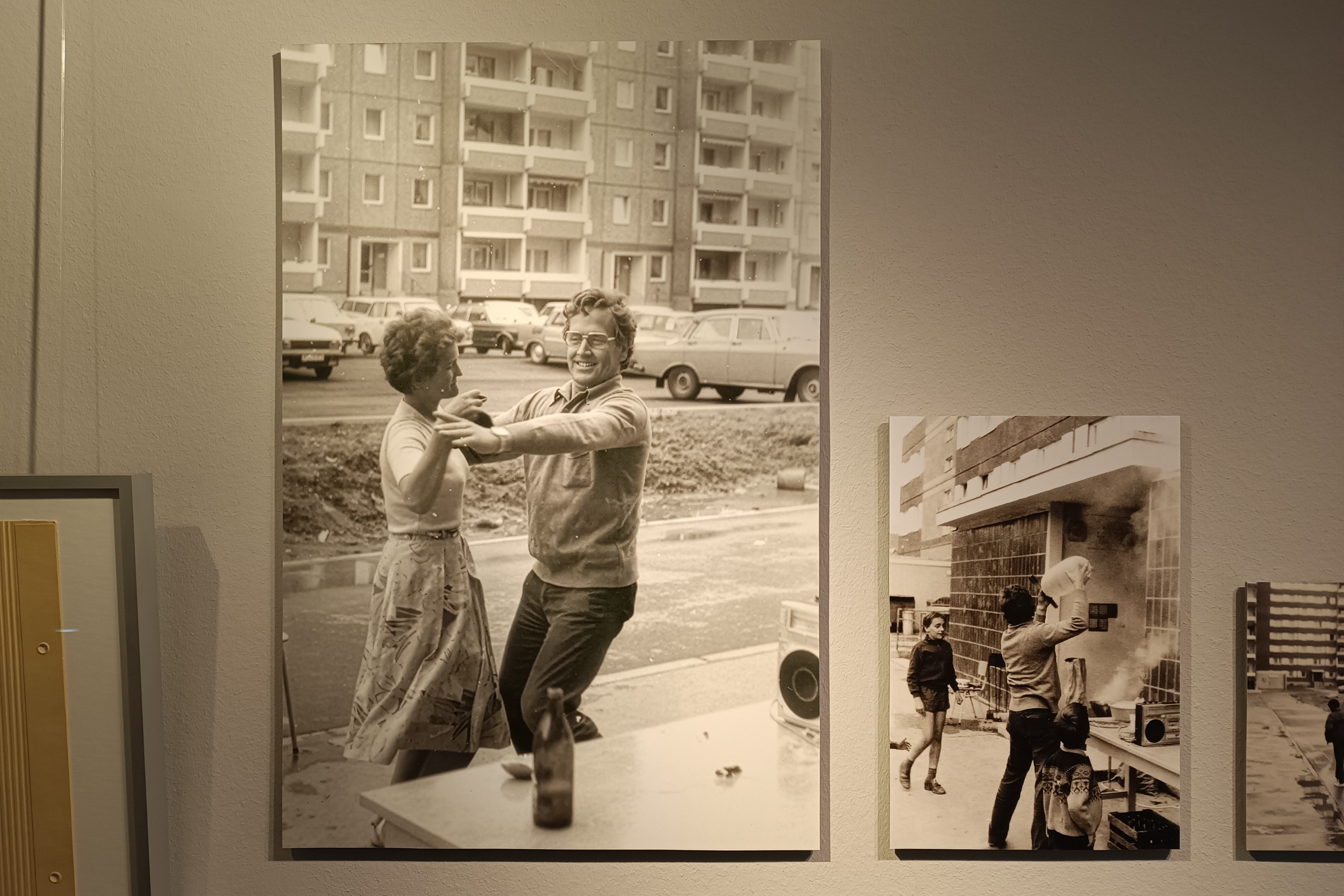
“That’s when the idea came up that, yes, we really ought to do this more often. So we took it on board. We set up a residents’ committee, with a chairperson, deputy chairperson and treasurer. We then developed ideas together and began converting a large room in the basement. That’s how we created a wonderful function room.”
Carnival celebrations, summer festivals and other events were organized; eventually, the building was awarded the ‘Golden House Number’, which disappeared without a trace after German reunification.
The block of flats was demolished after reunification; Brigitte and Klaus Glatzel moved away from Leipzig to the countryside. In the end, however, city life beckoned once more and they returned to Grünau. We spoke to the Glatzel family about this.
The exhibition is not yet fully complete. People can still contribute photos and stories, and visitors can also leave direct feedback on a wall.
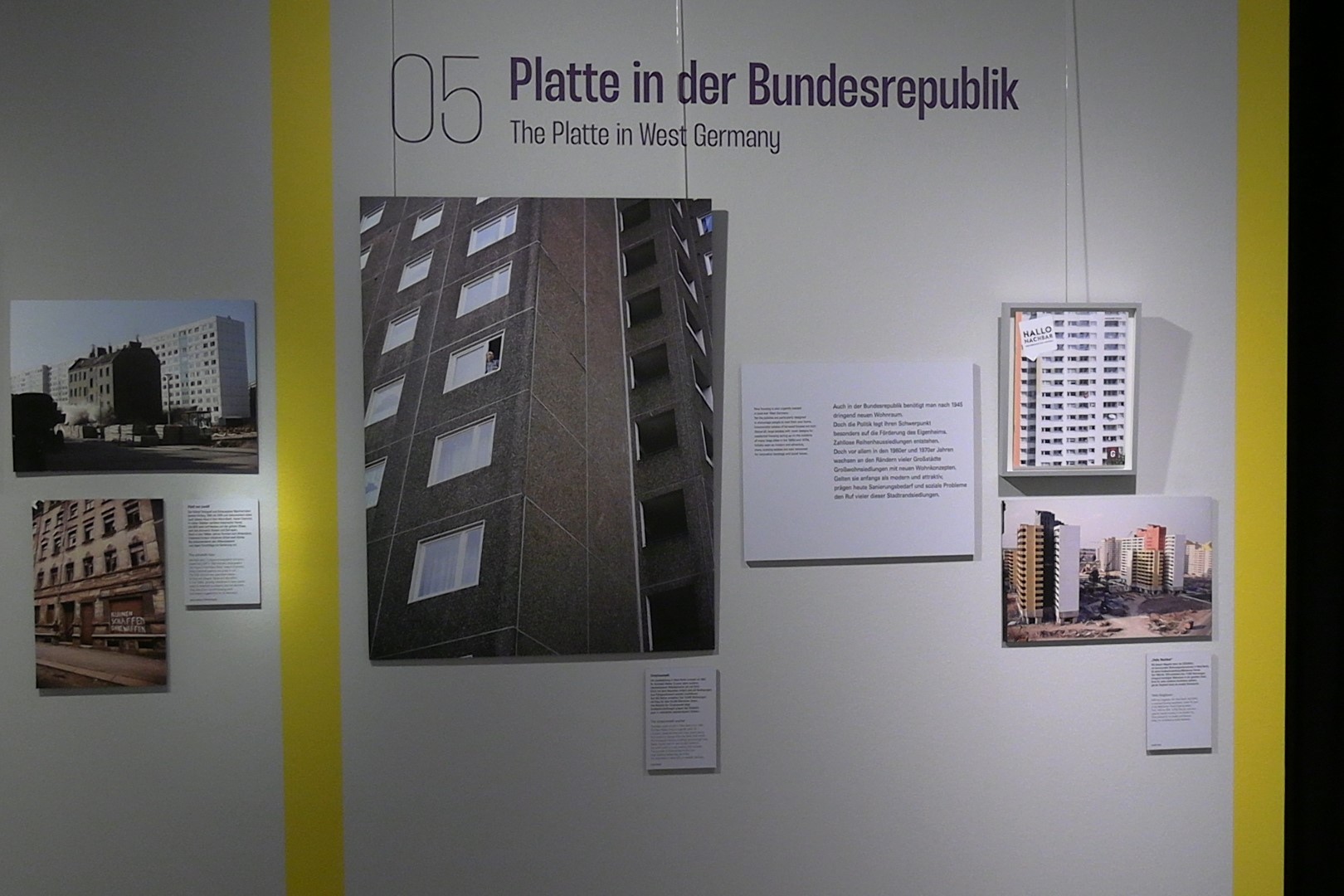
It is an interesting exhibition, albeit a relatively small one, and its unique concept offers a fresh perspective on the ‘Platte’.
The exhibition can be viewed until 17 January 2027 at the Zeitgeschichtliches Forum Leipzig, Grimmaische Straße 6, 04109 Leipzig. Opening times can be found here.
Empfohlen auf LZ


So können Sie die Berichterstattung der Leipziger Zeitung unterstützen:



There is one comment