Dieser Artikel ist auch in deutscher Sprache verfügbar: Zum deutschen Artikel.
More fruit, nuts and vegetables, less meat and less sugar: this is precisely what all nutritionists recommend. It has little to do with what Germans currently eat on average. In recent years, central Germany has been missing out on more than a year’s worth of rainfall – that is, more than 600 mm. Germany is lacking the equivalent volume of water found in Lake Constance.
Due to the lower rainfall, hardly any water can seep into the ground in summer to replenish groundwater reserves. As there is hardly any snow in winter either and too little rain, there is virtually no groundwater recharge.
The problem is this: The drier the soil is at depth, the more difficult it is for water to seep through, as it must first gradually replenish the parched soil. And the deeper the water has to seep, the more slowly it seeps through – depending, of course, on the permeability of the relevant soil layers.
Furthermore, in some areas we extract more groundwater for our water supply than can seep in. For Leipzig, we draw most of our drinking water from the groundwater that flows through the glacial valleys from the Ore Mountains towards the Baltic Sea (drinking water works near Torgau and Naunhof). The opencast mining pits to the south and north of Leipzig also tap into these aquifers, which is why the water levels in these pits have stabilised at a certain level.
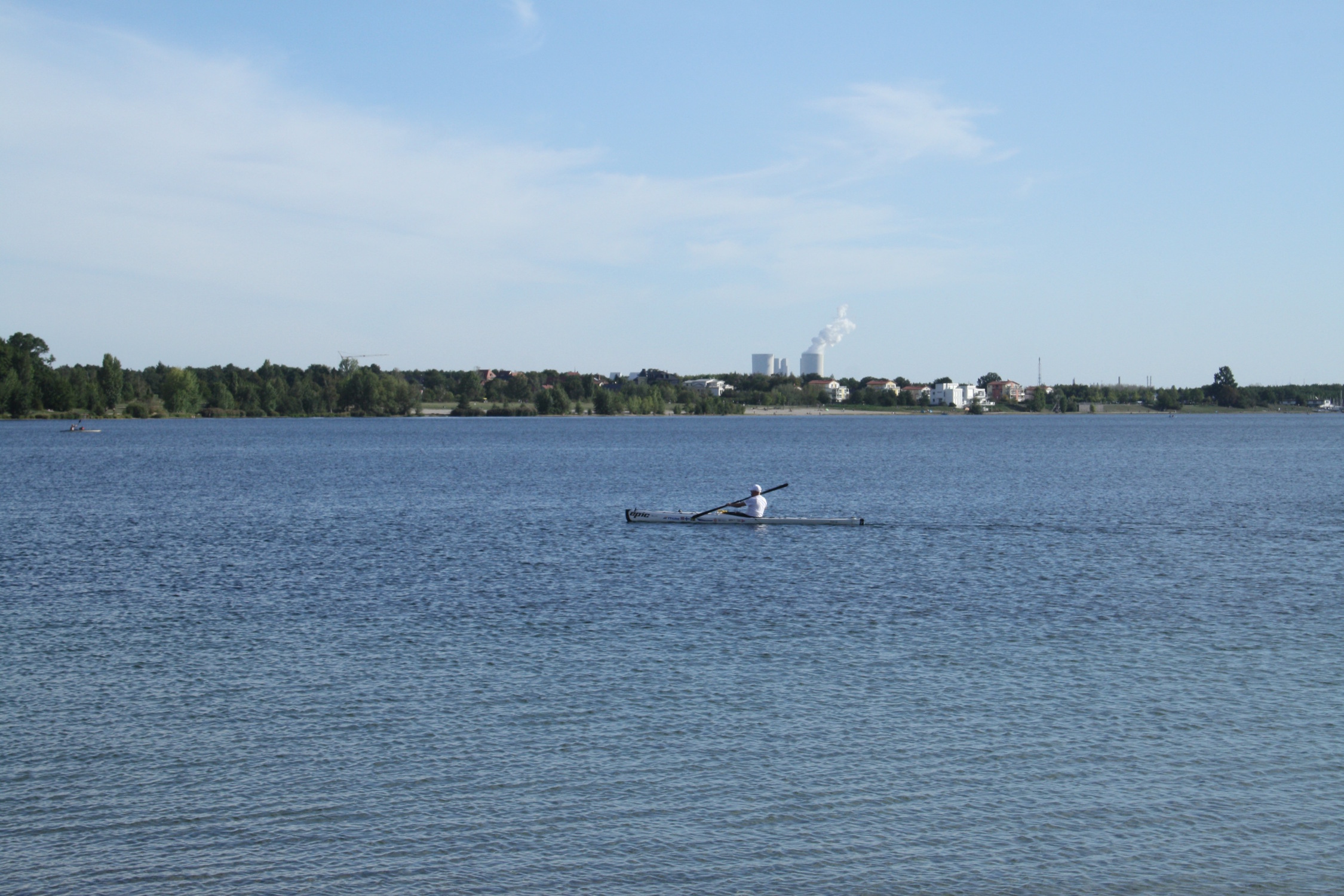
Due to the extreme summer heat, more and more water is evaporating from these large bodies of water, which means there is a shortfall in the total water supply for drinking water and industrial water abstraction, as well as for rivers and natural lakes.
We should therefore only extract as much water from the ground as can seep back in over the course of the year. This applies in particular to the extraction of groundwater for agricultural irrigation, water extraction by industry for technological processes and cooling, and water extraction for commercial purposes to produce beverages of all kinds.
A windfall for large corporations
According to information from the Heinrich Böll Foundation dated 7 January 2026
: “Large multinational corporations continue to pump out vast quantities of groundwater. In many regions, this private-sector use is coming into conflict with the public interest. In Treuchtlingen, Franconia, Aldi Nord is drilling local wells, whilst the local population has to source its drinking water from over 100 kilometres away – at correspondingly high costs.
In the Brandenburg town of Baruth, the two major corporations Red Bull and Rauch took over the Brandenburger Urstromquelle mineral water plant in 2023, along with extensive groundwater rights.
Red Bull and Rauch are permitted to use 2.5 million cubic metres: more than the average total consumption of all the people in a German town with 50,000 inhabitants. The two corporations are entitled to around 92 per cent of the total annual extraction volume in Baruth. This leaves just 8 per cent for the local population. Red Bull is currently planning to expand its production in Baruth with a new logistics centre. This is likely to cause the company’s water consumption to rise further. The Federal Environment Agency estimates that groundwater recharge in Brandenburg could fall by up to 40 per cent by 2050.”
A new water policy
A fair water policy in this sense requires new, clear political measures. Unfortunately, we are hearing absolutely nothing on this subject from the current federal government or the Free State of Saxony. Necessary measures would include:
– a shift towards a circular economy in industry, i.e. recycling and reusing the water that has been abstracted as many times as possible within the cycle.
– There needs to be greater public transparency regarding the water consumption of large corporations. Water abstraction charges must be set on a sliding scale depending on the volume abstracted and made public,
– groundwater abstraction must be regulated much more strictly and better aligned with natural recharge rates – particularly in regions experiencing water stress,
– and corporations must be placed under greater obligation – for example, through an adjusted water price – to make their production processes more water-efficient. For only comprehensive and consistently enforced protection and the careful use of our groundwater reserves can safeguard the natural water cycle in the long term.
How much does drinking water cost?
The price of fresh water in Leipzig for 2026 is around 2.62 euros per cubic metre. The annual standing charge for the water meter is approximately 124.65 euros.
For reference: one cubic metre contains 1,000 litres. The price in supermarkets or discount stores for 1 litre of mineral water starts at 0.20 cents per litre (the cheapest 1.5-litre bottle now costs from €0.29), 0.20 cents per litre multiplied by 1,000 litres equals 200 euros!
The price of water for beverage manufacturers in the Free State of Saxony is difficult to determine. According to data collected by BUND in January 2019 on water charges, the price per cubic metre of groundwater ranges from 1.5 cents per m³ for public water supply to 7.6 cents per m³ for ‘other purposes’. Mind you, that’s in cents per cubic metre of groundwater! Consumers pay in euros per cubic metre!
Industry in Germany consumes an enormous amount of water. Around half of all water abstraction is carried out by the business sector. Companies such as RWE and BASF use large quantities of drinking water, whilst beverage conglomerates are also buying up wells. This trend is leading to conflicts within the water sector, between public water supply, agriculture and industry. Currently, 14 of the 16 federal states levy a charge for water abstraction, known as the ‘water cent’.
The federal states decide for themselves on the level of these charges. Although the costs vary from state to state, they are very low everywhere. In the sectors of hydropower, agriculture, mining, cooling and drinking water, prices per cubic metre of water vary between 0.5 and 31 cents (equivalent to 0.0005 to 0.031 cents per litre).
In Hesse and Thuringia, companies can even extract water free of charge. The lignite company RWE, for example, uses almost 500 million cubic metres of water per year for its opencast mining operations. That is equivalent to 500 billion litres – roughly the same amount as 10 million citizens consume in a year. RWE pays a maximum of 5 cents per cubic metre for this.
Although the current federal government has proposed many measures to protect drinking water and the water supply in a National Water Strategy, this strategy dates from July 2025 and is designed to cover the period up to 2050. However, there is still a lack of legal provisions that prioritise the public water supply. Companies are often granted long-term abstraction rights that take little account of the climate crisis and the resulting increasing water scarcity.
Empfohlen auf LZ


So können Sie die Berichterstattung der Leipziger Zeitung unterstützen:




There is one comment