Dieser Artikel ist auch in deutscher Sprache verfügbar: Zum deutschen Artikel.
It has already made a brief appearance: snow, that unmistakable sign of winter. Not enough yet for sledding fun, perhaps, but the city is not ours alone. For many wild birds, even a thin dusting of snow – or simply frozen ground – is enough to make finding food a struggle. Those who provide the right food now can help guide species such as blue tits, sparrows, blackbirds, and robins safely through the winter.
The best way to feed them is with a classic bird feeder. Whether on the balcony, the windowsill, or freestanding in the backyard, these small structures are like neighborhood cafés for birds: places where they can find food and perch in shelter from rain or snow.
What Belongs in a Bird Feeder
Unsalted, unroasted sunflower seeds are ideal for tits and sparrows. Oats, peanuts and fine mixed seeds are popular with seed-eaters. Soft-food feeders prefer raisins or dried berries. For an extra energy boost, fat-based food (such as coconut fat mixed with seeds) is invaluable.
All these treats can be collected throughout the year, which can be especially fun for children. Supplying the birds behind the house with self-gathered food fosters a sense of responsibility – and gets kids outside into the fresh air at the same time.
Important: All seeds, grains, and nuts used must be untreated. No salt, no roasted crusts, nothing smoked. Those short on time can buy well-balanced food mixes at pet shops or, at this time of year, from a regular supermarket (between €2 and €4 per kilo, depending on the supplier). Bread and kitchen scraps should never be fed to birds.
If you have freestanding feeding stations, make sure they are inaccessible to cats, martens, and raccoons. Protective cages can be improvised from old leaf rakes or grill grates; professionally made versions cost around 10 to 20 euros at hardware stores.

Feeding Without a Birdhouse
Space is not always available for a classic bird feeder. But even without a birdhouse, there are plenty of alternatives to scattered food: rings, fat balls, filled coconut shells. Even old cookie cutters can be repurposed and look decorative hanging from trees or windows. Aside from the actual food, the key ingredient here is fat.
Pork and beef suet (available in most butcher shops) works just as well as coconut fat. What matters is that the fat does not melt at temperatures above freezing. If you buy lard, make absolutely sure it is unsalted. A simple guide to making hanging bird food is available from the German Federation for the Environment and Nature Conservation (BUND).

Hands off! This Food Can be Deadly
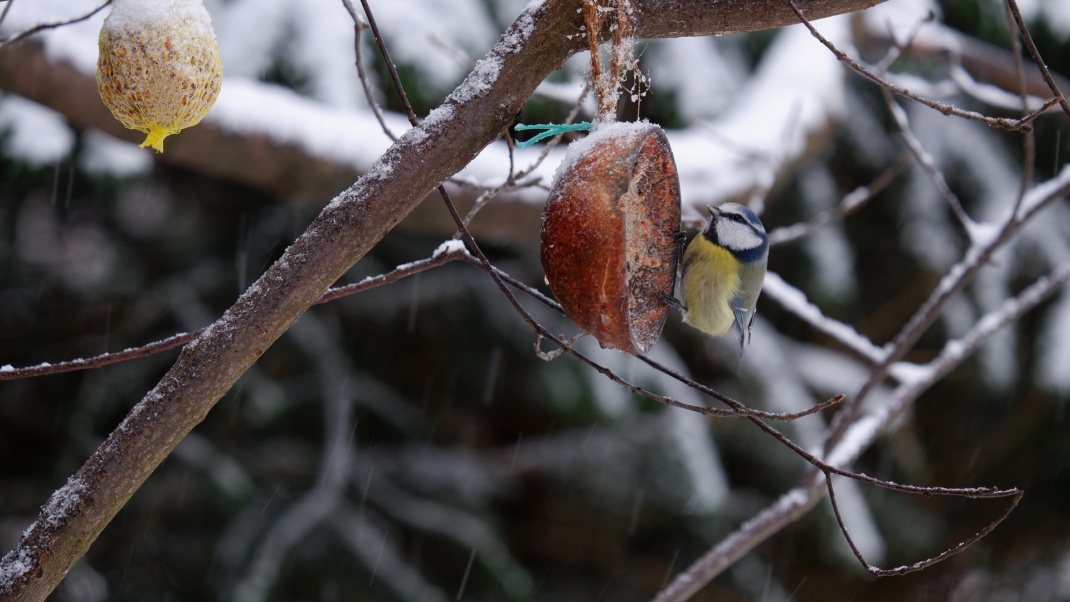
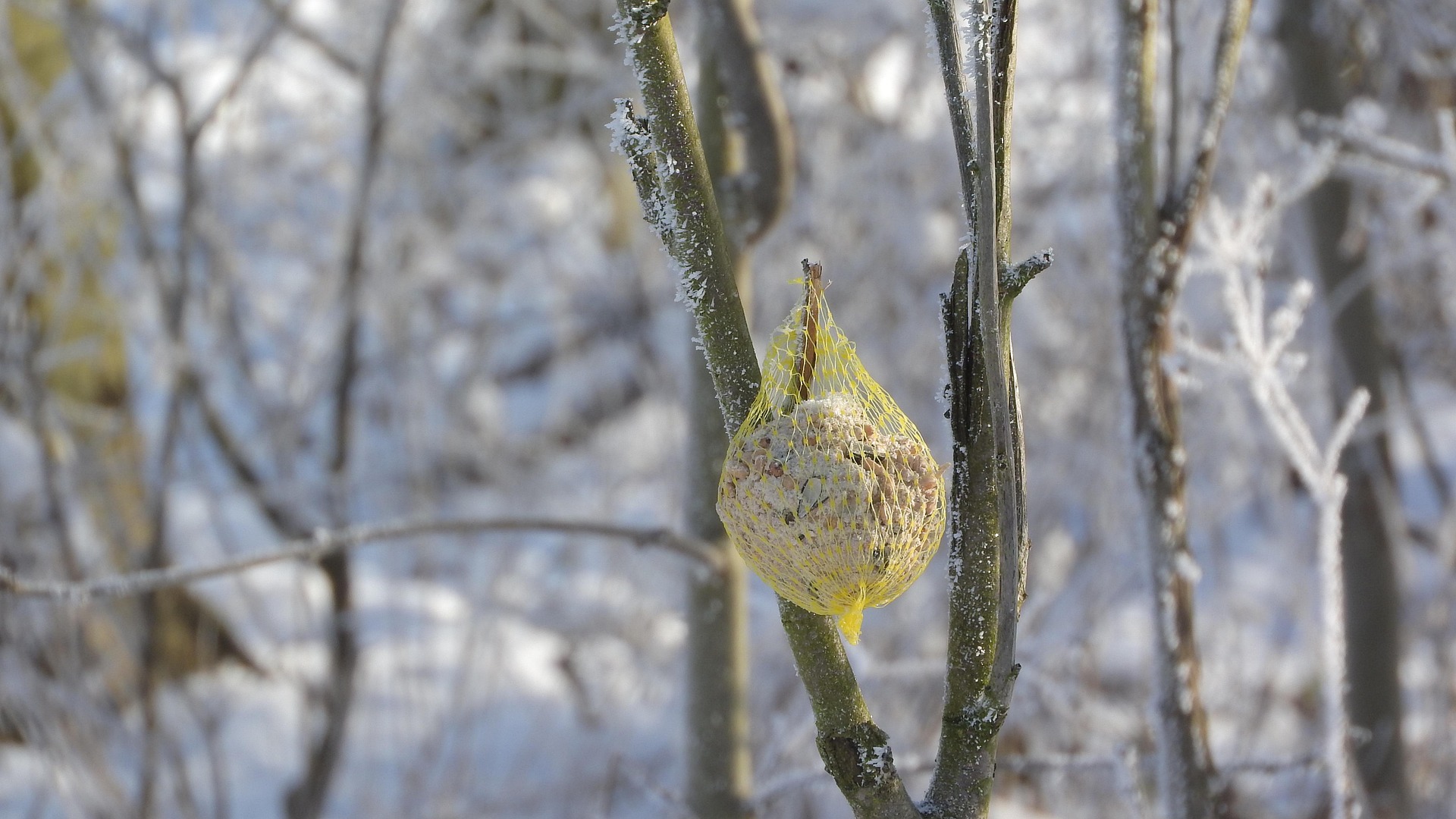
No space for a birdhouse, no time to make your own. But you still want to help your feathered friends through the winter? The simplest option sits on supermarket shelves: ready-made bird food. Rings, fat balls and filled shapes are widely available. But there is one version you should avoid at all costs: seed packs wrapped in plastic netting.
Birds can get caught in these fine nets with their claws, legs, or heads. Unable to free themselves, they remain stuck. Death comes slowly and painfully – through exhaustion, starvation, freezing or strangulation. Nets that fall to the ground, or fragments of them, are often collected by other birds for nest building, where they turn into lethal traps for chicks.
If you see such nets, take action and remove them. If there are still seeds inside, scatter them on elevated surfaces – branch forks, walls or ledges. Then dispose of the plastic in the recycling bin. These nets do not belong in the environment. And when shopping, choose fat balls without netting – always.
Empfohlen auf LZ


So können Sie die Berichterstattung der Leipziger Zeitung unterstützen:





There is one comment