Dieser Artikel ist auch in deutscher Sprache verfügbar: Zum deutschen Artikel.
Not only is traffic in the south of the city picking up again, but the Christmas and Advent markets are also showing signs of life. Plenty of space for punch and pastries! The Faculty of Law welcomes former Green Party leader Ricarda Lang to discuss the legal basis of political ideas. And two whole days are devoted to the folk music scene of the GDR, which successfully sought to bring a little of the wider world behind the Iron Curtain.
Done and dusted: key junction in the south clear again
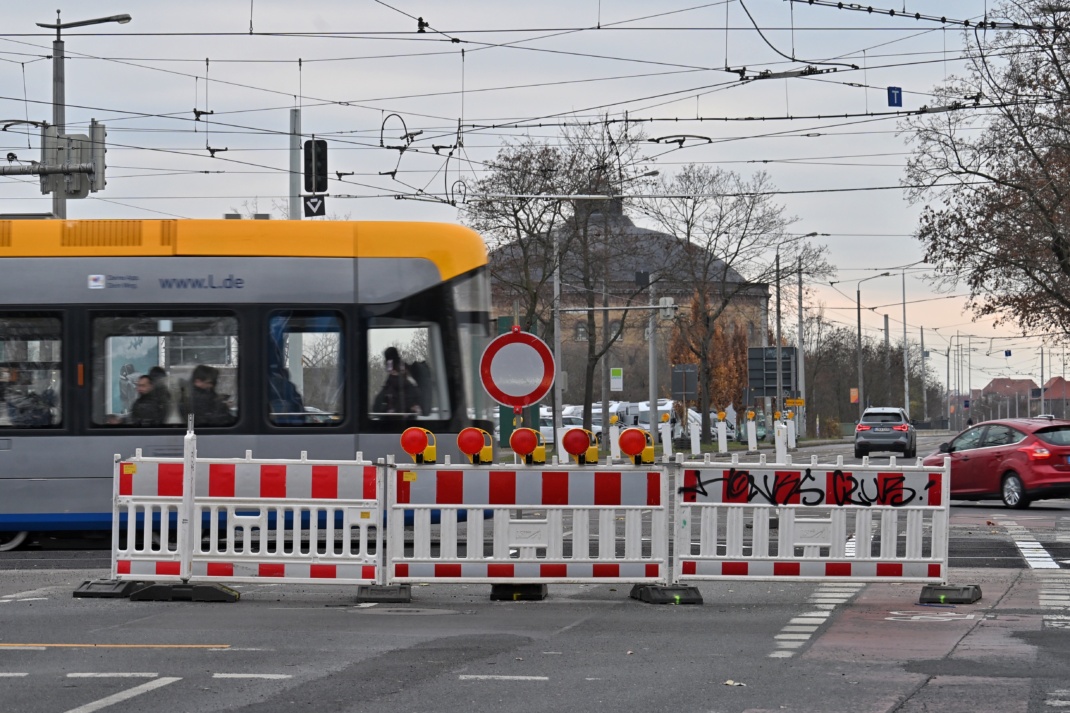
It was quite a faff, that diversion on Zwickauer Straße. Turning right to go left, plus a little detour across the tracks – and waiting, waiting and waiting yet again. But today, the track works on one of the most important transport links in the south of Leipzig are being completed. According to Leipziger Verkehrsbetriebe (LVB)
, this marks the end of the track repairs that began on 9 November at the junction of Richard-Lehmann-Straße and Zwickauer Straße (just over a kilometre from the Monument to the Battle of the Nations).
On Zwickauer Straße itself, tram services resumed on the morning of 21 November. Up to and including today, bus route 70 is following a local diversion and, when travelling towards Markkleeberg-West, is also serving the ‘An den Tierkliniken’ stop. The construction-related restrictions on car traffic are also due to end today. Until now, only right turns were permitted at the junction on Richard-Lehmann-Straße
, whilst vehicles on Zwickauer Straße were also able to continue
straight ahead.
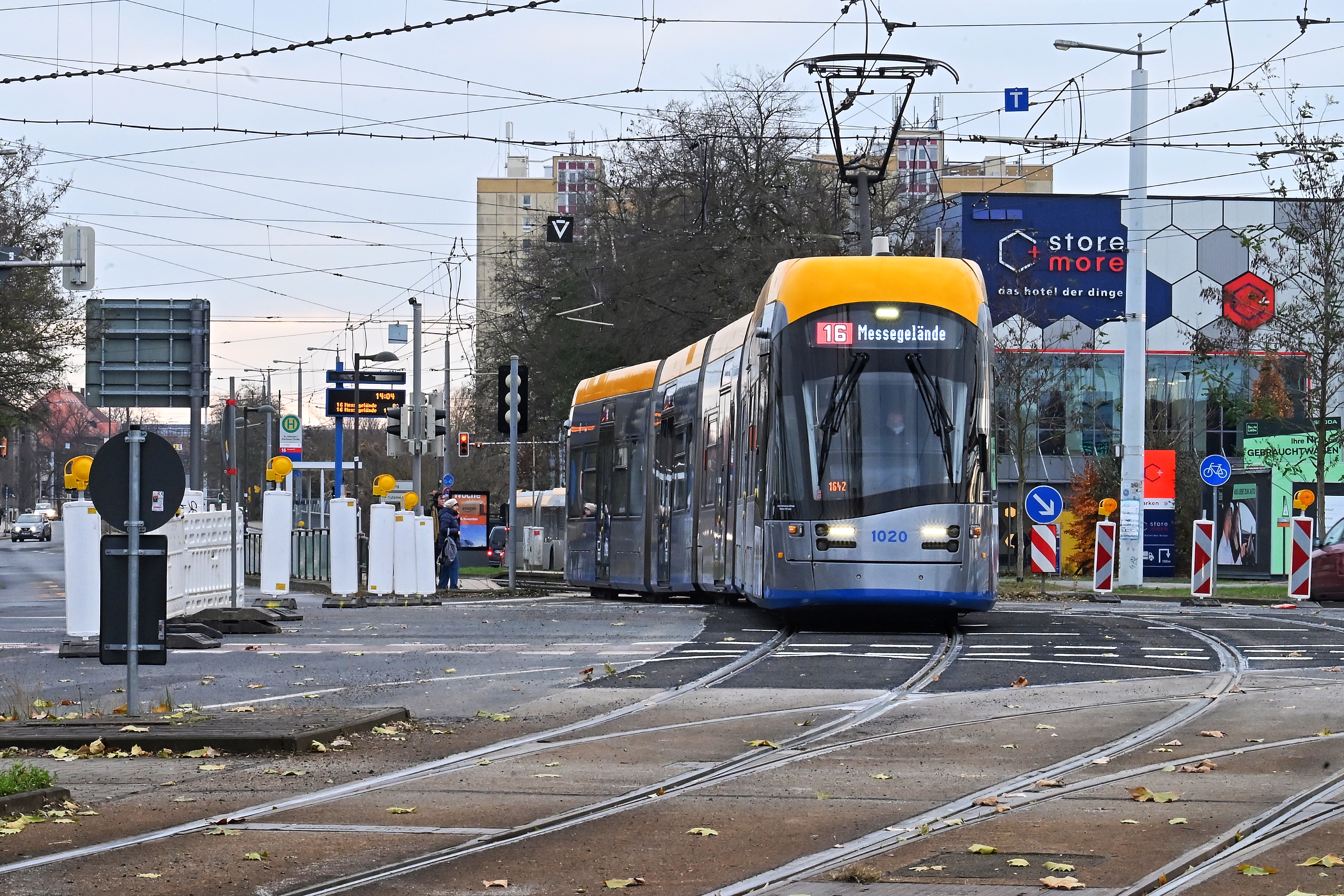
The tracks at the junction have been being replaced since 9 November. © Benjamin Weinkauf
The junction is of particular importance to commuters and local residents. Richard-Lehmann-Straße, which forms part of the B2 federal road, connects the Südvorstadt and Connewitz districts with the south-east of Leipzig. Zwickauer Straße provides access southwards, in particular to the residential areas of Marienbrunn and Lößnig, and northwards to the Alte Messe
and the city centre.
The area around the junction is also significant in terms of the history of the trade fair. The southern gate of the former Technische Messe was located on Richard-Lehmann-Straße; like other entrances to the exhibition grounds, it was marked by the distinctive double ‘M’. Of these trade fair landmarks, visible from afar, only the one on Prager Straße remains today. Since the Leipzig Trade Fair
moved to the north of the city in 1996, the former exhibition grounds have been developed into a hub for business, science, commerce and leisure.
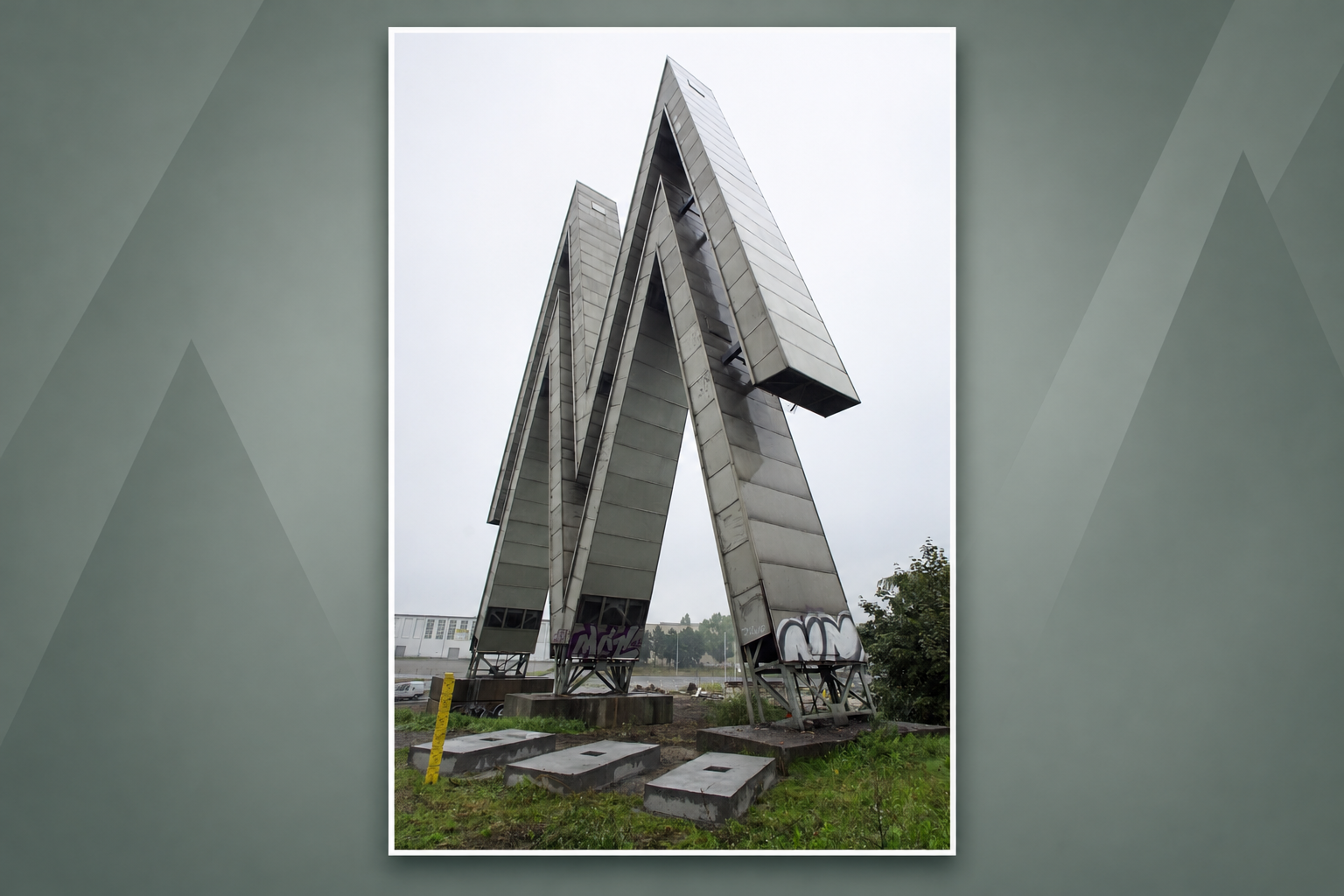
The striking double ‘M’ at the former south gate of the Alte Messe was demolished. © Archive: Benjamin Weinkauf
Under scrutiny: politics and the law must go hand in hand
Politics on a legally sound footing: Former Green Party leader Ricarda Lang is visiting the University of Leipzig today and will be speaking on the topic ‘An evening of legal and political discussion with Ricarda Lang’ from 7 pm in the Audimax with Leipzig-based professor of criminal law Elisa Hoven on current political and legal issues. Given the current situation in Saxony, the debate on a possible ban on the AfD is likely to be of particular regional interest.
Other topics include a possible need for reform in sexual offences law to protect sexual self-determination, the legal regulation of surrogacy, and the legal framework for organ donation. Hoven, who is also a judge at the Saxon Constitutional Court, has already addressed several of these issues publicly.
For instance, the University of Leipzig reported on a joint article by the professor and her research assistant, Marco Vöhringer, published in the *Frankfurter Allgemeine Zeitung* (FAZ). In it, both authors critically examine an expert opinion by the Society for Civil Liberties on a possible ban on the AfD. They scrutinise the report’s constitutional assessment criteria and draw a distinction between politically objectionable positions and those that could legally justify banning a political party.
Back in May 2026, Hoven had already addressed the German ban on surrogacy publicly. Today’s event was announced on 5 October 2026 by the chair held by the professor of criminal law and is also listed in the Faculty of Law’s official calendar of events.
In addition to students from all disciplines, interested members of the public are also invited. The Audimax in the Neues Augusteum (Augustusplatz 10) has 817 seats and is accessible via the ground floor.

All decked out: two more Advent markets open
Following the opening of the main Christmas market in Leipzig city centre on 24 November, two further festive events in the south and south-east of Leipzig are inviting visitors from this weekend onwards. At the Alte Messe, the Leipzig Winter Magic kicks off its first weekend of events today.
Unlike its ‘big brother’ in the city centre, this festive treat runs until 3 January. Attractions on the site in front of the HIT supermarket include various fairground rides, a nostalgic children’s railway and a 25-metre-high walk-in Christmas tree with a mulled wine bar and a small stage.
On Saturday, the Advent market season begins at the Parkschloss in Dölitz. From 2 pm to 7 pm, stallholders around the bandstand will be offering handmade gifts and regional produce. At 4 pm, there will be a communal Christmas carol sing-along. The food and drink on offer includes mulled wine, non-alcoholic apple punch, solyanka, mini doughnuts and roasted almonds. Admission is free here too. The winter market takes place on all four Advent weekends, on Saturdays and Sundays from 2 pm to 7 pm.

Anniversary: The folk scene behind the Wall
Modern folk music had its origins in a world that was out of reach for the people of the GDR. But as was the case with other things too, the insurmountable distance made the material all the more desirable – material from which an entire movement eventually fashioned its musical garments. The University of Leipzig’s Museum of Musical Instruments is opening the special exhibition ‘Do-it-yourself – 50 Years of Folk Music in East Germany’ tomorrow at 3 pm at GRASSI (Johannisplatz).
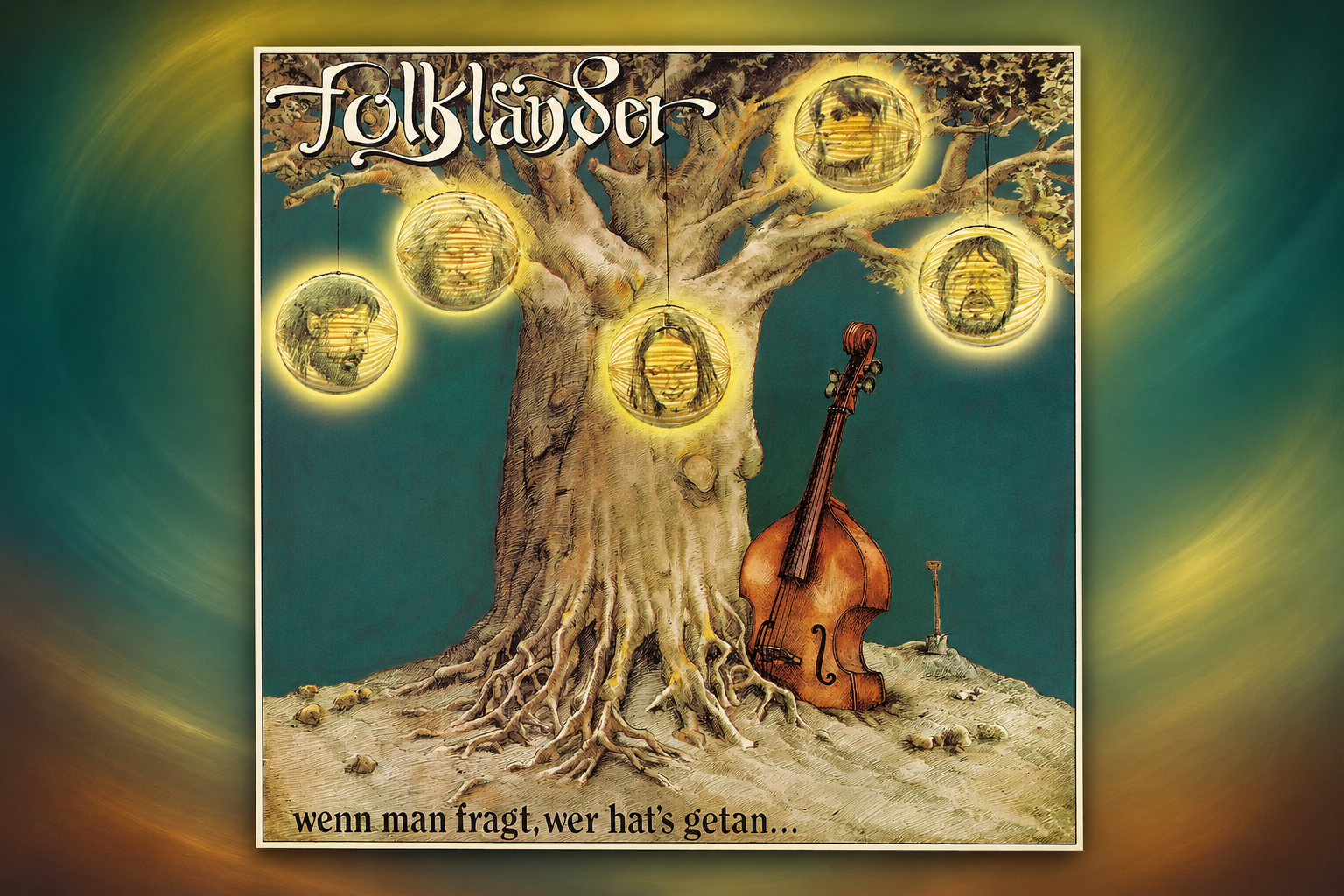
The occasion marks the 50th anniversary of this independent folk scene, whose origins date back to a musicians’ gathering initiated by the Leipzig group ‘Folkländer’ in late 1976. The city developed into a centre of the folk movement in the GDR. Historical photographs, event posters and homemade musical instruments document the history of this musical culture.
As numerous instruments, such as bagpipes and hurdy-gurdies, were not commercially available in the GDR, musicians began to build them themselves. Among the instruments on display is a hurdy-gurdy crafted by Jo Meyer in 1987. The Musical Instrument Museum has organised the exhibition in collaboration with the national association PROFOLK. The curators are Dr Ralf Gehler and Wolfgang Leyn.
At tomorrow’s opening, Gehler will moderate a panel discussion with instrument makers Matthias Branschke from Wittenberg, Jo Meyer from Berlin and Jörn Römer from Leipzig. Afterwards, the curators will lead a guided tour of the exhibition. The duo Solid Ghost will provide musical accompaniment for the opening and its closing proceedings with harp and bagpipes. Admission to the opening and the special exhibition is free. The exhibition can be visited until 21 June 2027, Tuesdays to Sundays from 10 am to 6 pm.
On Sunday, the anniversary celebrations will continue with a themed day at the naTo socio-cultural centre (Karl-Liebknecht-Straße 46). For many years, this venue hosted the ‘Folkstanz’ series, which was popular during the GDR era but viewed with suspicion by the Stasi. From 11.00 am to 12.30 pm, participants will discuss the conditions of the music scene in the GDR under the title ‘Folk in the paternalistic state’. From 3.00 pm to 4.30 pm, the focus will be on its development following reunification. From 6.00 pm to 7.00 pm, Lottes Flausen will perform, and from 8.00 pm to 9.00 pm, TradTöchter will play. From 9.00 pm, the musicians are invited to join in a jam session.
Empfohlen auf LZ


So können Sie die Berichterstattung der Leipziger Zeitung unterstützen:





There is one comment