Dieser Artikel ist auch in deutscher Sprache verfügbar: Zum deutschen Artikel.
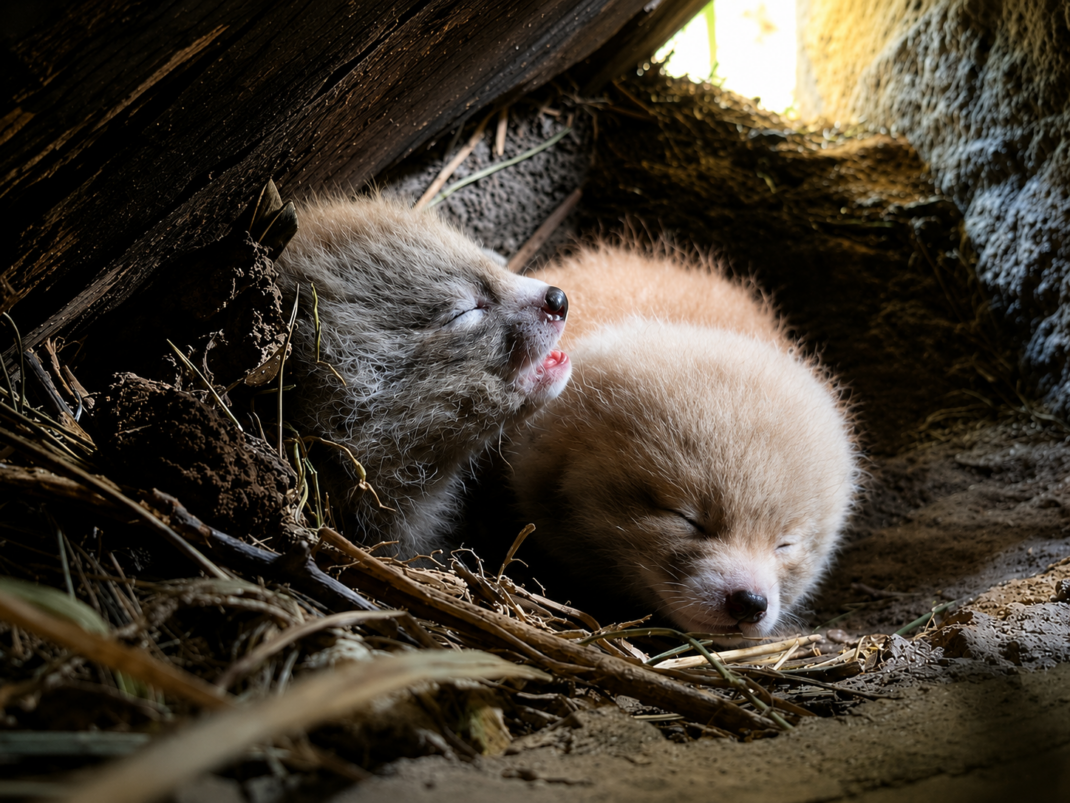
No, it’s not a broken-down bike riding through the panda enclosure – it’s the squeaking of the little fluffy cubs born a few days ago to their two-year-old mum, Kamala, which first alerted the keepers to the new arrivals (as reported by the LZ). Leipzig Zoo had been hoping for such an event for quite some time. Now it has finally happened. In the cool darkness of a cosy crevice, the female panda – who was relocated from France to Leipzig a year ago – has found the ideal place to raise her cubs.
Blind and as light as a feather
Although red pandas reach sexual maturity at around one and a half years of age, females often do not have their first offspring until they are a good two years old. After a gestation period of around four to five months, two cubs are usually born in late spring or summer. They weigh just 90 to 110 grams; although they are already covered in fur, they are completely dependent on their mother.
This is because the mother takes on all the work involved in rearing them, nursing, warming, grooming and carrying the cubs, as well as staying with them almost constantly during the first few days. The fathers, on the other hand, play hardly any part in rearing the cubs. This is also true of Asa, a male originally from Normandy who now lives in Leipzig.
Although red pandas are regularly bred successfully in captivity, the period immediately after birth remains particularly sensitive. In the wild, the animals usually live to be eight to ten years old; in zoos, they generally live considerably longer.
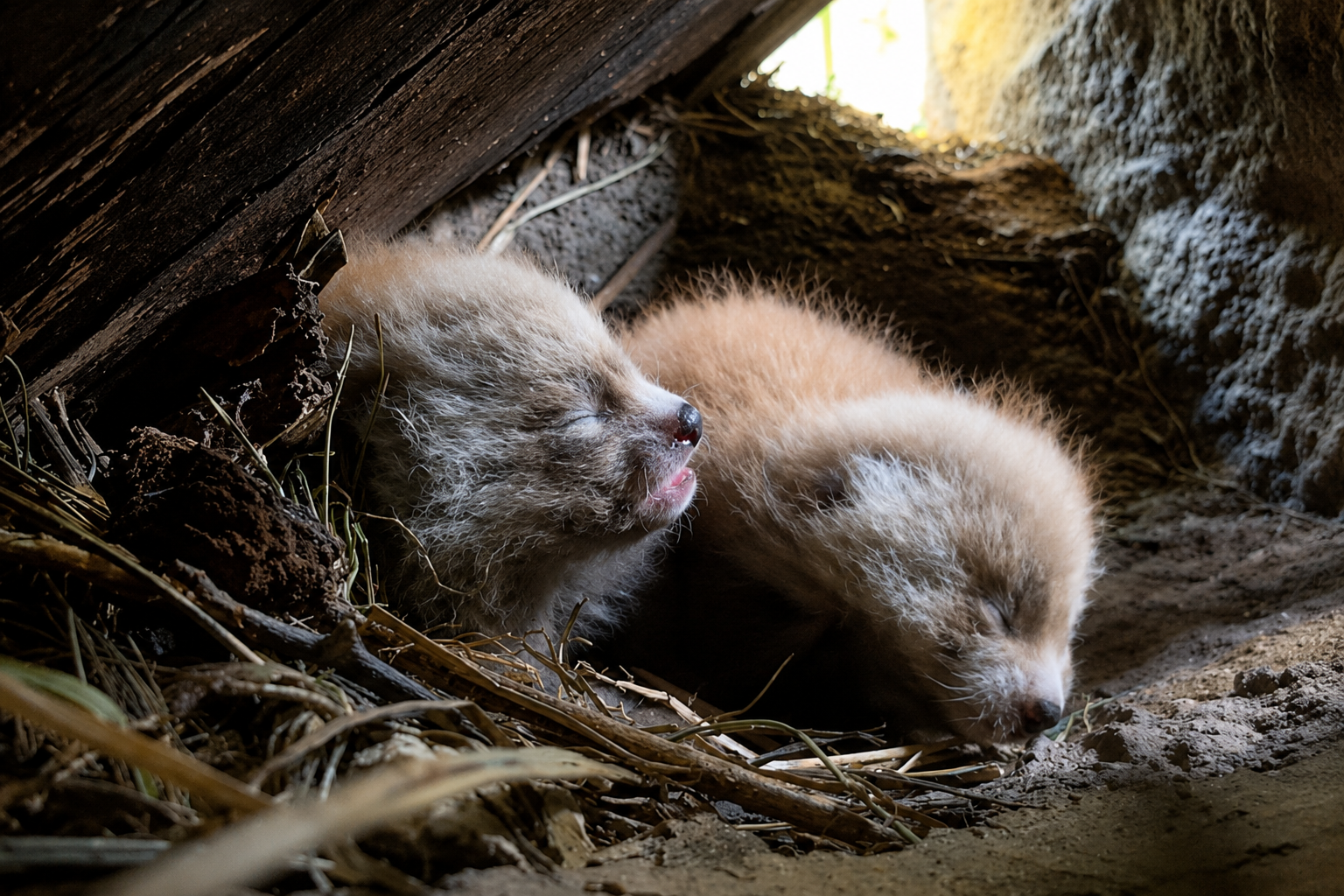
Resting up for their big debut – the little panda cubs. Photo: Leipzig Zoo / Facebook
Giant pandas and red pandas are not related
Although its name suggests a close relationship with the giant panda, the red panda belongs to its own family, the Ailuridae. Its natural habitat consists of cool, high-altitude forests with dense bamboo undergrowth, stretching from Nepal and India through Bhutan and Myanmar to south-west China.
The species is classified as critically endangered, as the fragmentation and deforestation of its forests, as well as disturbances caused by grazing livestock, dogs and human activity, are affecting its food supply, refuges and connections between individual populations. Conservation programmes therefore focus on habitat preservation, measures to combat poaching, local educational initiatives and coordinated conservation breeding in zoos. I
has now published the first pictures on social media of the funny little fur balls chirping away, but has to ask panda fans to be patient for a little while longer: “It will be a few more weeks before the cubs make an appearance for you in the enclosure, though. The cubs always take their time before venturing out for the first time… After about three weeks, they open their eyes and ears, and the colour change to the typical ‘panda red’ begins. A subtle red tinge can already be seen.”
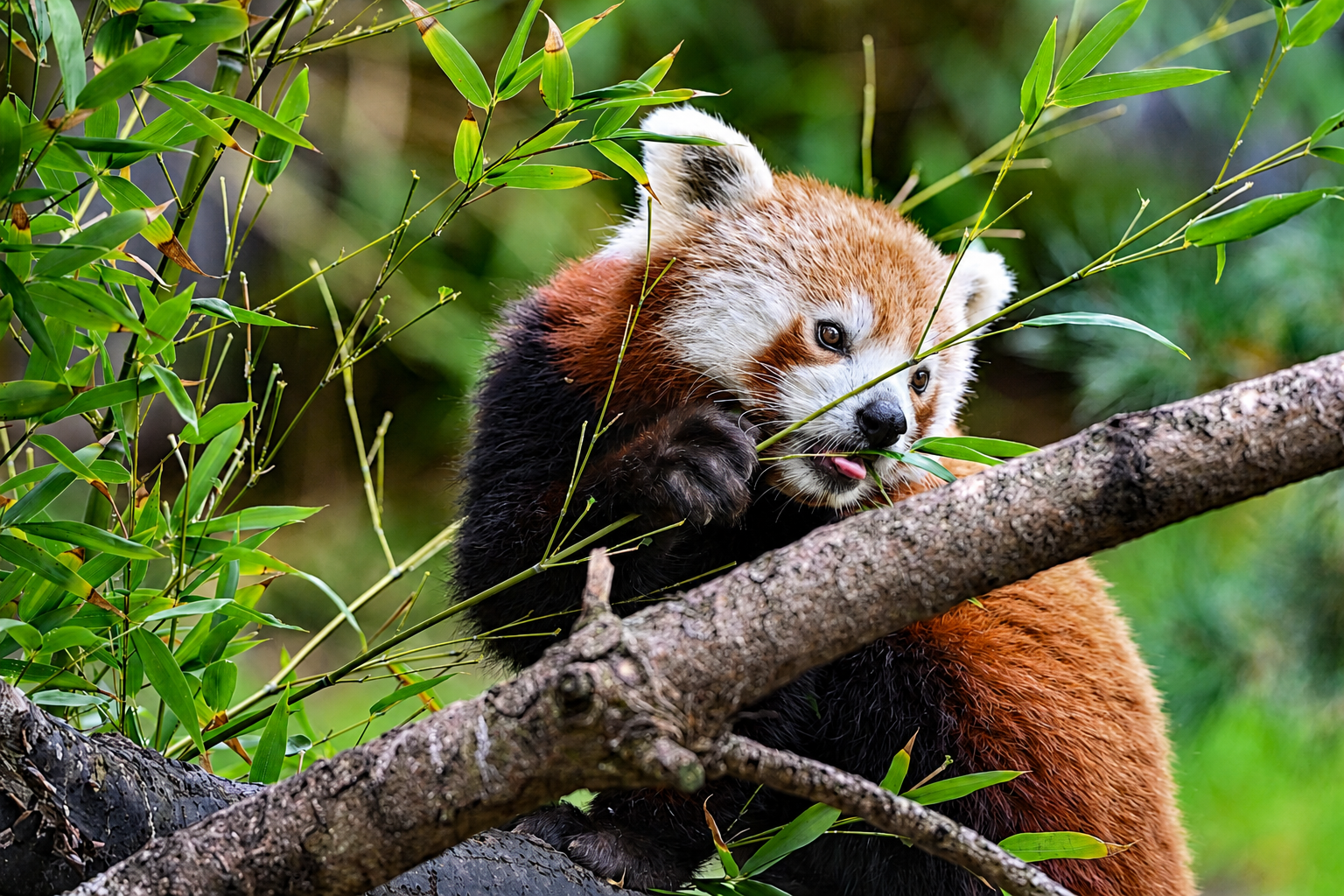
When they’re grown up, red pandas love nothing more than eating bamboo. Photo: Benjamin Weinkauf
Leipzig Zoo is open daily. Summer opening hours are currently from 9 am to 7 pm. During the summer season, day tickets cost 25 euros for adults and 17 euros for children aged six to 16; children under six are admitted free of charge. The zoo is easily accessible by public transport. Tram line 12 stops right outside the main entrance. Day tickets purchased online also entitle holders to travel to and from the zoo within Leipzig using public transport. A car park for cars and bicycles is located directly opposite the main entrance. It’s best to plan your visit ONLINE.
Transparency note: the video footage taken on Zoo Leipzig’s mobile phone camera has been slightly sharpened using image-editing software. No changes have been made to the content or form in order to preserve authenticity.
Empfohlen auf LZ


So können Sie die Berichterstattung der Leipziger Zeitung unterstützen:





There is one comment