Dieser Artikel ist auch in deutscher Sprache verfügbar: Zum deutschen Artikel.
It is said that Napoleon Bonaparte ordered trees to be planted along the country roads so that his marching troops would have shade. When his generals objected, pointing out that the trees would take 20 years to grow tall enough for that purpose, he is said to have replied: “All the more reason to start immediately!” Whether or not this story is true, under Napoleon’s rule avenues were certainly laid out in Germany too, and we still benefit from them today – provided they haven’t fallen victim to the craze for cars.
There is a saying: “The best time to plant a tree was twenty years ago. The second-best time is now.” Some people claim it’s an African proverb, others say it comes from China, and there’s also a theory linking it to a Russian general named Arakčeev.
One thing the story about Napoleon and the proverb have in common is this: you simply have to start taking action.
Leipzig and its trees
Between 2018 and 2025, Leipzig lost 15,732 trees, despite all the measures taken to plant new trees and preserve existing ones. This puts Leipzig at the top of the list – unfortunately, among the cities with the highest loss of trees. This is documented in the ‘Hitzecheck’ report by Deutsche Umwelthilfe. How is this situation supposed to improve? In the face of this, the City of Leipzig intends to approve the clearing of a further three hectares of woodland. It is not yet known where this loss will be offset.
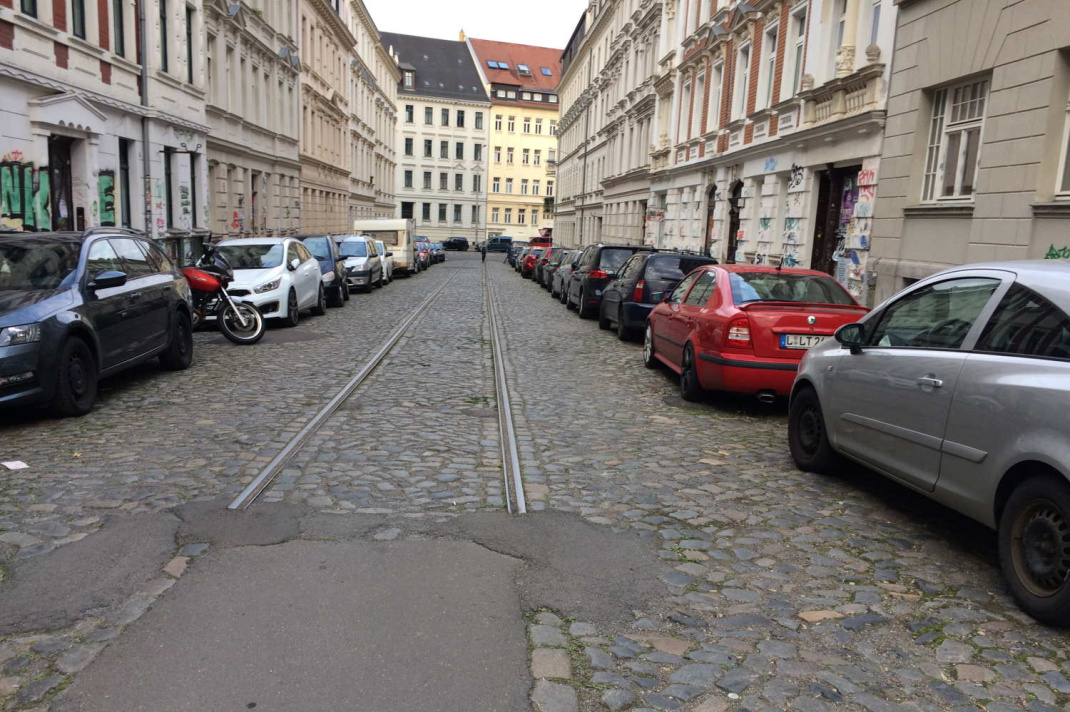
Sometimes, heritage protection also stands in the way of trees. Anyone thinking of the market square or the square in front of the Federal Administrative Court is not quite right. Yes, heritage protection does apply there when it comes to greening, but it also applies on Simildenstraße in Connewitz. When the Left Party faction proposed planting trees along this street in 2023, the heritage protection authority vetoed the proposal. It wrote:
“From a heritage protection perspective, the southern, listed section of the street cannot be planted with trees. Planting trees would involve the partial destruction of the original road surface and would have a significantly detrimental effect on the appearance of the street.”
The Mayor for Urban Development and the Mayor also gave reasons for the rejection. Thomas Dienberg remarked that it was not just about the paving, but about the street’s overall appearance. Burkhard Jung felt that it would be ideally suited for filming scenes set around 1900. Without the cars parked there, of course. But they could always be moved out of the way.
So if a film is ever made that deals with the heat stress of the 1900s, Simildenstraße is ready and waiting. After all, it has historic paving, including long-disused tram tracks.
Unplanted tree pits along roads should not – at least in the opinion of almost half of the members of Leipzig City Council – be planted with replacement greenery, but rather used for parking spaces.
There is a heat action plan
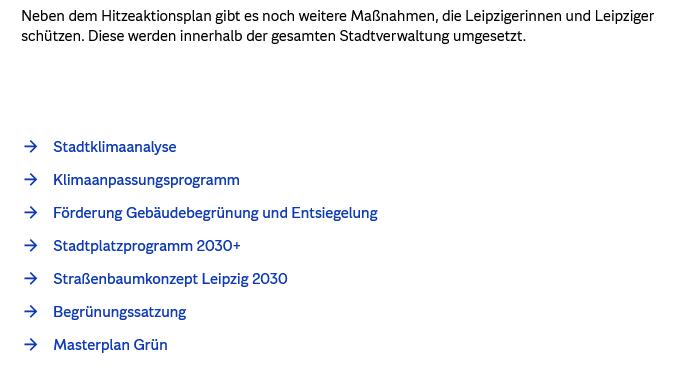
It should also be noted here that the City of Leipzig’s heat action plan contains no mention of trees. As the relevant department informed us in September 2024, the plan focuses on something else: “The focus of the 2024–2026 Heat Action Plan is on measures for risk communication and reducing the impact of heatwaves.” There are also a number of other measures, though it appears that these are not being implemented sufficiently.
It’s not just the local authorities
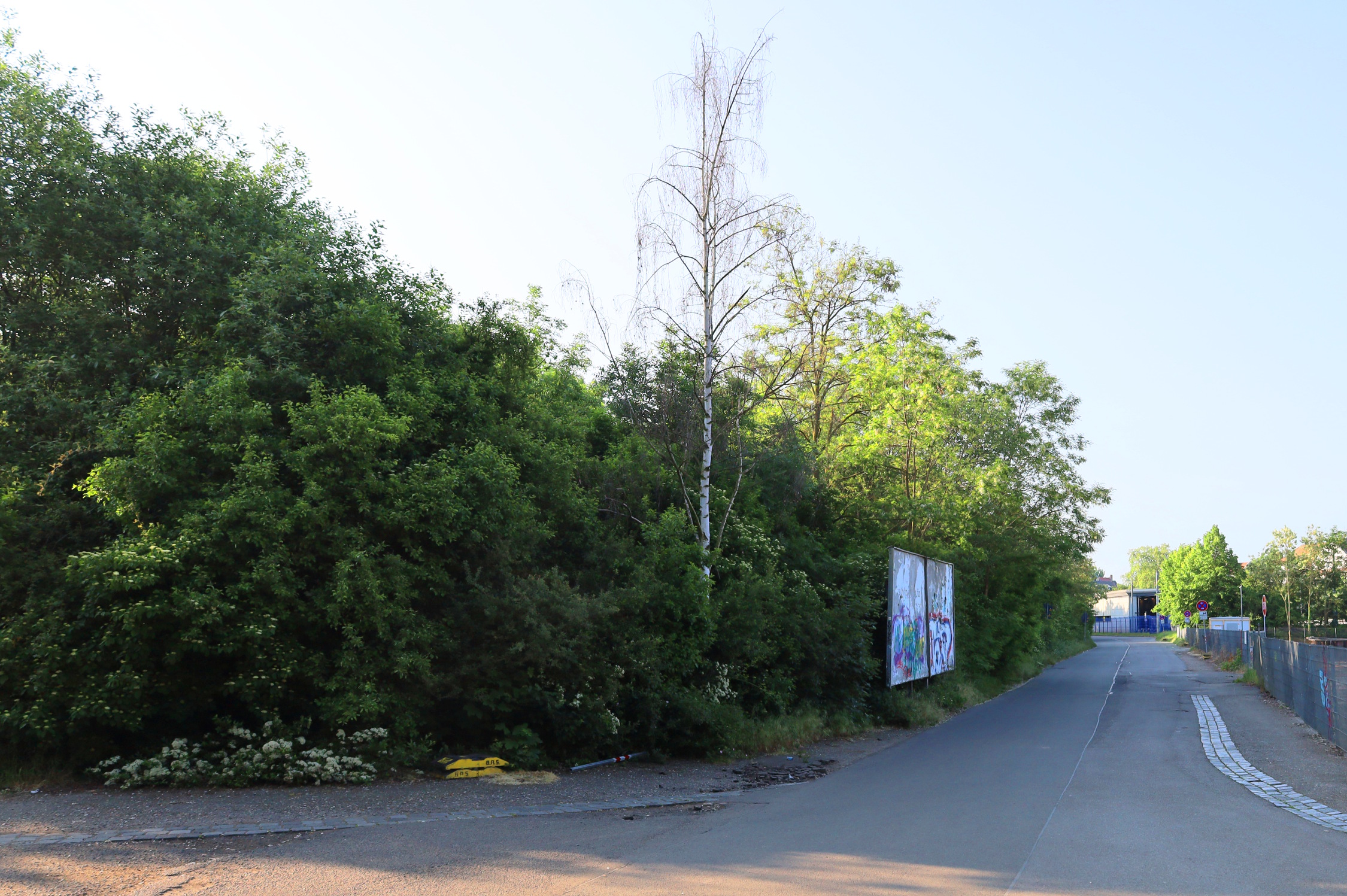
If the street tree concept is to have any real impact, newly planted trees are sometimes destroyed. This was the case at the end of 2025 on Henriettenstraße and Jordanstraße in the west of Leipzig. The same sometimes happens to green facades, probably when they bother the property owner.
When heat protection through trees and greening cannot be implemented, other parties besides the city are sometimes involved.
What happens next?
It is worth reading the city administration’s full response to a question raised by the Green Party. The urgent question, entitled ‘After the heat is before the heat – climate change adaptation in Leipzig following the recent record-breaking heatwaves’, was answered at the council meeting on 1 July 2026. The answers are sobering.
Question 4 read: Which measures from the 2024–2026 Heat Action Plan have already been fully implemented since the resolution was passed in April 2025, which are currently being implemented, and which have not yet been started?
The response indicates that the measures in the Heat Protection Plan are still largely in the process of being implemented. They are therefore not yet effective, or only partially so. Work has not yet begun on developing the communication cascades for targeted heat warnings.
Question 5 was: How does the city administration assess, in particular, the implementation and impact of the communication strategy used for heat protection over the past week?
Things do not look good, judging by the first two points of the response. “Due to a lack of heat protection management, there is as yet no coordinated and structured city-wide communication strategy and no communication cascade for heat-related emergencies” and “more extensive ad hoc communication is currently not possible given the ongoing staff shortages”.
In Question 6, the parliamentary group asks about further short-term measures, particularly to protect vulnerable groups. The response is very detailed, but the key points are in the opening sentences: “Despite expert assessments of the need for further and more efficient short-term measures, the measures currently being implemented must suffice” and “Without additional staff, it is not possible to plan further measures”.
Finally, regarding the last question within Question 8, which reads: “What impact is the current budget freeze having on heat protection measures, and what financial consequences will the city face as a result of the delays or the failure to implement the planned measures?”

’s heat protection action plan and budget freeze. Screenshot: LZ
The full response can be seen in the image: no follow-up funding, job cuts in discretionary spending, implementation only on a reduced scale, and a reduction in the budget for climate adaptation measures – the selection speaks for itself.
Conclusion
: There is unlikely to be a significant number of newly planted trees in Leipzig in the foreseeable future; indeed, the tree population may even continue to decline. This dry and hot summer is almost over, and the next one is sure to follow. To prepare for the summers we can expect in 20 years’ time, it would make sense to start planting trees and implementing other climate protection measures now. Even if that means one or two streets might no longer be available for film scenes set in the year 1900.
Empfohlen auf LZ


So können Sie die Berichterstattung der Leipziger Zeitung unterstützen:





There is one comment