Dieser Artikel ist auch in deutscher Sprache verfügbar: Zum deutschen Artikel.
Ceuta is not a natural phenomenon. Ceuta is a mirror. Tens of thousands of people are crowding at Europe’s border. Many are minors. They swim for their lives, climb over border barriers or risk death to reach European soil. The headlines are full of border security, the military and contingency plans. The debate centres on how Europe can better protect its external borders.
The real question is hardly ever asked.
Why would a person voluntarily leave their home?
The official explanation for the current situation sounds technical and almost reassuring: a ruling by the Spanish Supreme Court may have raised hopes of the right to remain. People-smugglers are said to have spread rumours. Morocco may be enforcing border controls less strictly. Economic problems are also a factor.
All of this may well be true.
But anyone who seriously believes that a court ruling or a post on TikTok would prompt tens of thousands of people to risk their lives is mistaking the spark for the fire.
People do not leave their homes because of rumours.
They leave their homes because they no longer see a future for themselves.
Anyone who has experienced war, who knows hunger, who has to escape political persecution or can no longer feed their children, does not make a free choice. They flee. That is why it bothers me how matter-of-factly we now speak almost exclusively of ‘migrants’. Many of the people at Europe’s borders are not seeking prosperity. They are refugees – even if not everyone meets the narrow legal definition of the Geneva Convention on Refugees. Reality often extends beyond the letter of the law.
It’s not just Moroccans
What’s more: it’s not just Moroccans. Amongst these people are refugees from Sudan, the Sahel, conflict-torn regions of West Africa and other crisis zones. They often find themselves stranded in Morocco for years on end – with no prospects, no rights, no future.
Of course, Europe has the right to protect its external borders. A state must know who is entering its territory. Nobody is calling for open borders without rules. This debate is legitimate.
But it becomes hypocritical if that is where it ends.
Because we are discussing fences instead of the reasons why people find themselves standing in front of them in the first place.
For decades, Europe has benefited from global economic structures that generate poverty elsewhere. We buy T-shirts for two euros, smartphones made with raw materials from conflict zones, and food at prices that are only possible because people at the other end of the supply chain can barely make a living from their work.
We export weapons to crisis regions, sign raw materials agreements with authoritarian regimes and talk about a values-based foreign policy. Our governments speak of human rights – whilst at the same time striking deals with states that trample them underfoot.
That little word: responsibility
The United States and Europe, too, bear responsibility for many of the crises whose consequences are now becoming visible on our borders. Under Donald Trump, international solidarity was systematically undermined and national isolationism was elevated to a guiding political principle. But the truth is more uncomfortable: the causes extend far beyond individual presidents or governments. They are the result of decades of power politics, economic interests and a global system from which the affluent North has long benefited.
And what about us?
We, too, cannot entirely shirk this responsibility. We knew about child labour. About starvation wages. About civil wars. About people drowning in the Mediterranean whilst fleeing. We knew about textile factories that collapsed, about mines where children extract rare earths, and about the consequences of climate change caused primarily by the industrialised nations.
Because looking the other way is not an option.
We have seen all of this!
And yet we carried on consuming.
Not out of malice, but because looking the other way is easier than bringing about change.
That is why the people in Ceuta are no threat to Europe.
They are a visible reminder that our world order is letting millions of people down.
They are not coming to take anything away from us.
They come because almost everything has already been taken from them.
Security.
Prospects.
A home.
Dignity.
It’s about the root causes, not the symptoms
Anyone who today calls merely for stricter border controls is tackling the symptoms and ignoring the causes. That may be politically successful in the short term. Morally, it is an admission of failure.
We should finally stop declaring the ‘refugee’ to be the problem. The problem is a world in which wealth on the one hand and hopelessness on the other are not a coincidence, but are interconnected.
My enemy is not the person who arrives exhausted at Europe’s border. My enemy is the political and economic structures that force people to leave their homeland in the first place.
And that is why I do not say to people fleeing war, misery and despair: ‘Go back’.
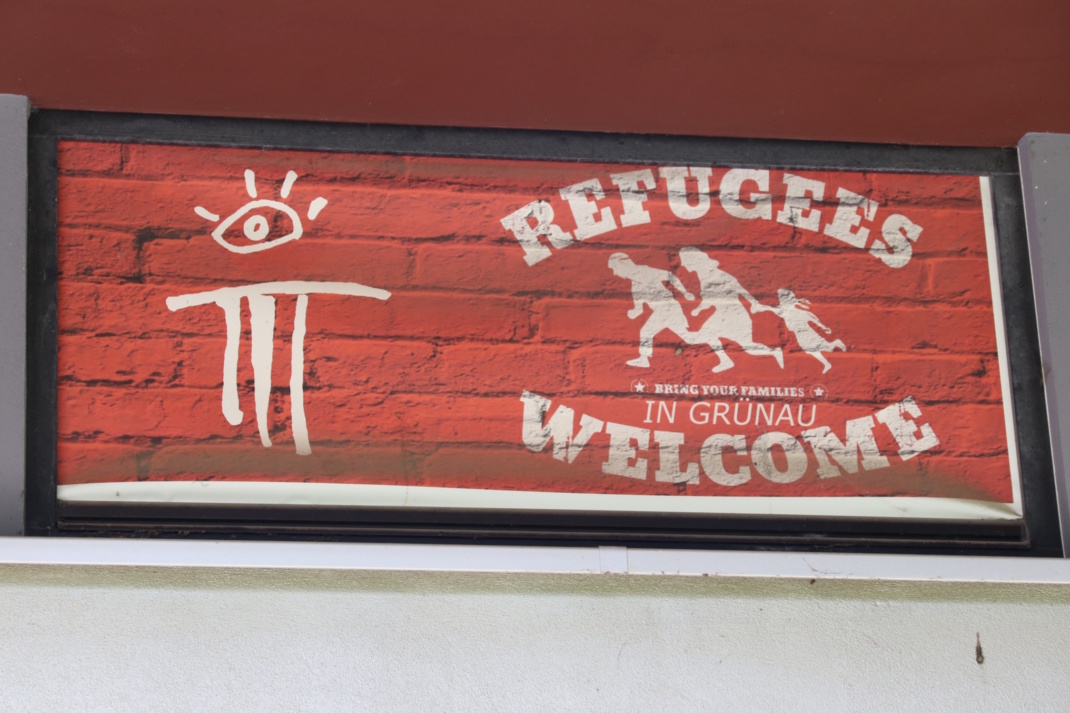
Even today, I still say: Refugees Welcome.
Not because Europe can solve all the world’s problems on its own.
But because humanity proves its worth precisely at the moment when it comes at a cost.
Empfohlen auf LZ


So können Sie die Berichterstattung der Leipziger Zeitung unterstützen:



There is one comment