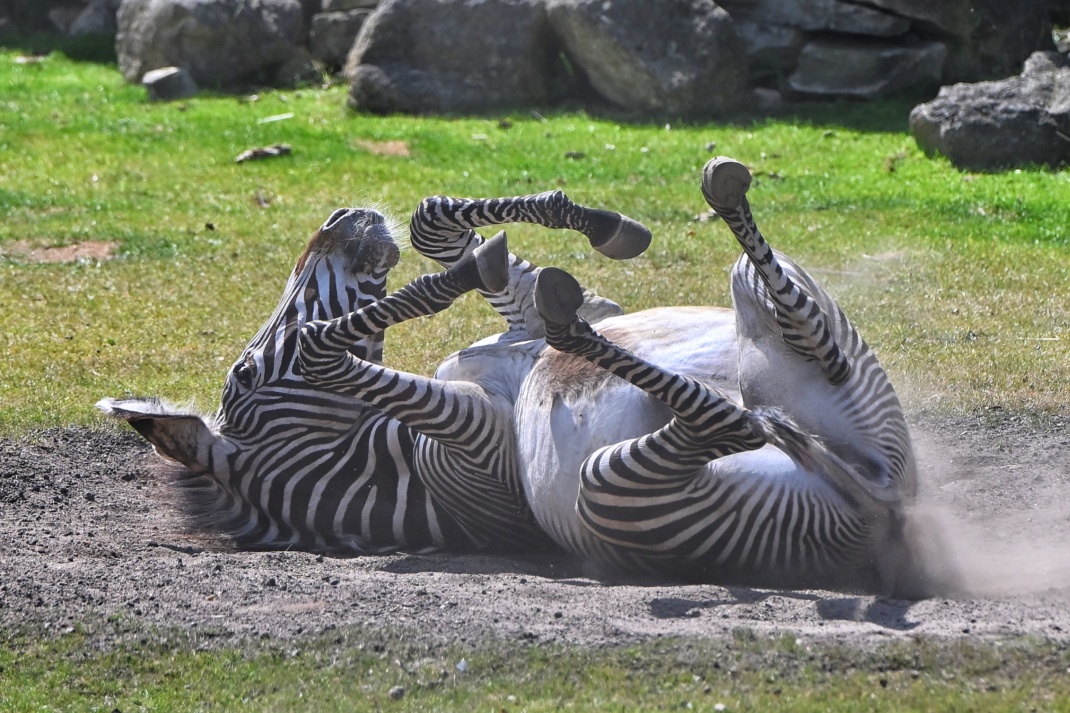
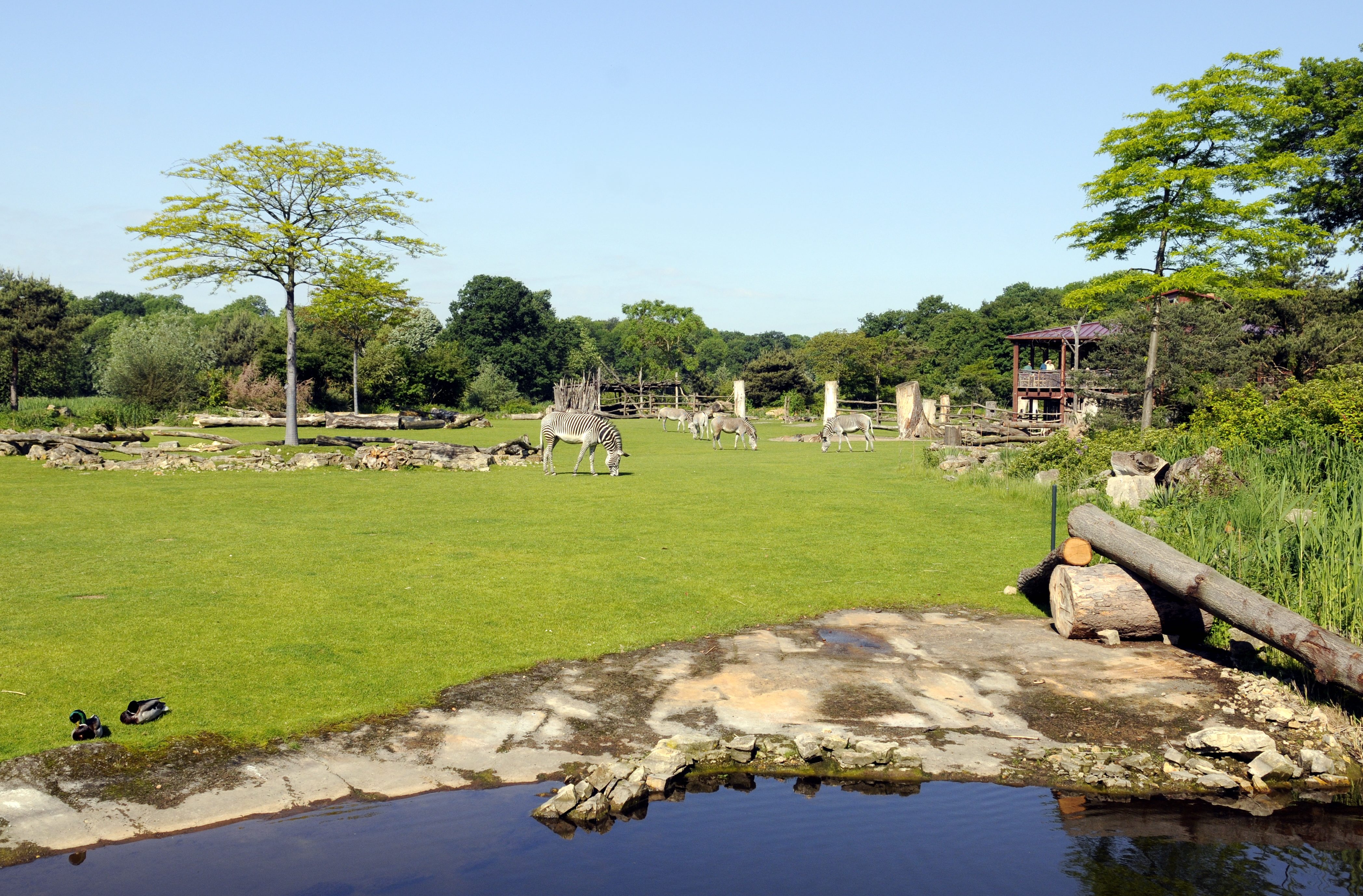
It’s not just the Kenyan savannah that’s incredibly hot. That’s where the Grévy’s zebras are found – the largest and, at the same time, the most endangered of the three existing zebra species. In Leipzig’s African savannah, the Kiwara Kopje, the sun also beats down mercilessly on shrubs, trees and wildlife. There are shady shelters, and even a swimming lake of its own. Yet no one – not even the poultry – seeks to cool off in it. Instead, we see the stallion Cosimo rolling around to his heart’s content in the sand pit, kicking up a proper cloud of dust. It’s a habit that leaves some visitors thoroughly baffled.
Inherited caution
The explanation for this scratchy pleasure is obvious – or rather, it lies in the zebras’ genes. Although they are generally regarded as good swimmers and cross rivers and lakes on their migrations – unlike at Leipzig Zoo, however, in the wild they must always be careful not to become easy prey for crocodiles. After all, swimming fast whilst kicking out in self-defence is impossible. And so Mother Earth has built this advice into the DNA of these lively striped creatures: to avoid seeking out bodies of water for the sake of pure pleasure wherever possible.
Even though very few of us humans would probably give it a go, a sand bath apparently has a cooling effect. It also helps ward off pesky flies, ticks, fleas, mites and lice.
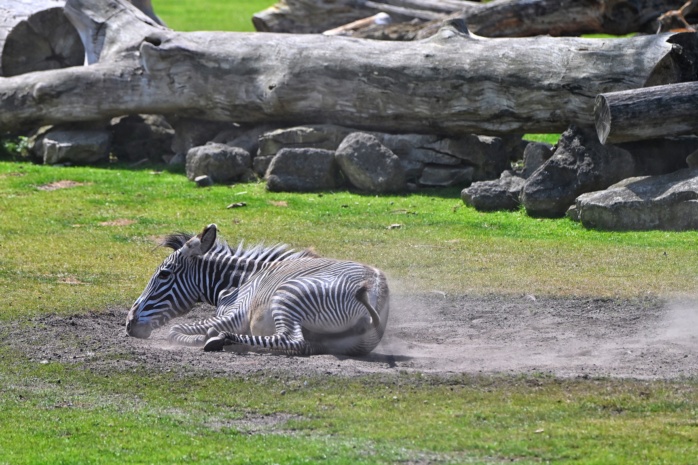
Lebensfreude mit Sinn. Zebra Cosimo beim Bad im Sand. Foto: Benjamin Weinkauf 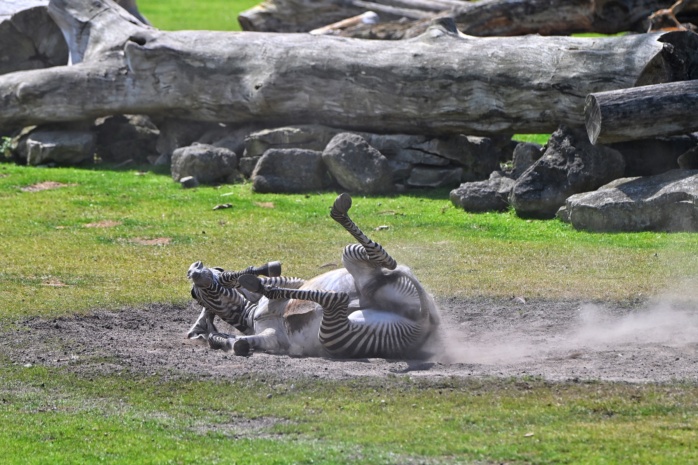
Lebensfreude mit Sinn. Zebra Cosimo beim Bad im Sand. Foto: Benjamin Weinkauf 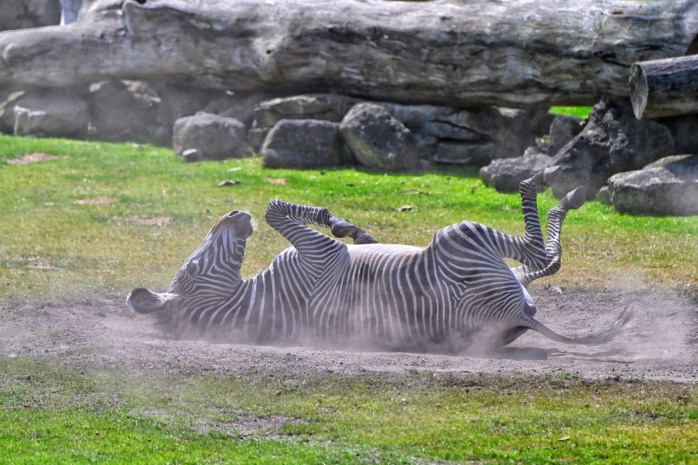
Lebensfreude mit Sinn. Zebra Cosimo beim Bad im Sand. Foto: Benjamin Weinkauf 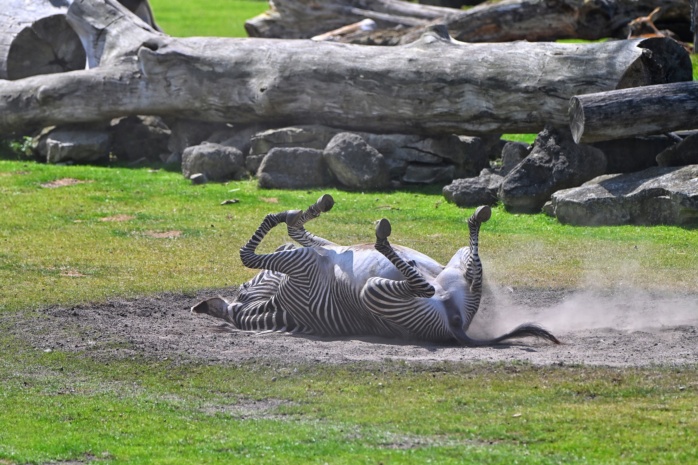
Lebensfreude mit Sinn. Zebra Cosimo beim Bad im Sand. Foto: Benjamin Weinkauf 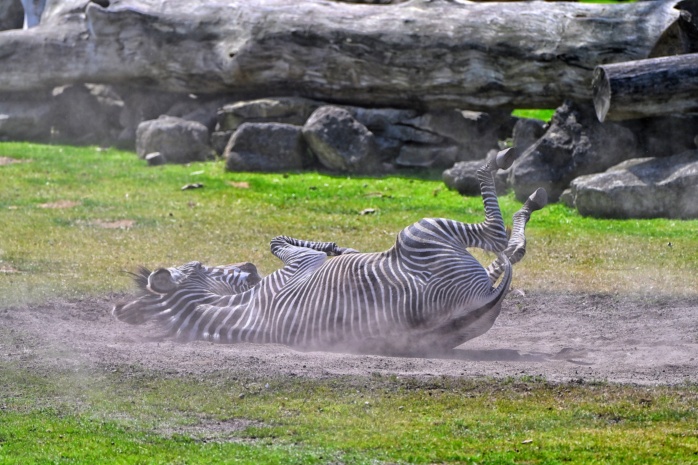
Lebensfreude mit Sinn. Zebra Cosimo beim Bad im Sand. Foto: Benjamin Weinkauf 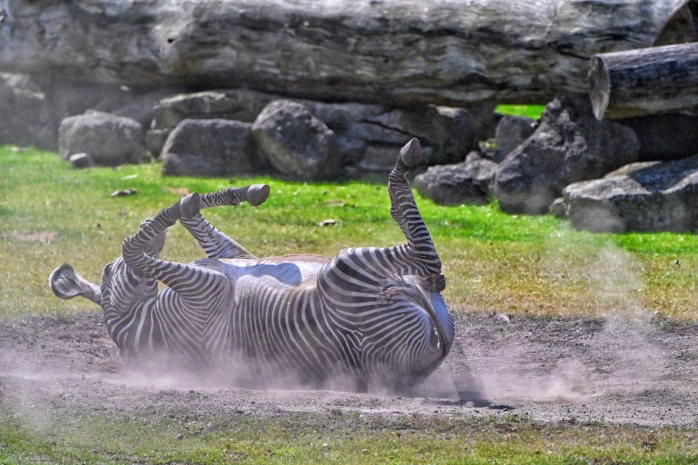
Lebensfreude mit Sinn. Zebra Cosimo beim Bad im Sand. Foto: Benjamin Weinkauf 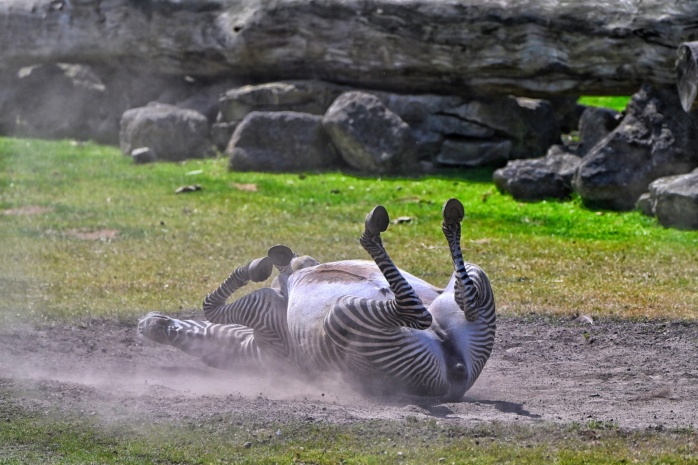
Lebensfreude mit Sinn. Zebra Cosimo beim Bad im Sand. Foto: Benjamin Weinkauf


Endangered species
The Leipzig zebra herd is part of the European Endangered Species Programme (EEP). Today, there are only around 3,000 Grévy’s zebras left in the wild. The majority of these are found in Kenya. Only 230 were last counted in Ethiopia. This means that the population of this species has declined by at least 80 per cent since the late 1970s. Following a drastic decline to around 4,000 animals in the late 1980s and approximately 2,000 individuals at the turn of the millennium, the latest surveys indicate a slight recovery, at least in Kenya. There, around 2,300 Grévy’s zebras were recorded in 2016, rising to around 2,800 by 2018. Despite this trend, the species’ situation remains extremely critical. In Somalia, they are considered extinct.
Leipzig Zoo is open daily. Summer opening hours are currently from 9 am to 7 pm. During the summer season, day tickets cost 25 euros for adults and 17 euros for children aged six to 16; children under six are admitted free of charge. The zoo is easily accessible by public transport. Tram line 12 stops right outside the main entrance. Day tickets purchased online also entitle holders to travel to and from the zoo on public transport within Leipzig. A car park for cars and bicycles is located directly opposite the main entrance. It is best to plan your visit online.
Empfohlen auf LZ


So können Sie die Berichterstattung der Leipziger Zeitung unterstützen:


There is one comment