Dieser Artikel ist auch in deutscher Sprache verfügbar: Zum deutschen Artikel.
Everything is getting more expensive. That’s true. Inflation is part of our lives. The only question is: what is actually driving these rising prices? And which factor is causing the most dramatic fluctuations? The latest publication from the State Statistical Office merely hints at this, reporting that Saxony’s annual inflation rate for August 2026 is expected to reach 2.9 per cent. The main categories showing the sharpest rises over the past year were transport (9.1 per cent), health (5.1 per cent), education (4.9 per cent) and ‘other goods and services’ (4.6 per cent).
But what does this annual period tell us? Even here, the main driver is already apparent: “Significant price rises in the transport sector were seen in fuels (27.9 per cent), vehicle maintenance and repairs (6.9 per cent) and passenger transport by air (8.1 per cent) and road (5.2 per cent).”
The fact that fuel prices have risen so sharply in such a short space of time is, of course, linked to the Trump administration’s utterly misguided war against Iran and the blockade of the Strait of Hormuz. But the statistics also provide another comparison, namely with the year 2020, which really highlights just how expensive fossil fuels have become during this period – particularly as a result of the war against Ukraine unleashed by Putin. And this does not only affect fuels.
Petrol has actually become 67 per cent more expensive during this period, and diesel fuel by as much as 95 per cent. And that is certainly important news. Because as almost all transport on German roads – whether involving industrial goods, raw materials or food for the supermarkets – is carried out using diesel vehicles, the enormous price rises for fuel are passed on right here to all prices – whether it be finished products, fruit or pasta in the supermarket, or products and spare parts for industry.
No single item in the consumer price index illustrates more clearly how the constant rise in the cost of fossil fuels is making life increasingly expensive for everyone living in the Free State.
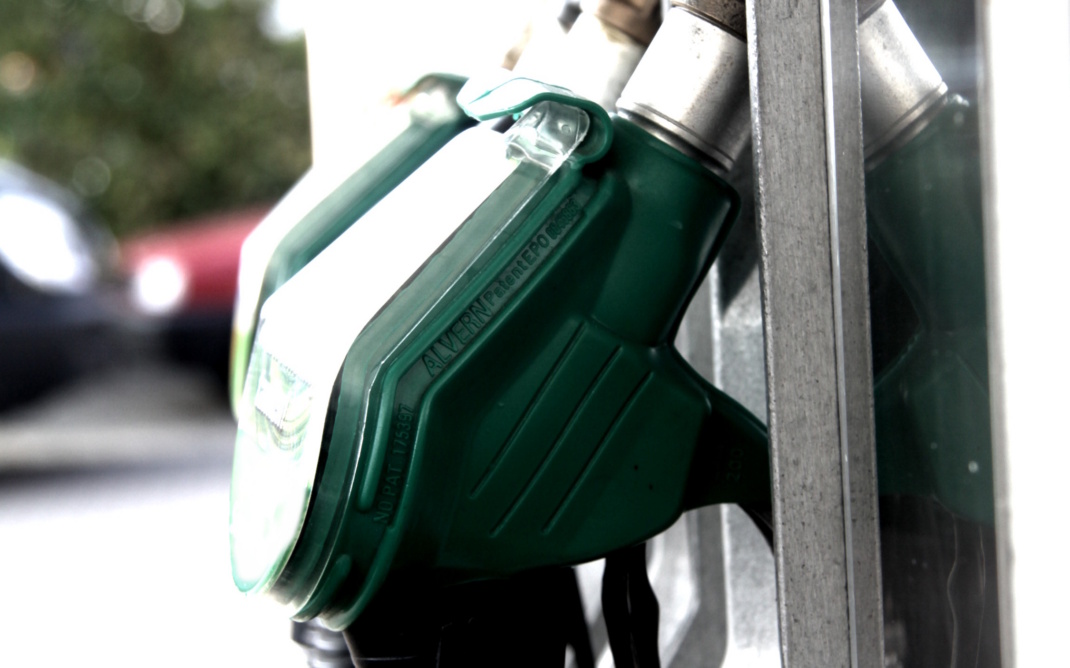
Global politics at the petrol pump
Public transport, on the other hand, offers a real ray of hope, as the state statisticians note almost in passing: “The annual fare adjustments typical for this month in local public transport were reflected in the ‘Combined Passenger Transport’ sub-index (1.9 per cent).” Here, the Deutschlandticket in particular is helping to curb price rises and ensure that mobility remains affordable for many Saxons.
Of course, it is not only at the petrol pump that Saxons are experiencing how global politics is having a direct impact on their wallets via fuel prices. This affects not only petrol and diesel, but also gas and heating oil, without which most Saxons’ homes would remain cold. Since 2020, the price of gas has risen by over 91 per cent, as has that of heating oil.
This is likely to make every property owner wonder whether they can continue to afford gas or oil heating for much longer. Quite apart from the absurdities of current federal policy, which is trying by every means to slow down the expansion of renewable energy.
And since district heating is also generated primarily using natural gas and coal, these developments are also having an impact on the price of district heating, which has risen by 88 per cent since 2020.
There is even one fuel that has seen an even sharper rise in price: This is the ‘solid fuels’ category, which primarily includes coal and wood. This category has doubled in price since 2020, so it is certainly no alternative for all those fools who still believe that fossil fuels are a cheap way to make ends meet.
Renewables are keeping electricity price rises in check
It is also helpful to compare this with another household expense – electricity. This has risen by just under 21 per cent since 2020. And it has only done so because ‘rapidly rampable’ gas-fired power stations continue to play a significant role in determining the level of German electricity prices.
Whereas electricity from renewable sources should, in fact, be leading to a fall in electricity prices. Without electricity from wind and solar power, electricity prices would logically have risen to match the levels of price increases for gas and coal.
A simple inflation calculation thus shows just how expensive clinging to fossil fuels actually makes life in Germany. And how nonsensical a policy is that slows down and prevents the expansion of renewable energy generation.
The statistics reveal something else too: despite a backward-looking energy policy in Berlin, renewables are actually helping to drive down electricity prices: “Whilst heating oil, including running costs, was 29.6 per cent more expensive than in the same month last year, electricity prices fell by an average of 6.3 per cent.”
The other items in the consumer price index then logically illustrate how the rise in energy costs is feeding through to everyday consumer prices. Food prices have risen by over 37 per cent since 2020, whilst housing costs have risen by over 20 per cent (with heating costs rising significantly more sharply than basic rents, which increased by just under 11 per cent).
Empfohlen auf LZ


So können Sie die Berichterstattung der Leipziger Zeitung unterstützen:





There is one comment