Dieser Artikel ist auch in deutscher Sprache verfügbar: Zum deutschen Artikel.
The mid-term elections – the US congressional and gubernatorial elections – send a crystal-clear message: An overwhelming majority of voters reject corruption and the shameless enrichment of a select few, the widening gap between rich and poor, and immigration policies and imperial-militarist superpower politics that flout the rule of law.
They want existing inequalities in society to be levelled out at an early stage through education and social integration. They seek solidarity even with those who have recently arrived in the country as immigrants
and who, through their work, make an important contribution to social cohesion. Even Elon Musk’s $500,000,000(!) in campaign funding for the Trump Republicans was powerless to counter this political will to protect democratic freedoms and place social justice on the political agenda.
The election results of 3 November 2026 thus underscore what is becoming increasingly apparent in our country too: The focus of future policy must be on ensuring equal access to education, housing, work and income; keeping everyday life affordable for all; addressing existing social divisions at an early stage; driving forward climate protection; and maintaining the peace in Europe.
The PiS government in Poland, the Orbán regime in Hungary, the Vučić regime in Serbia and now the corrupt Trump administration have shown that this cannot be achieved through nationalist policies of exclusion and marginalisation, both at home and abroad. The end result of their autocratic rule has been – and continues to be – a faltering economy, a legal system riddled with loopholes, a damaged democracy and, above all, a society torn apart from within.
It is foreseeable that any form of government participation by the AfD will leave nothing but such scorched earth in its wake. We must at all costs spare ourselves this foreseeable bitter experience – not least in view of the damage that Trump’s fascist policies have already caused!
That is why everything will now depend on the democratic parties and civil society drawing the right lessons from developments in Europe and the US. So-called ‘reforms’ whose starting point is not a vision for society geared towards the future, but solely empty coffers, will win over neither people nor public acceptance. We need a vision for life that is worth striving for, for all generations and social groups, one that, based on fundamental democratic values, conveys both recognition and a sense of responsibility.
If citizens feel and experience both of these in their everyday lives, they can be won over to democratic participation and the assumption of socio-political responsibility. This requires that we (and not just politicians) communicate much more directly, personally and empathetically with people of all ages – right where we live.
At this point, I would like to highlight a problem that is very prevalent in towns and local communities, but which – if discussed at all – is only debated in terms of apportioning blame: for over 20 years, 50,000 plus X young people in Germany have been leaving educational institutions without a school-leaving certificate. This means that a large proportion of these people lack the basic life skills, are dependent on state support for decades, and have hardly any opportunities for participation.
This social injustice alone demonstrates that we urgently need education, social and integration policies that are focused on the individual, proactive and solution-oriented – particularly in rural areas and in deprived neighbourhoods. This does not require a new law, but rather a collective societal effort at a local level – at every single educational institution and within people’s communities.
For we can no longer afford the enormously expanded base of people without school-leaving qualifications, with all the long-term consequences and social upheavals that entails. To address this, we need policies and civic engagement that respond decisively, intervene at an early stage and act on our own initiative. Of course, this costs money, but above all it requires a genuine commitment.
However, the costs and expenditure we incur now are nothing compared to the horrendous long-term costs of inaction. They represent an investment in the future.
To set new processes of social coexistence in motion, we must, first and foremost, stop the general suspicion directed at those affected by social upheaval. The fact is: they will only become a ‘burden on our pockets’ if we continue to neglect them now.
When ‘Gen Z’ takes to the streets at present to demand prospects for the future on behalf of the younger generation, we should also use this necessary wake-up call to realign our policies towards fair participation and the protection of living spaces.
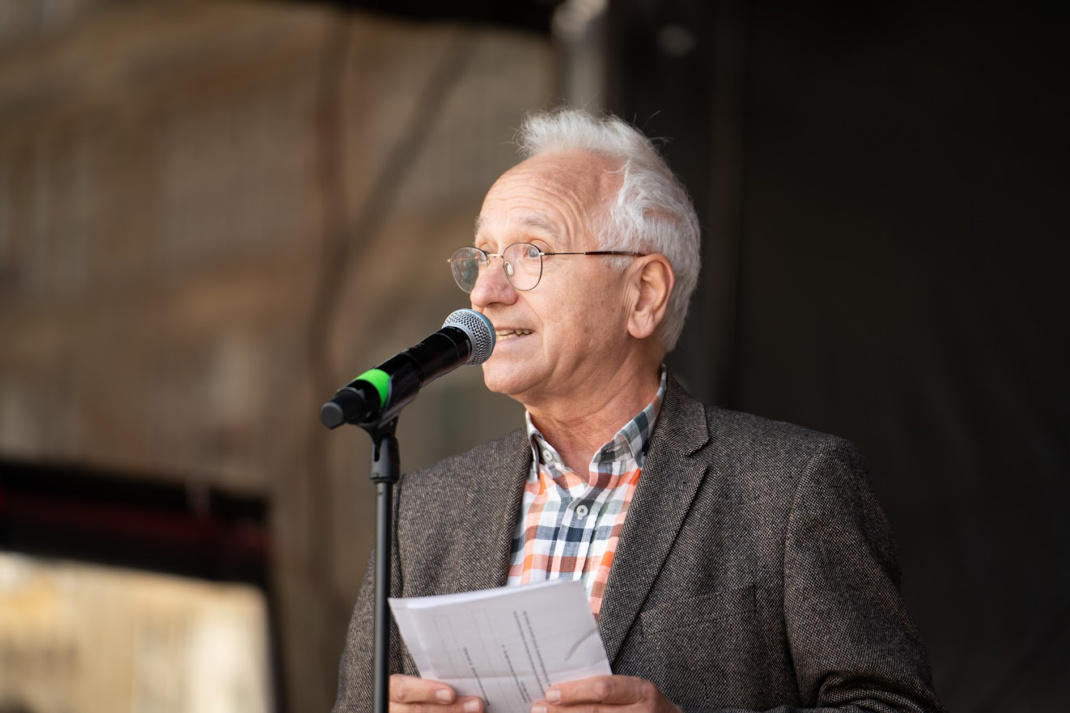
Christian Wolff, born on 14 November 1949 in Düsseldorf, was pastor of St Thomas’s Church in Leipzig from 1992 to 2014. Since 2014, Wolff, a long-standing member of the SPD, has been active as a blogger and adviser on matters relating to the church, culture and politics. He lives in Leipzig and is involved in many areas of public life from a socio-political perspective. Visit the author’s blog: https://wolff-christian.de/
Empfohlen auf LZ


So können Sie die Berichterstattung der Leipziger Zeitung unterstützen:





There is one comment