Dieser Artikel ist auch in deutscher Sprache verfügbar: Zum deutschen Artikel.
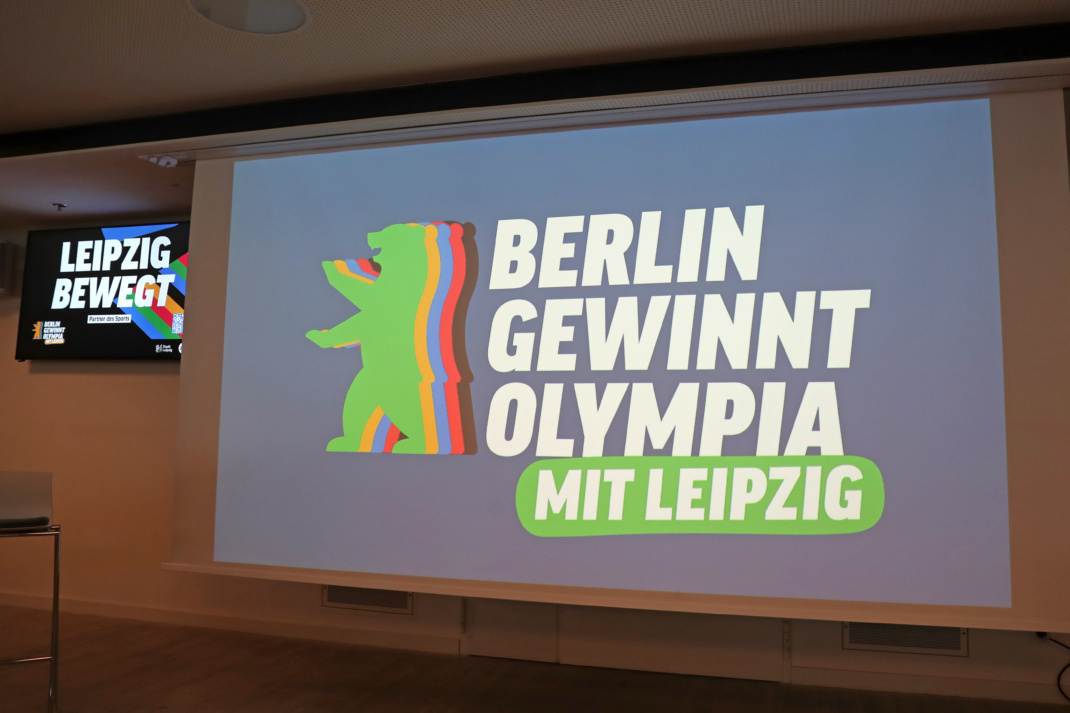
Take a deep breath, catch your breath, check your pulse. On Wednesday, 23 September, news began to filter through that Berlin would be withdrawing its bid to host the 2036, 2040 or 2044 Olympic Games. The Senate’s press conference on the matter wasn’t until Thursday. And the actual intra-German Olympic selection process isn’t until Saturday. But the writing had been on the wall for some time. Berlin’s premature withdrawal, which also knocks Leipzig out of the Olympic race once again, comes as no surprise. Far too many mistakes had already been made in the run-up to the decision. And the biggest mistake cost them crucial points.
On Tuesday 22 September, the German Olympic Sports Confederation (DOSB) published its assessment of the three potential German Olympic bids. “Out of a possible 100 points, the Munich bid scored 87.03 points, whilst Cologne-Rhine-Ruhr scored 85.02 points. Both bids were rated ‘very good’ because they fell within the 80–100 point range. The bid from Berlin received a ‘good’ rating with 74.64 points,” reported “Sportschau”.
Is the election result to blame?
The “Tagesschau” programme was even certain that the election result on Sunday, 20 September, was the deciding factor behind the withdrawal
: “The CDU-SPD Senate, which had driven the plans forward, was voted out in Sunday’s House of Representatives election. Election winner Elif Eralp (The Left), who could become the new Governing Mayor, is opposed to the Olympics and had already criticised the bid process and its costs.
Just one day after the election, Eralp had already announced that the matter had been settled. The Greens, who are expected to form part of the government, also reject the plans. Both parties argue that Berlin needs the money more urgently elsewhere.”
RBB
,
pointed out
what cost Berlin the most points – despite its positively assessed international appeal: “Unlike in the other two regions, there was no public consultation in the capital. According to Niroomand, this fact was also given significant weight in the DOSB commission’s evaluation. Whilst the Berlin House of Representatives had approved a bid, opponents of the Olympics had also launched a citizens’ initiative against it.”
And the DOSB is well aware that such a massive project cannot really succeed unless the public is behind it. Even the people of Leipzig, who supported the Berlin bid
as partners, failed to carry out a robust public consultation.
No public viewing
Following the announcement on Thursday, 24 September, that Berlin had withdrawn its bid for the Olympic and Paralympic Games, the public viewing event scheduled for Saturday, 26 September from 1.30 pm to watch the decision on Germany’s Olympic candidate at Leipzig’s Markt has been cancelled, Leipzig City Hall has now announced.
Leipzig is, of course, no longer in the running following Berlin’s withdrawal. At the extraordinary general meeting of the German Olympic Sports Confederation (DOSB) in Baden-Baden, a decision will be made as to whether Germany will bid to host the Olympic and Paralympic Games with Munich or with the Cologne-Rhine-Ruhr region.
The stage on Leipzig’s Marktplatz will therefore be entirely dedicated to the Leipzig Market Days on Saturday from 11 am, which will be taking place in the city centre from 25 September to 4 October.
Saxony State Sports Federation regrets Berlin’s withdrawal
On Thursday, the Saxony State Sports Federation (LSB) also expressed its regret at the withdrawal of the joint bid by Berlin and Leipzig.
“We deeply regret Berlin’s withdrawal. Leipzig and Saxony were fully committed to this concept. The joint bid has demonstrated the potential that lies in combining an international metropolis with strong sporting centres and a rich sporting tradition in the regions,” explained LSB President Dr Frank Pfeil. He expressed his sincere thanks to all those involved in Berlin and Leipzig for their commitment.
With Munich and Cologne-Rhine-Ruhr, there are now two proposals ready for Germany’s continued bid. The LSB views it positively that Cologne-Rhine-Ruhr expressly wishes to include East German sporting centres such as Markkleeberg and Rostock-Warnemünde. “This sends a strong signal that the Olympic and Paralympic Games are to be viewed as a pan-German project,” explains Pfeil.
The decision on which bid Germany should put forward internationally will be made by the relevant Olympic federations, the DOSB Executive Board and the individual members of the DOSB on 26 September in Baden-Baden. Saxony’s LSB President emphasises: “We do not wish to pre-empt this vote: should either Munich or Cologne-Rhine-Ruhr be selected, they can count on the unreserved support of the organised sports movement in Saxony. What is crucial for us is that Germany subsequently stands united behind its bid and jointly promotes the Olympic and Paralympic Games in our country.”
No GOLD for Leipzig
“The disappointment is, of course, immense. We have been working towards this goal and this Saturday for years,” says Jens Lehmann, acting chairman of GOLD for Leipzig,
the association that campaigned for Berlin in Leipzig “With last Sunday’s vote, the situation for BERLIN has become very difficult. In his view, BERLIN had the best concept and also the most promising prospects internationally.”
But euphoria is simply no substitute for persuading the public. The Leipzig bid also suffered from the fact that there was no public consultation. And there was scepticism about this major project within the Leipzig City Council too.
Leipzig needs sustainable sports facilities and better conditions for sports clubs
Leipzig’s Greens spoke out cautiously on Thursday, emphasising: “As the Bündnis 90 / Die Grünen group on the Leipzig City Council, we have never supported this bid uncritically. ‘The Olympics at any cost’ was never our goal. Rather, we have advocated for the Olympic and Paralympic Games to be conceived and implemented in a sustainable, inclusive and financially responsible manner, and for Leipzig to benefit from them in the long term. This is precisely where we saw the opportunity. Those who enter the race together also bear responsibility together and should not simply leave the others behind in the home straight.
The Greens particularly regret the missed opportunity regarding the Paralympic Games. “They could have provided a major platform for inclusion and participation and enhanced the visibility of people with disabilities far beyond the realm of sport. For us, this is where the social power of such Games lies: people come together and experience fairness, respect and a sense of community. Especially at a time when so many things are drifting apart, this is no trivial matter.”
“Of course, BERLIN could have lost on Saturday,” says Sylvia Herbst-Weckel, sports policy spokesperson for the Green Party parliamentary group, commenting on Berlin’s withdrawal. “That’s part and parcel of sport. But you have to compete to find that out. Withdrawing from the process three days before the decision is therefore bitter for us. And when several cities enter the race together, we believe it’s also part of the process to discuss the outcome together. It disappoints us, and yes, it also makes us angry. Yesterday, this news left us quite stunned. We entered the race together – and now Leipzig and the other partners are suddenly on their own in the home straight.”
In Leipzig, clubs, federations, the local administration, politicians and many other stakeholders have also been grappling with the question: ‘What will actually remain after the Games?’ Ideas were developed, requirements set out and a great deal of time invested.
“But what must not disappear with the bid are the good ideas that emerged in the process: sustainable sports facilities, better conditions for our clubs, greater accessibility and inclusion, as well as strong grassroots, school and elite sport,” emphasises Sylvia Herbst-Weckel. “We will continue to champion these causes in Leipzig – with or without the Olympic rings.”
Empfohlen auf LZ


So können Sie die Berichterstattung der Leipziger Zeitung unterstützen:



There is one comment