
Dieser Artikel ist auch in deutscher Sprache verfügbar: Zum deutschen Artikel.
Electricity comes out of the socket. The question of where that socket will be in future is an intriguing one. The municipal utilities provide the answer. With its head held high, the GfZK bids farewell to a much-loved grant; an exhibition showcases future plans for the school biology centre; and the waterworks invite visitors to explore the sewer system. Meanwhile, on Riebeckstraße, a campaign group is tackling injustices suffered by girls in the GDR.
Innovation for electric cars
In Leipzig, electric car users will soon be getting down on their knees. The municipal utilities are today presenting their pilot project and launching a new form of charging infrastructure: so-called ‘charging kerbs’. At two selected locations near the City-Ring (including Alter Amtshof 2), electric car drivers can now charge their vehicles using charging points integrated into the kerb.
The concept is based on a pilot scheme in Cologne that has attracted nationwide attention, where these systems are already in use. Developed by the Düsseldorf-based Rheinmetall Group, the one-metre-long, 80-kilogramme kerbs differ hardly at all in appearance from conventional kerbs.
To charge, the vehicle is parked next to the charging point, the debit card is scanned at the kerb, and the charging cable is then connected to the socket integrated into the ground. The reason behind Leipzig’s initiative is the rising number of electric vehicles in the trade fair city. At the start of 2026, a total of 7,889 electric vehicles were registered. A year earlier, the figure stood at 6,571 – meaning the fleet has grown by a good 20 per cent within a year. At the start of 2024, the figure had still stood at 5,534.
Furthermore, in some places, traditional charging points take up too much space or are not permitted from an urban design perspective. The sockets installed at the kerb do not require extensive foundations, are considered to require less maintenance and, like conventional charging points, are set to be displayed on sat-nav systems and transport apps.
Art and tight budgets
With a small evening reception today, the Gallery for Contemporary Art (GfZK) is bidding farewell to a funding programme that has brought international perspectives to Leipzig for almost a quarter of a century. After just under 25 years, the fellowship for young international curators – jointly run by the GfZK and the Cultural Foundation of the Free State of Saxony (KdFS) – is coming to an end.
Since 2001, the Cultural Foundation has awarded the grant annually at the GfZK. A total of 21 scholarship holders from 19 countries have shaped the museum’s programme during this time, developed their own projects and forged an international network that extends far beyond Leipzig. An event in the GfZK auditorium today marks the end of this programme.
Following opening remarks by Dr Manuel Frey and Franciska Zólyom, the current scholarship holder, Simon Kurti, and former scholarship holders Eleni Michaelidi (2023–24) and Nini Palavandishvili (2009–10) will discuss international networks and transcultural curating. From 7.30 pm, there will be a get-together with drinks and a DJ set on the GfZK’s roof terrace.
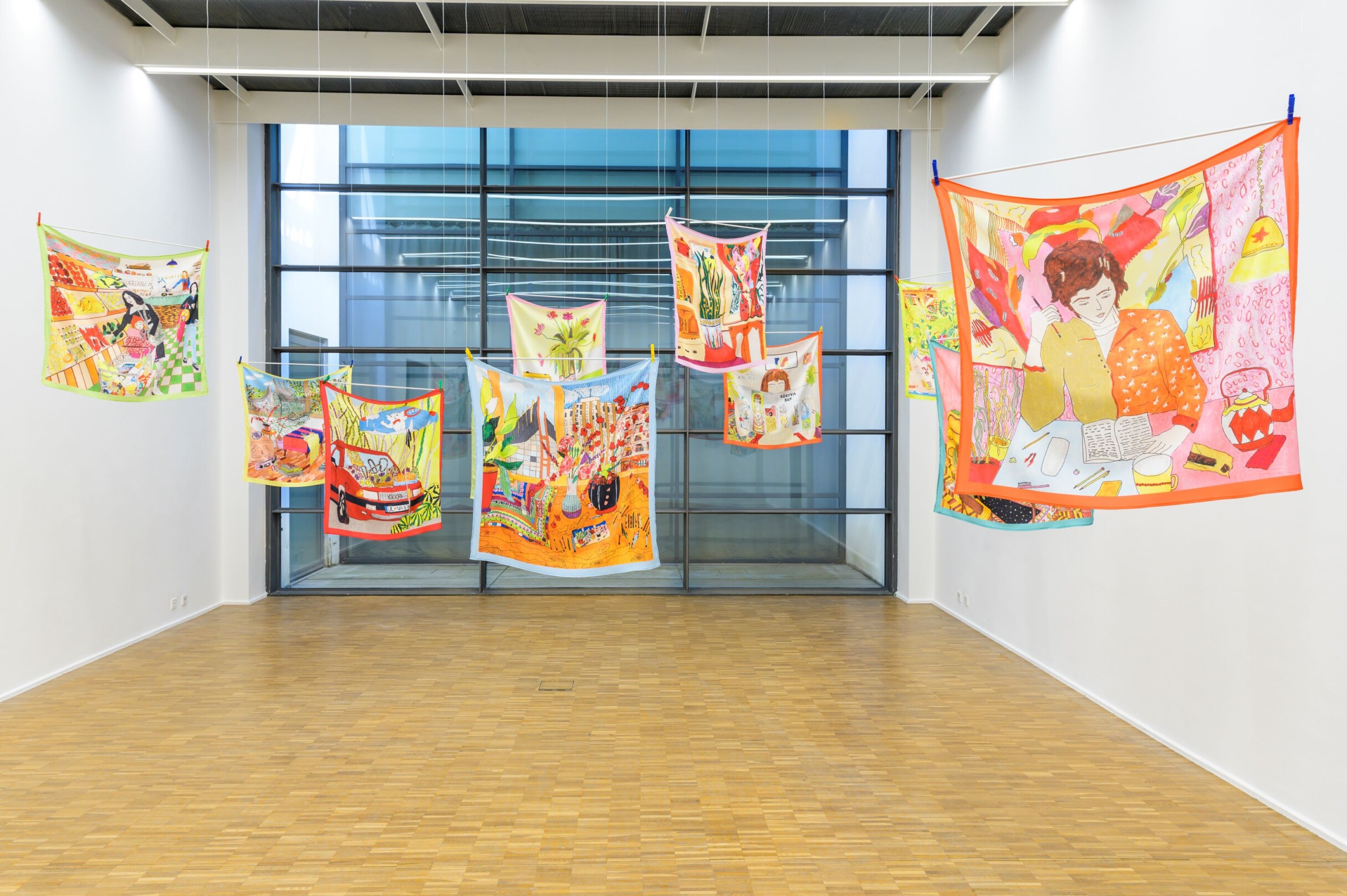
The group exhibition ‘Knoten der Zeit’ (Knots of Time), the final project created as part of the fellowship, runs until 23 August. The exhibition’s title is taken from a quote in the book *Dream Catalogue* by Bjeshkë Guri and Lira Blakaj on dream interpretation in Kosovo. In it, the authors explore how cultural assumptions and traditions shape people and connect generations.
Neither the GfZK nor the Cultural Foundation explain in their public announcements why the fellowship is being discontinued after almost 25 years. However, the decision comes at a time of significant cuts to cultural funding in Saxony. According to the Ministry of Culture, the Cultural Foundation had around 1.7 million euros less at its disposal in 2025 than in 2024; furthermore, the state subsidy for the GfZK was also reduced.
Whether these cuts directly contributed to the programme’s closure has not yet been publicly confirmed.
Examining the disenfranchisement of girls in the GDR
They rank among the darkest chapters in the history of injustice in the GDR: the closed venereological wards. Research, archival findings and eyewitness accounts show that, whilst these institutions were officially intended to combat sexually transmitted diseases, in practice they were often also used to discipline young women.
The wards in Leipzig-Thonberg, Halle (Saale) and Berlin-Buch are particularly well documented. For Leipzig, the city archives hold around 5,000 patient files dating from 1946 to 1990. Historians have analysed many of these and arrived at conclusions that significantly alter the previous understanding of the situation.
Whilst the institutions were frequently associated with the treatment of sex workers, in the Leipzig sample for the period from 1961 to 1990, around 52 per cent of admissions fell into the category of ‘vagrant women’. Sex workers, by contrast, accounted for only around three per cent of cases.
In addition, there were women classified as so-called ‘HwG persons’, i.e. individuals with ‘frequently changing sexual partners’. The files document reasons for admission including, amongst others, ‘skiving off work’, ‘loitering’ or repeated running away. Particularly noteworthy is the fact that many of those affected were apparently not treated at all for a confirmed sexually transmitted disease.
GDR-wide figures for 1968 show that 2,763 women were admitted to secure venereology wards. In Leipzig, the average age of those admitted fell from 22.6 years before 1961 to 19.49 years after the Ordinance on the Control of Sexually Transmitted Diseases came into force. More than half of those listed as ‘vagrants’ were under the age of 18.
An event in the ‘Erzählcafé’ series, taking place today at Riebeckstraße 63 in Leipzig, is dedicated to coming to terms with this injustice. Until the end of the GDR, this was the site of the local closed venereological ward. The Riebeckstraße 63 e.V. association and the Torgau Closed Youth Work Camp Memorial Centre are jointly hosting the event at 4.30 pm; their open invitation is extended to affected women, their relatives and anyone else interested.
The ‘Erzählcafé’ offers the opportunity to share personal experiences, engage in conversation and exchange memories. At the same time, the event is intended as a space for listening and mutual support. No registration or admission fee is required.
Architectural designs for bio-education
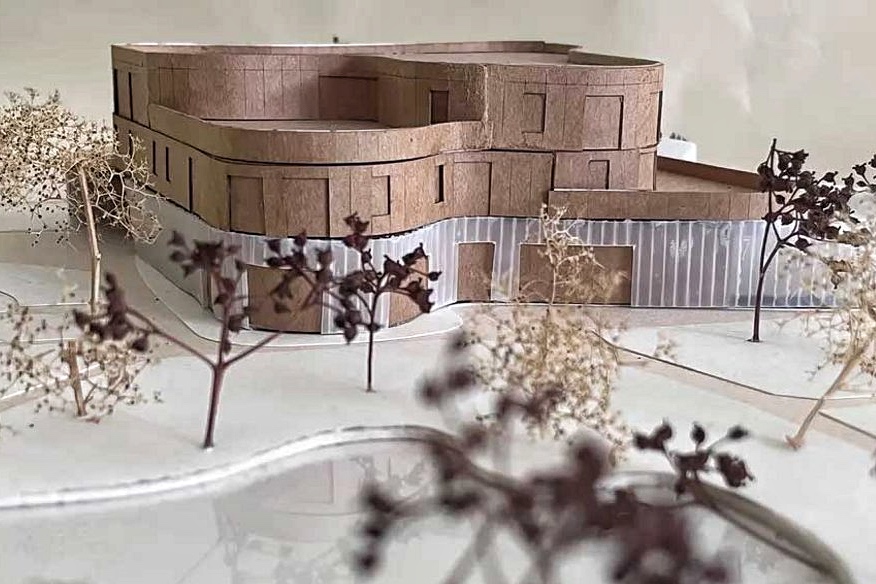
The results of an architecture seminar organised by HTWK Leipzig, which focuses on the future development of the site on Schleußiger Weg, are being presented today at the Leipzig School Biology Centre. The background to this is the plan to establish an education centre there. The vision is for a modern learning and experiential space offering interdisciplinary programmes for different age groups.
In Prof. Frank Schüler’s seminar, students on the Master’s programme in Architecture developed concepts for the further development of the site. The designs explore how architecture, nature and education can be combined to create a sustainable learning environment. The plans are based on the ‘Whole Institution Approach’, which brings together ecological, socio-cultural and economic aspects.
The aim is to create a sustainably designed new building on the site of the City of Leipzig’s Botanical Teaching Garden. The visions developed are presented in the exhibition ‘Making the Future Visible’. On display are both architectural models and digital designs, which visitors can explore via a tablet.
The exhibition is open today, 20 August, from 3 pm to 5 pm, free of charge, at the Leipzig School Biology Centre in the Botanical Teaching Garden, Schleußiger Weg 1. During the exhibition, the director of the School Biology Centre, Sebastian Hänsel, will be available to discuss the project.
The School Biology Centre comprises the Open-Air School, the Botany School and the Zoo School, as well as the Botanical Teaching Garden. The latter has served as an extracurricular learning venue for more than 130 years. The planned further development of the site is firmly anchored in Leipzig’s long-term school building strategy.
Right at the bottom
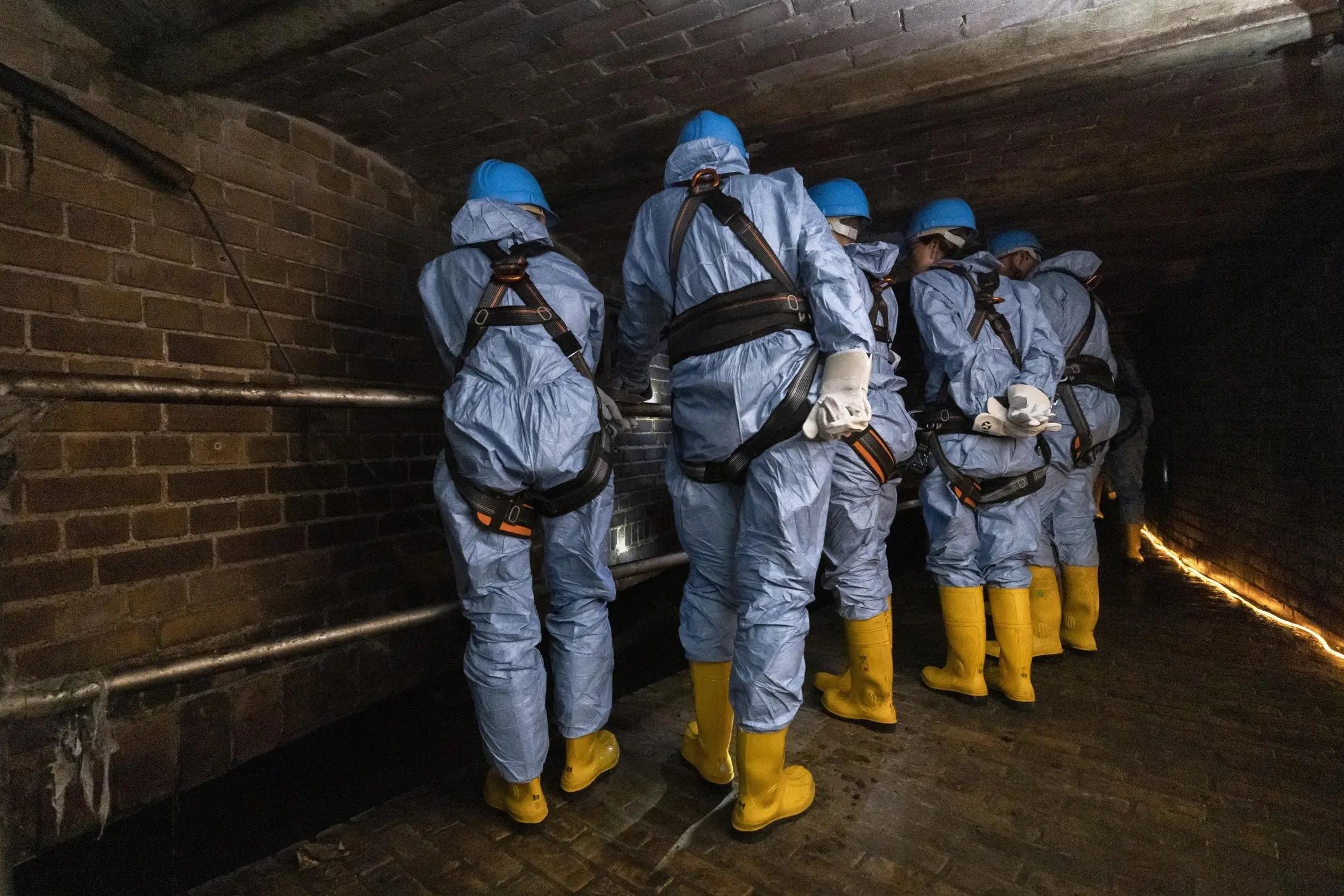
This city tour is going underground! Although it doesn’t take place until next week, as places are as scarce as toilet paper can sometimes be, it’s advisable to book your place today. To mark Toilet Paper Day, Leipzig Waterworks is inviting the public on Wednesday 26 August to take a special look beneath the earth’s surface and explore the city’s sewerage system.
Guided tours will showcase the sewerage system and provide information on what belongs in the toilet – and what doesn’t. Accompanied by experts from Leipziger Wasserwerke, participants will descend directly into the sewer system via a manhole.
During the tours, which last around an hour, guides will explain how Leipzig’s sewer network operates, the daily tasks carried out there, and the importance of a functioning wastewater disposal system for city life. The tours start between 11.00 and 14.00 on the hour. The meeting point is on Richard-Wagner-Platz in front of the Höfe am Brühl.
Due to the limited number of places, advance booking is required at www.L.de/nahdran, subject to availability. Anyone wishing to take part in one of the tours must be at least 12 years old and 1.50 metres tall. Participants must also be sure-footed, in good physical condition and able to move safely in confined and dark spaces. Access is via a sewer manhole with an opening approximately 60 centimetres in diameter. The necessary protective equipment is provided by Leipziger Wasserwerke.
So können Sie die Berichterstattung der Leipziger Zeitung unterstützen:




There is one comment