Dieser Artikel ist auch in deutscher Sprache verfügbar: Zum deutschen Artikel.
Give them a name: that was, in fact, the aim of the initiative that fought for years to ensure that the Old Town Hall would commemorate the witch burnings in some way. Since 2021, there has indeed been a plaque there that highlights this dark chapter in Leipzig’s municipal and legal history.
But what is so distressing about it, according to Leipzig resident Andreas Uhde, is the simple fact that the plaque does not list the names of the victims. The women executed on flimsy charges remain anonymous. He believed there was another way. And so he approached the city. Without success.
“In the spring of this year, I approached the City of Leipzig with a request for a commemorative plaque for the victims of the witch hunts. The city’s response was clear: nothing new had come to light, no further plans were being made, and they were grateful for the existing plaque ‘as it is’,” Andreas Uhde explains to the LZ.
“I couldn’t let that go. Because the existing plaque lists figures – ‘at least 250 women, men and children, 72 of whom were put to death’ – but no names. Not a single name. No faces. No stories. To me, these people are not just an anonymous figure. They are people with names. With lives. With dignity.”
High figures, no names
It remains unclear how reliable the figure on the plaque at the Old Town Hall is. The high figure of 250 sentences probably refers to the whole of Electoral Saxony. In an article for the ‘Yearbook of Leipzig City History 2022’, the historian Madeleine Apitzsch examined the archival sources available in Leipzig.
Her finding: “Excluding the dubious cases and taking into account the accusation of witchcraft from Zweenfurth as well as the trial of 1618, at least twenty-five witchcraftand witchcraft trials, as well as a charge of defamation relating to a previous accusation of keeping a dragon, were heard.”
And further: “In the Leipzig district, between 1479 and 1730, accusations of witchcraft were levelled against five men, seventeen women and three underage boys.” The sources are so patchy that complete trial records exist for only seven individuals, and detailed information is available for a total of nine.
It is therefore understandable that Andreas Uhde was unable to find any more names.
“I have carried out research. I have found names. Names such as:
· Margaretha Liebler
· Margarethe Schultze
· Elisabeth Schuncke
· Maria Gottlöber
· Catharina Heiler
· Anna Maria Freygang.”
A time of torment
He suspects there are “many more whose names nobody knows any more”. But that is precisely what is misleading about the plaque installed at the Old Town Hall in 2021. The figures listed there do not, in fact, represent the “witch hunts in Leipzig”, but those across the whole of Electoral Saxony, even if these trials were held in Leipzig.
Madeleine Apitzsch’s article does, of course, also describe the ordeal the accused endured in order to extract a confession from them – in some cases through torture. One of the accused women even died whilst being tortured.
It is precisely here that the cruelty of the witch hunts – a phenomenon of the modern era – becomes apparent. This is often forgotten.
Nor were all the victims sent to the stake. There is evidence of two women being burnt at the stake, but also of one beheading and a sentence involving the burning of the cheeks and being bound in stocks. Two men were broken on the wheel. From 1598 onwards, the sentences became significantly more civilised. The trials tended to end in acquittal, fines, imprisonment or a blood feud.
But even when these facts are known, the plaque on the Old Town Hall seems rather misleading and inaccurate. And it is also completely inadequate when it comes to the fates of those who were killed.
A place for their names
And so Andreas Uhde is now campaigning for the women killed for witchcraft to be given their own commemorative plaque
“I have designed a memorial plaque myself. With their names. In large letters. So that they are not forgotten. So that they become visible. So that they are given back what was taken from them: their dignity,” he explains. And he also knows where the right place would be to install the plaque.
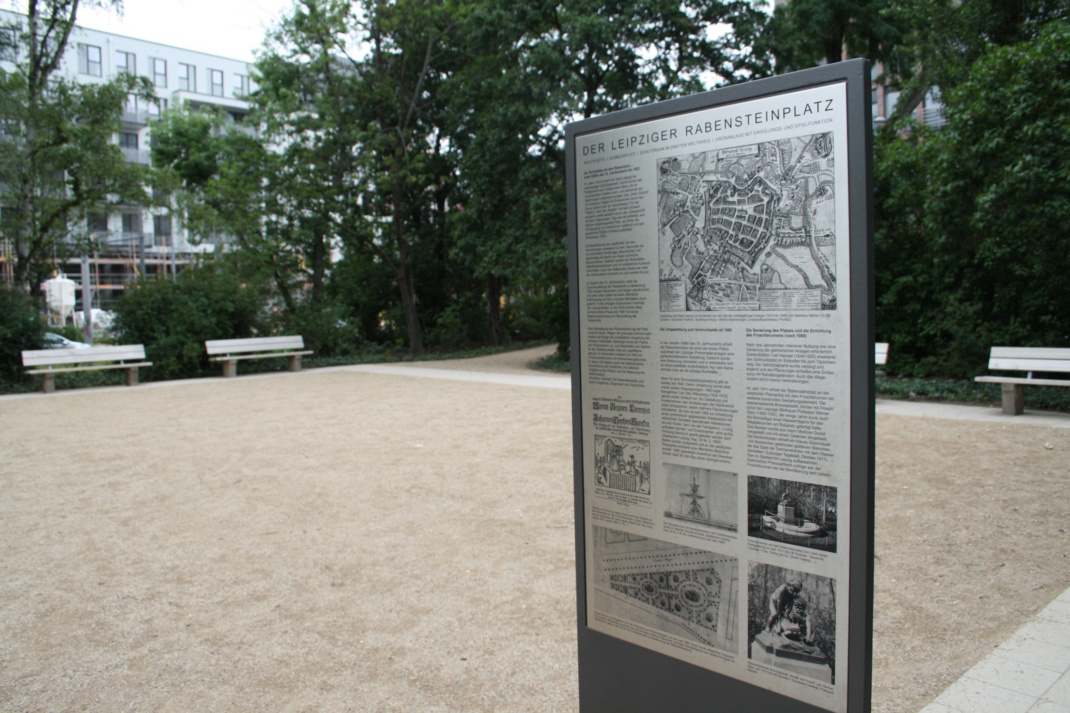
“In my opinion, the right place for this plaque would be Rabensteinplatz – the old execution site. The place where people were once convicted and executed for alleged witchcraft. The place where their screams echoed. The place where their ashes were scattered. That is where they should be remembered,” he says. His aim is not “to accuse the city. Not to assign blame. But to give the victims a voice. To keep the memory alive. To show that there are people who do not want to forget.
The witch hunts are not a closed chapter. Their effects are still felt today. In the shame. In the silence. In the fear. And in the way we treat those who are different.”
This makes it a very topical issue. Incidentally, Rabensteinplatz was used as a place of execution until 1822. The executions were carried out here in public. And not – as is often portrayed in films – as a bloody spectacle with an enthusiastic audience. On the contrary: the public were publicly urged to watch the executions. This was seen as a means of educating the people and driving home to them, in the most fundamental way, the consequences of breaking the law.
There would probably have been an oppressive silence as the executioner carried out his duties. And for decades afterwards, Rabensteinplatz remained unused because the memory of its grim history was still far too vivid.
Empfohlen auf LZ


So können Sie die Berichterstattung der Leipziger Zeitung unterstützen:





There is one comment