Dieser Artikel ist auch in deutscher Sprache verfügbar: Zum deutschen Artikel.
Ever since Friedrich Merz appeared on camera on 2 July and announced: “We are abolishing sick notes issued over the phone and introducing the requirement to submit a certificate of incapacity for work from the first day of illness”, there have been many conflicting signals. There is talk of “sensible solutions” from Klingbeil and of greater digitalisation from Warken. Many people are wondering what, in fact, is certain.
Then came Jens Spahn
The CDU/CSU parliamentary group leader in the Bundestag made strong statements. When asked whether the outrage over these measures could have been foreseen, he said: “The very same doctors and officials who told us during the healthcare reform a few weeks ago, ‘Oh my goodness, that would mean 80 million fewer doctor’s appointments a year’, are now saying there are too many doctor’s appointments. People always twist the argument to suit their own purposes.”
Unfortunately, there is no evidence to show which doctors and officials claimed that the requirement to provide a doctor’s note from the first day would result in fewer doctor’s visits.
The statement: “I think everyone, in their real, everyday life – amongst their acquaintances, in their neighbourhood, amongst friends, perhaps at work – is familiar with the situation where, particularly on Mondays and Fridays, there are what are known as ‘bedside decisions’ – you sit on the edge of the bed and wonder, ‘Is today the right day?’” merely demonstrates that Jens Spahn is making policy based on belief and emotion rather than hard facts.
In the video, you can see his full remarks on the subject; the final part, concerning care, is nothing short of an outrage.
What do others say?
Vice-Chancellor Lars Klingbeil wants a sensible solution and says: “Firstly, we should say that you don’t have to drag yourselves to the doctor when you’re ill, nor do you have to drag yourselves to work when you’re ill. And secondly: it’s best if we give the collective bargaining partners or the companies the opportunity to organise the whole thing as they see fit.” A sensible solution already existed: employers could stipulate in employment contracts, works councils could set out in works agreements, and the collective bargaining parties could agree in collective agreements when a sick note must be submitted.
Federal Health Minister Nina Warken said: “As a general rule, nobody should go to work if they are unwell. That is not set to change in future.”
That should go without saying.
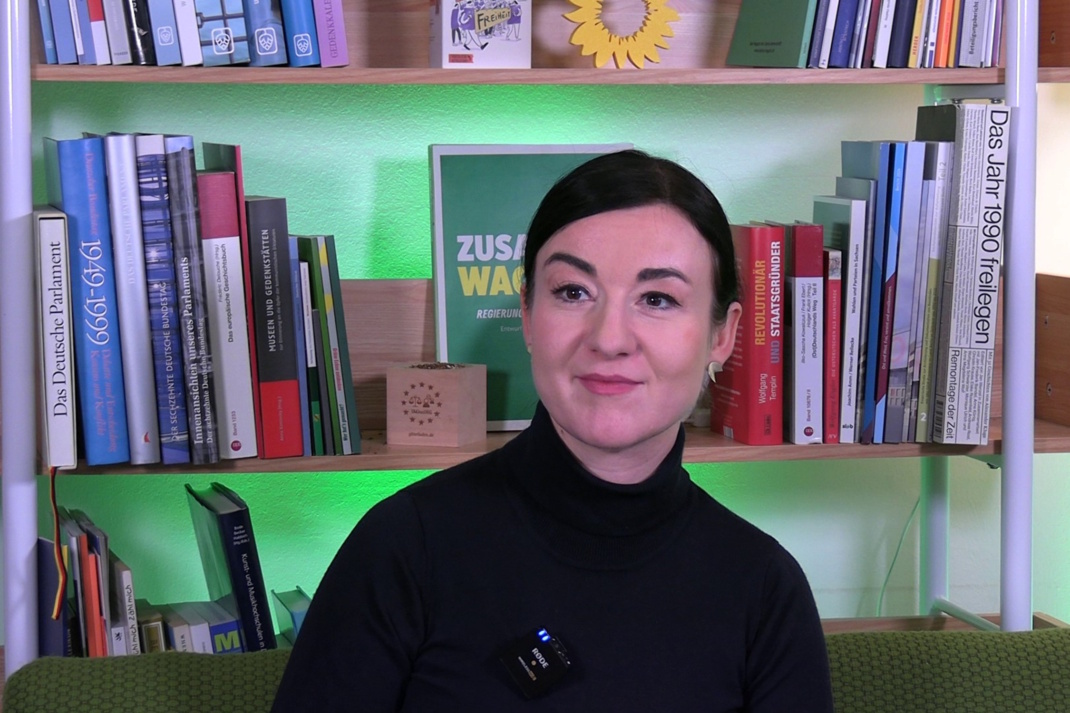
This is certainly a topic open to debate; we met with Member of the Bundestag Dr Paula Piechotta (Alliance 90/The Greens) for a brief discussion via Zoom to ask her about it.
Conversation with Dr Piechotta, Member of the Bundestag
Dr Piechotta, thank you very much for taking the time to speak with us. In statements made by various politicians on the subject of sick notes, there is constant talk of an exorbitant rise in the number of sick days compared with 2020. How should we interpret this?
The health insurance funds’ analyses on this topic suggest that this is primarily due to the switch to electronic sick notes – sick days are now recorded more comprehensively. When paper sick notes were the only option, many people did not pass them on to their health insurance provider. Consequently, these days were not recorded and did not appear in the statistics. This explains a large part of the increase and probably also much of the difference compared with other countries.
What cannot be ruled out is that, of course, the COVID-19 pandemic has also led to a change in awareness among many people regarding infection and health, and people no longer drag themselves to work with a cold as often as they used to. However, this may also mean that fewer colleagues are infected and, as a result, fewer are absent due to illness.
Overall, there are two major factors at play. Electronic recording means we are capturing more cases overall. On the other hand, the pandemic has led to different health behaviours and greater health awareness among certain groups – though not all employees.
Could an increase in long-term illnesses, such as Long Covid, also be a factor?
That may well be the case.
In your opinion, can we say that the abolition of sick notes by telephone and the requirement to take sick leave from the very first day is definitely leading to an increased workload for GPs’ practices?
Yes, people do have to visit the surgeries or speak to the doctor virtually. That certainly increases the workload for GPs. GPs in Germany certainly aren’t suffering from a lack of work. In rural areas, GPs tend to have far more patients to look after than those in towns and cities. That is also part of the picture, because the density of GPs in towns and cities is still significantly higher than in rural areas.
Could it be said that the expected increase in demand at GP practices might have a negative impact on the quality of medical care?
You can’t make a blanket statement about that, but GPs will naturally have less time for other things.
The federal government also wants to impose harsher penalties for ‘the incorrect issuing of a certificate of incapacity for work’ (AU). What is your view on this?
This places doctors under general suspicion; that’s quite something. It’s yet another example of the anti-doctor policy the CDU is currently pursuing, and one really doesn’t know where it’s coming from. We already have individual employers today who repeatedly drag doctors through the courts, claiming: ‘The sick note wasn’t valid.’ Then the GP has to appear in court, and that means another day’s work is lost at the practice. In this way, doctors are being deliberately targeted by certain employers, and that definitely has to stop.
There are, of course, claims that this issue has only been brought to the fore because the coalition wants to divert attention from other issues such as fixed-term contracts and the watering down of protection against dismissal. Is there any truth in that?
I think that’s unlikely, because we know very well how this compromise came about during the night. We know that the CDU wanted to push through something much harsher, namely that the first day of sick leave should be deducted from annual leave or from one’s salary. Then this bizarre compromise emerged, which makes you think: clearly, nobody in the Chancellor’s Office gave any thought, whilst seeking a compromise, to how this would actually be implemented in everyday life. The protest is so widespread now because this example brings together everything that people hate about this federal government:
Firstly, it becomes clear once again that Friedrich Merz and Jens Spahn simply regard workers as lazy across the board. Which is a blatant insinuation; we have never worked as many hours in Germany as we have in recent years, because more and more people are in work. Secondly, we can see here too that this federal government is simply incompetent. The third point is that the SPD is failing to prevent all these socially unreasonable demands. That, too, is something that disappoints many people about this federal government. The Black-Red coalition is now implementing such anti-social measures that the FDP could never have imagined, even in its wildest dreams. And I believe that many voters did not foresee during the last federal election that the ‘traffic light’ coalition would be more socially minded than the current Black-Red one. This contempt for workers, which can now be observed on a daily basis within the CDU/CSU, is something new. This radicalisation of the CDU/CSU is evident, amongst other things, in this very issue.
Dr Piechotta, thank you for the interview.
Empfohlen auf LZ


So können Sie die Berichterstattung der Leipziger Zeitung unterstützen:



There is one comment