Dieser Artikel ist auch in deutscher Sprache verfügbar: Zum deutschen Artikel.
Pupils from the Leibniz-Gymnasium on Nordplatz also took the opportunity on 1 July to attend the council meeting as guests. This was because the agenda for that day included an item that was of great interest to them: when would it finally be their school’s turn for refurbishment? The Left Party had tabled a question on this matter. Word had got round that the Leibniz Gymnasium, too, was falling victim to Leipzig’s financial difficulties. Plans to renovate and extend the school building have been put on hold for the time being.
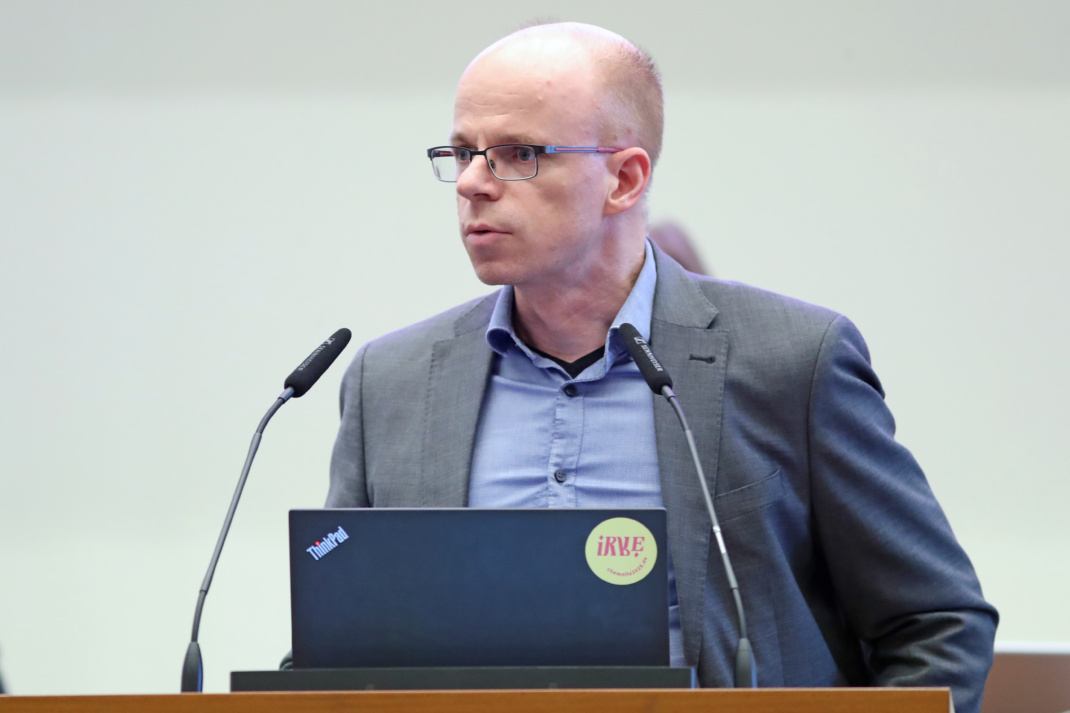
This was subsequently confirmed by the written response from the Education Department to the Left Party’s question, which had been brought forward to 1 July specifically so that the guests from the Leibniz Gymnasium could still hear the oral answers. Left Party city councillor Cornelia Falken was not entirely satisfied with the city’s response, however, as it failed to address one crucial question.
The written reply did, however, confirm all the initial fears: “A planning resolution for a comprehensive refurbishment of the Leibniz Gymnasium has been adopted. The planning resolution covers the comprehensive refurbishment of the school building at Nordplatz 13 as well as the extension of the school to include the building at Eutritzscher Straße 17. The cost of the project was estimated at €37,000,000. However, the cost estimate from LP2, which was finalised in March 2026, stood at approximately €42,300,000 – significantly higher than the expected target figure – which is why the project, as originally defined, must now be reassessed. Against this background, it was re-examined and confirmed that the space required for a three-form-group grammar school cannot be accommodated within the main building alone, and that an extension is unavoidable. Due to the current tight budgetary situation and in view of the financial implications and construction strategy issues, the planning for the Leibniz School has been suspended until further notice.”
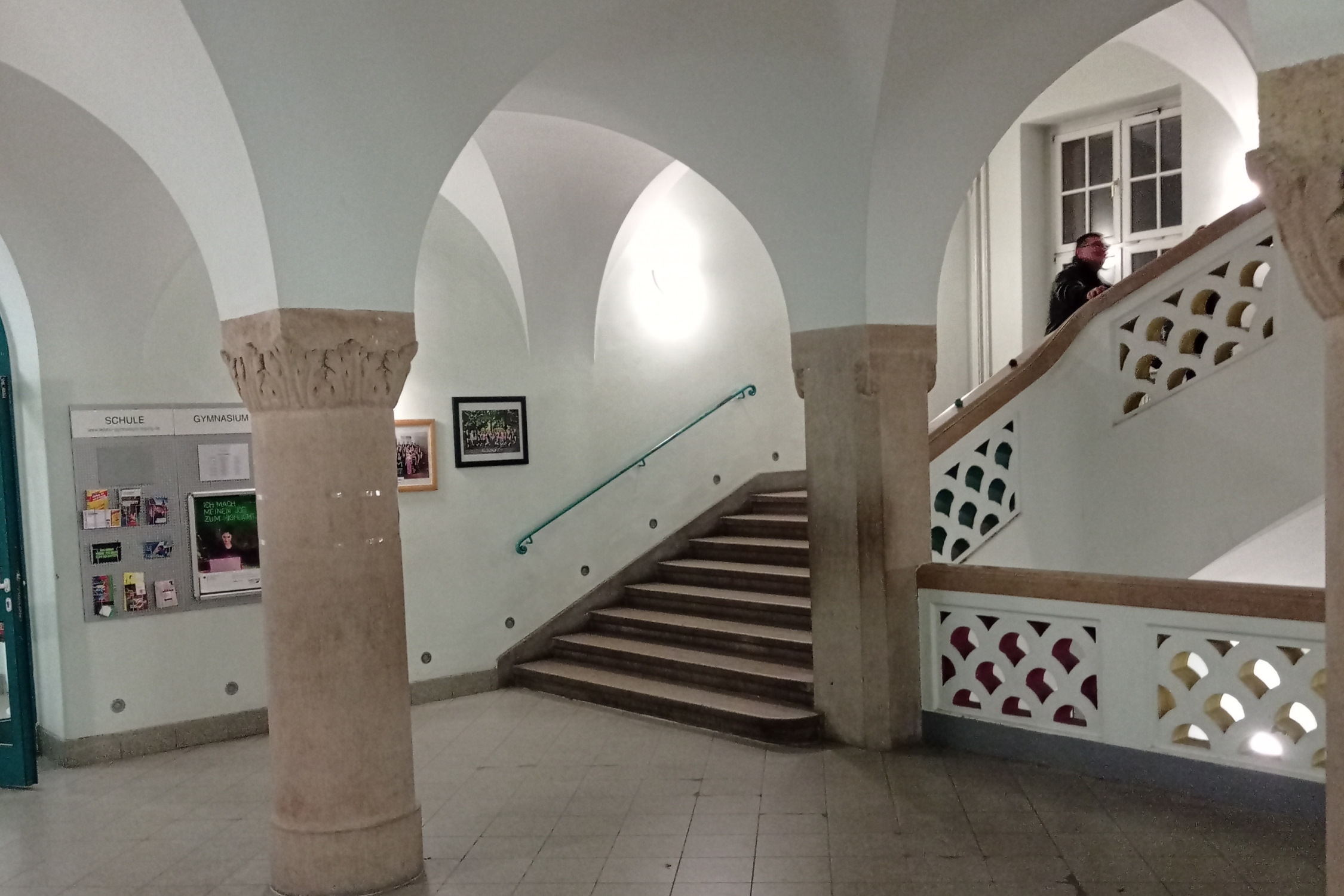 The stairwell at the Leibniz School. Photo: Thomas Köhler
Which left only one thing clear: The school will not be refurbished over the next five years. The Department for Schools’ response stated: “Under the school building strategy currently being updated, no funds are available until 2031 for the comprehensive refurbishment and extension of the grammar school.” And it seems nothing will happen here in 2032 either, as Peter Hirschmann, head of the Schools Authority, confirmed on 1 July.
At least the windows are airtight
Of course, he was unable to give a specific date as to when a comprehensive refurbishment at Nordplatz might be expected. This will now have to emerge from the debate on the new list of priorities for school building projects, which is being drawn up over the summer and is due to be presented to the city council after the summer break. “We could have waited until then,” remarked CDU city councillor Karsten Albrecht. “Then we could have discussed it in committee.”
That is, of course, the sort of thing a city councillor might think, someone who cannot really empathise with the sense of urgency felt by those directly affected when an issue concerns them personally. And that is precisely what question time in the City Council is for. Not just the residents’ question time, but also that of the council groups, who usually have good reasons to bring to light an issue that has been simmering away behind closed doors.
After all, an issue like this – whether the school is to be refurbished or not – is bound to cause unease amongst pupils, teachers and parents alike. All the more so when a refurbishment project that had already been planned is suddenly postponed because the council has run out of money.
Because this affects not only the future, but also the present. After all, if there is no comprehensive refurbishment, the damage that already exists must be repaired. At the Leibniz Gymnasium, this concerns the broken windows, which Cornelia Falken specifically asked about again. The Education Department had not answered this question. Peter Hirschmann was also unable to answer it on 1 July, but promised to look into the matter. After all, it is not just the increasingly hot days that disrupt lessons when the windows simply do not close properly. According to Hirschmann, the council will certainly not be fitting new windows, but will try to repair the existing ones.
It now remains to be seen where the refurbishment of the Leibniz Gymnasium will be placed on the priority list for school building projects. A list which itself has long been indicative of how the city’s financial crisis is also affecting the urgently needed school refurbishments, pushing many long-promised projects well into the 2030s.
Empfohlen auf LZ


So können Sie die Berichterstattung der Leipziger Zeitung unterstützen:





There is one comment