Dieser Artikel ist auch in deutscher Sprache verfügbar: Zum deutschen Artikel.
It was to be expected that there would be a commotion over this agenda item at the council meeting on 2 July. Die-hard patriarchs simply cannot help but shout out and vociferously express their old-fashioned displeasure. They have internalised patriarchy. And so it did indeed get noisy in the city council when the motion ‘Proposal for a memorial to the victims of femicide in Leipzig’ was put to the floor. Three women spoke. And men shouted them down. Typical. And symptomatic.
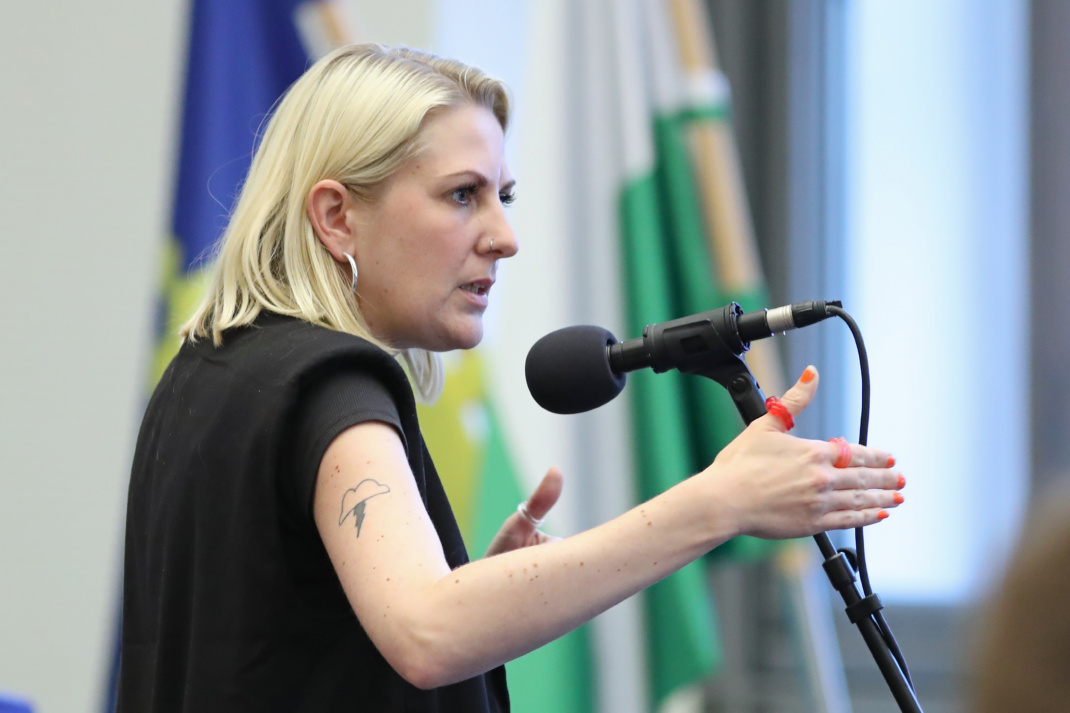
On that day, the problem was highlighted above all by Green Party city councillor Anne Vollerthun, who pointed out that the issue of femicide is deeply rooted in patriarchal structures. Structures so deeply ingrained in our society that many men no longer even realise how they benefit from them and are guided by them. And how this also shapes their view of women – along with the internalised devaluation and contempt for women.
When Anne Vollerthun, speaking into the side microphone, not only explained the official definition of femicide but also presented the figures on femicides across Germany and in Leipzig, there was an outcry from the right-hand side of the council chamber, and Mayor Burkhard Jung had to urgently call for restraint.
Yet these are the very same dynamics that have characterised the debate on femicide and the dignified commemoration of the women killed in Leipzig for years now. This actually makes the need to create a public memorial to the women and girls who have been killed all the more urgent. For patriarchal power dynamics also thrive on the suppression of femicides, on the fact that police reports often refer only to crimes committed within relationships. A veil of silence over it all – and then everything is fine? Of course it isn’t.
The background to the memorial site
As early as 15 June 2022, the Leipzig City Council approved the motion ‘Commemorating the victims of femicide’ tabled by Mandy Gehrt and Beate Ehms (both Die Linke). The motion called for the development of a concept for a memorial site – in collaboration with civil society initiatives such as #KeineMehr.
“The city subsequently commissioned relevant initiatives to produce an expert report. This report categorises femicides in Leipzig, compares possible forms of commemoration with those in other cities and countries, and assesses suitable locations. The report was submitted in June 2024,” says the Department of Culture
, describing the process of selecting the site for Leipzig’s memorial.
“On 12 March 2025, the City Council allocated funding for the memorial site in the 2025/2026 biennial budget (40,000 euros for 2025, 100,000 euros for 2026, see VIII-HP-10324-VSP-02). The city subsequently commissioned a detailed implementation plan to develop a feasible design for a site in Leipzig within this budget.
This plan was submitted by the Phia e.V. association at the end of July 2025. It was agreed upon within the city administration in August 2025 and subsequently discussed at the Expert Forum for Art in Public Spaces and in Architecture (18 August 2025). There, it was assessed positively and supplemented with recommendations.”
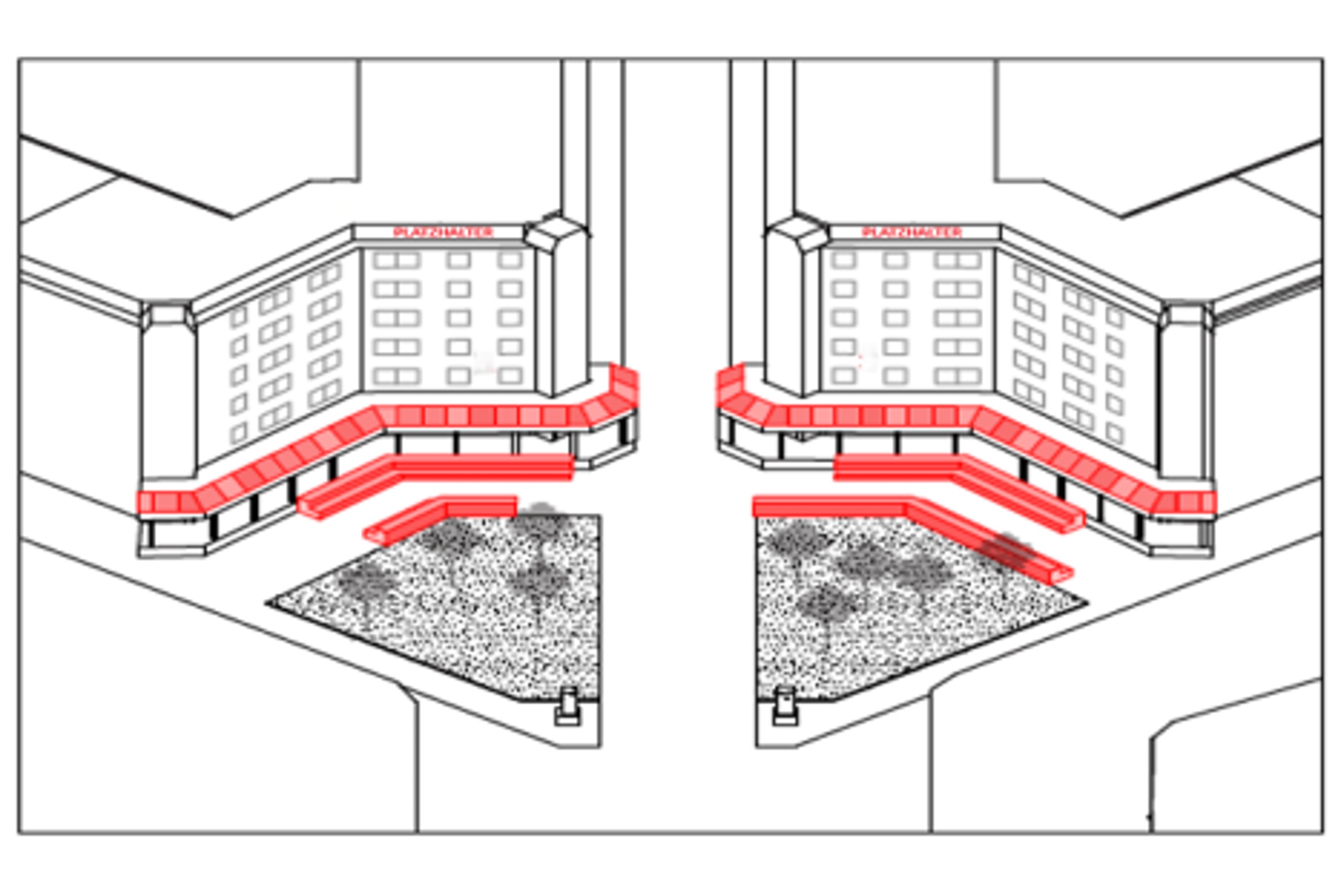
This is what the memorial site in the Kolonnadenviertel could look like. Illustration: City of Leipzig
The memorial site is to be realised in collaboration with the LWB in the Kolonnadenviertel – directly in front of the buildings at Kolonnadenstraße 1 and 2. This will include an “installation of softly glowing words on the upper façade (parapet) of the LWB buildings at Kolonnadenstraße 1 and 2” and the selective design of the glass panes in the colonnade canopy. Events are planned, as well as a dedicated website providing information on the issue of femicide and, specifically, on the cases of femicide recorded in Leipzig.
An issue is gaining attention
And whilst AfD city councillor Alexandra Hachmeister claimed that there was no need for such a memorial site in Leipzig, Anne Vollerthun was not the only one to speak out clearly.
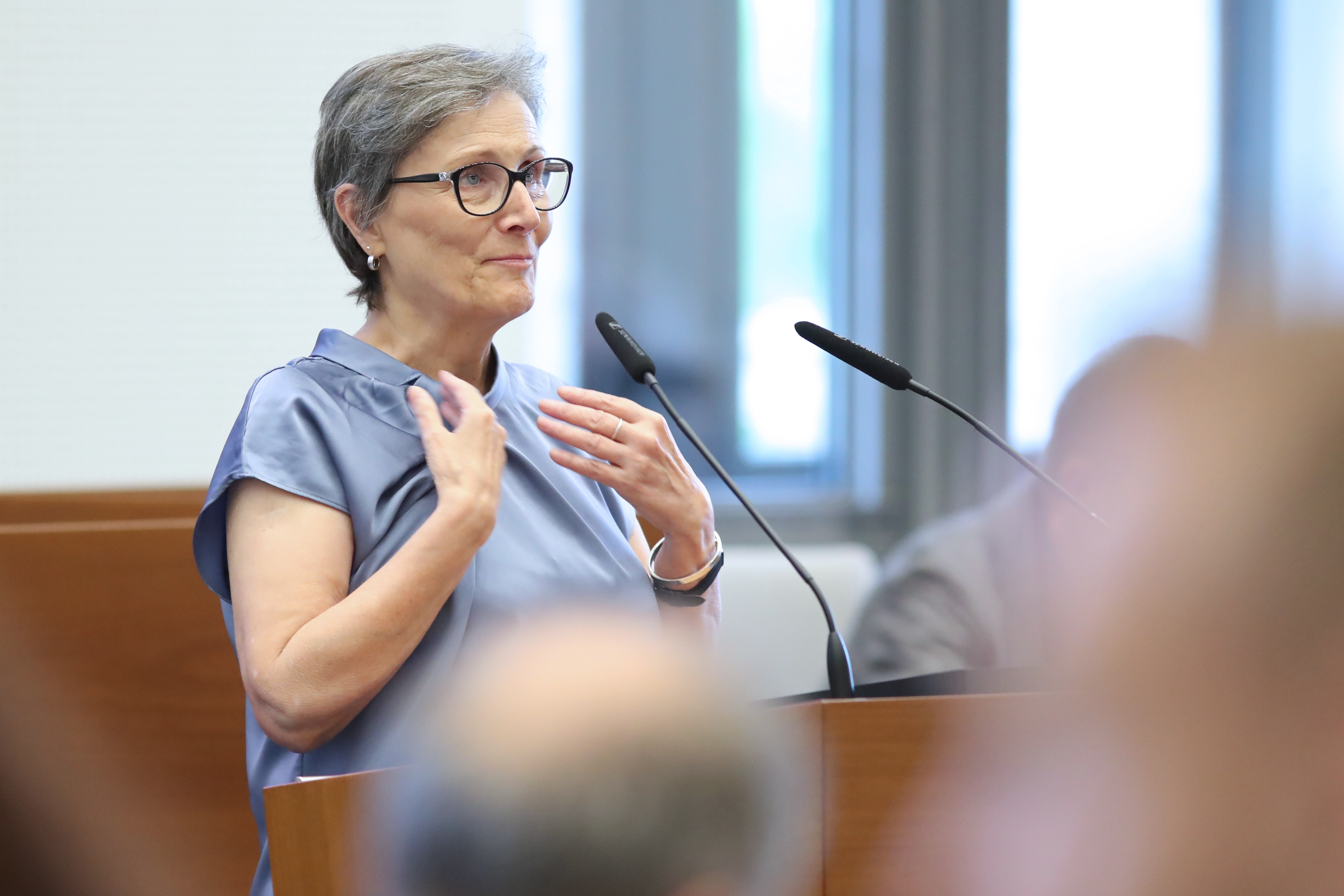
Pia Heine, the SPD parliamentary group’s spokesperson on gender equality policy, specifically cited the figures for Leipzig: “Over the past 15 years, there have been fifteen cases of femicide in Leipzig. Women are being killed simply because they are women. Through their actions, the perpetrators deny their female victims the right to a self-determined life. However, the spiral begins much earlier, often in the home. The rising numbers of women using counselling centres and shelters demonstrate this. Within the Leipzig Police Department’s catchment area, there are 300 high-risk cases where the police believe a homicide may occur.”
To ensure that the memorial site can be funded, city councillors from the Greens, The Left, the SPD and the Independent Group had submitted a corresponding budget proposal.
Pia Heine also noted that the issue of femicide is being discussed nationwide: “The planned Leipzig memorial site for the victims of femicide thus also supports the nationwide initiative of the Violence Assistance Act by anchoring the issue of violence against women more firmly in our city’s social consciousness. From 2032 onwards – as enshrined in the Violence Assistance Act – there will be a legal right to free shelter for all women who suffer violence in relationships and need to protect their lives. Patriarchal violence against women does not just happen somewhere else at the hands of just anyone; it happens right here in our immediate neighbourhood.”
Too few safe places
For there are still too few such safe havens in Leipzig. Escalation in a relationship is often foreshadowed by incidents of domestic violence, which are also recorded by the police. However, many women are unable to leave this violent environment because there are not enough safe houses or available flats to enable them to separate from their violent partner.
Beate Ehms, spokesperson for gender equality for the Left Party parliamentary group, and Mandy Gehrt, the group’s spokesperson on cultural policy, summed up the problem after the meeting as follows: “The issue of violence against women, including their murder, must be brought to the public’s attention. Far too often, femicides are dismissed in the media as ‘family tragedies’ or ‘dramas of jealousy’.
But it must be clear and indisputable: These are not unfortunate isolated incidents, but the extreme culmination of a series of acts of violence against women, ranging from physical and psychological degradation, domestic violence and confinement, through stalking, to sexual harassment and rape. In 2024 alone, according to the Federal Criminal Police Office, 132 women in Germany were killed by their (ex-)partners. The number of misogynistic crimes is rising every year.
At Dorotheenplatz in Leipzig’s Kolonnadenviertel district, a memorial site will in future combine remembrance and education. At the same time, it is intended to provide a space for events and dialogue, as well as to spur political change. It aims to call on people not to look the other way when faced with violence against women, children and LGBTI people, but to stand up courageously for a gender-equal, peaceful coexistence in Leipzig.
“Our special thanks go to the #Keinemehr initiative and the women of Phia e.V. for their dedicated work on this memorial site.”
The motion was subsequently passed by the City Council on 2 July by a large majority of 35 votes to 19, with 4 abstentions.
Empfohlen auf LZ


So können Sie die Berichterstattung der Leipziger Zeitung unterstützen:




There is one comment