Dieser Artikel ist auch in deutscher Sprache verfügbar: Zum deutschen Artikel.
Just a few years ago, the city council was still debating whether Leipzig should introduce a tourist accommodation tax or not. Now, everyone is pleased that the city can raise additional funds from it, which in turn benefit tourism. But who exactly? From the city’s point of view, the City Council’s Economic Committee has sufficient authority to decide on this. Or does it? Should other city councillors also have a say? The majority of the council wasn’t entirely convinced of this on 2 July.
That wasn’t actually the crux of the proposal from the Economic Affairs Department either. The real focus was on a new application process involving electronic submissions and a clear evaluation model. This is intended to reduce the administrative burden associated with the current application process. There was quite clearly no opposition to this in the council meeting (apart from from The Left), which instead focused on discussing how many members would sit on the selection panel responsible for deciding on the approval of applications.
Should it be the Economic Affairs Committee alone, as has been the case so far? Or should seven city councillors from all political groups be added, as proposed by The Left? Or just four, as demanded by the SPD group?
Why should it end after three years?
The political groups had clearly not really coordinated their positions on this. Both motions were rejected in the vote on 2 July. The same went for the Left’s motion to stick with the old procedure. The Mayor for Economic Affairs, Clemens Schülke, did not consider that a sensible idea either. Just when the city suggests simplifying the procedure, The Left doesn’t want it.
But by the end of the debate, it turned out anyway that there was practically no majority for any of the amendments. Except for one. That had been tabled by SPD city councillor Christina März all on her own.
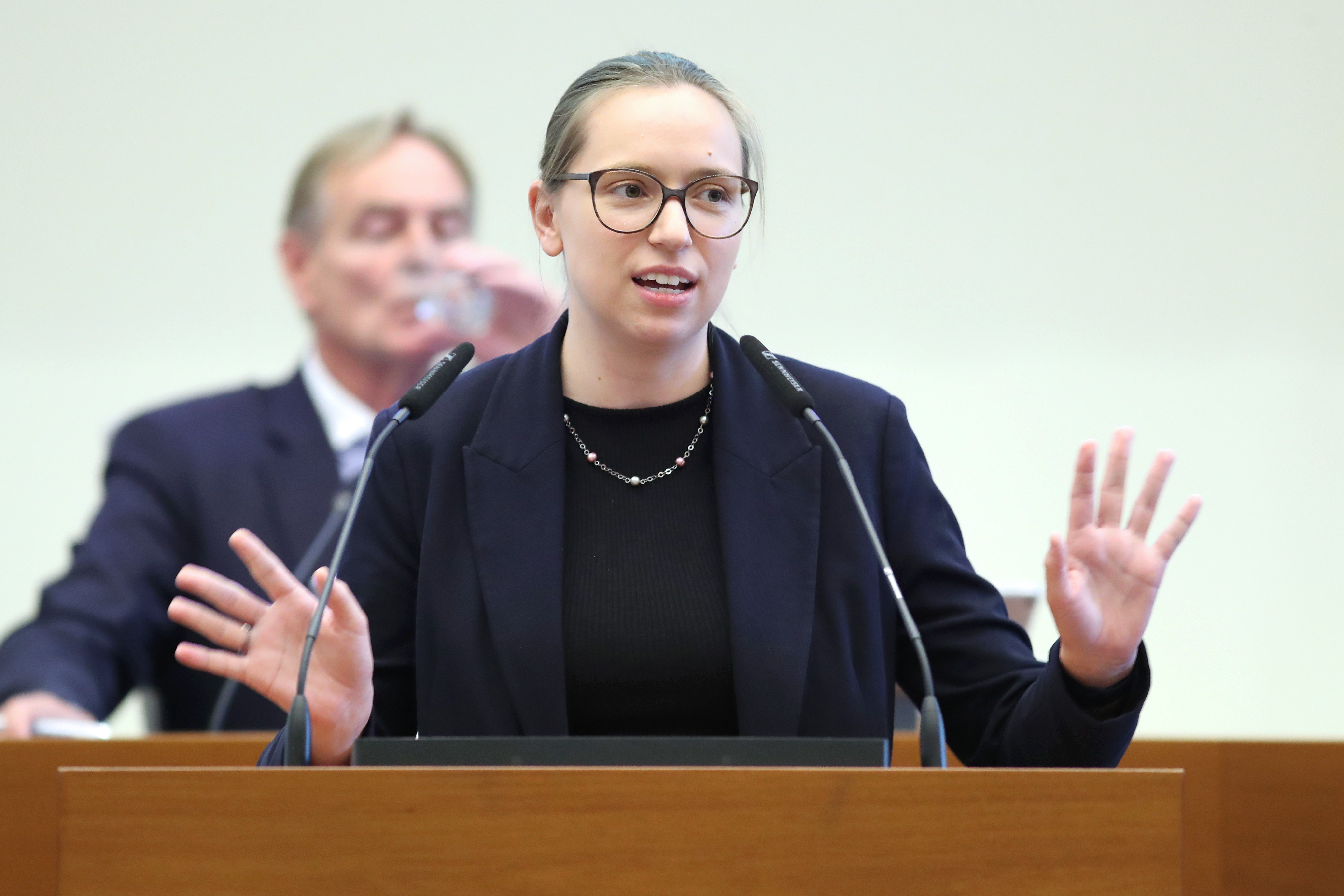
Christina März (SPD) in the Leipzig City Council on 1 July 2026. Photo: Jan Kaefer
She considered it nonsensical that events of relevance to tourism – which had received funding over the past three years – were suddenly no longer allowed to apply for funding. From Clemens Schülke’s point of view, the projects should, by this stage, have learnt to stand on their own two feet.
Which is, of course, nonsense. Christina März didn’t put it quite like that, but the fact remains: almost all cultural projects that have been funded in recent years through money from the accommodation tax ‘don’t pay for themselves’ and are reliant on funding and grants. Even the otherwise successful Bach Festival. Although it wouldn’t simply cease to exist if it no longer received money from tourism funding, it would have to scale back its activities.
And so Clemens Schülke, too, must have been astonished that Christina März’s application – submitted at the last minute – secured a majority with 32 votes to 25. One might at least have suspected a little why the Left and SPD groups were so keen to send further city councillors from the Sports and Culture Committee onto the decision-making panel.
It wasn’t primarily about party proportional representation, but about professional expertise. Anyone familiar with cultural funding knows that even successful initiatives do not cease to rely on funding after three years. On the contrary: culture needs grants.
The focus remains on the Economic Committee
And that is precisely why the councillors responsible were also pleased that the accommodation tax had been introduced, ensuring that the funds do not merely benefit tourism specifically (which is, after all, the central economic issue), but also the cultural and sporting events that attract people to Leipzig as tourists.
And for some events, that’s a significant sum, as Torsten Bonew, the councillor responsible for finance, casually hinted at in his comments on the Left Party’s motion to increase the share allocated to cultural projects from 50 per cent to 60 per cent. That 10 per cent amounts to 1.4 million euros, after all. Leipzig can now therefore distribute 14 million euros from the accommodation tax. And this includes funding for cultural and sporting projects that attract tourists to Leipzig.
That’s a lot of money, and one can only hope that the members of the Economic Affairs Committee, who decide on the allocation, possess the necessary expertise. After all, the City Council ultimately approved the proposal put forward by the Economic Affairs Department by 47 votes to 11. The new electronic application process can therefore go ahead.
Empfohlen auf LZ


So können Sie die Berichterstattung der Leipziger Zeitung unterstützen:




There is one comment