Dieser Artikel ist auch in deutscher Sprache verfügbar: Zum deutschen Artikel.
Ultimately, it always comes down to acceptance. This is true of the energy transition too. All the more so when two districts of Leipzig – Hartmannsdorf and Knautnaundorf – are particularly affected within their local areas, as it is primarily here that Leipzig’s wind power capacity is being expanded. They then find themselves with significantly larger wind turbines right on their doorstep. That requires acceptance. And this can certainly be achieved through Saxony’s EEErtrBetG – the Revenue-Sharing Act passed in 2024. This is because it allows the affected local authorities to share in the revenue generated by the power-generating facilities
That wasn’t the norm before. But with the increased expansion of wind power, it makes sense in Saxony too. But what happens if the affected municipalities are part of a large city like Leipzig? Does the revenue share then simply disappear into the city’s overall budget?
That is precisely what should not happen. Which is why the city council asked the administration to draft a corresponding resolution stipulating that the revenue share remains within the local authorities directly affected by the expansion of wind power.
On 2 July, this draft resolution from the Environment Department was then presented to the council meeting. However, one point in the resolution was worded somewhat too broadly: “The selection of measures shall be determined by resolution of the local councils or city district councils, in accordance with legal requirements and the assessment of the City of Leipzig. The funds are available exclusively for projects that are not mandatory tasks and are implemented solely by the City of Leipzig. Where funds may be allocated to third parties within the meaning of Section 6(1)(3), (6) and (7) of the Saxony Energy Efficiency Act (EEErtrBetG), the relevant specialist funding guidelines of the City of Leipzig shall apply.”
The money must be additional
After all, that would still have allowed the funds to be offset in some way against funds from the city budget. This is why the Green Party parliamentary group requested a clear clarification here, so that the affected localities ultimately do indeed have more money at their disposal: “The principle of additionality must be ensured. A combination of payments to enable larger-scale measures is, in principle, possible.”
The Green Party parliamentary group leader, Dr Tobias Peter, welcomed the city’s proposal, which now also ensures “that the money ends up where the installations are located”. As the energy transition gains momentum, this is likely to amount to several 10,000 euros a year. That is enough to finance quite a few projects in the locality, and perhaps even to set some aside if the local council has a larger project in mind.
Direct impact
Seen in this light, the Greens’ motion also struck a chord with CDU councillor Sabine Heymann, who went on to present a minor amendment proposed by the CDU parliamentary group. This is because people can have completely different interpretations of the term ‘municipality’ in the text of the law. According to the CDU motion, this must be formulated more specifically in the interests of those actually affected.
The CDU’s motion on this reads: “In particular, the new wording lacks any reference to the local districts directly affected. This wording opens the door to granting subsidies to city districts or localities that are not affected by renewable energy installations at all.”
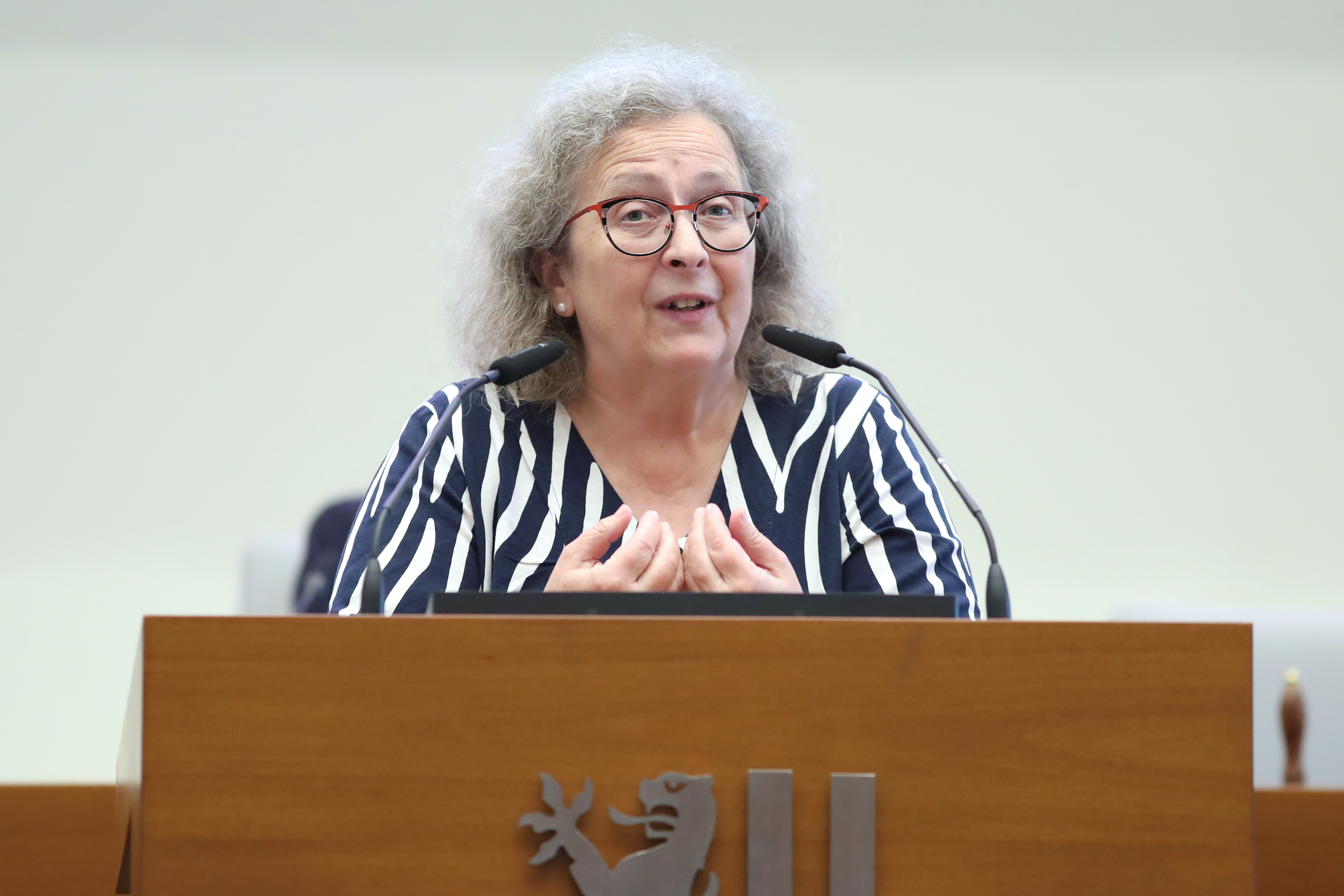
It must be explicitly stated that only those directly affected and their city districts or localities are to benefit from the funding. The proposer therefore requests that the wording be amended to revert to the text of the original draft.
The reference to the text of the Act is insufficient, as it relates only to the local authority level. For Leipzig, this is too broad a scope to do justice to the principle of acceptance.”
Neither Heiko Rosenthal, the councillor for the environment, nor Mayor Burkhard Jung had any issue with the two amendments. After all, they essentially just clarified what revenue sharing really needs to be about. Burkhard Jung therefore adopted both motions. And the amended proposal received a clear vote of approval from the council, with 45 votes in favour, 0 against and 11 abstentions.
Empfohlen auf LZ


So können Sie die Berichterstattung der Leipziger Zeitung unterstützen:





There is one comment