Dieser Artikel ist auch in deutscher Sprache verfügbar: Zum deutschen Artikel.
Church buildings are a feature of many villages. They are known as landmarks, the centre of the village or points of reference. These places of worship are of great significance in terms of architecture, art history and regional history. This time, we are looking at a church in Kreypau, a district of Leuna.
The church in Kreypau is the Protestant church of the village of Kreypau, which belongs to the town of Leuna in Saxony-Anhalt. It forms part of the Wallendorf parish in the Merseburg church district of the Protestant Church in Central Germany. It is listed as a listed building in the local register of historic monuments under registration number 094 20506.
History and Architecture
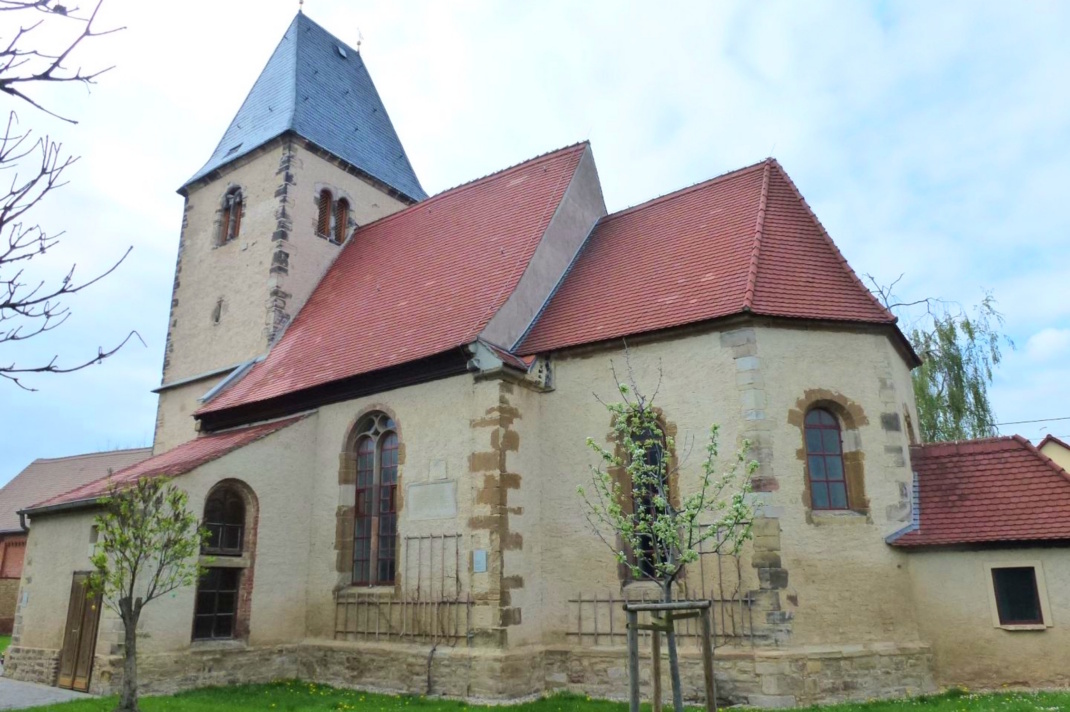
The church, a plastered rubble-stone building that dominates the townscape, was built in 1550/1551, according to an inscription, on the site of an older Romanesque predecessor. It is thought that some parts of the older building were reused in its construction.
Front view. Catatine, CC0, https://commons.wikimedia.org/w/index.php?curid=113914178
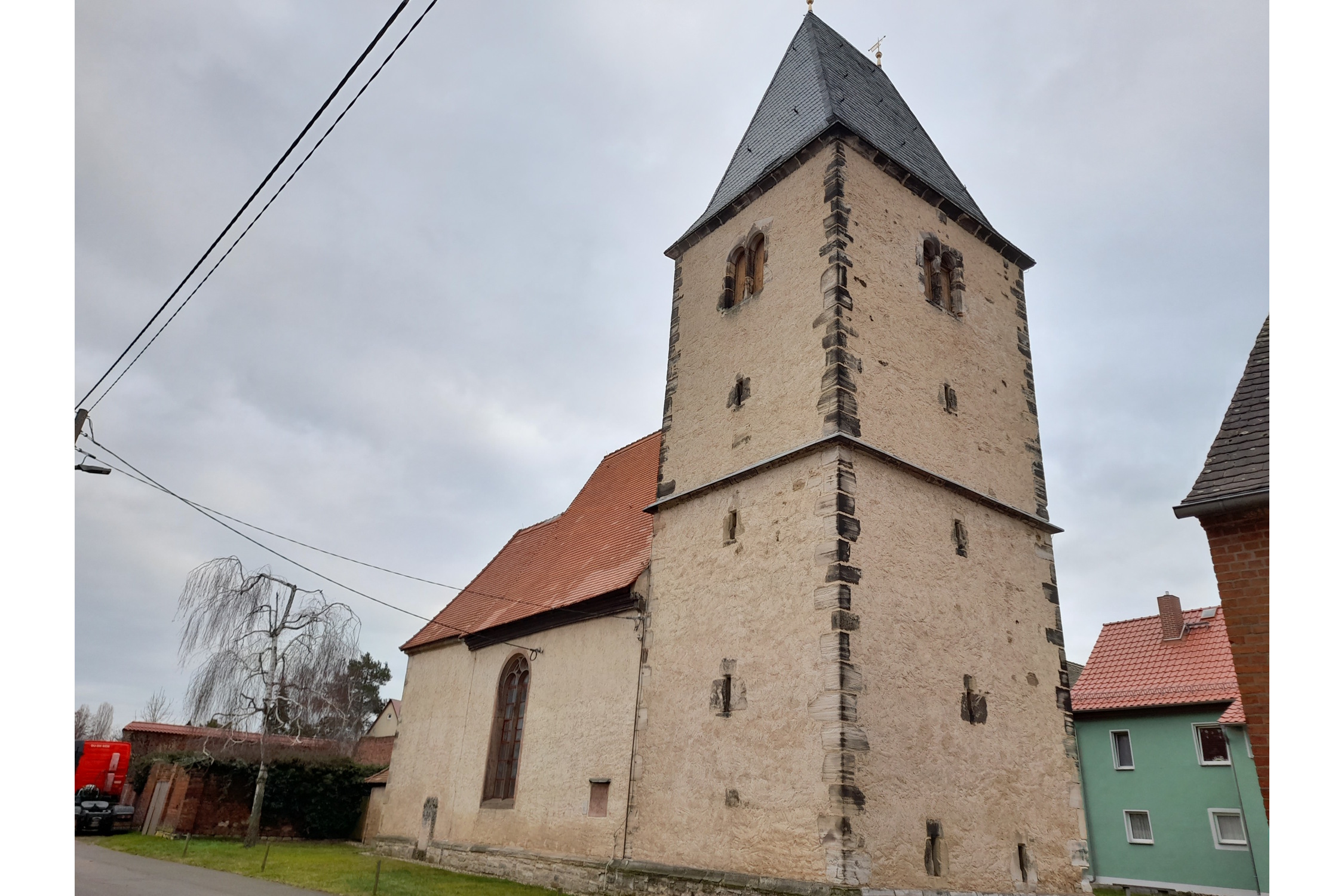
The rectangular west tower, erected as early as 1530, has domed, round-arched sound openings on all four sides.
During the Thirty Years’ War, a bell was stolen around 1641. Today, the tower houses three steel bells dating from 1920.
The nave features tracery windows. The southern porch is dated 1793; a Romanesque cube capital has been reused there.
On the north side of the nave is a commemorative plaque, dated 1544 and of cultural and historical significance, honouring the initiator of the church’s construction.
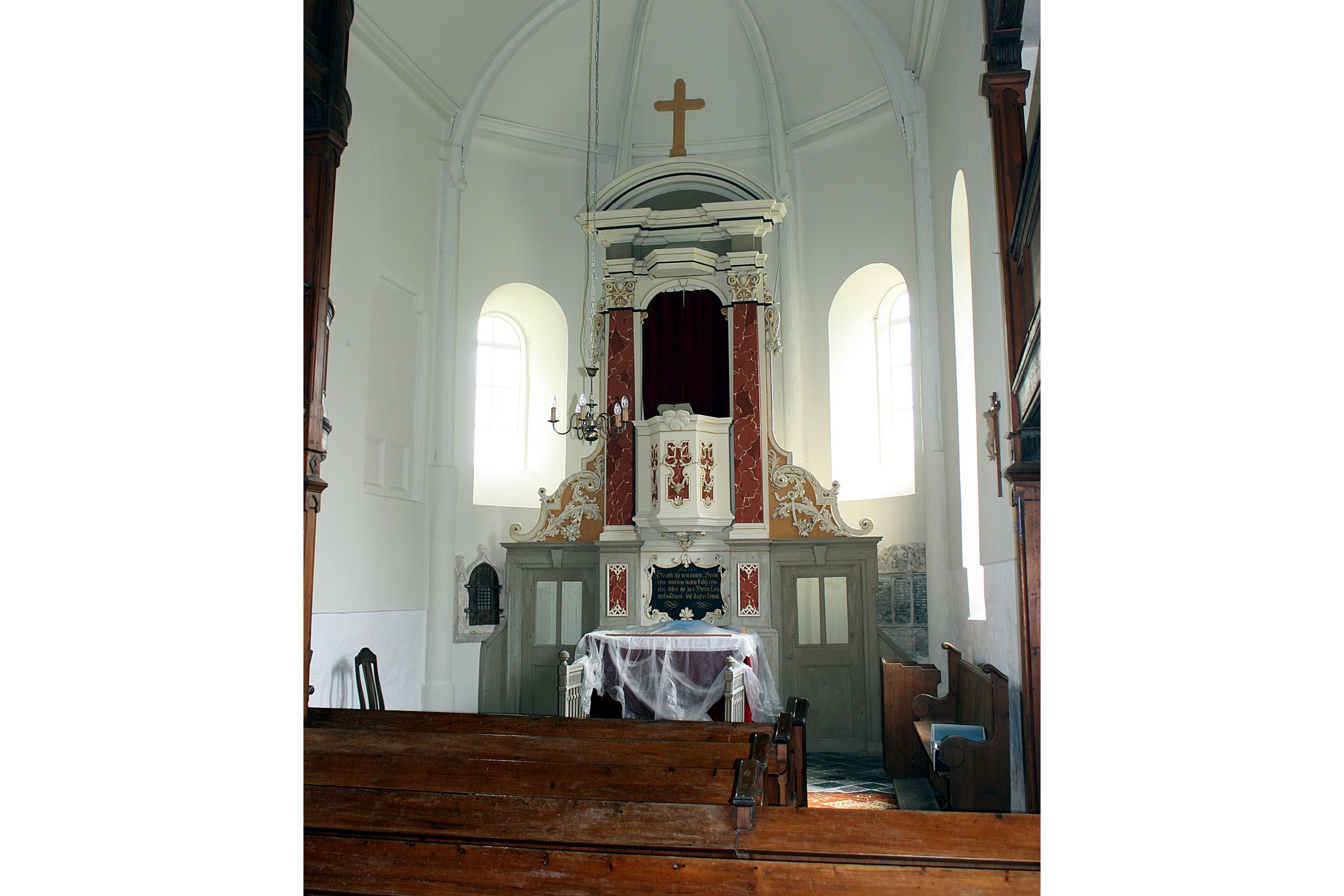
Pulpit altar. Dguendel, CC BY 3.0, https://commons.wikimedia.org/w/index.php?curid=33077487
Interior
Inside, the nave and chancel are vaulted with wooden barrel vaults. On the ground floor of the tower, there are two rooms accessible through pointed-arch doors, spanned by a barrel vault and a groined vault respectively.
The nave features a two-storey horseshoe-shaped gallery along its long sides.
The large organ on the west gallery was built by Carl Joseph Chwatal between 1866 and 1868.
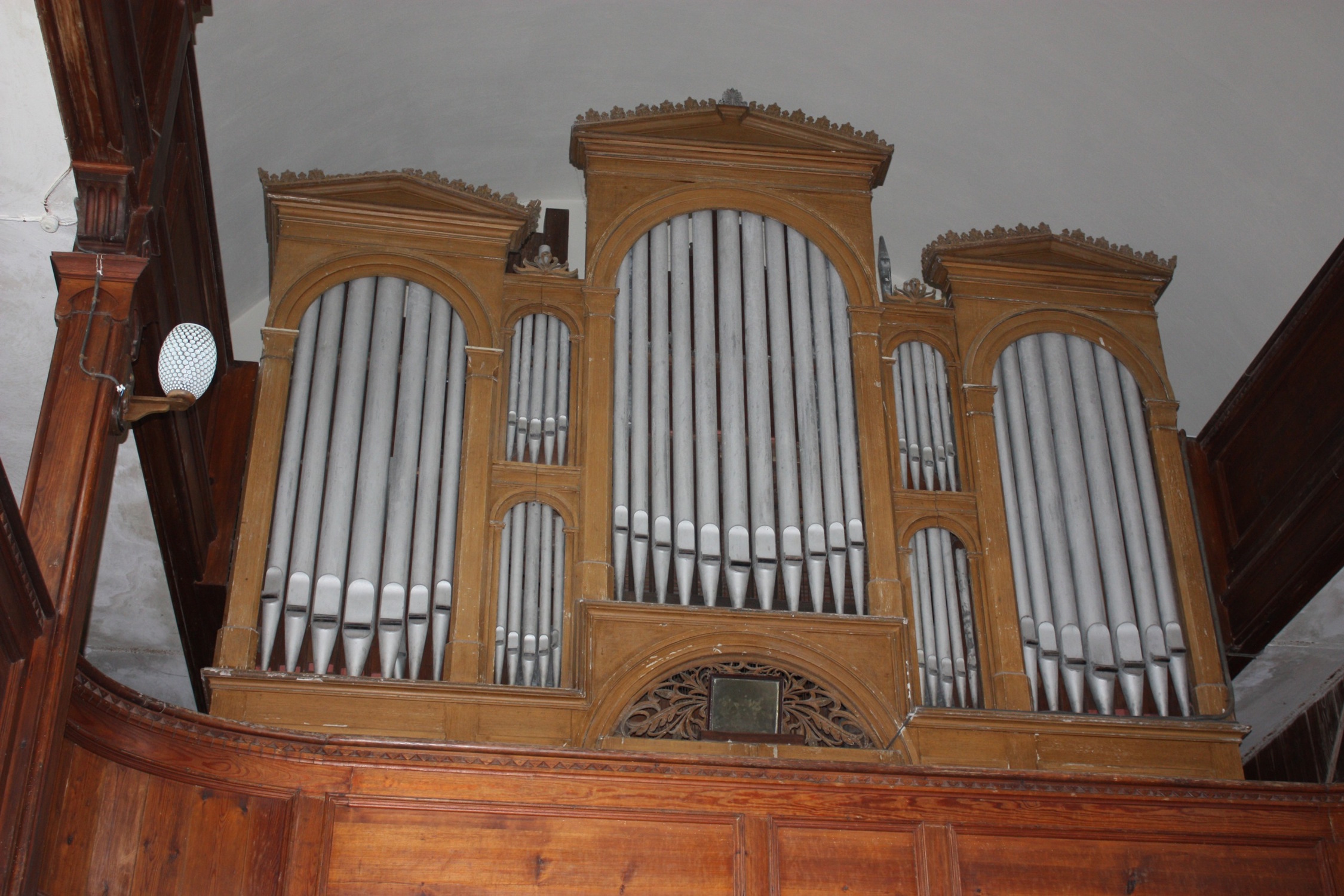
Organ. Dguendel, CC BY 3.0, https://commons.wikimedia.org/w/index.php?curid=33077525
The wooden pulpit altar, dating from the 1720s, is characterised by a tall structure with side passages and understated, high-quality carved decoration. The baptismal font from 1627 and a tabernacle niche located in the choir have been preserved.
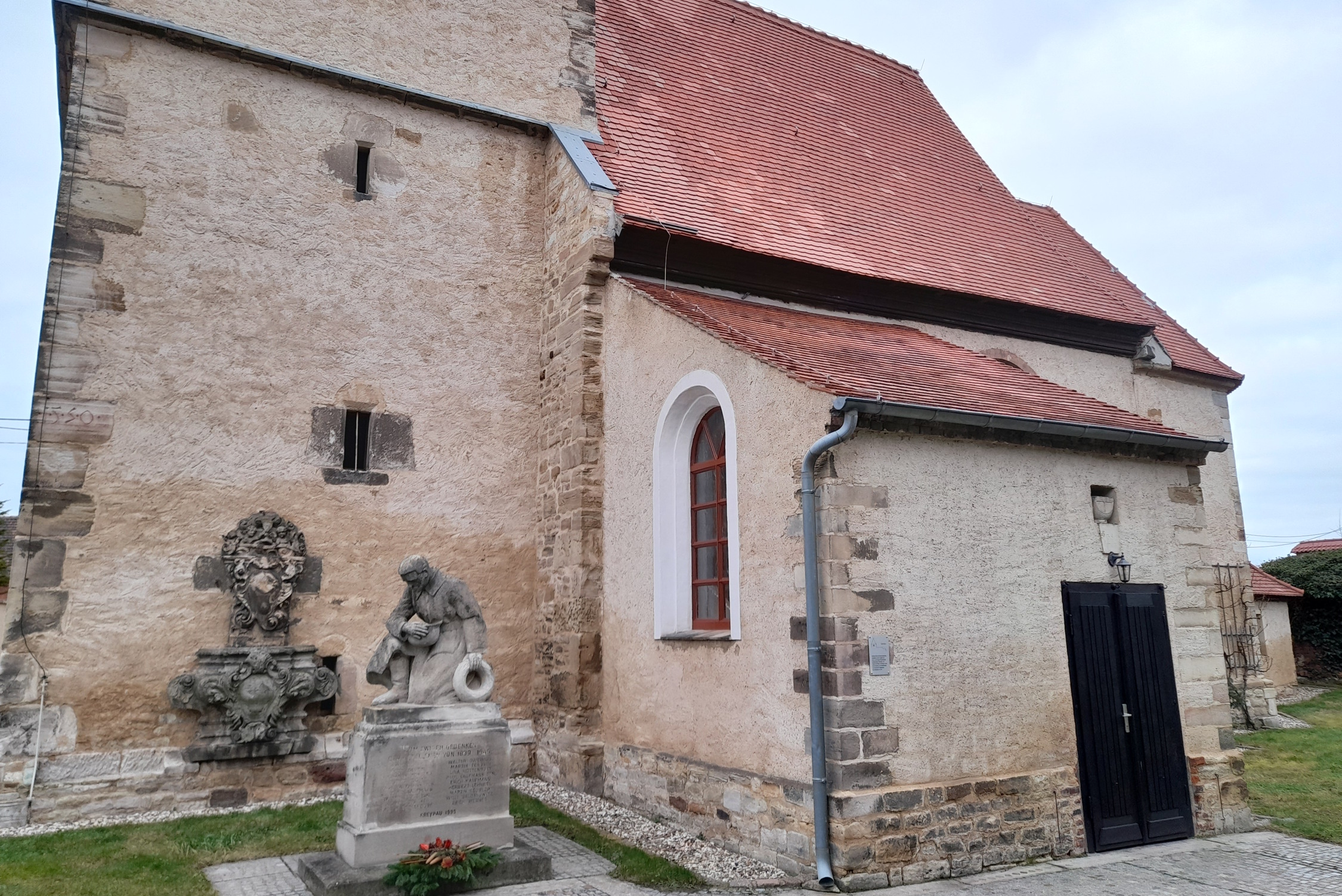
Side view showing the epitaph and war memorial. Catatine, CC0, https://commons.wikimedia.org/w/index.php?curid=113914181
Inside the church stands the gravestone of the vicar Martin Schamelius, who died in 1617.
In front of the church, on the south wall, there is a Baroque funerary monument (epitaph) and a war memorial dating from 1921 dedicated to those who fell in the First World War. In 1995, the names of those from Kreypau who fell in the Second World War were added to the memorial.
The epitaph for Carl Wilhelm von Dieskau, a knight-landowner from Kreypau, who died in 1695 as a result of a serious injury sustained in the ‘Battle of Fleury’ and was buried in Kreypau, was returned to its former location in the church that same year.
Coordinates:
51° 19′ 44.5″ N, 12° 2′ 31.8″ E
The village church in Kreypau on Wikipedia:
https://de.wikipedia.org/wiki/Dorfkirche_Kreypau
Empfohlen auf LZ


So können Sie die Berichterstattung der Leipziger Zeitung unterstützen:




There is one comment