Dieser Artikel ist auch in deutscher Sprache verfügbar: Zum deutschen Artikel.
In the 1920s, Leipzig was home to one of the largest Jewish communities in Germany. A number of families had a significant influence on the visual arts – through their cultural involvement and through the works they donated to the Leipzig Museum of Fine Arts (MdbK). Following the National Socialists’ rise to power, Jewish life in Leipzig was completely wiped out. The once strong ties between Jewish citizens and the MdbK fell into oblivion.
The exhibition ‘Four Walls Full of Art: Jewish Families and Their Collections in Leipzig’ aims to bring this back into the public consciousness, focusing both on the art collections and on the individual families and their stories. The exhibition opened on Tuesday, 29 September.
Featuring over 120 works, including 41 on loan from Italy, Austria, Switzerland, Spain and the USA, the MdbK is presenting the first exhibition of this scale in Germany to explore Jewish art collectors, their collections and, at the same time, the museum’s own connections with these families. In doing so, the MdbK takes a critical look at its own role in the confiscation of cultural property under National Socialism and at the history of coming to terms with the past after 1945.
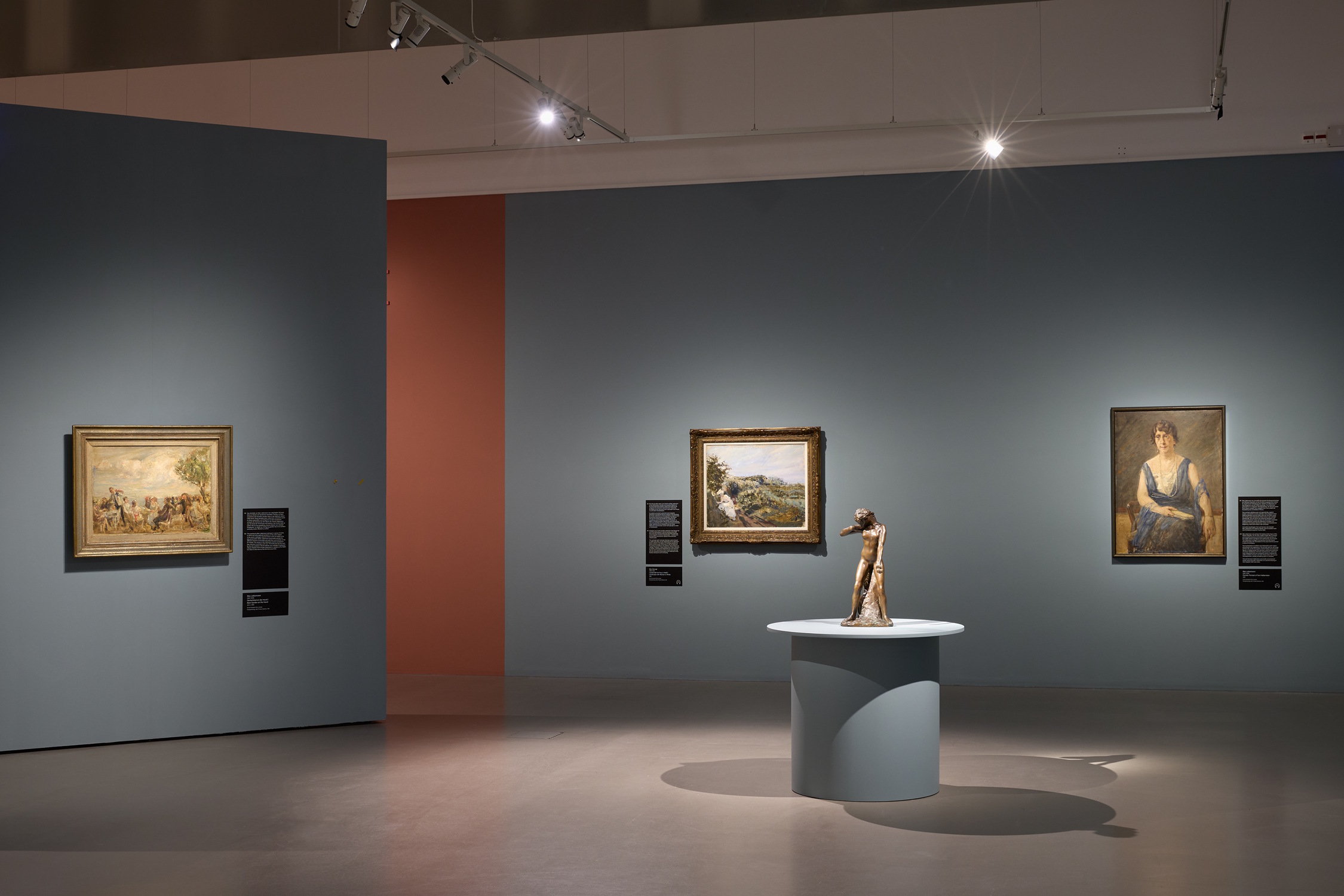
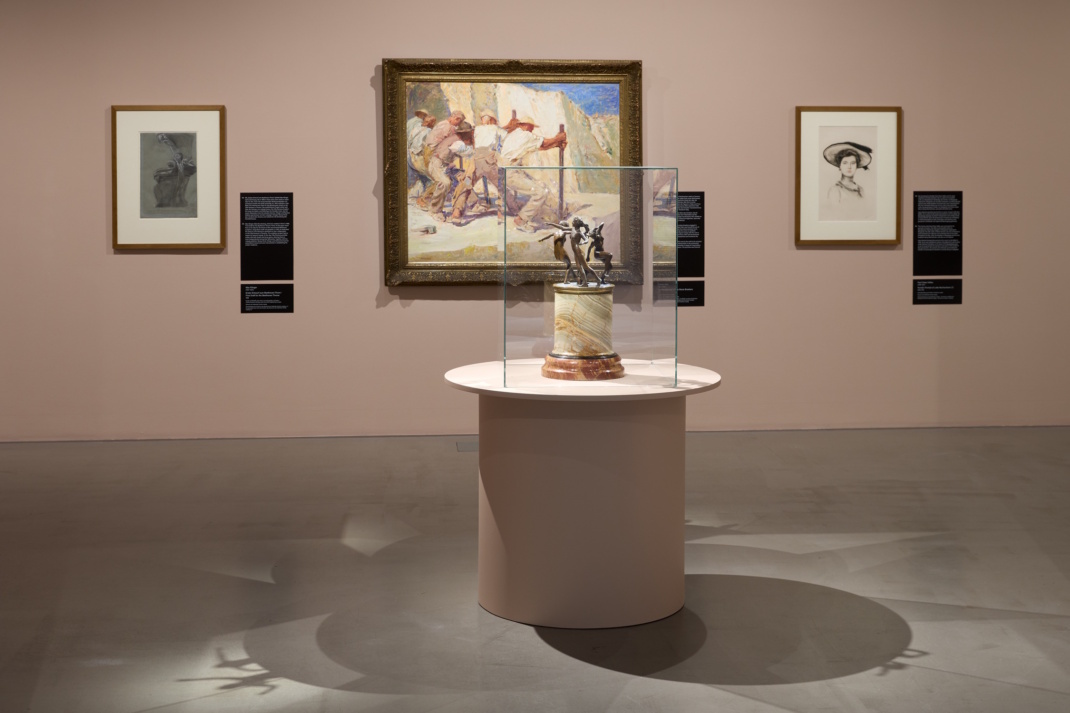
‘Four Walls Full of Art’ brings together paintings, sculptures and works on paper from the private collections of eleven families from Leipzig who were persecuted under National Socialism: Erna and Wilhelm Breslauer, Hermann and Toni Halberstam, Franziska and Max Heilpern, Margarete and Max Hermann Heine, Henri and Martha Hinrichsen, Clara (Cläre) and Gustav Kirstein, Moritz Kraemer, Karl Lilienfeld, Friedrich and Marie Nachod, Carl and Laura (Lore) Sonntag, and Moritz and Selma Ury.
The private collections comprised predominantly works of art from the French and German Impressionist movements and Classical Modernism, as well as works by other outstanding artists of the 19th and 20th centuries. Stylistically, they reflect the spectrum of bourgeois culture, as they were appreciated by a broad middle-class audience at the time and were in high demand on the art market.
Particularly noteworthy here is Max Klinger’s sculpture ‘Galathea’, which, since its restitution to the descendants of the Kirstein family in 2001, is now on display again at the MdbK on loan from the Metropolitan Museum of Art.
Thanks to national and international loans, the exhibition features, amongst other things, renowned works of Classical Modernism from the Karl Lilienfeld Collection, including Max Pechstein’s ‘Portrait in Red’ (Hessian State Museum, Darmstadt), ‘The Locomotive Whistle’ (Kunstpalast, Düsseldorf), ‘Italian Landscape’ (Expressionism Foundation at the Kunstmuseum Bern), as well as Karl Schmidt-Rottluff’s ‘House by the Station’ (mumok – Museum of Modern Art, Ludwig Foundation, Vienna) and ‘Fishermen on the Lagoon’ (Museum Folkwang, Essen).
The exhibition highlights the connection between the artists’ personal life stories and their works in a unique way: Max Liebermann’s ‘Portrait of Toni Halberstam’, on loan from the descendants of the Halberstam family, depicts the collector herself.
Confiscation and Disposal
German museums profited enormously from Nazi art looting. Some artworks from the collections entered the MdbK’s holdings in the context of Nazi persecution. The exhibition section ‘Looting and Restitution’ uses selected works to provide an insight into the MdbK’s role in the confiscation and disposal of artworks during the Nazi dictatorship and addresses the failure of the GDR government to return them to the families.
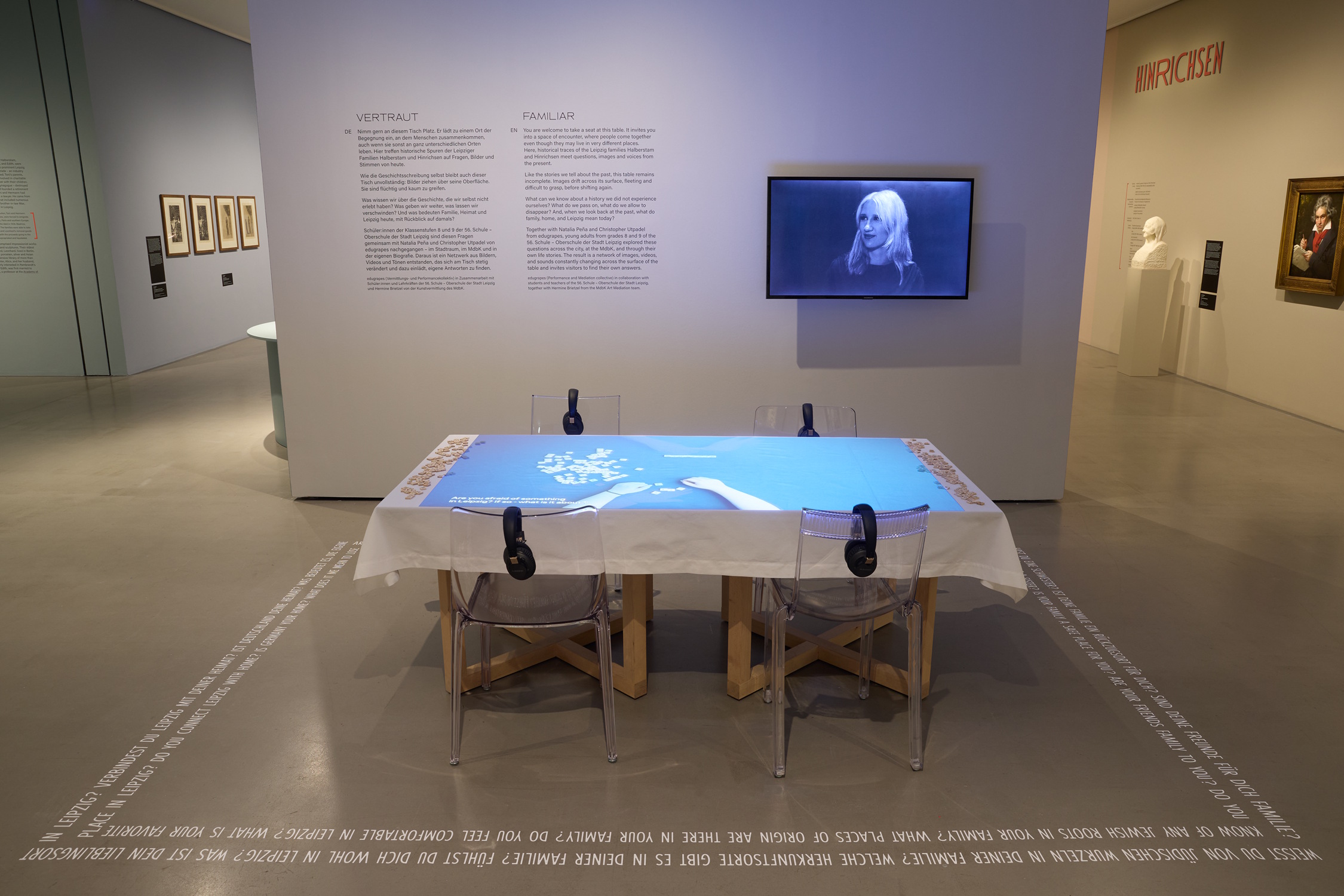
Leon Kahane brings a contemporary perspective to the exhibition, one that engages with the process of coming to terms with the Nazi era in the GDR. In addition, works by Jewish artists from Leipzig of the 1920s are on display; these artists were connected to the families represented here through the networks of the Leipzig art scene.
Knowledge regarding the private art collections of Jewish families in Leipzig remains a gap in our understanding. The research project ‘Art Collections of Jewish Families in Leipzig in the First Half of the 20th Century’ (duration: 15 January 2025 to 15 July 2026) laid the groundwork for the exhibition at the MdbK.
Exhibition and accompanying programme
‘Four Walls Full of Art’ offers a varied programme of events in collaboration with a range of partners: activities range from concerts and performances to an academic conference, a digital city tour via the ‘jewish-places’ platform, and a school project week. The exhibition features a creative activity booklet (MdbK [Zine]), designed by the artist Shlomit Lehavi, and a free audio guide (German / English / plain language). Toni Bentley, a descendant, has recorded first-hand accounts of her great-grandmother’s memories on behalf of the collecting families.
The exhibition is funded by the Cultural Foundation of the Free State of Saxony, the Friede Springer Foundation, the Hertie Foundation and the Saxon State Office for Museums. A collaboration with ‘Tacheles – Year of Jewish Culture in Saxony 2026’.
‘Four Walls Full of Art’ can be seen at the Museum of Fine Arts from 30 September 2026 to 31 January 2027.
Empfohlen auf LZ


So können Sie die Berichterstattung der Leipziger Zeitung unterstützen:


There is one comment