
Dieser Artikel ist auch in deutscher Sprache verfügbar: Zum deutschen Artikel.
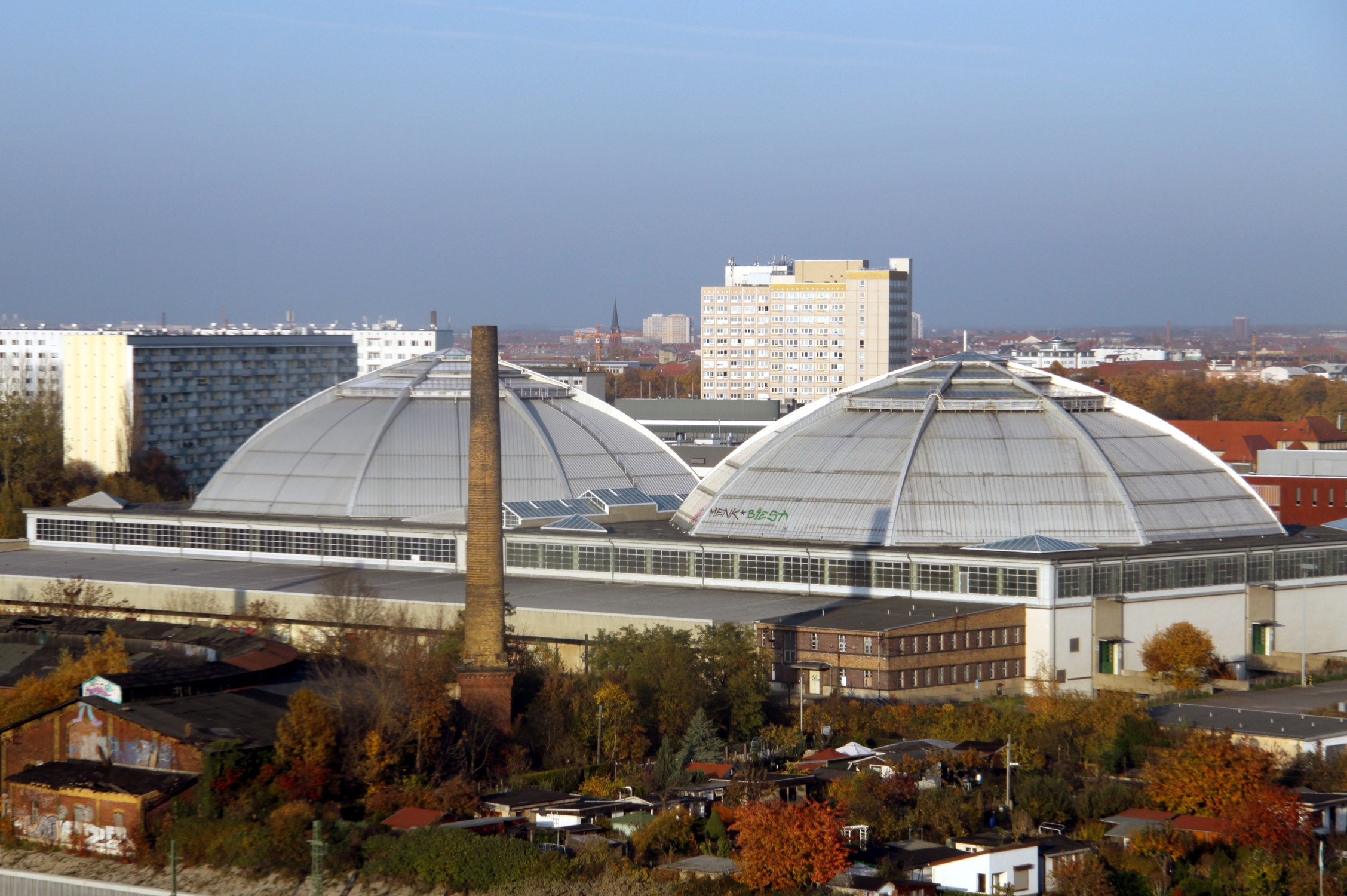
At this final presentation on 2 September, Mayor Burkhard Jung, who was chairing the meeting, was clearly running out of steam too. This proposal concerned Development Plan No. 451.1 ‘Semmelweisstraße/An den Tierkliniken, Northern Section’, i.e. the entire area around Semmelweisstraße and the Kohlrabizirkus. It is, in fact, an area lacking in liveability, which has been languishing for decades without any clear structure or real prospects. These only emerged following the City of Leipzig’s purchase of the Kohlrabizirkus, which is now intended to serve as an anchor for the entire neighbourhood.
Agenda Item 19.5
So there was a pile of objections to the development plan submitted by the city, the last one even arriving after the deadline had passed. And perhaps CDU city councillor Sabine Heymann is right in suspecting that some of the local property owners will now take legal action against the development plan. It could, she suggested, turn out to be a costly and protracted affair, even though it is completely unclear why some owners should feel they have not been heard. That could have been clarified earlier, said Sabine Heymann.
But that raises the question: were the property owners not taken into account? After all, every development plan – as required by law – also provides for public participation. And that did take place.https://vg06.met.vgwort.de/na/0d0f56b97ecc47f48ebbf3d6ce084d4d

The Planning Department assesses this public participation as follows:
“Early public participation (Section 3(1) of the German Building Code (BauGB)) regarding Development Plan No. 451 ‘Semmelweisstraße/An den Tierkliniken’ took place between 12 September 2023 and 13 October 2023 via public display at the New Town Hall.
The announcement was published in the Leipzig Electronic Official Gazette No. 16/2023 of 2 September 2023. The early public participation related to the extended area of application in accordance with the resolution to draw up Development Plan No. 451 of 29 April2020, published in the Leipzig Official Gazette No. 09/2020 of 9 May 2020, with the extension of the scope announced on 13 October 2022 in the Leipzig Electronic Official Gazette No. 20/2022 dated 29 October 2022.
As part of the early public consultation, nine comments were received from the public concerning the scope of Development Plan No. 397.1. These were taken into account in the further development of the development plan.
The formal public consultation (Section 3(2) of the German Building Code (BauGB)) on Local Development Plan No. 451.1 ‘Semmelweisstraße/An den Tierkliniken, Northern Section’ took place from 17 March 2026 to 24 April 2026 via public display at the New Town Hall and online publication. The announcement was published in the Leipzig Official Gazette No. 05/2026 of 7 March 2026.
A total of six comments were received from the public, two of which were from environmental organisations and nature conservation associations. No changes were made to the content of the plan following the public consultation on the draft.”
Objections were incorporated
It was therefore not only property owners who raised objections, but also environmental organisations in Leipzig. They “called for a stronger focus on climate and environmental protection targets, including the preservation of mature trees, the minimisation of parking spaces, ‘sponge city’ concepts, energy supply from renewable sources, and consideration of biodiversity. Individual submissions also emphasised the protection of mature trees.” The Planning Department notes that these objections were partially taken into account in the green space planning.
So the question remains: can we expect a barrage of objections from property owners?
And the Planning Department also confirms that the environmental organisations are absolutely right. This is because: “As large areas of the planning area are marked as overheating zones on the urban climate analysis map, it is necessary to establish regulations that counteract further overheating in the event of the site being developed. Furthermore, due to the poor infiltration capacity of the soil, it is necessary to establish regulations that restrict the development of the land in such a way that rainwater management on the property itself is possible.”
Excluded plots
Nor were these owners’ objections dismissed, as the proposal notes. “Private owners within the plan area drew attention to existing urban development agreements and property interests, and criticised the fact that these had not been sufficiently taken into account in the competition and design planning stages. There were fears of de facto expropriation through the allocation of building plots. Following this submission, the plan was amended as follows: the building plots were adjusted so that each is situated solely on the land of a single owner.”
In plain language: the two plots were excluded from the development plan. One of the owners is even permitted to build as he had announced: “In the further development of the competition entry, a rectangular building envelope with a structure up to 25 metres high has been specified, allowing for a building of up to six storeys.”
So the conflicts are not quite as significant as Sabine Heymann seems to fear. And Leipzig can finally move forward with planning for the Kohlrabizirkus, as – with the exception of the CDU group – the city council approved the proposal on 2 September by 49 votes to 11.
When will work begin?
The actual aim of the development plan is, in essence, obvious to anyone who has ever visited this heavily impervious area. The Planning Department describes it as follows: “In this context, development proposals put forward by the former owner of the former Großmarkthalle and another landowner have made it clear to the administration that achieving a coordinated overall development on this site, including the necessary infrastructure requirements, requires coordination through binding urban land-use planning. Only with this framework can the requirements for orderly urban development – incorporating the listed buildings and creating supra-regional transport routes and green spaces – be met.
The City of Leipzig has set itself the objective of securing, in the long term, the site of the former Großmarkthalle in accordance with the content and objectives of the Land Use Plan, as a cultural and creative district, as well as for sporting uses, and to develop the surrounding underutilised areas into an attractive inner-city commercial district as the ‘BioCity Campus’ cluster site. To this end, an urban planning competition was held in 2022/23. The present development plan is intended to ensure that the updated elements of the winning design are incorporated into the planning process.
In fact, local property owners can only benefit from all this. However, it remains to be seen, of course, when the city will be able to get started on the measures it has planned, given a completely unbalanced budget. After all, these measures cost money: land acquisition costs for future development areas (transport) €2.3 million, land acquisition costs for future green spaces (including compensation area for sand lizards within planning area 451.1) €1.5 million, planning and implementation costs for: transport, including utilities, €5.1 million, and planning and implementation costs for: public green spaces, €3.2 million.
According to the planning department, the intention is actually to wait: “We can wait with the development planning and the construction of the infrastructure until there are concrete plans from companies to set up here.”
This could well work out now, as the development plan has been approved and – according to the mayor responsible for building, Thomas Dienberg – even the final objection has been taken into account.
Empfohlen auf LZ


So können Sie die Berichterstattung der Leipziger Zeitung unterstützen:




There is one comment