Dieser Artikel ist auch in deutscher Sprache verfügbar: Zum deutschen Artikel.
A film festival that once brought the world to Leipzig from beyond the Iron Curtain is kicking off again this evening. To make way for this, the LVB is suspending a local bus service due to building works. At the ‘Runde Ecke’, you can find out whether the neighbourhood really was home to nothing but nice people back in the day – and the Academy of Music is keeping a stage free today for future star violinists.
Tax office instead of Tierra del Fuego
With the end of the autumn half-term holidays, visitor numbers at Leipzig Zoo –
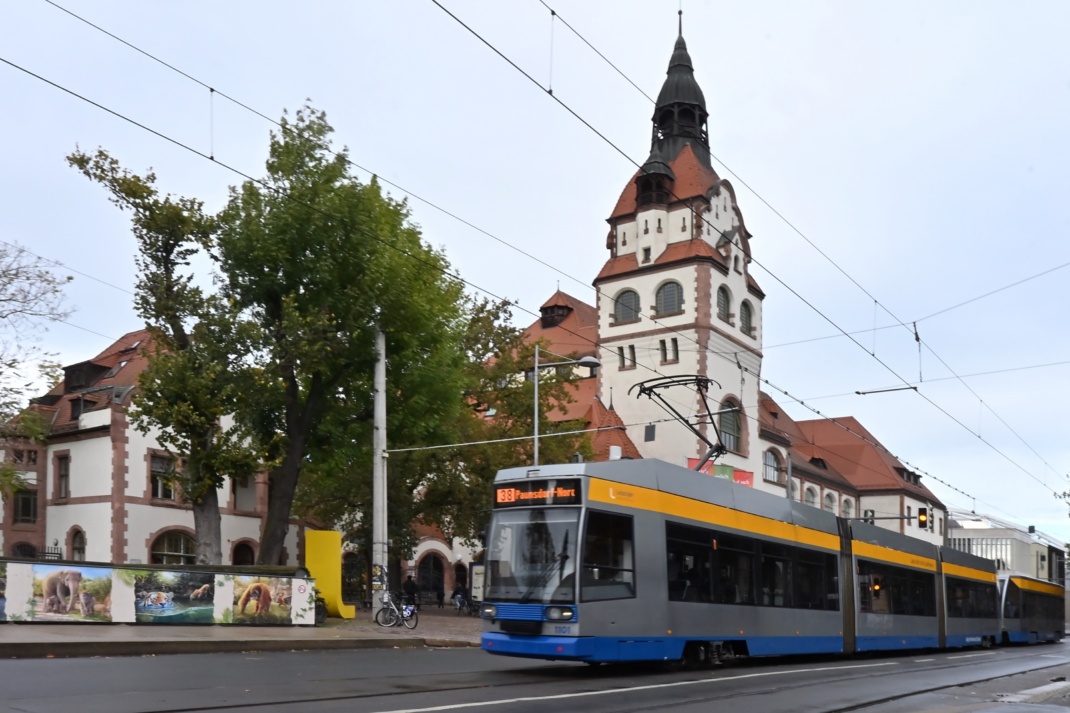
with its newly opened ‘Feuerland’ South American enclosure – are easing off slightly once again. And with that, a journey option that many had come to love is also coming to an end: the use of tram line 38, which is currently under construction. From today, it will once again run along a more direct route between Chausseehaus and the main station. The diversion via the Michaelisstraße, Zoo and Goerdelerring stops, which has been in place since 12 October, is no longer in operation. This also marks the end, after two weeks, of the temporary stop for line 38 at the zoo.
Instead, the trams will once again serve Wilhelm-Liebknecht-Platz (Tax Office
) and reach the main station via platforms A and B. Until yesterday, the line had been using platforms C and D. The reason for the change is extensive track works in Leipzig city centre, which have been disrupting tram services since 12 October. In particular, the closure of tracks A and B at the main station made the previous diversion necessary. The new route is set to remain in place up to and including 8 November.
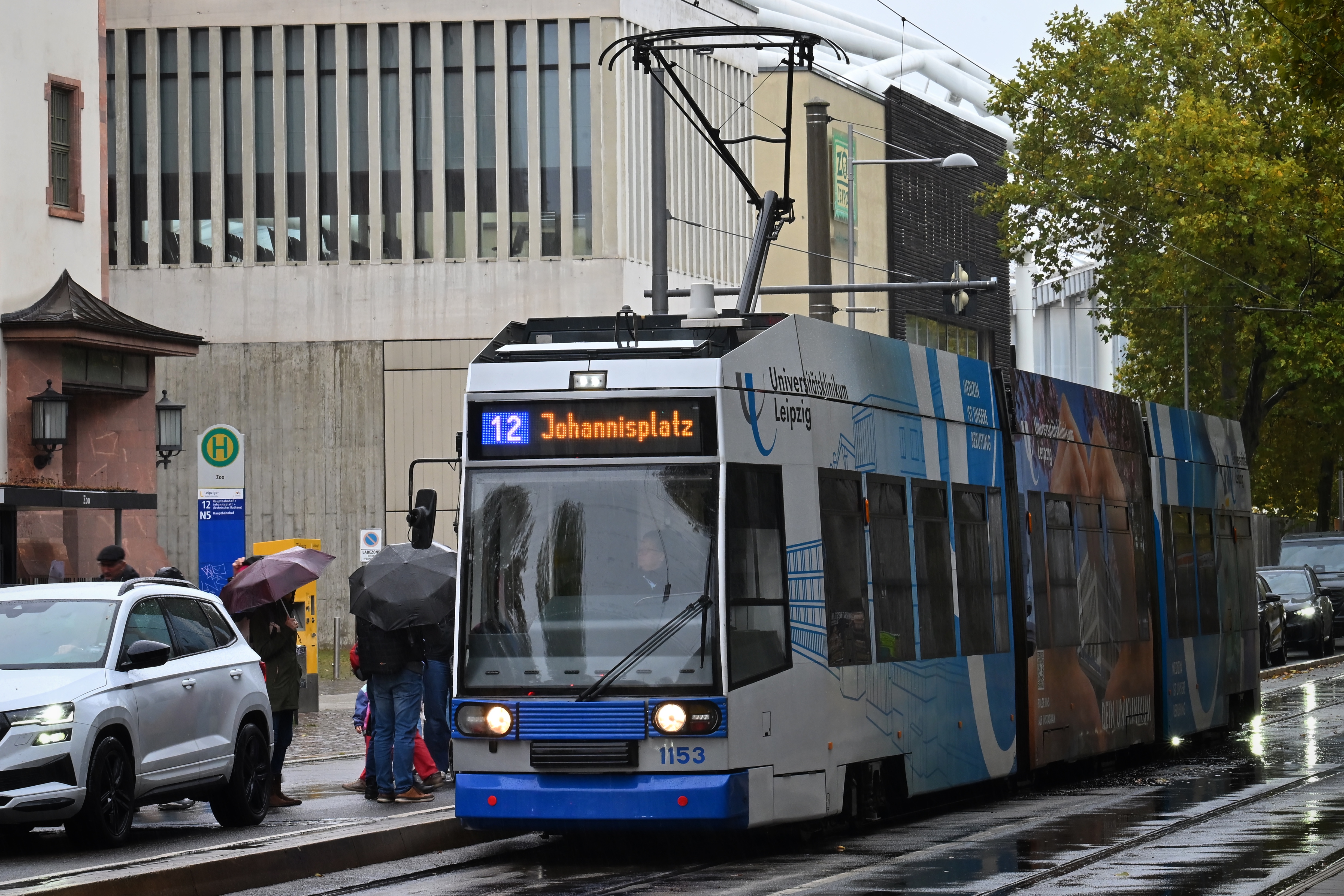
During the day, Line 12 is now once again the only service running to the zoo. When the N5 night bus stops here, not all the animals are asleep, but the gates are closed. Photo: Benjamin Weinkauf
At the same time, a further phase of construction begins today on Georgiring between Hofmeisterstraße and Schützenstraße. The work there forms part of the LVB’s wider construction programme, which also includes Augustusplatz and the main railway station
. Work has also been underway since 12 October on the track curves between Augustusplatz and Grimmaischer Steinweg. The tram service between Roßplatz and Augustusplatz is therefore suspended until 8 November, with lines 8 and 10 particularly affected. The LVB provides regular updates on current diversions via its official construction website
.
Leipzig Transport Authority (LVB)
is maintaining tram services even during major trackworks by using so-called ‘construction routes’. To do this, they are linking sections of track that remain open to traffic on various regular routes to form temporary replacement services. This ensures that as many direct connections as possible are maintained and spares passengers the need for additional changes. At the same time, existing tracks can be used without having to deploy replacement buses everywhere. Depending on the progress of the works, the routes of these ‘construction lines’ change, which is why they do not have a permanently fixed route.
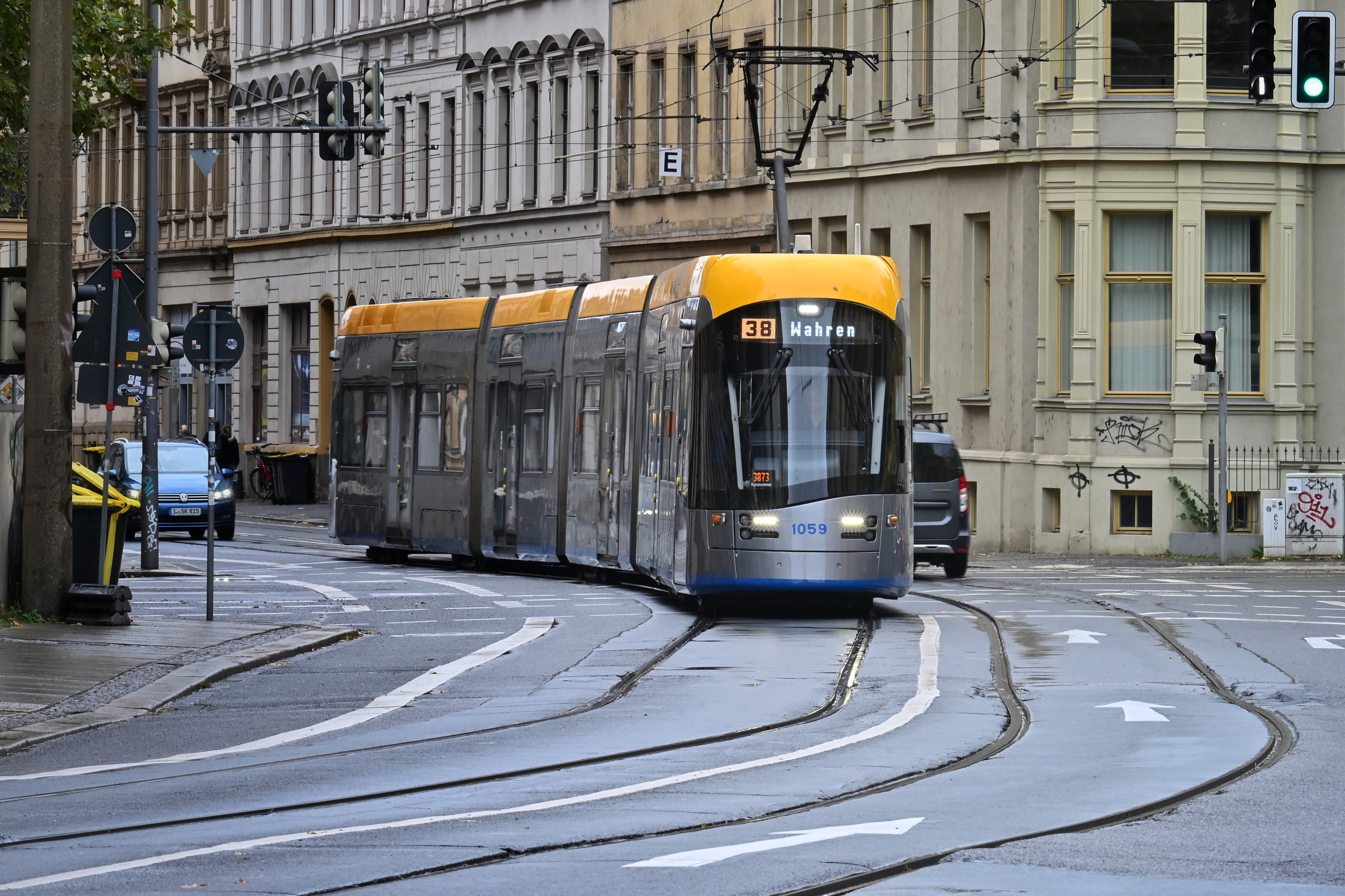
The tram for special occasions. The 38 always runs wherever it’s needed. Photo: Benjamin Weinkauf
The world on Leipzig’s screens
When this festival was launched, it had been just two years since the popular uprising of 17 June, and hopes for reform had been dashed. The constraints of the dictatorship appeared to be cemented in place even before they were built in stone in 1961. And yet, 71 years ago, something emerged that, alongside the Leipzig Trade Fair, brought a touch of the wider world to the city: founded in 1955 as the ‘Leipzig Culture and Documentary Film Week’, this film festival developed during the Cold War into an extraordinary venue for international encounters.
In the GDR, whose borders severely restricted cultural exchange with the West, it offered insights into other societies and political realities. Filmmakers from East and West, from countries in Africa, Asia and Latin America, came together in Leipzig, where otherwise only economic exchange during trade fair periods created such an atmosphere. From the mid-1960s onwards, the Documentary and Short Film Week ranked among the world’s most important events of its kind and was, at the same time, the GDR’s largest international cultural event.
Although the programme remained subject to state control and ideological guidelines, spaces for artistic and political debate emerged. The motto ‘Films of the World – For World Peace’, introduced in 1961, and Pablo Picasso’s dove of peace, used since 1962, became symbols of this aspiration.
Following reunification, the festival maintained its international standing and continued to evolve, introducing its own animated film competitions, industry events and digital art forms. Today marks the start of the 69th edition of DOK Leipzig (there were two hiatuses), which will present a total of 217 films from 61 countries until 1 November. These include 30 world premieres and 29 debut films. In four competitions, 76 films are vying for the Golden and Silver Doves. The awards ceremony will take place on Saturday, 31 October, at 8 pm at the Schaubühne Lindenfels.
This year, there is a particular focus on Central and Eastern Europe. The new ‘Fokus Ost’ section, curated by Grit Lemke (‘Gundermann Revier’), comprises ten documentaries, including eight world premieres. The festival will open with ‘Guten Abend, du Schöne’ by Ina Borrmann. The film reunites with women who had previously recounted their lives in Maxie Wander’s 1977 book “Guten Morgen, du Schöne”. The official opening ceremony takes place today at the Schauspielhaus.

Other notable productions include “Bára – Diary of a Rockstar” by the Czech director Helena Třeštíková, who documented the life of rock singer Bára Basiková over a period of 50 years. Alongside the film screenings, the festival offers international panel discussions and meetings with directors. Standard tickets cost ten euros, concessions eight euros, and children’s and youth screenings five euros. Season tickets are available for 80 or 50 euros respectively. Tickets can be purchased via the official website dok-leipzig.de and, from the start of the festival, at participating cinema box offices and at the festival centre in the Museum of Fine Arts.
The full programme and all screening times are summarised ONLINE HERE. Individual films are also available to watch online via DOK Stream for five euros.

The Rooms Next Door
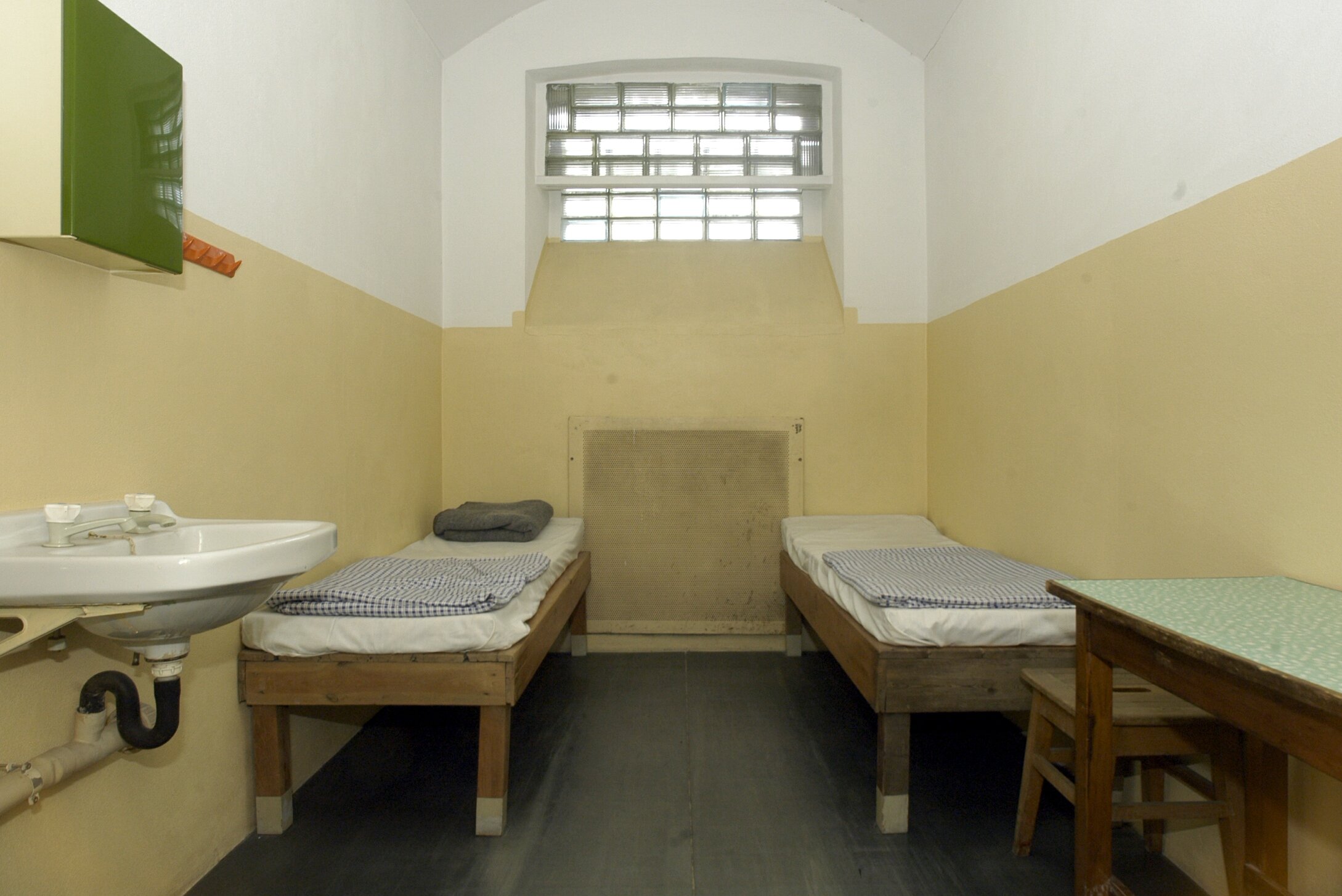
The Stasi’s tentacles reached everywhere. In classrooms, offices, work collectives, coaches, local pubs, church services and families. And even the rooms just next door could lead into the abyss of GDR repression. The Stasi used more than 1,000 secret flats and other premises in Leipzig for surveillance, meetings with informants and intelligence operations.
A research project by the Leipzig Citizens’ Committee reveals just how far this network extended across the city. The findings will be presented today at 7 pm in the former Stasi cinema auditorium at Goerdelerring 20, fourth floor. Under the title ‘Topography of Power: The Covert Flats and Premises of the Ministry for State Security in Leipzig’, the structures of the GDR secret service will be explained using specific addresses and historical files. There will be an opportunity for discussion afterwards.
The research began following the occupation of the Leipzig Stasi district headquarters on 4 December 1989. As early as 1990, the Citizens’ Committee had documented around 350 secret locations; by 2018, 450 were known. A systematic analysis of the files ultimately revealed 1,062 clandestine flats and premises that were in use in the autumn of 1989. Further findings have since come to light. The facilities ranged from individual rooms in private flats to entire detached houses.
It was there that Stasi officers met their unofficial collaborators, received reports or organised covert surveillance operations. Leipzig played a special role as an international trade fair city. The spring and autumn trade fairs offered numerous opportunities for foreign espionage. In addition to the local offices, the Main Directorate for Reconnaissance and other Stasi units also used secret premises in Leipzig.
A digital city map, first published in 2019 and since expanded, documents the updated locations. Today’s presentation forms part of the supporting programme organised by the ‘Museum in der Runden Ecke’ memorial in the run-up to the anniversary of the Peaceful Revolution.
The magic inherent in the beginning
Yes, perhaps it’s not quite ready for a first record deal yet. But not every artistic idea needs to be fully formed to hold its own in front of an audience. At the “Felix Mendelssohn Bartholdy” University of Music and Theatre in Leipzig, even “unfinished” works are given a place on stage today. At 7.30 pm, an ‘Open Stage’ begins in the Blackbox at Dittrichring 21 – an event format organised by the Students’ Council that deliberately eschews the usual expectations of a professional concert.
Under the motto ‘Failure with beer and apple spritzer – open to all finished and unfinished performances from all disciplines’, artistic contributions from various disciplines can be presented and tested. The focus is less on a perfect performance and more on the opportunity to try out new ideas, explore unusual forms of expression and exchange ideas across disciplinary boundaries.
This format complements the university’s regular concerts and performances by providing a deliberately informal platform where works at an early stage of development can also be presented to the public.
Empfohlen auf LZ


So können Sie die Berichterstattung der Leipziger Zeitung unterstützen:



There is one comment