Dieser Artikel ist auch in deutscher Sprache verfügbar: Zum deutschen Artikel.
They are unassuming – and yet of great significance to many: two closures are the focus of our attention today, in what is, in fact, a small matter. Two exhibitions are catching our eye: one because it is new, the other because the artist herself is guiding visitors through her impressive body of work. And there is growing resistance to the AfD’s use of the Alte Handelsbörse.
Protest against right-wing extremists
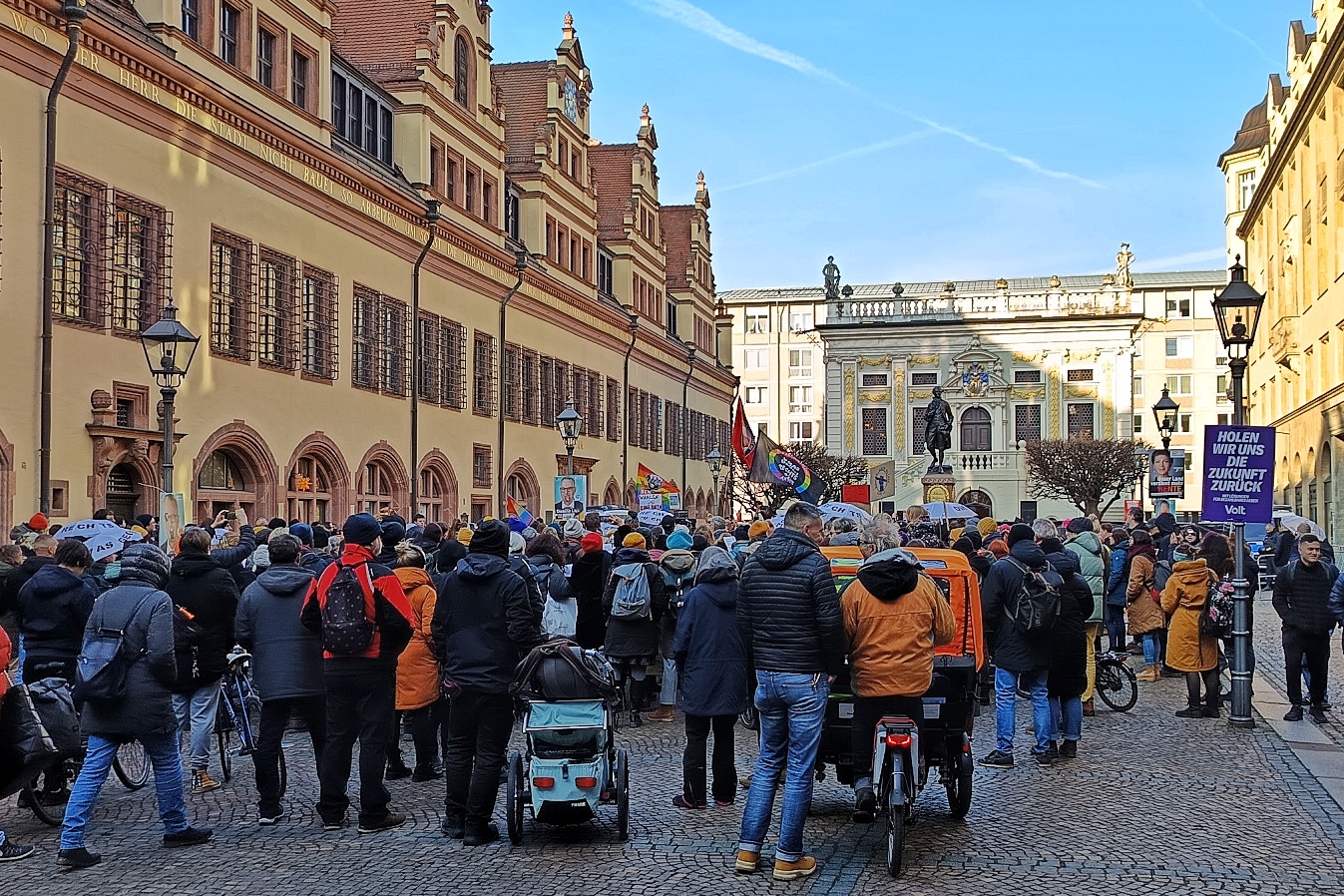
The AfD parliamentary group in the Saxon State Parliament is planning to continue a series of events this evening at the Alte Handelsbörse on Leipzig’s Naschmarkt. Leipzig AfD Member of the State Parliament Holger Hentschel and the chair of the AfD parliamentary group in the Saxon State Parliament, Jörg Urban, are listed as participants.
The City History Museum has stated that, whilst it is the operator of the building, it has no authority to refuse such events due to the local zoning regulations.
In protest against the gathering, the ‘Grandmothers Against the Right’ and others are calling for a special vigil and inviting people to gather at the Naschmarkt at 5 pm.
The Old Stock Exchange is one of Leipzig’s most significant historic buildings and was built on the initiative of the merchant class. The city council approved its construction on 6 May 1678. This followed an initiative by 30 leading merchants who drew attention to grievances already documented in the *Leipzig Chronicle* by Johann Jakob Vogel.
The catalyst was criticism from Italian and Flemish merchants regarding the trading conditions in Leipzig at the time. During the trade fair in 1666, only a wooden stall had been erected on the market square, ‘under which the merchants could stand in the dry’. Many long-distance traders were familiar with imposing stock exchange buildings in other cities. Against this backdrop, dissatisfaction grew amongst Leipzig’s merchants regarding their own circumstances, leading them ultimately to push for the construction of a stock exchange.
The vaults on the ground floor were let to merchants, whilst the hall on the upper floor – created specifically for stock exchange meetings – was used for auctions outside trade fair periods. After 1887, the city councillors also held their meetings there. The Old Stock Exchange suffered severe damage during the Second World War. The building was burnt to the ground.
Following its destruction in 1943, the building was initially secured with a temporary roof. Reconstruction began in 1955 and was completed in 1962. Since then, the former stock exchange hall has mainly served as a venue for readings, concerts and conferences.
Regarding the building’s current daily hirer, the annual report of the State Office for the Protection of the Constitution, published in 2025, states: “Key political objectives of the regional association are incompatible with the Basic Law. By order of 15 July 2024 (Ref. 6 L 20/24), confirmed by a ruling of the Saxony Higher Administrative Court dated 21 January 2025 (3 B 127/24), the Dresden Administrative Court rejected the urgent application by the AFD Saxony Regional Association against its classification as a confirmed right-wing extremist organisation.“
Small but mighty
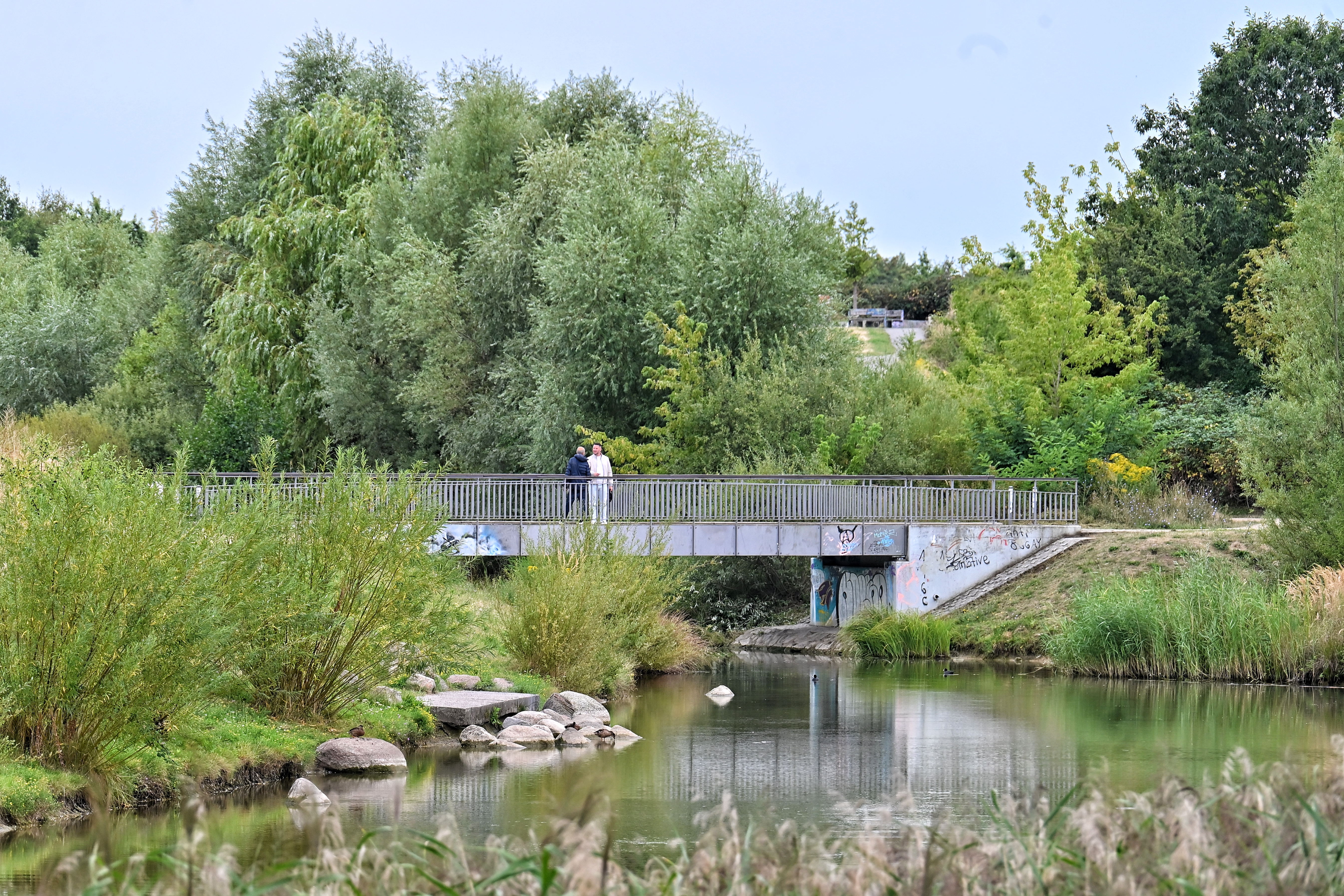
As it has fallen into disrepair over the years, the bridge over the Bogensee in the Grüner Bogen Paunsdorf needs repairing. It connects an allotment garden to the new Heiterblick housing estate in Paunsdorf. The work will cost around 15,000 euros and is due to be completed by mid-September. During this time, it will be completely closed.
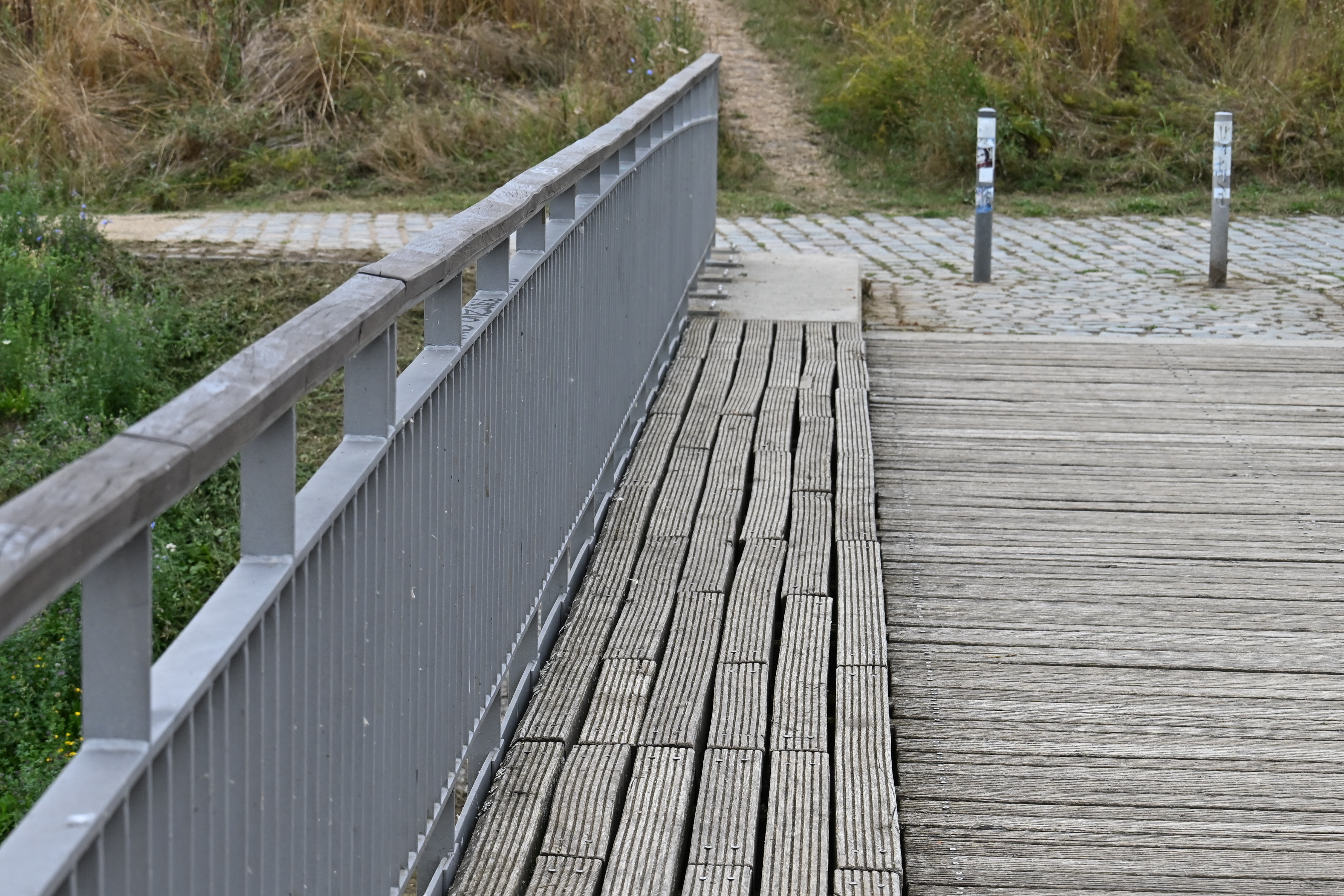
For allotment holders, this means having to take detours. Yet whilst chatting by the fence, one allotment holder admits to the LZ: “The detour takes us through our ‘Grüner Bogen’, a beautiful, peaceful park. And the bridge does need doing – after all, we don’t want to break our bones.”
This ‘Grüner Bogen’ covers a total area of 120 hectares, making it the largest open-space development project in north-east Leipzig. As part of the city-wide green space network, this landscape plays a particularly important role in improving the living environment for around 17,000 residents. On agricultural and military brownfield sites surrounding the ‘Heiterblick’ prefabricated housing estate, playgrounds, recreational areas and walking trails have been created in line with urban nature conservation strategies.
The project has received several awards: In addition to being nominated for the ‘International Urban Landscape Award’ in 2007, the Grüner Bogen Paunsdorf received the ‘Leipzig Architecture Prize’ in the same year. It also won the special prize ‘Nature in the City’ in the ‘Federal Capital of Biodiversity 2011’ competition.
Thank goodness for the lottery
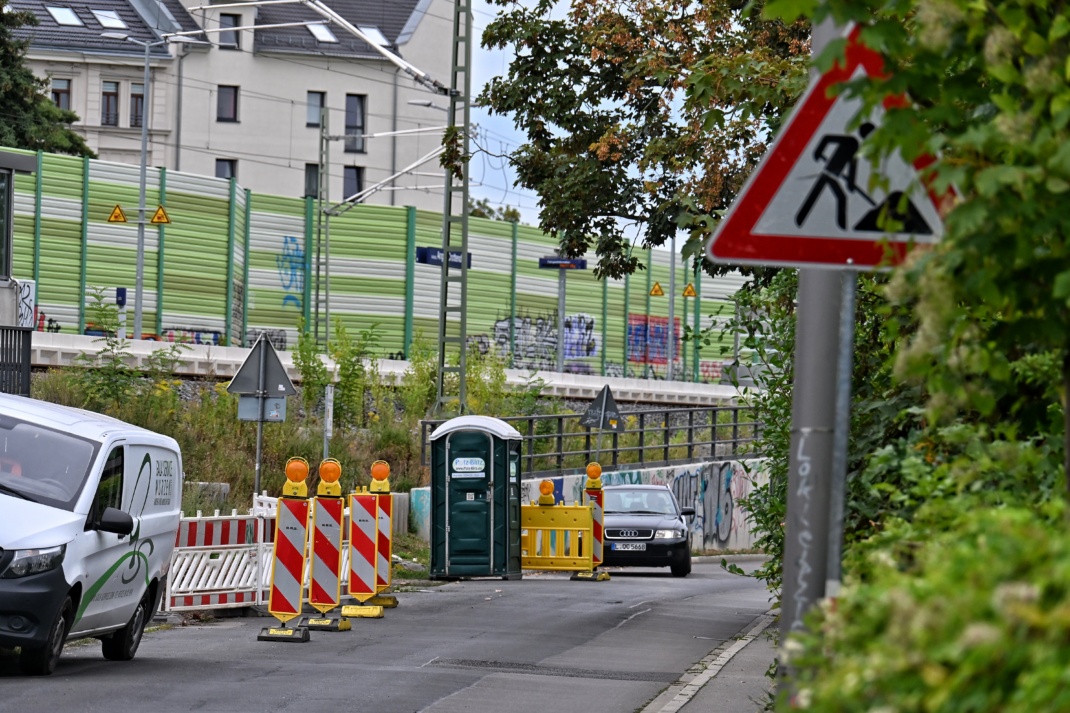
Another road closure affects a path that, at first glance, also appears to be just a small one. Yet, despite its modest size, ‘Am Güterring’ is one of the most important links (and shortcuts) between the districts of Anger-Crottendorf and Reudnitz-Thonberg.
Today, it’s difficult to get through there because a crane is being erected. As the road ends right at the Sachsen-Lotto headquarters, anyone who values this ‘shortcut’ is in luck. The closure only applies to today.
All Crottendorf residents who have an allotment on Oststraße must use Pommernstraße to reach their plots. Given the current weather conditions, at least there’s no need to water the plants today.
City releases images of the Kakhovka dam disaster
At 2.54 am on the morning of 6 June, seismologists recorded an earthquake-like tremor with a magnitude of between 1 and 2 on the Richter scale. It was measured by a station in Bukovina, Romania, geographically associated with the Kakhovka reservoir on the lower reaches of the Dnieper.
From today, the City Office on Burgplatz is hosting an exhibition on the consequences of the destruction of the Ukrainian Kakhovka dam in June 2023. The exhibition marks Ukraine’s Independence Day. Organised by Leipzig helps Ukraine e. V., the exhibition highlights the environmental and humanitarian impacts of the disaster and documents its long-term consequences through photographs by Oleksandr Dschantimirov (born 1978, Donetsk), accompanying texts and other visual materials.

The breach of the weir caused widespread flooding in the areas downstream. At the time of the destruction, both the dam and the left bank of the river were under Russian control. The reservoir, which normally held 18.2 billion cubic metres of water, was close to its all-time high at the time, standing 80 centimetres above the normal maximum level of 16 metres.
At least 52 people lost their lives as a result of the resulting flooding. The explosion caused a massive flood wave that inundated numerous villages and towns, and the reservoir was completely emptied.
Russia and Ukraine blamed each other for the explosion, which triggered the dam breach and the subsequent flooding. Thousands of people were forced to leave their homes. Furthermore, the disaster had serious consequences for the drinking water supply, agriculture and the supply to the Zaporizhzhia Nuclear Power Station.
The exhibition can be viewed until 11 September at the town office on Burgplatz (access via Markgrafenstraße 3). Admission is free. The City Office is open Tuesdays to Thursdays from 1 pm to 6 pm and on Fridays from 1 pm to 3 pm.

Photographer gives a personal guided tour of the exhibition
It is a unique collection documenting the history of Jewish life in the early 1990s. The collection of works by the Leipzig-based photographer Silvia Hauptmann comprises 35,000 photographs. Until 22 September, the City Archives is offering an insight into this photographic treasure trove and showcasing a selection of the images in the exhibition ‘New Beginnings and Tradition – 30 Years of Contemporary Jewish Life in Saxony’.
Today, the photographer herself will be giving a guided tour of the exhibition, providing insights into her work and answering questions about her project. Silvia Hauptmann traces the developments of the Jewish communities in Leipzig, Dresden and Chemnitz following the fall of the Berlin Wall.
The guided tour begins at 4 pm and lasts one hour. Admission to the tour is free; no booking is required. The City Archives are located on the grounds of the Alte Messe in the former “Soviet Pavilion”.

Empfohlen auf LZ


So können Sie die Berichterstattung der Leipziger Zeitung unterstützen:





There is one comment