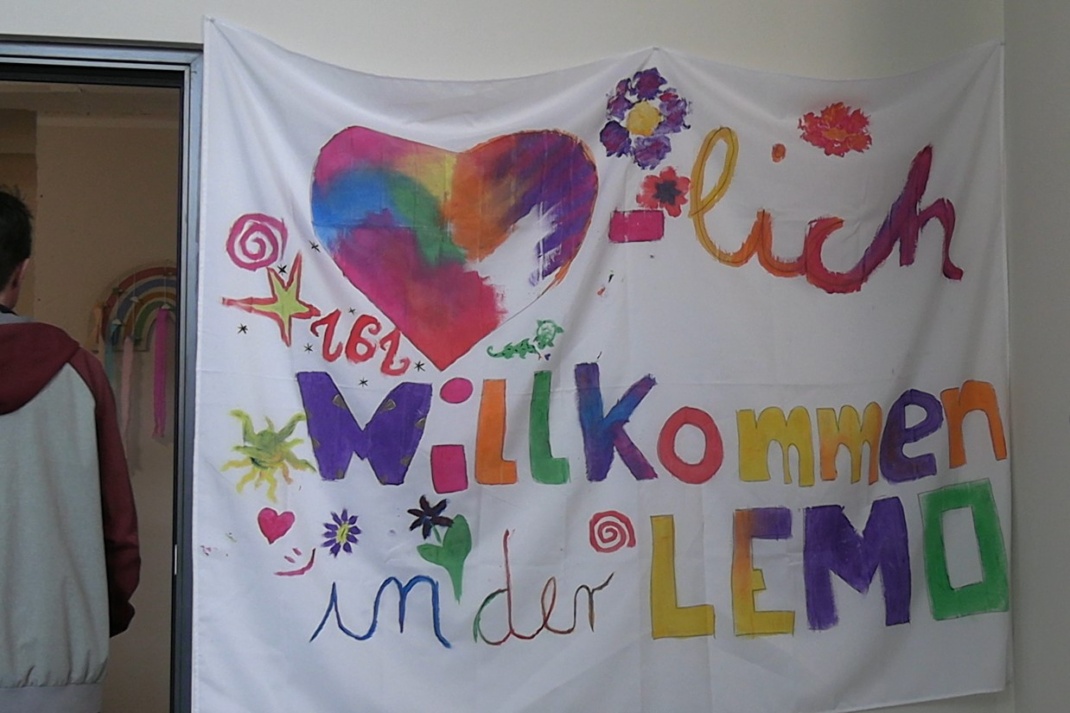
Dieser Artikel ist auch in deutscher Sprache verfügbar: Zum deutschen Artikel.
A few days ago, to the uninitiated, it looked as though it would be some time yet before LEMO could move into the ‘Alte Post’ on Stuttgarter Allee. Piles of building materials lay both in front of the building and on the scaffolding, and work was in full swing. However, that changed quickly. By 9 September, the gable facing Breisgauer Straße was already giving a clear indication of who was moving in.
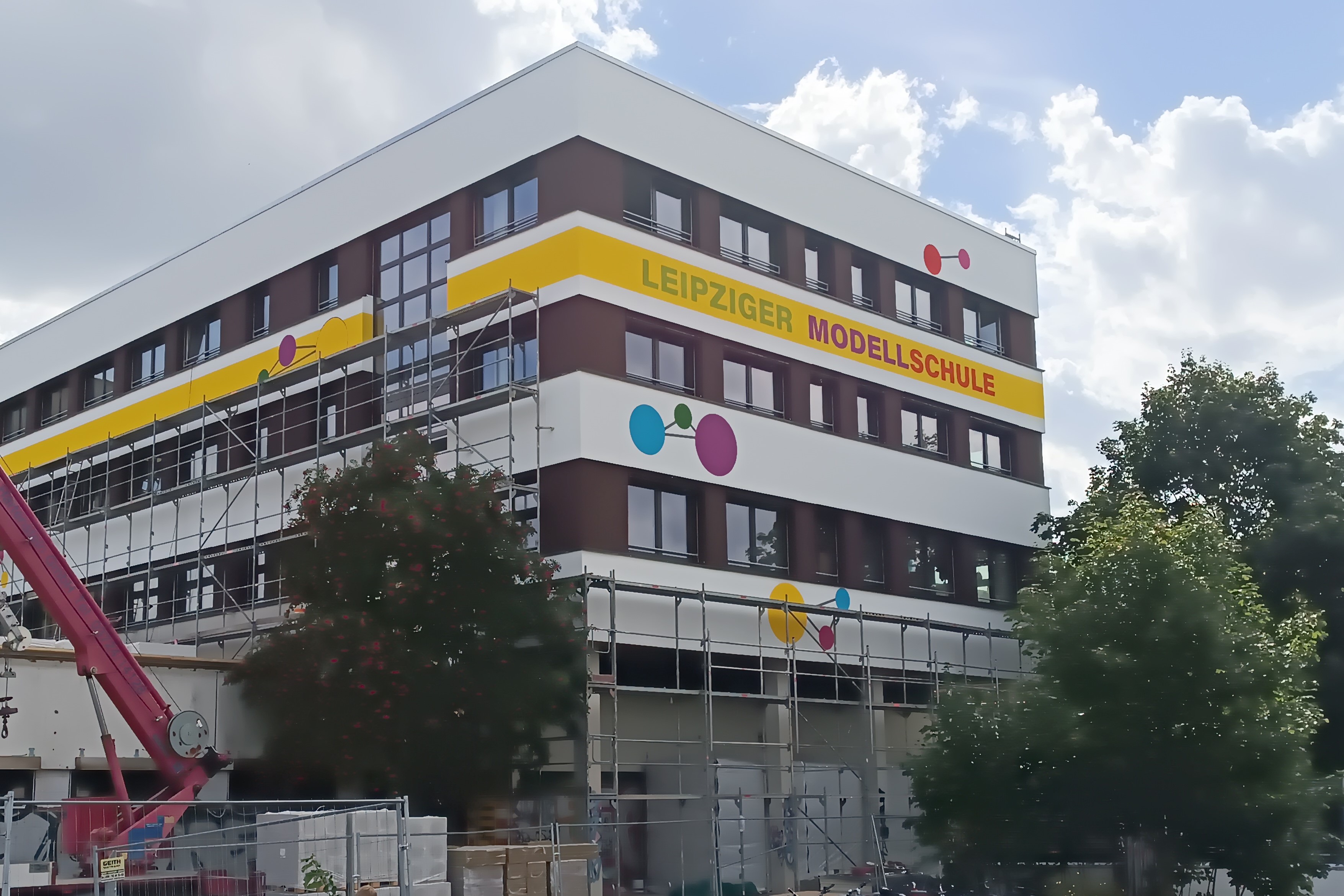
On 11 September, the time had come: the official opening took place, attended by representatives from politics, the association “Leipziger Modell – Lebens- und Bildungsraum e.V.”, the property developer, funding partners, the school itself and, of course, the pupils. We had a look around and asked a few people what they thought.
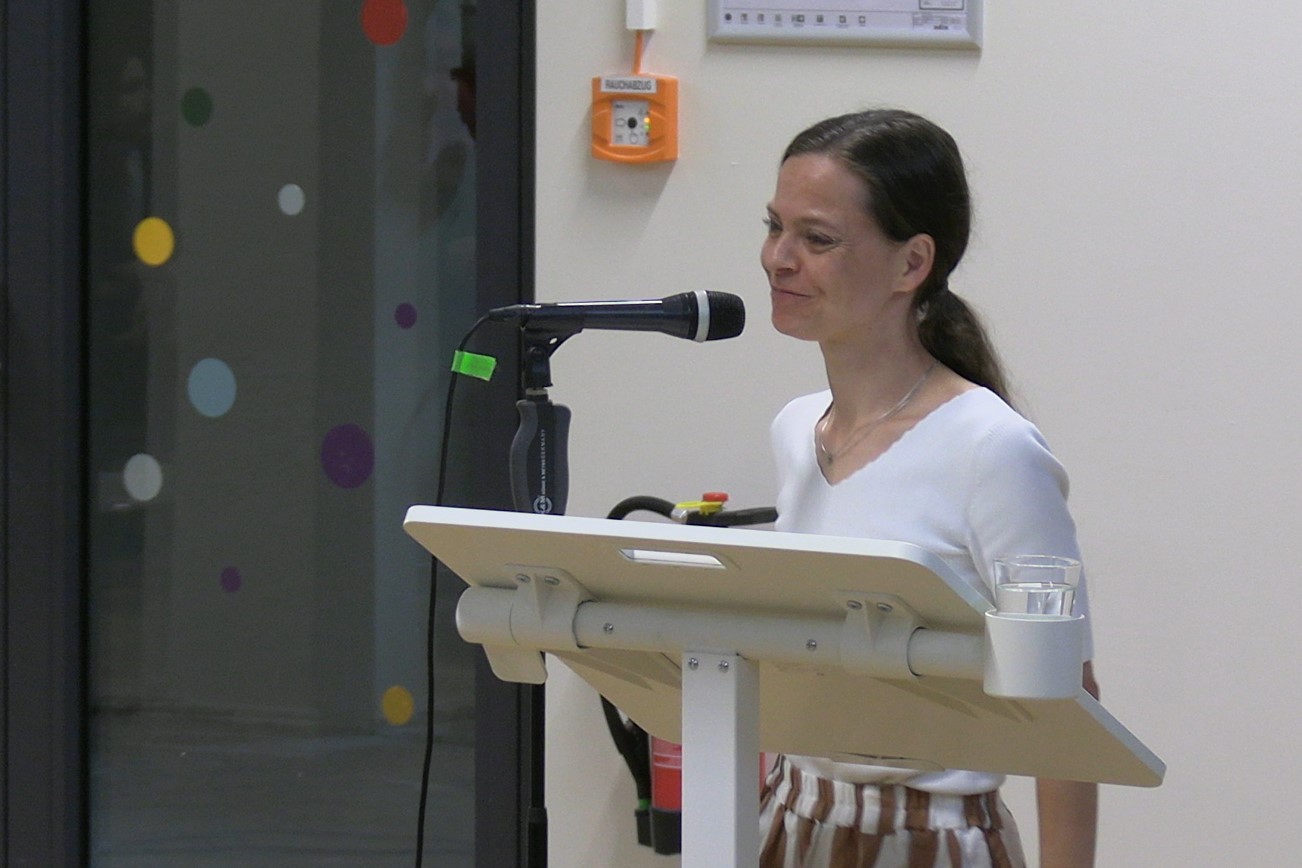
As expected, the opening began with speeches; following a brief introduction by Headteacher Kristin Narr, Uwe Schmidt, Head of the Schools Department at the State Office for Schools and Education in Leipzig – who was standing in for Minister Conrad Clemens – took the microphone. In his speech, Uwe Schmidt described LEMO as a “driver of innovation in the Saxon school landscape” and specifically highlighted the self-directed learning time, project-based learning and other forms of learning within the LEMO concept.
In an interview, when asked about the PISA shock and whether LEMO could offer anything to the state education sector, Uwe Schmidt said, amongst other things: “Independent schools are not in competition with the public sector; rather, they enrich the school landscape, so to speak, and we are very grateful for that. This model school in particular is trialling new teaching methods, and state schools have now also set out on this path with the ‘Education 2030’ initiative.”
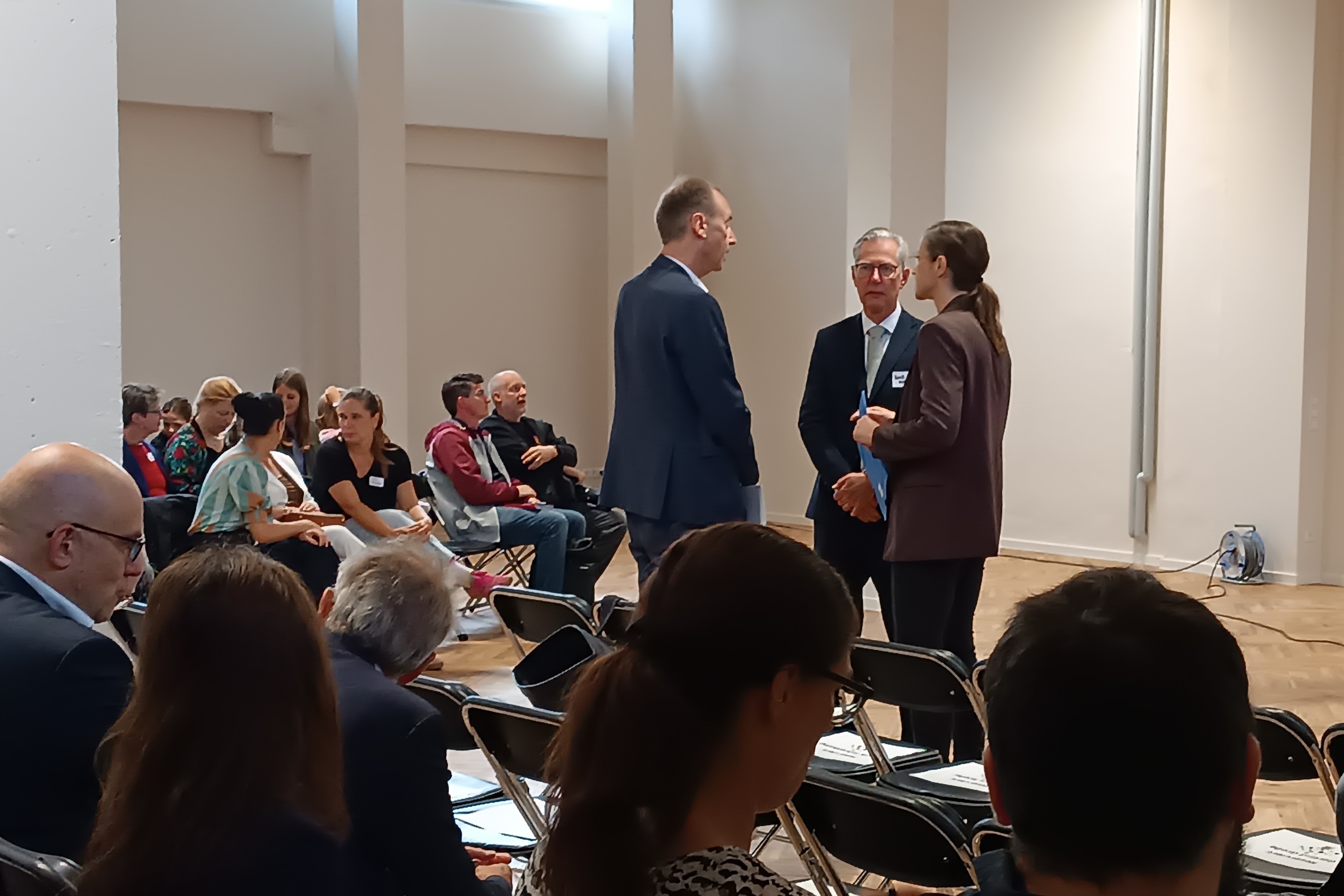
Uwe Schmidt, Vicki Felthaus and Patrik Fahrenkamp in conversation. Photo: Thomas Köhler
Leipzig’s Councillor for Youth, Schools and Democracy, Vicki Felthaus, addressed the PISA shock and emphasised that the LEMO comprehensive school develops the skills pupils need in the 21st century.
In the interview, Ms Felthaus said: “All I can say is that we need more concepts like this, where we say: ‘We’re confident enough to try something new.’ And here in this building, you can see for yourself – it’s not just one classroom after another, but the rooms themselves reflect how learning takes place here, using a whole range of different methods. And, yes, the young people are also learning independently very well – it’s absolutely impressive.”
Patrik Fahrenkamp, CEO of Leipziger Stadtbau AG, followed with his welcoming address. Stadtbau AG owns the site and the building, and is the developer responsible for the refurbishment. We asked Mr Fahrenkamp for an interview. In it, Patrik Fahrenkamp confirmed to us that Stadtbau AG intends to retain this property: “We’re investing our own money in this, and we don’t want to sell the property; rather, we want to take responsibility here in the very long term to ensure that this building remains in good condition and that the pupils and teachers can really enjoy themselves here.”
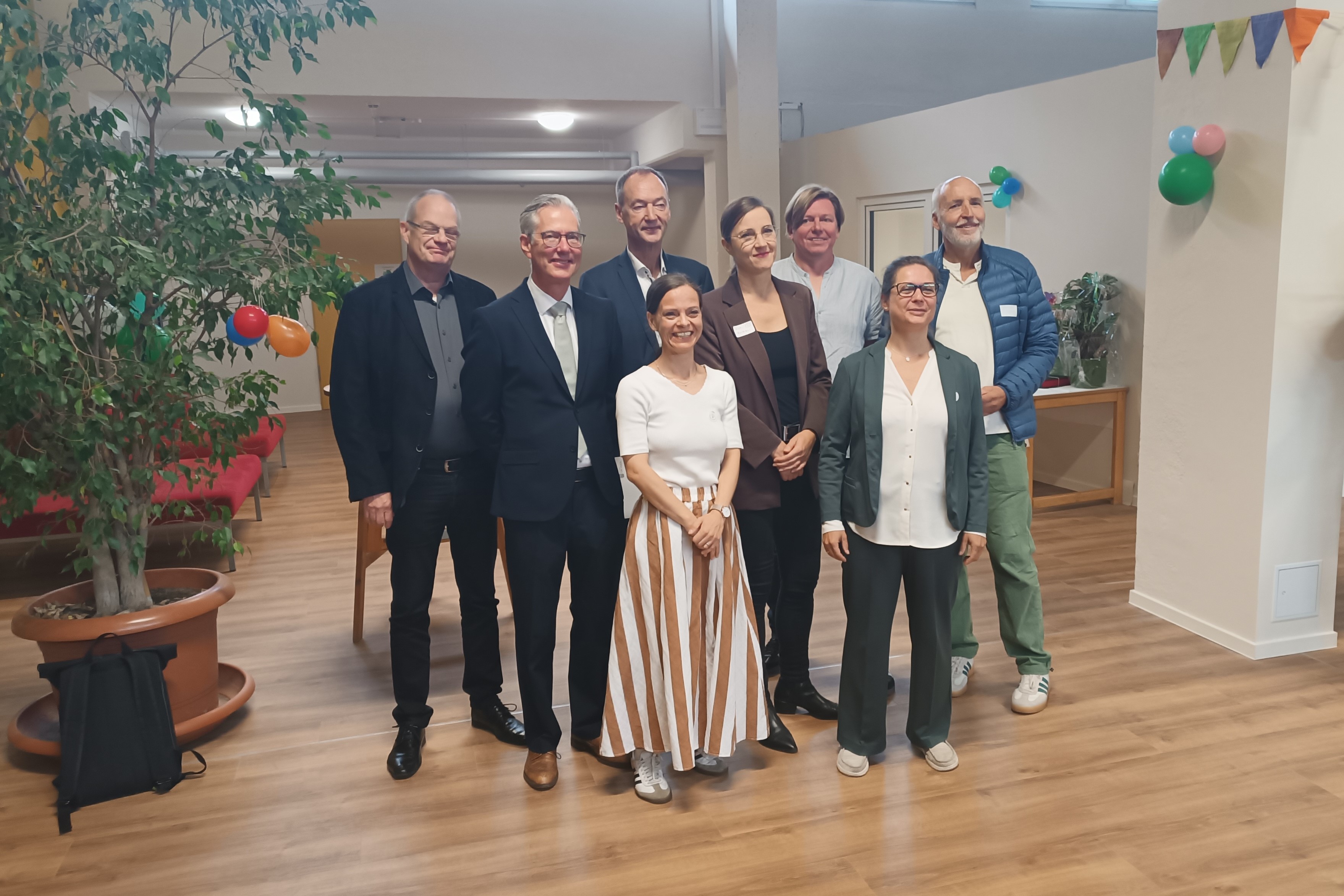
Hannes Koefer and Patrik Fahrenkamp (Stadtbau AG), Uwe Schmidt (LaSuB), Kristin Narr (LEMO), Vicki Felthaus (City of Leipzig), Jan Frank and Gerlind Große (LEMO Leipziger Modell gGmbH) Andreas Rebmann (Software AG Foundation). Photo: Thomas Köhler
In her speech, Prof. Dr Gerlind Große, Managing Director of LEMO Leipziger Modell gGmbH, expressed her thanks and appreciation to everyone involved and drew an analogy between the building’s former use as a post office and its new purpose. “A post office is traditionally a place of sorting – by location, size, format and jurisdiction. A school, however, must do something different here. It must not sort children and young people into fast or slow, easy or difficult, high-achieving or resilient. We refuse to turn differences into a hierarchy of human values.”
We also asked Gerlind Große for a short interview; amongst other things, we asked her what it was like to finally move into the school’s own premises after all these years at the Allee-Center.
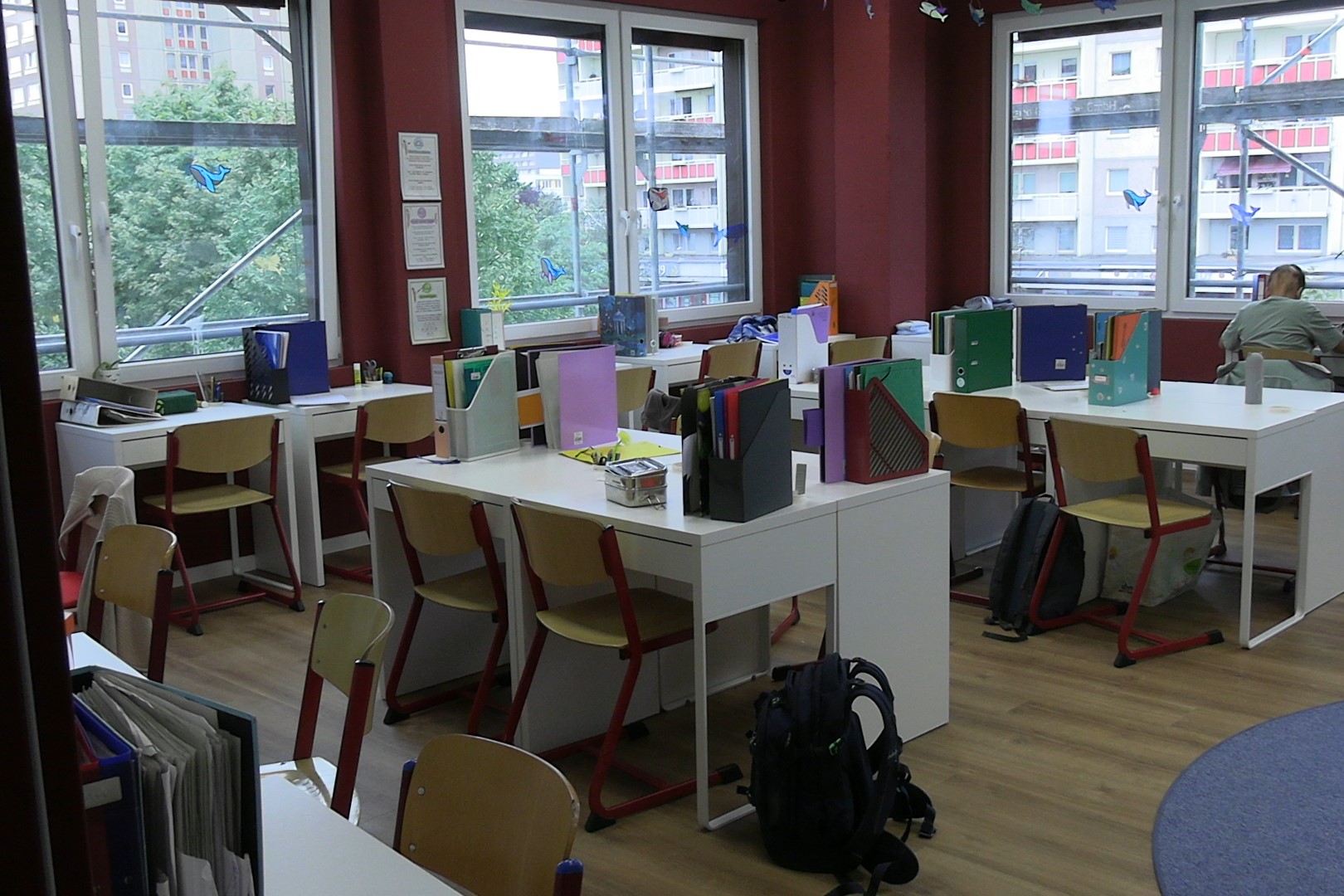
In the Blauwal learning office. Photo: Thomas Köhler
The tour of the completed floors, during which we were guided by pupils, showcased a wide variety of learning environment designs. These ranged from the ‘marketplace’ to quiet study areas for when pupils need peace and quiet to work, to feedback rooms, and finally to the ‘classrooms’, which are designed in a completely different way. We are using this term here simply to indicate a general function.
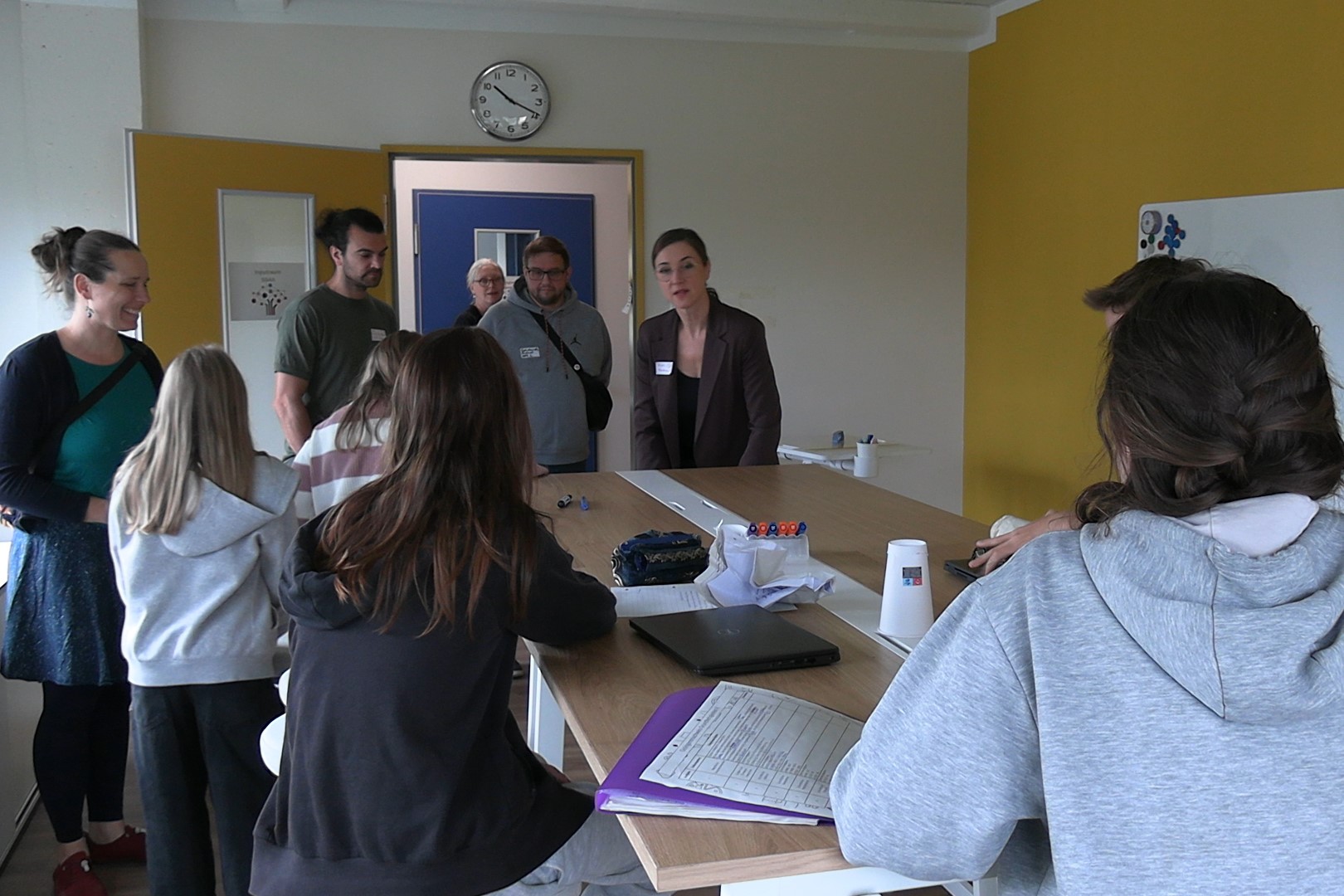
Vicki Felthaus is being shown how the school day works. Photo: Thomas Köhler
Nor is the grouping of pupils based on the traditional system of age-based year groups, i.e. 12 year groups. There are five core groups, which roughly correspond to Years 1–3, 4–6 and so on. As a comprehensive school, LEMO does not separate pupils into Hauptschule or Gymnasium streams after Year 4; pupils decide which path to take when the time comes. Pupils can obtain Hauptschule or Realschule qualifications, and from this academic year onwards, the Abitur as well.
We asked Headteacher Kristin Narr about this; she was happy to provide information and summarised the situation once again.
The pupils we met were also happy to share their experiences. For example, one young person told us that he had attended a Gymnasium from Year 5 onwards, but dropped out and switched to an Oberschule. He is now at LEMO and intends to go ahead and take his Abitur after all. That’s good to hear.
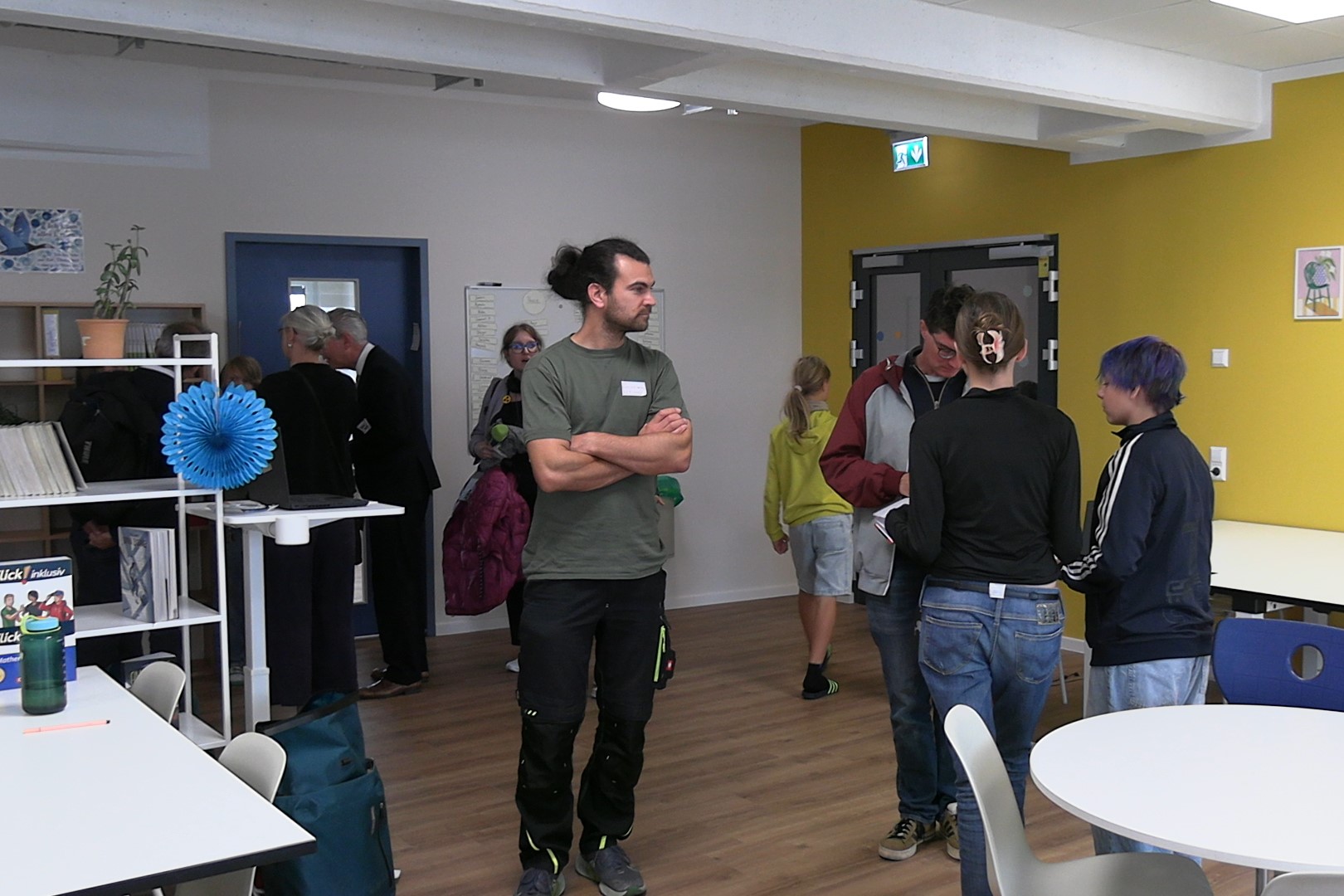
Pupils giving an interview in the market square. Photo: Thomas Köhler
When asked, the young people also told us that there is a balance between digital and face-to-face teaching. Both face-to-face and digital knowledge and skills are assessed. Weekly individual feedback sessions provide guidance for the pupils and learning mentors.
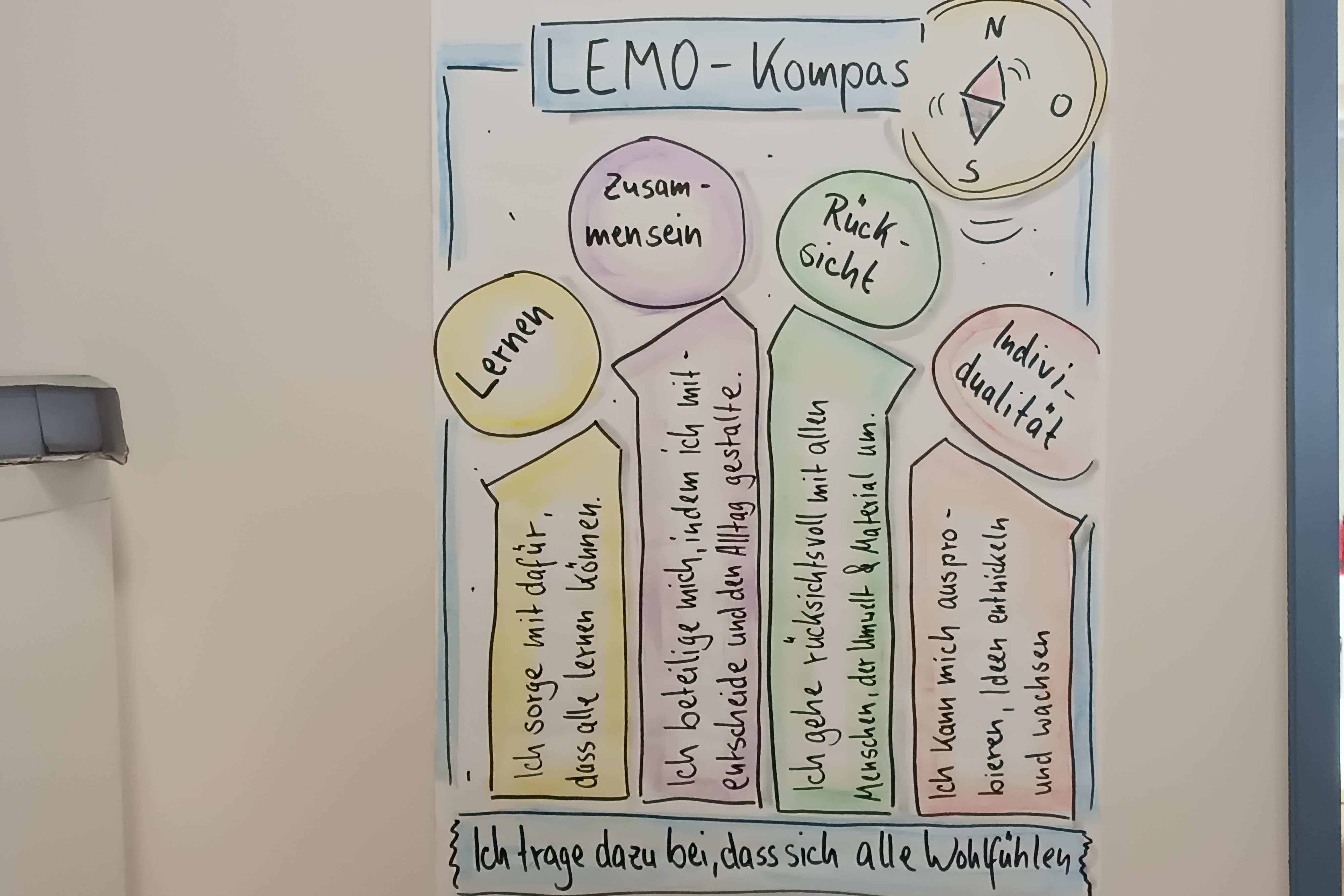
The LEMO Compass. Photo: Thomas Köhler
LEMO has moved into the new building with 240 pupils, and this figure is set to rise to 400 over the next few years.
What else is there to say? It’s a fantastic project – and we’re not the only ones who think so. All further information, such as details on school fees and other topics, is clearly organised on the website. All that remains is to wish LEMO, the team and, above all, the children and young people every success.
Empfohlen auf LZ


So können Sie die Berichterstattung der Leipziger Zeitung unterstützen:




There is one comment