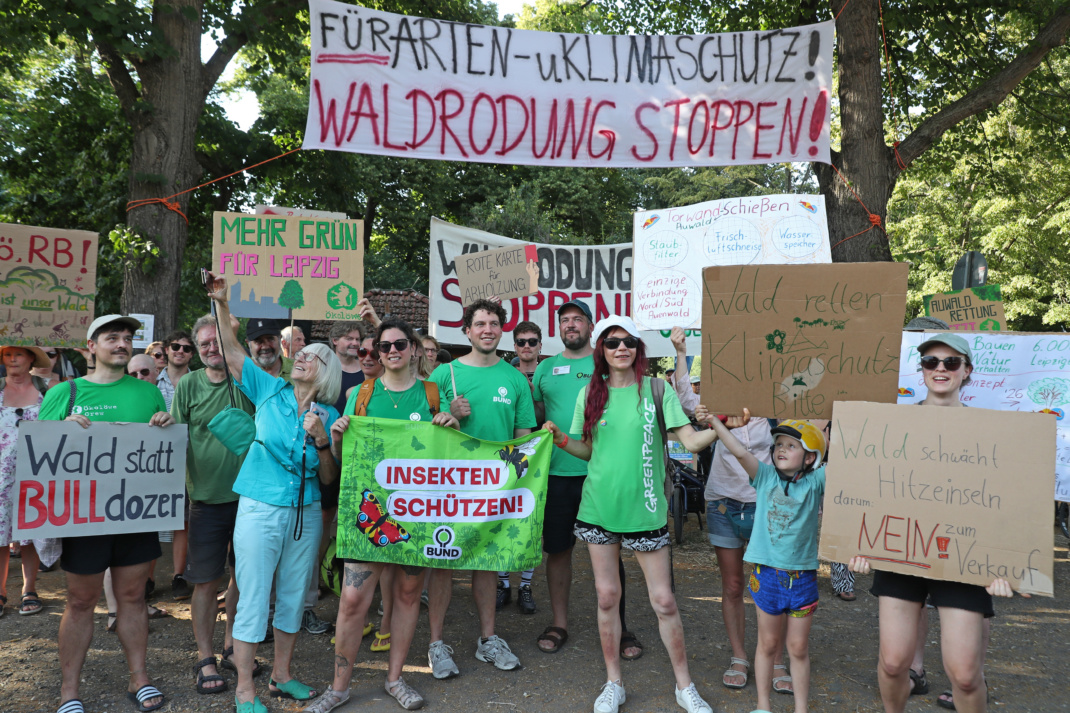
Dieser Artikel ist auch in deutscher Sprache verfügbar: Zum deutschen Artikel.
It’s a quick story. The City of Leipzig wanted to sell 5.7 hectares of land close to the city centre to RB Leipzig so that the club could expand its training centre there. RB’s needs were well known, but the solution was, to say the least, surprising. When RB set up in Leipzig, there were also plans to build on a greenfield site: a new stadium plus a training centre.
For Leipzig, however, this would have meant that the former Zentralstadion, along with the new building within it, would have remained unused. With three major concerts a year and a handful of high-security matches in the 3rd Division or the Regional League, it would not have been possible to run the stadium at a profit.
So RB was given the stadium plus a training centre on the other side of Cottaweg. In return, parking spaces had to be provided in accordance with the Saxon Building Regulations. Among other things, a building obligation was registered on the Kleinmesse fairground. This means that, strictly speaking, no Kleinmesse fair can take place during home matches, as that is where the parking spaces are located.
The whole arrangement was therefore not a viable solution even at the time the decision was made. At the same time, RB was able to purchase another plot of land on which the new administrative offices were built. This derelict site could also have been used to expand the training grounds. In that case, the administrative offices could have been built in front of the stadium, along with a multi-storey car park. However, that was not the intention either.
Where to put the Kleinmesse?
At the same time, some members of the city council had spoken out in favour of retaining the Kleinmesse fairground and had instructed the city administration to find a replacement for it. As a suitable alternative could not be found straight away – and the criteria remained unclear – the forest was offered to RB as a solution at the end of 2025.
The city’s idea: the fairground site is preserved, RB can expand, and to make way for this, the woodland simply has to go, as it is merely a compensation area anyway.
A strange idea. And one for which the city council also bears some responsibility, having failed to develop forward-looking ideas and reconcile differing needs. RB itself says that it would never have come up with the idea of using or encroaching upon the woodland for this purpose.
For the city administration, the idea seemed obvious. RB is a medium-sized enterprise that is of economic importance to Leipzig, not least through indirect economic benefits such as increased overnight stays and the like.
That is not fundamentally wrong. Of course, RB Leipzig is of economic importance. Of course, a football club needs training grounds and infrastructure. And of course, a city must reconcile differing interests.
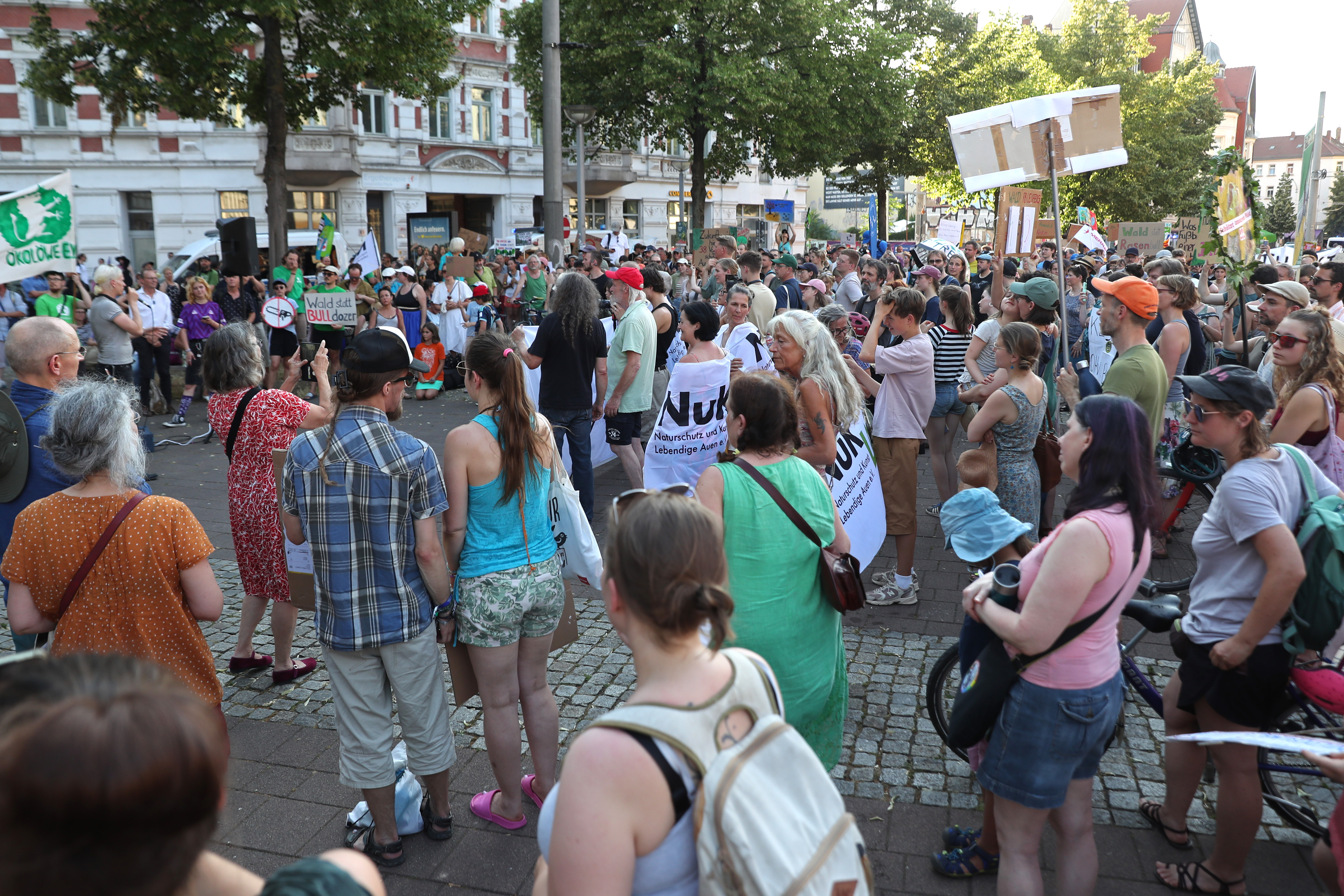
Closing rally at Lindenauer Markt. Demonstration by environmental organisations against the sale and deforestation of the Capa-Wäldchen (Capi) in Leipzig, 25 June 2026. Photo: Jan Kaefer
Nature as a sacrificial lamb?
That is not fundamentally wrong. Of course, RB Leipzig is economically significant. Of course, a football club needs training grounds and infrastructure. And of course, a city must reconcile different interests.
But this is precisely where the real problem begins.
For the question is not whether RB Leipzig is of economic importance. The question is why the solution to an already known infrastructure problem should, in the end, once again come at the expense of nature.
Why is the forest the area that can be made available, whilst other uses seem to be a foregone conclusion?
Why is a compensation area, intended to serve the natural balance, regarded as a sort of reserve that can be reclaimed when needed?
And why are the ecological consequences not made the starting point for planning, but instead treated as a problem that must somehow be resolved?
That is the crux of the conflict.
It is not football versus nature. Nor is it fairground operators versus nature conservation. Rather, it is the question of which interests in this city are regarded as sacrosanct and which are repeatedly up for negotiation.
The Capa Forest is not an isolated case
Unfortunately, this is not the first time that decisions in the city have been made at the expense of nature and that environmental impact assessments have been rushed through.
It must be made clear that the fact that planning permission procedures take a long time is not a problem for nature conservation. It is a problem of administration, planning and political priorities. Nature conservation is not a hindrance that must be cleared out of the way as quickly as possible so that a construction project can begin.
The way the city is currently dealing with the issue of nature conservation is also evident from the fact that it suffered a defeat before the Higher Administrative Court over the tree felling on Wilhelm-Leuschner-Platz.
On 26 March 2026, the Saxon Higher Administrative Court ruled that the felling permit issued by the City of Leipzig in 2020 was unlawful. The city had failed to adequately assess the impact and compensation requirements under nature conservation law. The court also made it clear that the city could not rely on a development plan when granting the felling permit, as this had not even been adopted at the time.
This is no trivial matter.
It raises the question of whether a city takes its own procedures and the legal requirements for nature conservation seriously. And it raises the question of whether nature is only taken into account when citizens, environmental organisations or the courts force it to do so.
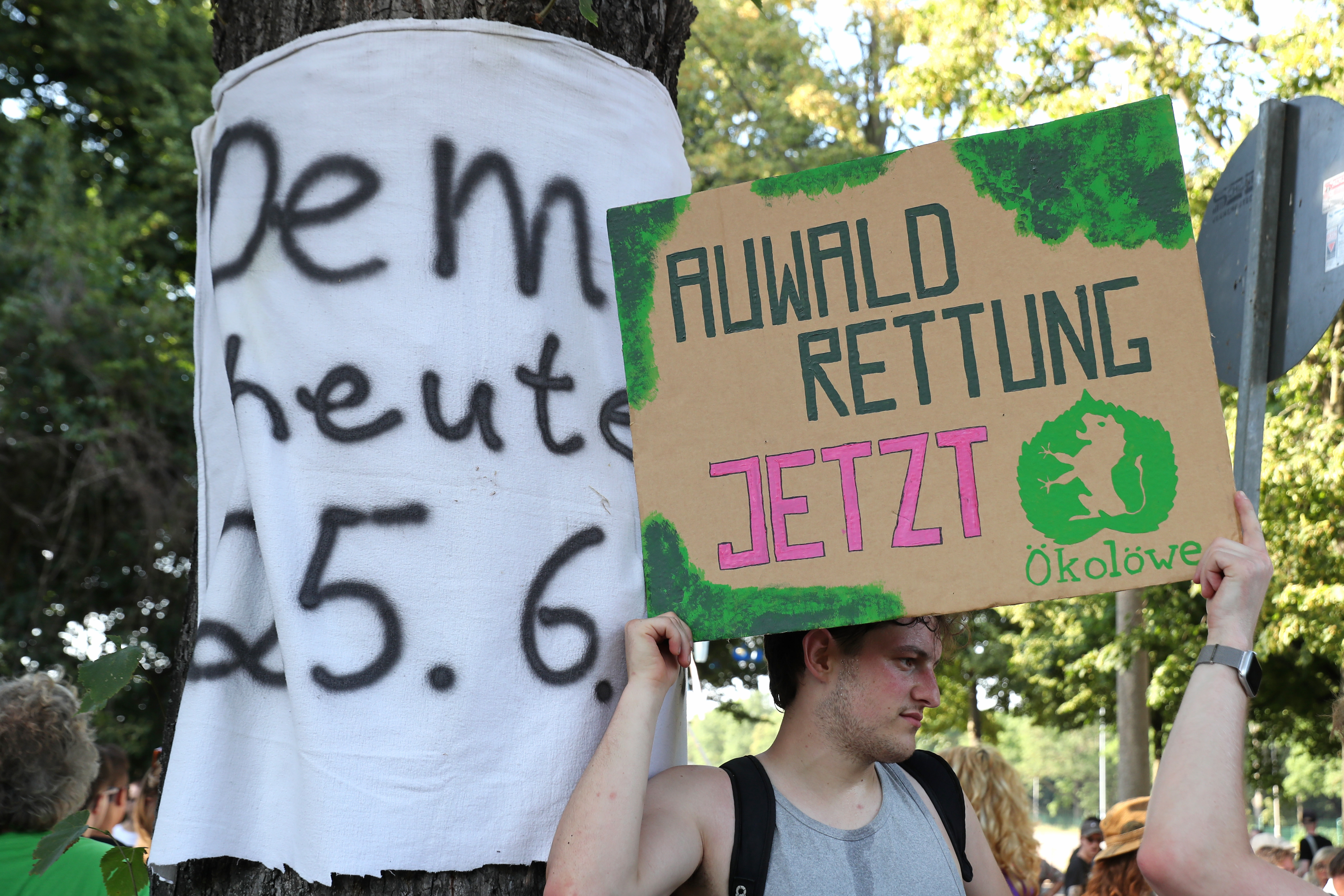
Demonstration by environmental organisations against the sale and felling of the Capa-Wäldchen (Capi) in Leipzig, 25 June 2026. Photo: Jan Kaefer
The debates surrounding the Bayerischer Bahnhof
also demonstrate – where the ‘Stadtnatur’ initiative was vindicated by the regulatory authorities in its complaints – that there are repeated conflicts in Leipzig over interventions in nature and the landscape. These cases are not identical in legal or factual terms. But they raise the same political question: how early and to what extent are ecological concerns incorporated into the planning process?
When nature doesn’t really count
At Wilhelm-Leuschner-Platz, the city was reprimanded by the Higher Administrative Court (OVG) at a time when all the trees had already been felled. NABU Leipzig had previously criticised the fact that the planning did not take sufficient account of existing trees and woodlands and biotope network structures. Many city councillors still do not seem to understand that the loss of natural habitats cannot simply be compensated for.
This is another reason why the impression arises that the protection of nature and the urban climate in Leipzig often only comes into play once the die has already been cast.
A structural disadvantage
The argument of conflicting objectives, which is frequently invoked, has in recent times repeatedly served merely as a fig leaf, with environmental protection and nature conservation ultimately losing out.
Of course there are conflicting objectives. Of course a city needs housing, schools, transport infrastructure, commercial areas and sports facilities. But conflicting objectives are no answer to the question of how these interests should be balanced.
If the city decides to sacrifice a woodland for a training centre, it must explain why this particular area is supposed to be the solution.
If valuable trees are removed from Wilhelm-Leuschner-Platz, it must explain why a more nature-friendly plan was not possible and what conclusions it draws from this.
When the city council argues over the protection of a silver maple that is a defining feature of the cityscape, at a time when the development plan was approved with the votes of all political groups, this fits the picture of a city where nature must repeatedly be defended against other interests and where people argue over symbols instead of focusing on the structural issues.
Compromises at the expense of nature
The problem is not that there are no people in Leipzig who are committed to environmental and nature conservation. There are environmental organisations, initiatives and committed citizens who are working to preserve nature.
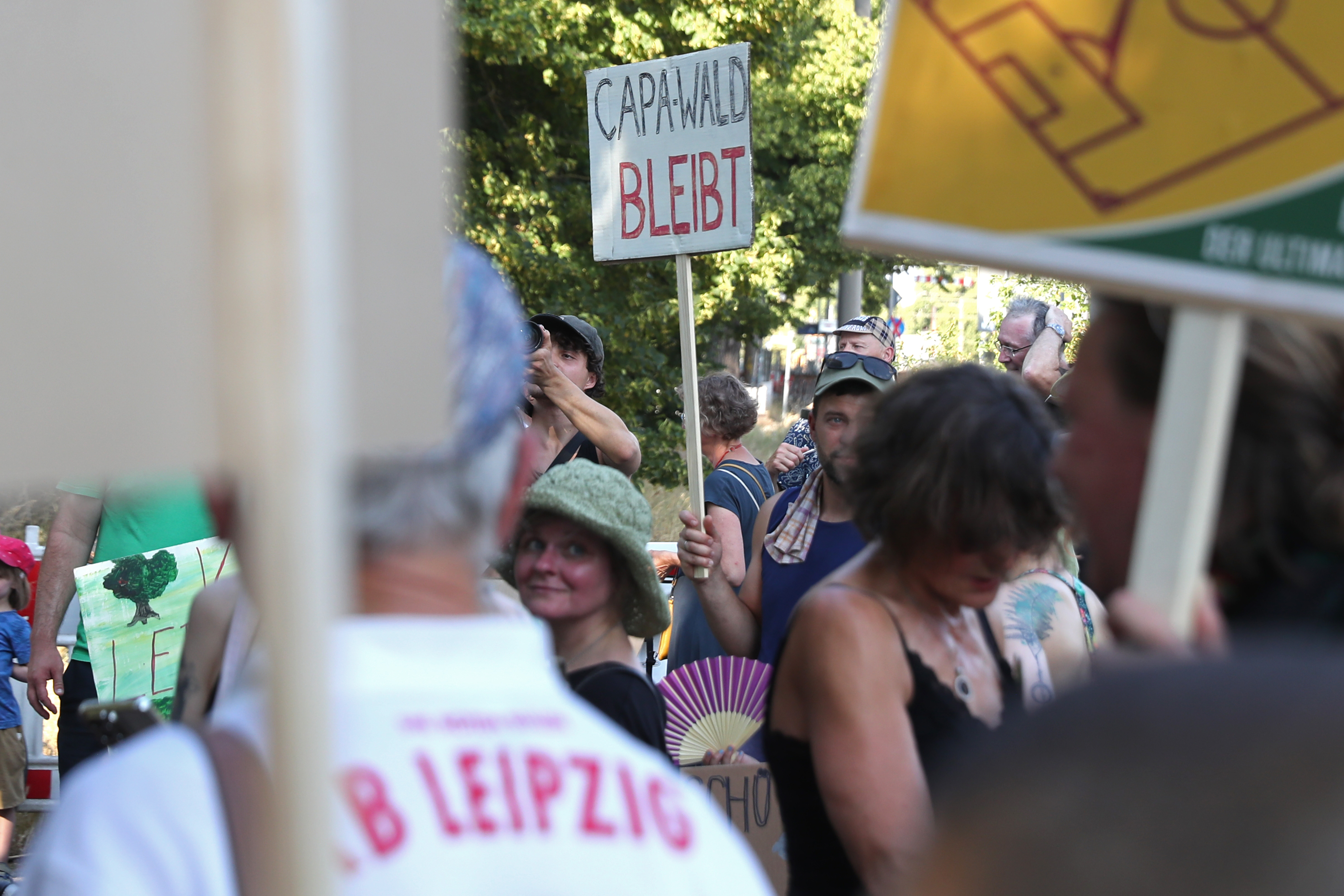
Demonstration by environmental organisations against the sale and deforestation of the Capa-Wäldchen (Capi) in Leipzig, 25 June 2026. Photo: Jan Kaefer
The problem is that, structurally speaking, nature conservation too often finds itself in the role of having to react and, ultimately, is repeatedly expected to accept compromises that result in a one-sided deterioration for nature. The fact that, in crucial votes and committee meetings, it is the norm for project developers and business associations to be heard, whilst representatives of environmental organisations are regularly ignored, fits into this picture.
The construction project is planned. The site has been selected. The economic interests have been identified. The political decisions have been prepared. And then nature conservation comes into the picture and is weighed up. But this weighing up does not take place in a vacuum. It is based on decisions that have already been made. And if these decisions treat nature from the outset as merely available land, then the outcome of the conflict is often predetermined. This is what can be called structural disadvantage.
It is not that nature conservation always loses. But it is that it repeatedly has to fight its way through, whilst other interests already appear to be a given. Unfortunately, even within the council and the administration, there is still room for improvement in understanding what our basic means of subsistence are and what significance they hold.
The fundamental question is not being asked
The fundamental question of what sort of city we want to live in and how we relate to nature is certainly not being asked systematically by most city councillors.
What should Leipzig look like in ten, twenty or thirty years’ time?
A city in which every spare square metre is regarded as potential building land?
A city in which green spaces and forests must always make way whenever economic or infrastructural interests dictate?
A city where nature conservation is only taken seriously when the courts force the authorities to do so?
Or a city that recognises its natural resources as part of its infrastructure?
Because that is exactly what they are.
Trees are not just trees. They are part of the urban climate. Forests are not just areas of land. They are habitats, water reservoirs, producers of fresh air and part of ecological networks. Brownfield sites are not just unused building land. They can be important habitats for animals and plants. Anyone who fails to incorporate these functions into urban planning from the outset is planning without regard for the future.
And anyone who repeatedly pits nature against short-term interests should not be surprised if, at some point, the city is no longer a pleasant place to live.
Who is protecting Leipzig’s future?
Anyone fighting to protect the environment in Leipzig cannot rely on the administration or the city council. That, unfortunately, is the sad reality.
Not because there is no point in engaging in political work. Not because there are no city councillors who champion nature. And not because the administration and politicians are fundamentally opposed to environmental protection. But because experience shows that protecting the foundations of our lives does not happen of its own accord. It must be demanded. Time and again.
In the planning process. In decision-making. In the granting of permits. In the courts. On the streets. In discussions with those in charge. And at the polls. The city’s residents must decide for themselves what sort of city they want.
A city in which nature is regarded as surplus land to be sacrificed when necessary, with all the negative consequences of such a decision.
Or a city where nature is part of the future that we shape together. Against this backdrop, the Capa Forest is more than just a patch of woodland. And the protests by so many citizens, the demonstrations and petitions, also show that the people of this city can bring about change. That is another reason why the Capa Forest is a litmus test.
For the administration. For the city council. For RB Leipzig. And for all of us.
Because ultimately, it is up to us to ensure that Leipzig remains a great place to live.
Not at some point in the future. But right now.
Empfohlen auf LZ


So können Sie die Berichterstattung der Leipziger Zeitung unterstützen:




There is one comment