Dieser Artikel ist auch in deutscher Sprache verfügbar: Zum deutschen Artikel.
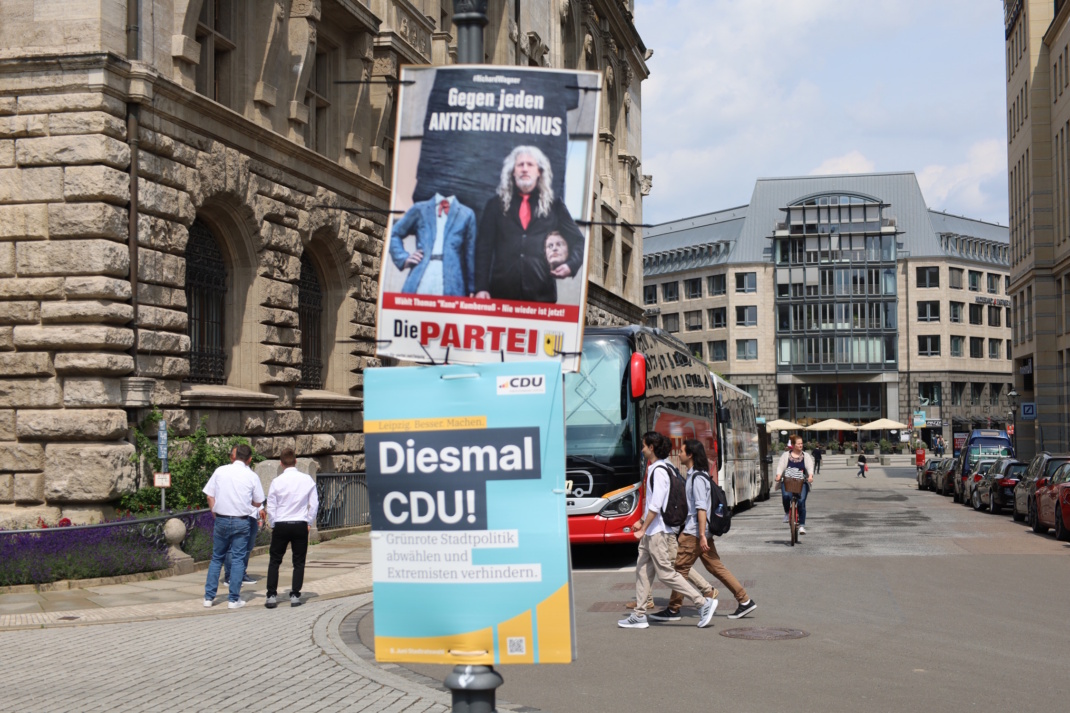
This concern was only too understandable, given that during the last elections Leipzig seemed to be literally drowning in a deluge of election posters. Many poles were covered from top to bottom. Some parties covered entire streets with their posters. And many posters were already lying torn to shreds on the grass after just a few days. This led to a public debate about whether the flood of posters could somehow be curbed. In November 2025, the city council commissioned a study to look into precisely that.
On 2 July, the administration’s report – commissioned in November – was presented to the city council for a decision. And – as one might have expected – most political groups were not pleased with it.
This was despite the administration having made every effort to take the original request into account: to limit the number of posters put up. After all, there are several causes behind the deluge of posters. One is the increasing fragmentation of the political landscape, as CDU city councillor Julian Schröder also noted on 2 July: more and more parties and voter associations are standing for election. Or – as in March 2027 – are standing in the mayoral election in Leipzig. They all want to attract attention.
Of course, not every party can put up 23,000 posters. A figure that already gives a hint of how the battle for the lampposts will merrily continue. After all, there are only 40,000 lampposts in Leipzig on which election posters can be displayed. Perhaps there would be more if a motion by the Greens had managed to bring about a change, so that more poles at LVB tram stops would also be available for election advertising.
A noble failure
Let’s get this out of the way straight away: even though three amendments from the political groups secured a majority on 2 July, it had no bearing on the outcome. In the end, the council majority rejected the revised election advertising regulations by 25 votes to 34. In the words of Mayor Burkhard Jung: “It’s good that we’ve had a discussion about it.”
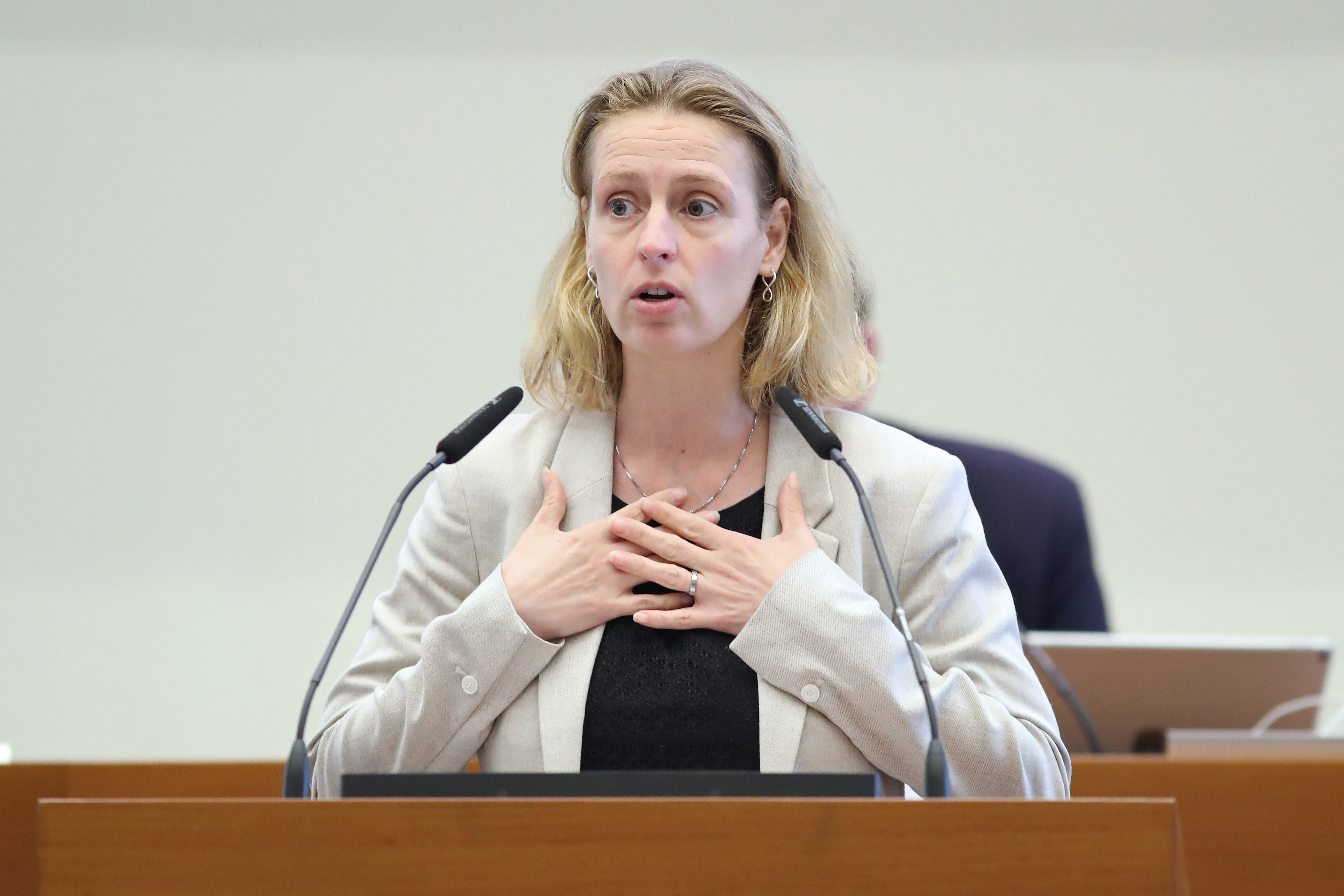
Franziska Riekewald (Die Linke) in the Leipzig City Council on 1 July 2026. Photo: Jan Kaefer
The problem was already made clear in the speeches by Julian Schröder and Die Linke parliamentary group leader Franziska Riekewald: Although the city can lay down rules on the maximum number and size of posters permitted on the poles, it has absolutely no staff resources to monitor which parties are complying with the rules and which are not, or to determine who put up their posters first and who was the last to break the rules.
Setting maximum limits on the number of posters for political parties is, according to Franziska Riekewald, undemocratic and unenforceable. And on the issue that particularly concerned the Greens when they launched the initiative for a new election campaign by-law, Julian Schröder also found nothing in the draft: littering. The Greens’ parliamentary group leader, Dr Tobias Peter, had at least expected a reduction in the flood of posters.
It’s all about attention
But even after the speeches by Julian Schröder and Franziska Riekewald, it was clear: neither the Left nor the CDU would agree to a reduction in the number of their election posters in the run-up to the upcoming mayoral elections. Because – as Riekewald also noted – it’s all about attention. The more posters there are, and the larger they are, the more attention they attract from potential voters.
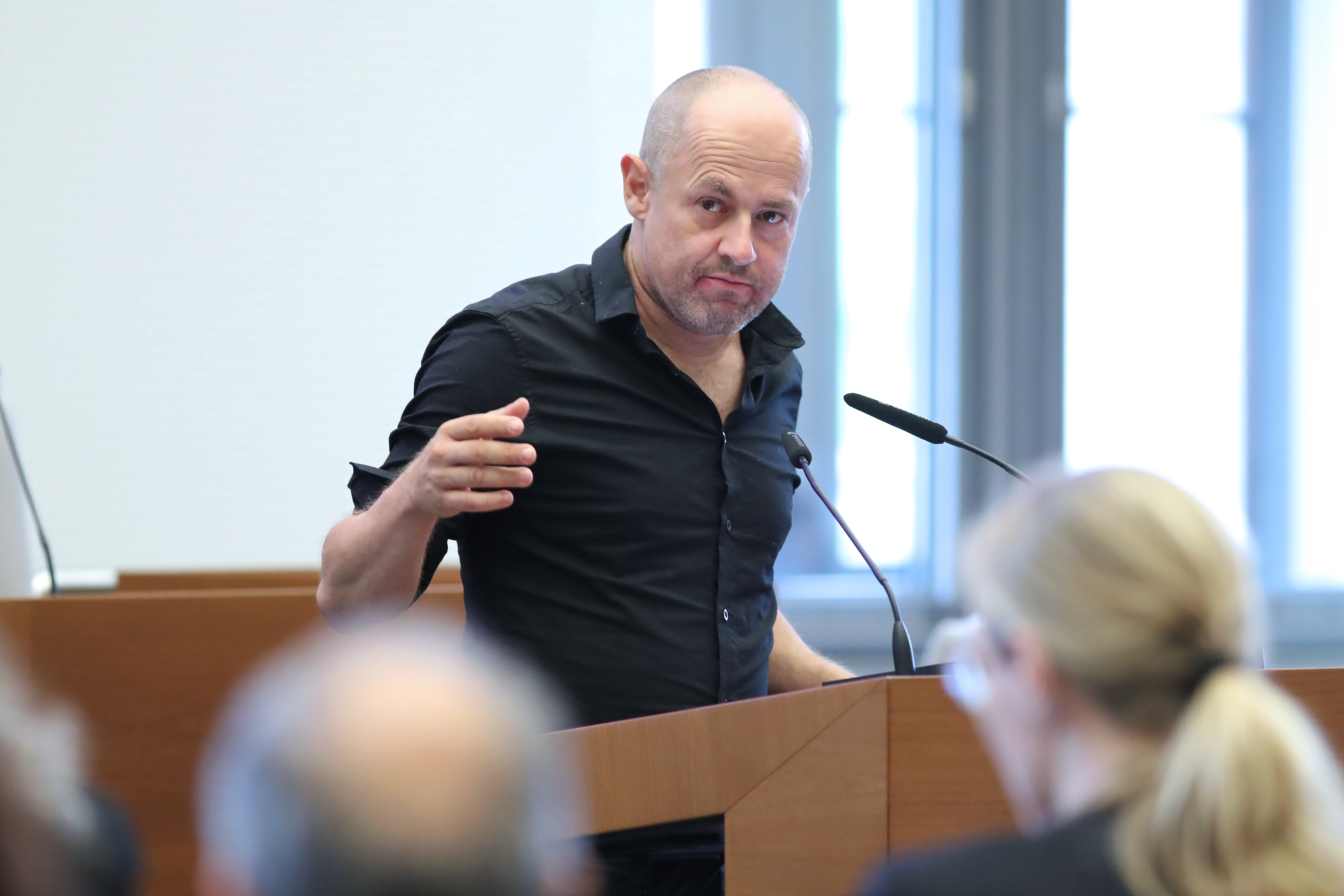
Tobias Peter (Alliance 90/The Greens) at Leipzig City Council on 1 July 2026. Photo: Jan Kaefer
BSW city councillor Sascha Jecht then raised an issue that an election campaign by-law might not be able to resolve. After all, election campaigns are changing too – and not just because of the increase in candidates. Whether posters on the streets actually influence anyone’s voting decision at all remains entirely open to question. Election campaigns have long been taking place increasingly in the digital sphere, over which an election advertising by-law naturally has no influence.
But following the speeches by Schröder and Riekewald, who could not find much to commend in the new election campaign regulations, it was clear to Tobias Peter that the Left Party and the CDU “want to continue bombarding the city with campaign material during election campaigns”.
Franziska Riekewald’s interjection was clear: “I admit that.”
Mayor Burkhard Jung then went ahead and put all the political groups’ amendments to a vote nonetheless. But that was really just a token gesture. Several political groups had long since made it clear that they would not agree to any restrictions on their flood of posters during election campaigns. Alongside Die Linke and the CDU, this included the AfD, which had attracted attention during the last elections with a deluge of blue posters, particularly in the outlying districts. The motto “The more, the better” was quoted several times that day.
Add to that the votes of the Free Faction, and the result was clear: By 25 votes to 34, the council majority rejected the amendment to the election campaign regulations. So everything remains as it was. And the people of Leipzig can already look forward to a city plastered with posters when the new mayor is elected in March 2027.
Empfohlen auf LZ


So können Sie die Berichterstattung der Leipziger Zeitung unterstützen:




There is one comment