Dieser Artikel ist auch in deutscher Sprache verfügbar: Zum deutschen Artikel.
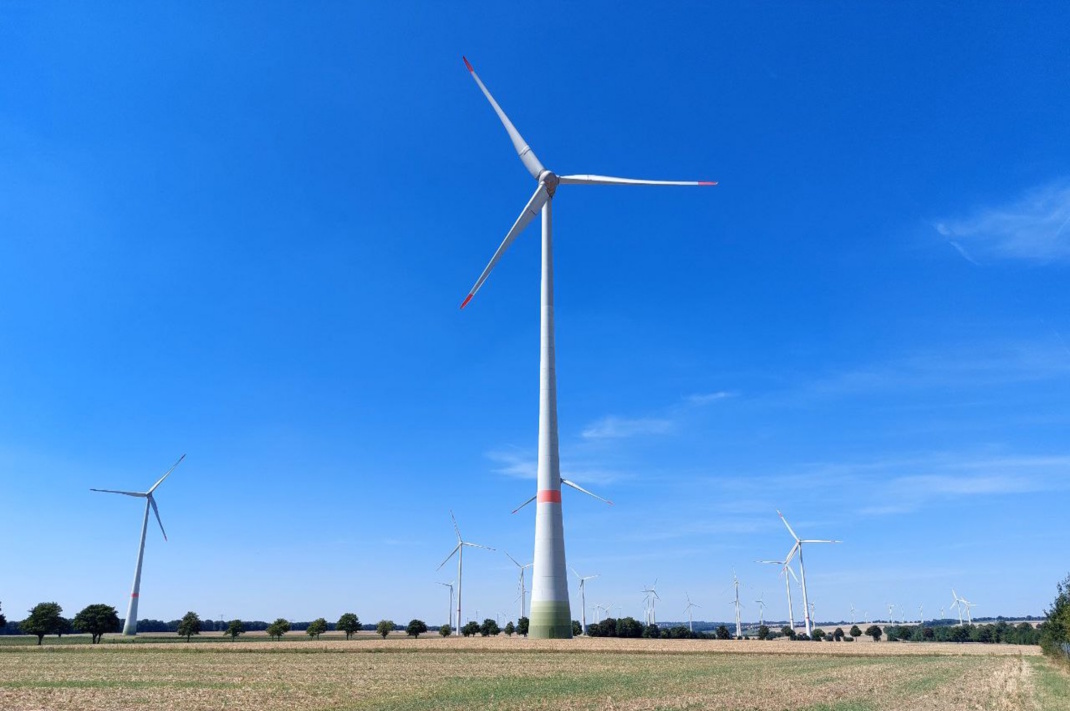
The expansion of renewable energy is a key component of climate policy. Although wind energy generally enjoys broad support, people living near wind turbines experience the consequences of the energy transition first-hand. A new study by researchers at the University of Leipzig now shows that, under certain circumstances, the visibility of wind turbines can reduce support for renewable energy.
How did they find this out? The study, published in the *Journal of Environmental Economics and Management*, examines how visible wind turbines affected voting behaviour in Germany between 1998 and 2021.
To do this, the researchers combined data on more than 28,000 wind turbines with high-resolution geodata, digital surface models, satellite-based settlement maps and local election results. On this basis, they calculated whether wind turbines were visible from residential areas and tracked how political support changed after local authorities were first visually exposed to them.
Is it the sight of them or the intensifying debate?
“Our findings suggest that the visual perception of wind turbines can influence attitudes towards the energy transition,” says Vincent F. Stegmaier, a research assistant at the Faculty of Economics at the University of Leipzig, who carried out the analysis. “In particular, it shows that this correlation has grown stronger over time – in parallel with an increasing polarisation of public debates on wind energy and a growing emphasis on the landscape and natural spaces.”
A distinctive feature of the study is that it examines communities that can see wind turbines in neighbouring communities and compares them with geographically close control communities. This enables the researchers to isolate the effect of visibility from other factors associated with the operation of wind turbines, such as additional tax revenue, opportunities for public participation in the planning process, or local economic benefits.
Effects particularly pronounced in rural regions and where there is organised resistance
The analysis shows that visible wind turbines did not lead to a measurable decline in support for parties advocating the expansion of renewable energy during the early phases of the German energy transition. In more recent periods, however, the share of the vote for such parties declined significantly when wind turbines first became visible in local communities.
These effects were particularly pronounced in rural regions and in areas with organised opposition to wind energy projects. At the same time, the researchers found evidence that financial participation opportunities for citizens and local economic benefits can, at least to some extent, mitigate negative reactions.
“Our findings do not mean that people fundamentally reject renewable energy,” explains Prof. Dr Melanie Krause, who co-authored the study with Stegmaier. “Rather, they underline the importance of perceptions of fairness. People tend to react negatively when they experience the impact of wind turbines on the landscape without simultaneously benefiting from the associated advantages or having any influence on site selection decisions.”
According to the researchers, the findings illustrate that the design of the energy transition should take into account not only national climate targets, but also local perceptions and the distribution of costs and benefits.
“The success of the energy transition depends on maintaining public support,” says Stegmaier. “Measures that strengthen local participation and distribute the benefits of wind energy more widely can help to reconcile ambitious climate targets with the concerns many people have about changes to their landscape.”
Original title
of the publication in the Journal of Environmental Economics and Management:
“Headwind in sight? Wind turbine visibility spillovers and support for renewable energy policy”
Empfohlen auf LZ


So können Sie die Berichterstattung der Leipziger Zeitung unterstützen:





There is one comment